
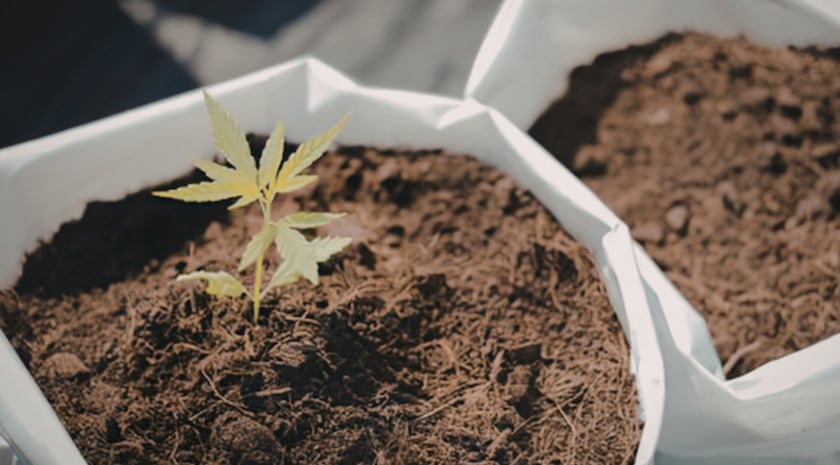
Cannabis fertilizers feed your plants the nutrients they need to grow strong stems, full foliage and dense buds. The best fertilizer for cannabis depends on your grow medium, your stage in the lifecycle and whether you prefer organic or synthetic nutrients.
This guide explains the core macronutrients, the right NPK ratios for each stage and the top fertilizer brands growers reach for. By the end you will know what to feed your plants, when to feed them and how to avoid the most common feeding mistakes.
What Nutrients Do Cannabis Plants Need?
Cannabis plants need three primary macronutrients to grow, plus a set of secondary nutrients and micronutrients. The three macronutrients are nitrogen (N), phosphorus (P) and potassium (K), shown on every fertilizer label as the NPK ratio.
Nitrogen drives leafy vegetative growth and early root and stem development, phosphorus fuels flowering, bud formation and the plant's energy and photosynthesis systems, and potassium regulates water movement and overall plant health. Without the right balance of these macronutrients, weed plants stall, yellow or produce small, loose flower.
Beyond NPK, marijuana plants also use secondary nutrients and micronutrients to complete the picture:
- Calcium and magnesium strengthen cell walls and support photosynthesis, often supplied together as a Cal-Mag supplement.
- Sulfur helps plants produce proteins and enzymes that keep growth steady.
- Micronutrients like iron, zinc and manganese are needed in tiny amounts but still affect leaf color and bud development.
A balanced cannabis fertilizer covers most of these, so most growers only add Cal-Mag or micronutrients when a deficiency appears.
What Is the Best NPK Ratio for Cannabis?
The best NPK ratio for cannabis changes with the growth stage, because weed plants need different nutrients during vegetation than during flowering. Vegetating plants want more nitrogen for leaf and stem growth, so a higher first number suits them.
Flowering plants want more phosphorus and potassium for bud development, so the second and third numbers climb while nitrogen drops. Matching the NPK ratio to the stage is the single biggest factor in feeding cannabis well.
The table below shows typical NPK ranges by stage. Use it as a starting reference, then follow the specific schedule on your nutrient bottle.
| Growth stage | Nitrogen (N) | Phosphorus (P) | Potassium (K) | Feeding goal |
| Seedling | Low | Low | Low | Gentle support, avoid burn |
| Early vegetative | High | Low | Medium | Drive leaf and stem growth |
| Late vegetative | High | Medium | Medium | Build structure before flower |
| Early flowering | Medium | Medium-High | High | Trigger bud sites |
| Late flowering | Low | High | High | Bulk and ripen buds |
| Flush (final 1-2 weeks, optional) | None | None | None | Plain water only (debated practice) |
The final flush is optional rather than essential, its benefit is debated among growers, and tapering nutrients down is a common alternative. These ranges are guidelines, not exact doses. Your strain, grow medium and brand of nutrients all shift the precise numbers, so read the label and adjust to how your plants respond.
Organic vs Synthetic Cannabis Nutrients
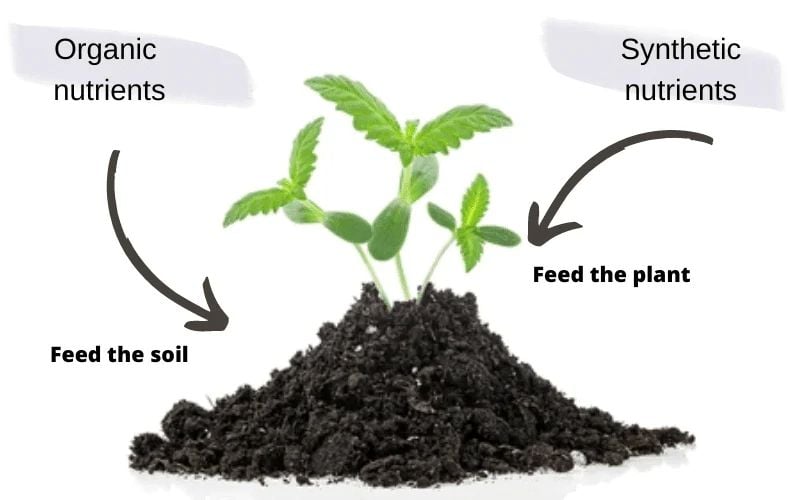
Cannabis nutrients come in two types: organic and synthetic. Organic nutrients are derived from natural sources like compost, bat guano, worm castings and bone meal, and they feed the plant slowly by enriching the living soil. Synthetic nutrients, also called mineral nutrients, are mineral salts that dissolve in water and reach the roots immediately.
Both grow healthy weed plants, so the better choice depends on your medium, your experience and how much control you want.
When Organic Cannabis Nutrients Work Best
Organic cannabis nutrients work best in soil grows where a living root zone breaks down natural inputs over time. Organic weed nutrients release slowly, which makes nutrient burn less likely and forgives small mistakes. Many growers report fuller terpene and aroma profiles from organic-fed plants, though results vary by strain and environment.
Because organic nutrients rely on microbial activity in the soil, consistent moisture and a stable root environment are key to getting the full benefit from them. When soil biology is active and balanced, nutrient uptake becomes more efficient and supports steady plant development throughout the grow cycle.
If you want a low-stress, soil-based grow, organic nutrients are a strong starting point, and our guide to organic weed fertilizers covers ten natural options in detail.
When Synthetic Cannabis Nutrients Work Best
Synthetic cannabis nutrients work best when you want precise, fast control over what the plant receives. Mineral nutrients dissolve straight into the water and feed the roots right away, so they are not dependent on soil biology.
This immediacy makes them the standard choice for hydroponic and coco coir grows where the medium holds no nutrients of its own. Because synthetic nutrients act fast, overfeeding can cause nutrient burn quickly, so start with half-strength doses and increase only when the plant handles them well.
Best Cannabis Fertilizer Brands
The best cannabis fertilizer brands combine reliable NPK formulas with stage-specific feeding products that match the plant's lifecycle. Each brand below offers a different balance of control, simplicity and price, so the right pick depends on your medium and experience level.
- Homegrown Cannabis Co. Standard: Bundles a full synthetic feeding schedule in one pack.
- Homegrown Cannabis Co. Organic: Bundles a full organic feeding schedule in one pack.
- General Hydroponics: Covers the foundational three-part NPK system and a coco-specific line.
- Fox Farm: Offers a broad soil-friendly range that rewards cautious, gradual feeding.
- Advanced Nutrients: Provides cannabis-specific formulas with stage boosters.
Homegrown Cannabis Co. Standard and Organic
Homegrown Cannabis Co. does not offer a single all-in-one feeding pack. Instead, nutrient support is built from individual products used at different stages of growth.
The closest full-cycle option is the Full Strength Grow Kit, which includes NPK fertilizer, mycorrhizae powder, and a cal-mag supplement for overall plant development. For flowering, growers can use Sweet Bloom and Flower Booster to support bud production, while the Organic Plant Booster is available as a bloom-stage supplement for organic setups.
Together, these products are combined as needed rather than following a pre-set feeding schedule.
General Hydroponics
General Hydroponics builds its range around the flexible three-part FloraSeries system (FloraGro, FloraBloom and FloraMicro) for hydroponic and soil grows. The brand also offers CocoTek, a coco-specific two-part base nutrient for growers using that medium, and General Organics, a natural line with grow and bloom base nutrients for those who want an organic option.
FoxFarm
FoxFarm offers an extensive soil-focused product range built for steady, forgiving feeding. New growers benefit from running half doses for the first few applications, then watching how the plants react before increasing strength. This cautious approach reduces the risk of nutrient burn while the plants establish.
FoxFarm fits soil growers who want room for error as they learn.
Advanced Nutrients
Advanced Nutrients produces cannabis-specific fertilizers and a deep lineup of stage boosters like Bud Candy, Overdrive and Big Bud. The cannabis-specific formulas remove much of the guesswork around ratios, because they are tuned to the plant rather than to general gardening.
The booster range targets the flowering stage, where extra phosphorus and potassium support bud development. This brand suits growers chasing maximum bloom-stage performance.
Best Fertilizers for Flowering and Big Buds
The best fertilizers for flowering cannabis carry higher phosphorus and potassium with reduced nitrogen, because bud development needs different fuel than leafy growth. These bloom-stage products are often sold as boosters or bloom nutrients, and most brands now include them in their lineups.
In the final weeks of flowering, switching to a high-PK formula helps bulk up the flower into denser, more aromatic nugs. Reported bud size depends on genetics, environment and feeding consistency, so a booster supports the plant rather than guaranteeing a yield.
How Often Should You Feed Cannabis Plants?
Cannabis plants are usually fed on a schedule that follows the watering cycle, with most growers feeding nutrients every second or third watering. Young seedlings need little to no added nutrients, so feeding starts light and increases as the plant grows.
Most nutrient brands print a feeding schedule on the bottle that lists doses by week, which is the safest reference to follow. Cannabis performs best at a steady pH, around 5.5 to 6.5 in soil and a little lower (about 5.8 to 6.2) in coco and hydro, so checking pH at each feeding keeps nutrients available to the roots.
For a full week-by-week breakdown, our cannabis feeding schedule guide maps doses to each stage.
Tips for Feeding Cannabis Plants
Feeding cannabis well comes down to consistency, observation and restraint, because more nutrients do not mean happier plants. The tips below cover the habits that prevent the most common feeding problems.
- Start with half-strength doses and increase gradually, so you avoid nutrient burn while learning how your plants respond.
- Flush plants with pH-balanced water if they show an adverse reaction, then reintroduce nutrients once they recover.
- Make your own compost when growing organic, which is a reliable way to enrich soil naturally.
- Hold pH steady between 5.5 and 6.5, because pH swings lock nutrients out even when they are present.
- Check your plants often, since early signs of deficiency or excess are easiest to fix when caught quickly.
- Feed young plants from autoflower, regular or feminized cannabis seeds lightly, because seedlings and young crops burn easily.
How Fertilizer Choice Connects to Your Seed Choice
Fertilizer choice connects to seed choice because different cannabis seeds reach different stages on different timelines, which changes when you switch nutrients.
Autoflower plants move from vegetation to flowering on their own schedule, so growers working with autoflower weed seeds typically switch to bloom nutrients earlier than they would with photoperiod strains. Photoperiod plants from feminized or regular seeds flower when light changes, giving you more control over the timing of your nutrient switch.
Matching your feeding plan to your seed type keeps the plant fed correctly at every stage, and you can start that plan by browsing quality marijuana seeds suited to your grow.
Frequently Asked Questions
What Is the Best All-In-One Fertilizer for Weed Plants?
All-in-one nutrient packs like the Homegrown Cannabis Co. Standard and Organic bundles cover the full lifecycle in a single kit. They suit growers who want a fixed schedule rather than mixing separate base nutrients and boosters.
Can You Use Regular Plant Food on Cannabis?
General-purpose plant food can work in a pinch, but cannabis-specific fertilizers match the plant's shifting NPK needs more closely. Cannabis-specific formulas are tuned to the high-nitrogen veg stage and the high-PK flowering stage, which general plant food rarely separates.
What Is the Best Fertilizer for an Outdoor Cannabis Grow?
Outdoor cannabis grows respond well to slow-release organic nutrients worked into the soil, since the living soil feeds plants steadily through the season. Synthetic nutrients still work outdoors when you want faster correction of a deficiency.
Do You Need to Flush Cannabis Before Harvest?
Many growers flush with plain water in the final one to two weeks of flowering to clear built-up nutrients from the medium. Flushing is a common practice rather than a strict requirement, and its effect varies by grow medium.