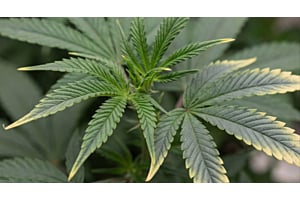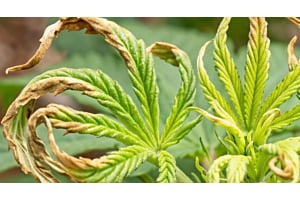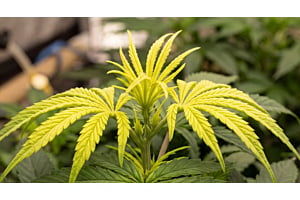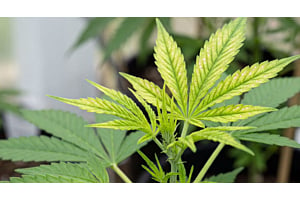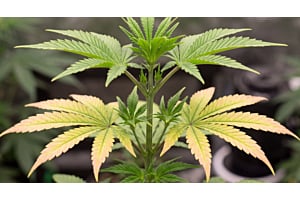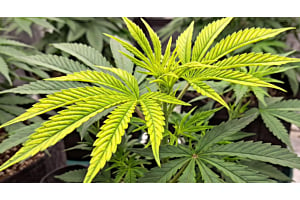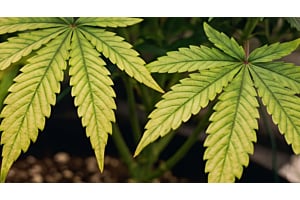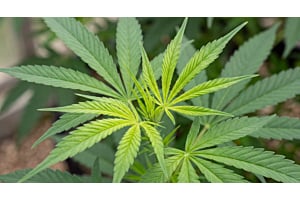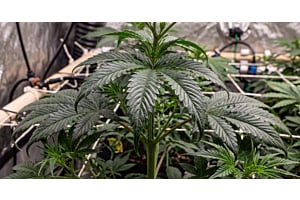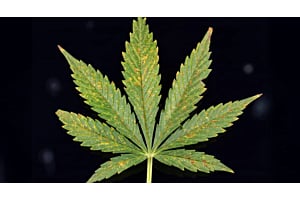
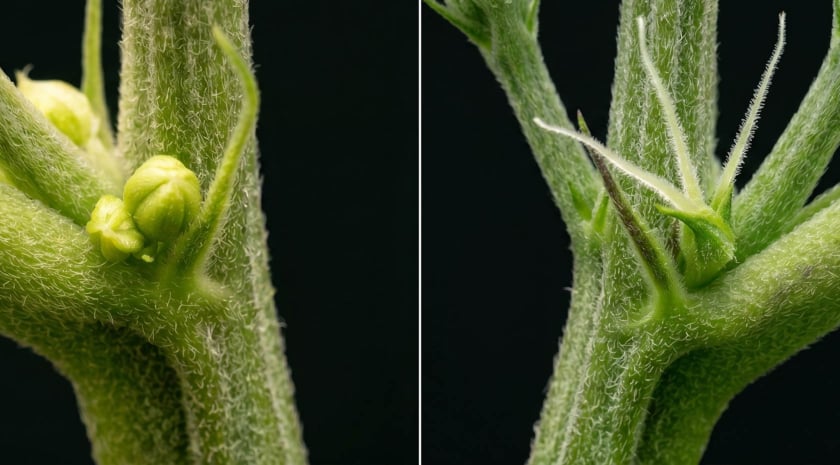
Knowing the difference between a male vs. female weed plant protects your harvest. Females grow buds — teardrop-shaped calyxes with one or two white hair-like pistils at their nodes. Male plants grow clusters of smooth, round pollen sacs with no white hairs. Removing males before those sacs open keeps your female plants unpollinated and your buds seed-free.
Most marijuana plants show these preflowers somewhere between weeks 3 and 6 from germination, with males often showing a little earlier. This guide (with pictures) shows you how to sex cannabis plants step by step and covers:
- The physical differences between male and female plants.
- What male and female preflowers look like up close.
- When plants usually show their sex and where to look first.
- How to confirm sex in veg and after the flip to flower.
- What a hermaphrodite looks like.
- Why you can't sex a seed and where seed choice fits.
The Importance of Cannabis Plant Sex
Sex determines whether a plant produces buds (females) or pollen sacs (males). If those male sacs burst near female plants, pollination follows, and the female redirects her energy from bud production to seed production. This lowers the density and cannabinoid content of her flowers, so harvest quality is diminished — buds are lighter, less potent, and full of seeds.
That’s why identifying cannabis plant sex early is one of the most important skills to develop, whether you're new to growing weed or already managing an established crop. The seed type you start with sets your male plant odds before germination even begins.
What Does a Female Cannabis Plant Look Like?
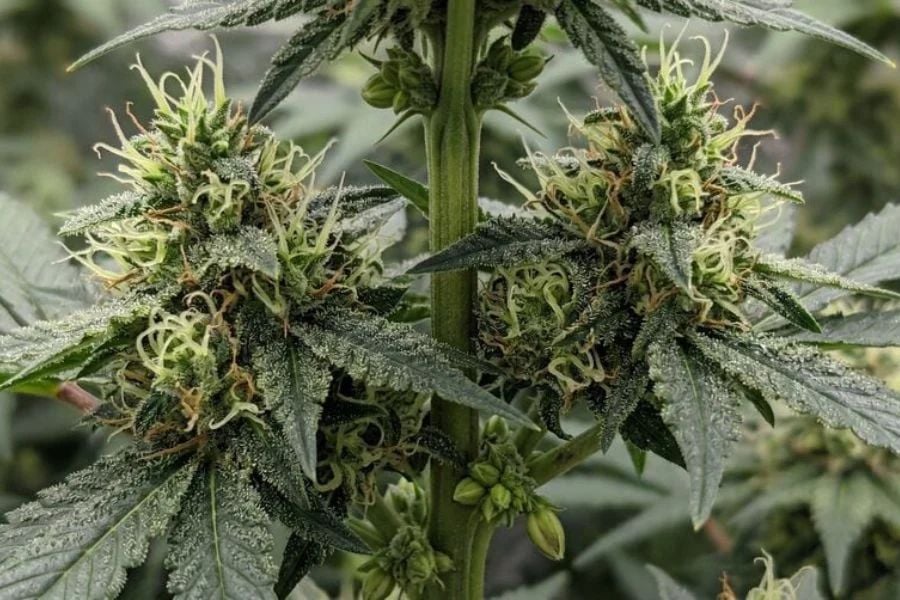
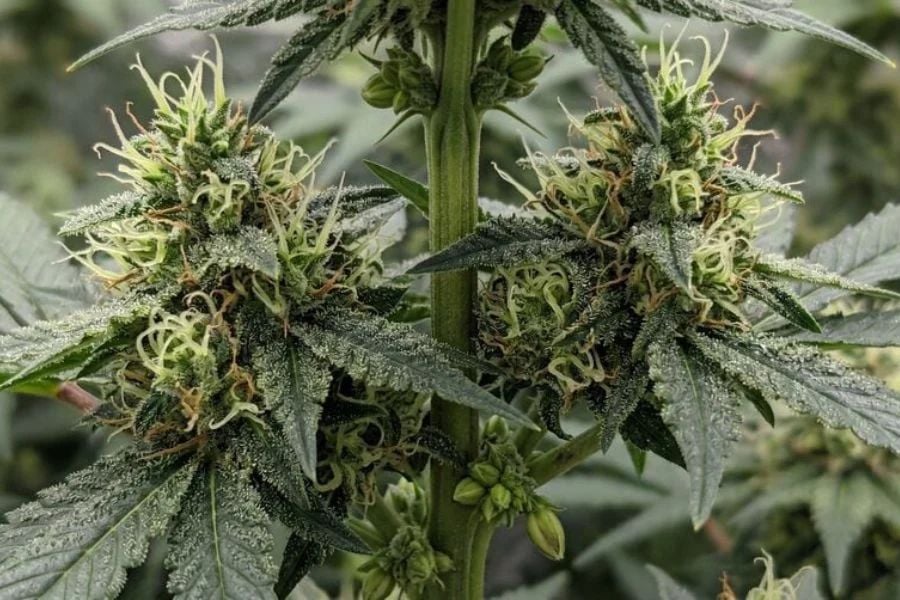
A female cannabis plant is identified by its small teardrop-shaped calyxes with thin white hairs, called pistils, growing at the nodes. In flower, those calyxes stack into pistil-covered buds that frost over with resin-rich trichomes. Female plants also tend to be shorter and bushier than males, but only the structures at the nodes confirm sex.
Female Cannabis Preflowers: The Earliest Signs
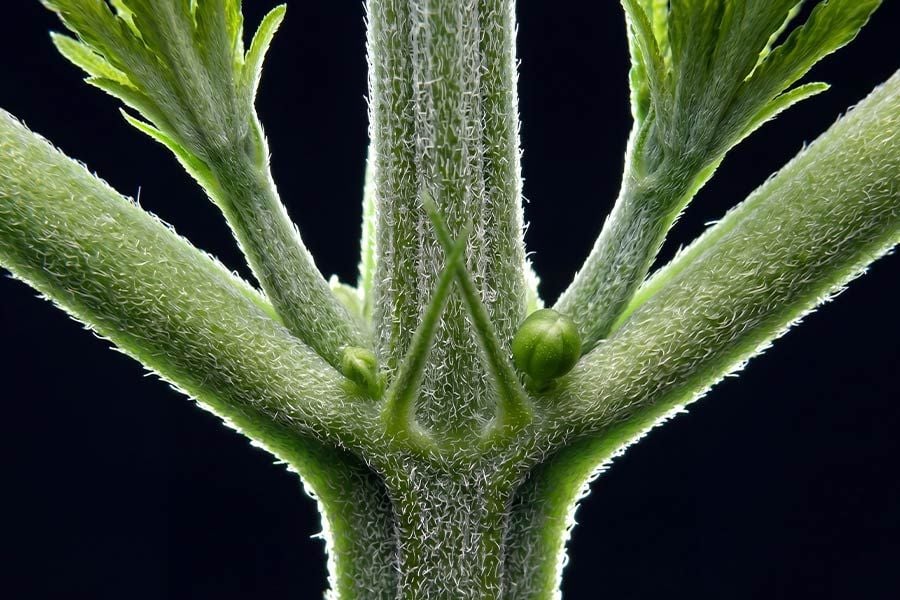
The earliest signs of a female plant are its preflowers: a pointed, pod-like calyx sitting tight against the stem, tucked behind the stipules — those thin green spikes at the nodes of both males and females. A calyx can appear a few days before the pistils, usually showing first on the upper nodes nearest the light, with 1–2 whitish pistil hairs later emerging from its tip.
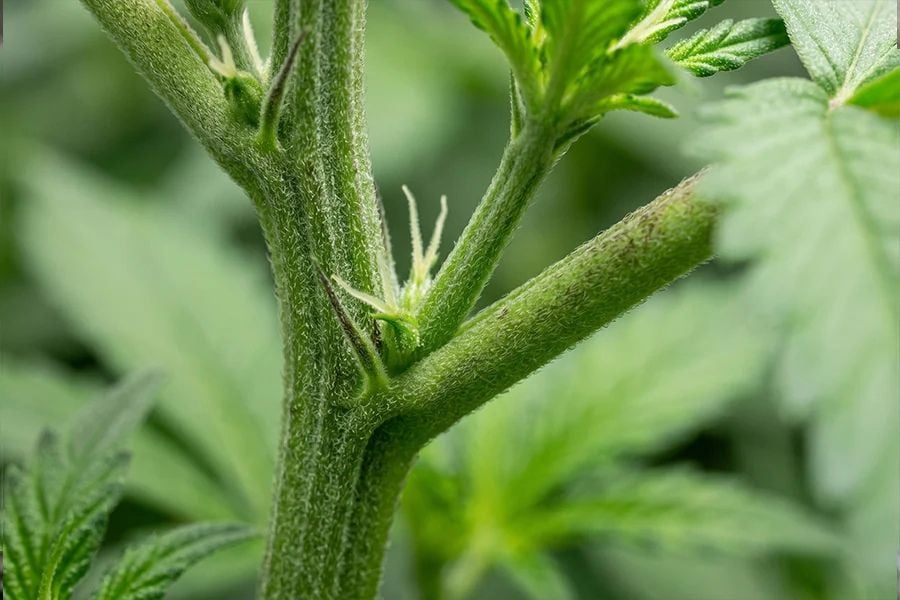
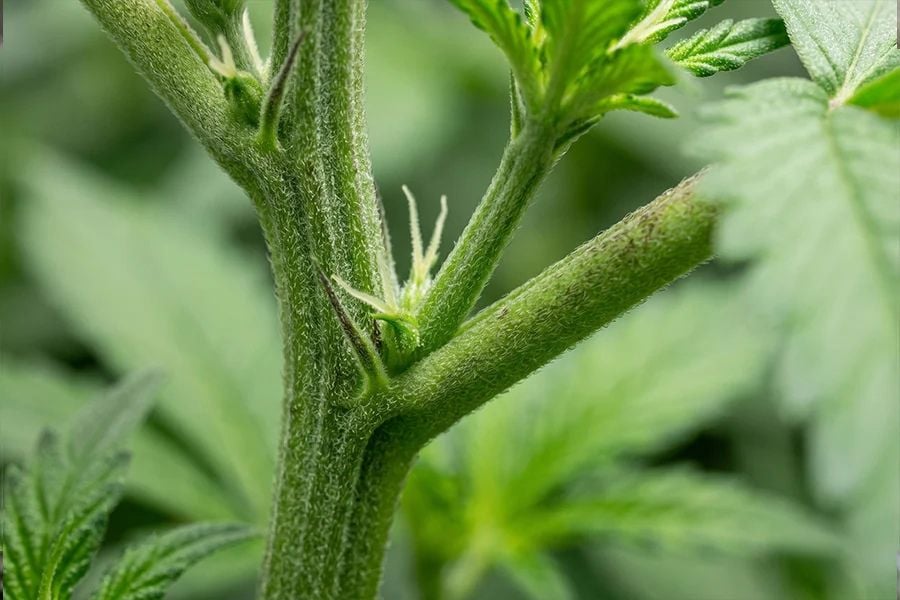
If you find a pointed calyx with no hairs yet, give it a few days and check the same node again. On a female plant, a pistil usually follows. A round shape that never grows a hair, especially one sitting on a tiny stalk, points to a male pollen sac instead.
Pistils are the pollen-catching part of the female flower. Once pollen lands on them, the calyx beneath starts forming a seed, which is why males need to come out before their sacs open.
What Does a Male Cannabis Plant Look Like?
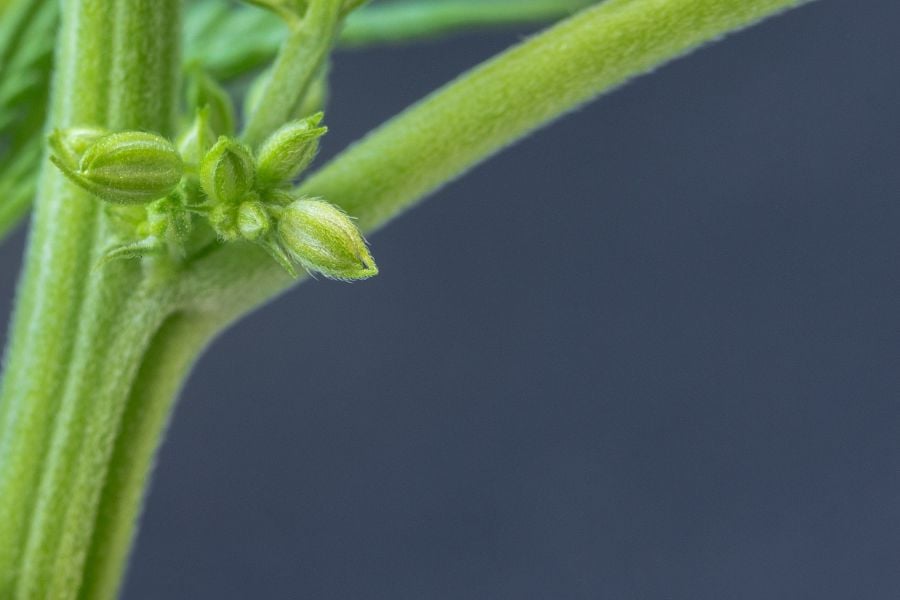
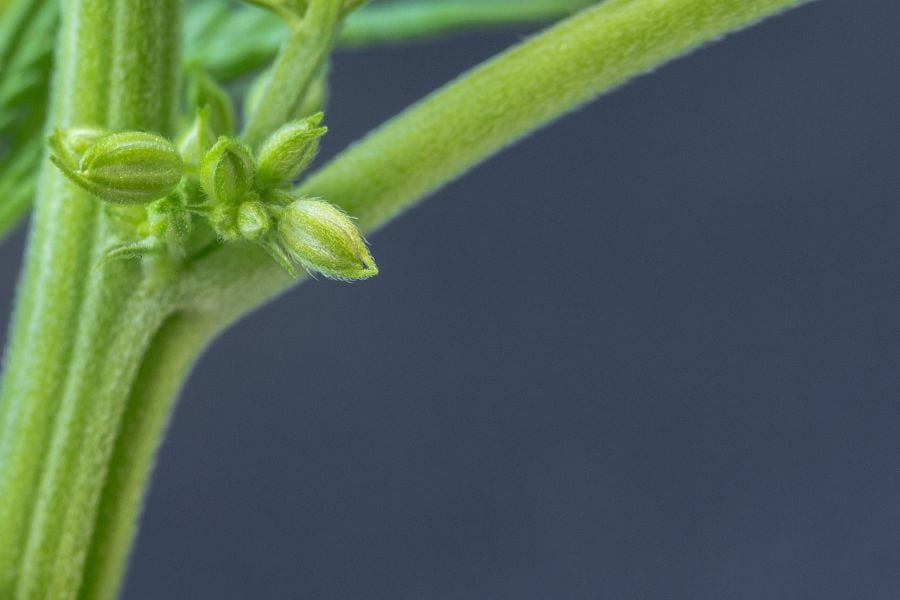
A male cannabis plant is identified by its small, smooth, and round or spade-shaped pollen sacs at the nodes, with no white hairs. As it flowers, the sacs multiply into grape-like clusters hanging where a female would grow buds. Males also tend to grow taller and faster, with sparser leaves, but again — only the structures at the nodes confirm sex.
Male Cannabis Preflowers: The Earliest Warning Signs
The earliest signs of a male plant are its preflowers too: usually starting as a single round sac at a node, tucked behind the stipules like a female calyx. It’s often held out on a tiny stalk rather than pressed against the stem. Males tend to show these sacs slightly earlier than females show pistils, so the first plants you can sex in a regular-seed crop are often males.
A lone sac can be hard to tell apart from a female calyx that hasn't pushed out a pistil yet. If you aren't sure, wait a few days and check the same node again. A male confirms itself by stacking more sacs at that node, still without a single hair.
Once the sacs cluster, they swell and eventually open to release pollen that can drift onto any female nearby. Learning these early signs gives you time to act before that happens. Remove males as soon as their sacs are visible, and carry them out of your grow space gently so you don't shake any open sacs over your females.
How to Tell If a Weed Plant Is Male or Female
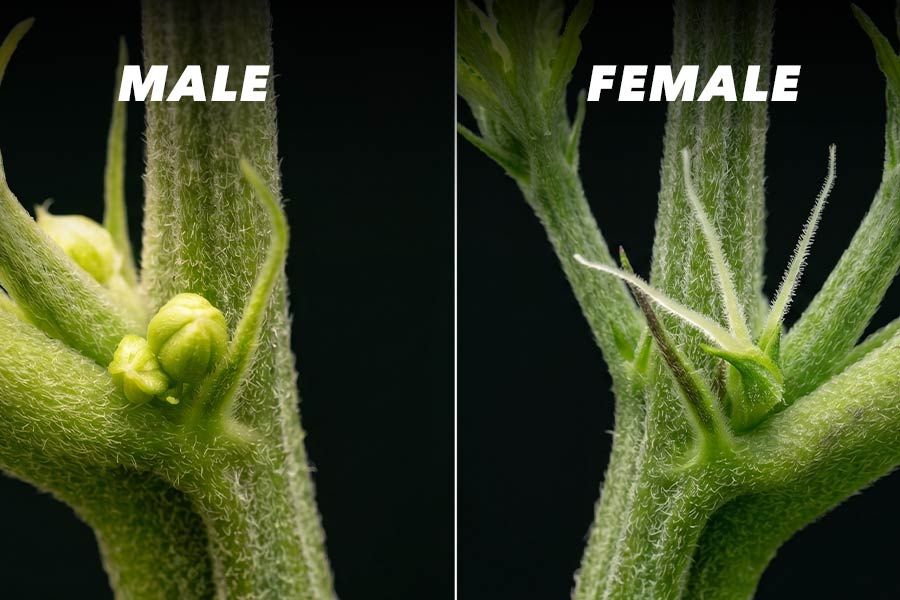
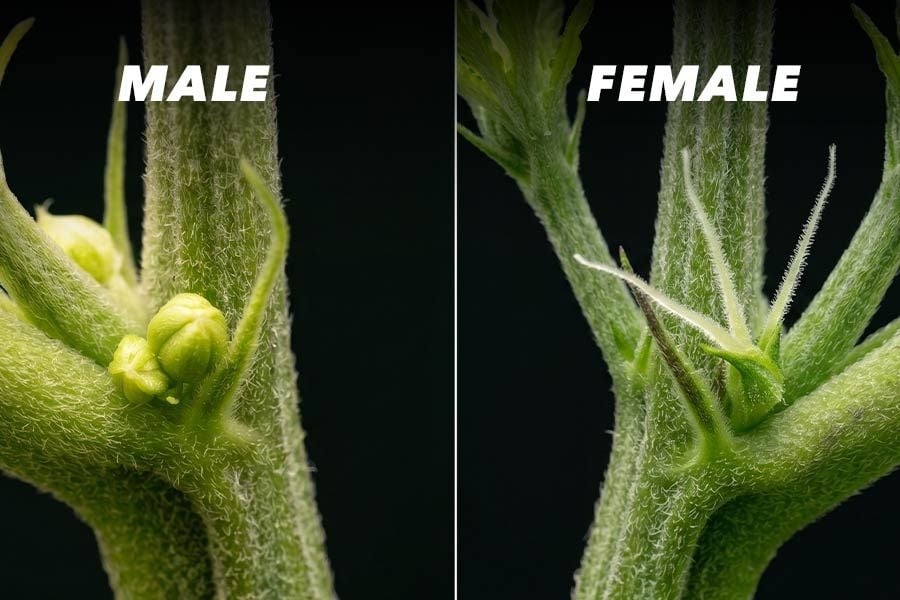
To tell if a weed plant is male or female, check the nodes where branches meet the main stem. White hairs growing from a small calyx mean female, and round pollen sacs with no hairs mean male.
Use the table below to compare the most visible differences between male vs. female cannabis plants. The high reliability traits confirm cannabis plant sex, ones marked ‘medium’ or ‘low’ are secondary clues to help you decide which plants to check first.
| Trait | Female Weed Plant | Male Weed Plant | Reliability |
| White hairs | Yes; 1–2 white pistil hairs emerge from the calyx | No; None | High |
| Reproductive structure shape | Calyx — Pointed or teardrop-shaped; sits tight against the node | Pollen Sac — Smooth and round or spade-shaped; often on a tiny stalk | High once developed |
| Structures in early flower | Stacked calyxes that form bud sites with pistils | Grape-like clusters of pollen sacs | High |
| First preflowers | Often a little later | Often a little earlier | Low |
| Leaf density | Generally fuller | Generally sparser | Low |
| Height | Generally shorter | Generally taller | Low |
| Stalk thickness | Generally more slender | Generally thicker | Low |
| Trichome coverage | Heavy by mid to late flower | Much lighter | Medium Not useful for early sexing |
How to Sex a Cannabis Plant Step by Step
To sex a cannabis plant, inspect its nodes every few days from about week 3 of growth, starting at the top of the plant. Confirm females by their white pistils and males by their hairless pollen sacs, then remove males before their sacs open. Here’s a step-by-step breakdown:
- Start checking the nodes at around week 3 from germination, then look again every few days. Begin with the upper nodes closest to the light, then work down the main stem and along every side branch. A plant may show only one or two preflowers at first, sometimes on a lower branch.
- Look into the ‘V’ junction where each branch meets the stem, just behind the base of the leaf stem. Ignore the green stipules there — remember, these thin green spikes appear on every weed plant regardless of sex. Stipules grow beside the node, while a fine hair-like pistil grows out of the tip of a small calyx.
- Use a jeweler's loupe at 30 to 60x magnification to inspect structures that are still too small for the naked eye. Match what you find against the table above. If a structure has no hairs yet and its shape is unclear, wait a few days and check the same node again.
- Label each plant as you confirm it, and keep checking females for hermaphroditic pollen sacs into flower — just in case.
- Remove a male plant immediately, before its pollen sacs open. Slip a bag over the plant, cut it at the base, and carry it out of your grow space. Indoors, that means out of the room entirely, away from any shared air or ventilation. Outdoors, moving a male a few yards away won't protect your females — pollen travels, so remove it completely.
Dispose of the male plant or compost it rather than leaving it nearby. If any sacs have already opened, change your clothes and wash your hands before going back to your female weed plants, since pollen can travel on you too.
Growing from clones? A cutting carries its mother plant's sex, so a clone from a confirmed female needs no sexing. Keep an eye on it in flower for hermaphroditic expression though, as you would with any other female plant.
When Do Cannabis Plants Show Their Sex?
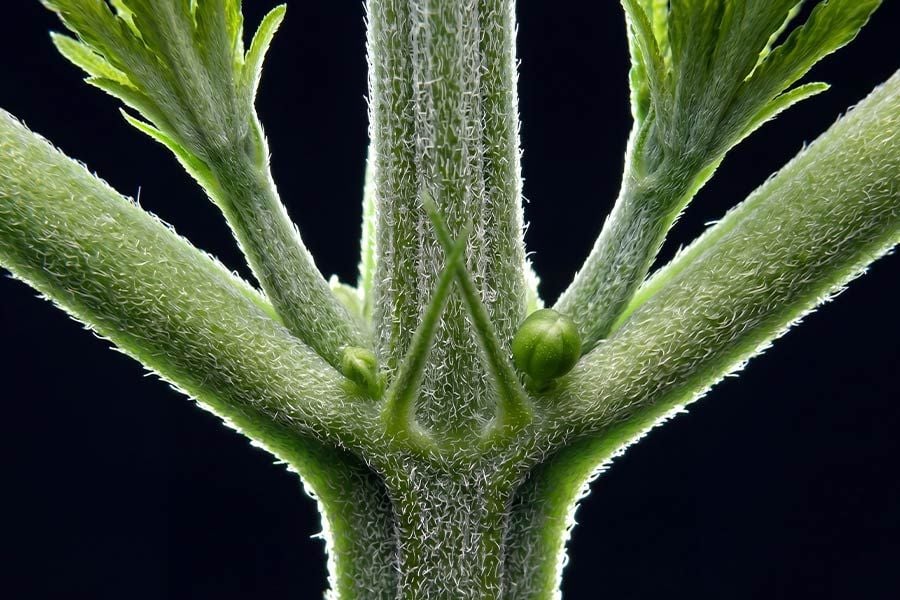
Most cannabis plants show their sex between weeks 3 and 6 from germination, depending on genetics and growing conditions. Males often reveal pollen sacs slightly earlier than females reveal pistils, and some females take longer than 6 weeks to show clearly.
You don't need to flip photoperiod plants to 12/12 to see preflowers. Most form them in veg as the plant matures, and the flip mainly makes sex easier to confirm.
How to Sex Cannabis in the Flowering Stage
To sex cannabis at the flowering stage, check the nodes and forming bud sites during the first 1–2 weeks after the flip to 12/12, when most photoperiod plants show clear sex. Grape-like clusters of pollen sacs mean male. Stacking calyxes pushing out white pistils mean female.
Waiting until flower to sex your plants carries a real risk. Once a male’s pollen sacs swell, it just takes one of them to burst and pollinate every female within reach. Treat the flowering stage as a confirmation check, not as your first attempt at sexing. Besides, a male that stays in your grow space just takes light, room, and feed away from your female crops.
Outdoors, photoperiod weed plants make the same shift to flowering when the days shorten and the nights get longer in late summer. Most of them will already have preflowers, developed during late veg — just like indoor plants.
How to Sex Autoflowering Weed Plants
You’d sex autoflowering cannabis plants the same way as photoperiods — by checking their nodes for white pistils or hairless pollen sacs from about week 3. The difference is timing. Autos start flowering according to age rather than waiting for a 12/12 light schedule, so you won't get a flip to confirm sex or a veg phase you can extend to buy time.
Autos move into flower young, and the gap between their first preflowers and their first flowers can be short. Check every few days rather than weekly, and remove any male as soon as you confirm it. Changing the light schedule won't hold an auto in veg, so the only way to get ahead of pollen is to look early and often.
Whether you need to sex autos at all depends on the seed type. Most autoflower weed seeds are sold as feminized, which greatly reduces the chance of males, although a quick look at the nodes in early flower still catches the occasional hermaphrodite. Regular autoflower seeds can produce males though, so sex those as you would any regular crop.
What Are Hermaphrodite Cannabis Plants?
Hermaphrodite cannabis plants, often called “hermies,” develop both male sacs and female flowers. Some push out a few single pollen sacs at the nodes. Others grow “nanners,” which are yellow or pale green banana-shaped anthers poking out of the buds themselves.
Pollen sacs or nanners can appear weeks after a plant is confirmed female, so keep checking bud sites closely through flower. Some genetics are more prone to hermaphroditism than others, though it’s often triggered by stress.
Common stress triggers include:
- Light leaks during the dark period.
- Severe temperature swings.
- Extreme environmental disruptions.
- Physical damage from heavy training.
Hermies pose the same threat as male plants. They can self-pollinate and spread pollen to females nearby, which reduces flower quality and cannabinoid density across your crop. Remove hermies from your grow space the moment you notice them — just as you would a confirmed male.
How Seed Type Affects Your Grow
The type of marijuana seeds you start with sets the odds of a male plant appearing before a single seed germinates. It also decides how much sexing work your grow will need, so it's worth understanding how each type behaves.
Feminized Seeds for Yield-Focused Grows
Feminized seeds suit yield-focused grows because they're bred to produce bud-bearing female plants. They greatly reduce the likelihood of males compared with regular seeds, so the space, light, and feed in your grow go to plants that will actually flower, and you spend far less time identifying and removing males.
A feminized crop still deserves a quick look at the nodes once plants start flowering. Stress or unstable genetics can push any female toward hermaphroditic expression, but that risk drops with high-quality feminized cannabis seeds from a reputable seed bank or breeder.
Regular Seeds for Breeding Projects and Phenotypes
Regular seeds are the seed type for breeding projects and phenotype hunts because they produce both male and female plants. Breeders need males to make their own crosses, and with a mixed population, you can choose keepers from both sexes.
Across large populations, regular weed seeds produce males and females in roughly equal numbers, but a small pack can land well away from half. Plan for anything from mostly females to mostly males, and pop a few more seeds than the number of plants you want to finish.
Sexing is a required step with regs, so start your node checks at week 3. Remove the males you don't need as soon as their sacs are visible. Move any you're keeping for breeding into a separate, sealed space with its own air before their sacs open.
Can You Tell Male From Female Cannabis Seeds?
No, male and female cannabis seeds look the same. Size, shape, color, stripes, and weight tell you nothing about a seed's sex, and neither do the male and female seed charts shared online. A seed's appearance can hint at how mature it is, but maturity and sex are unrelated.