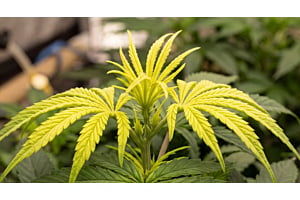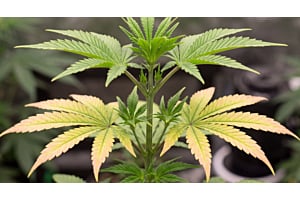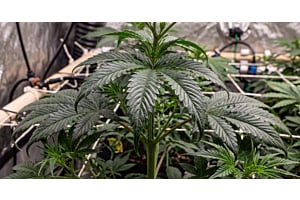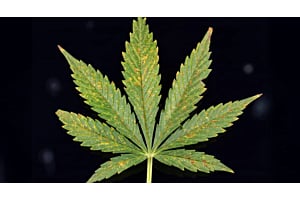
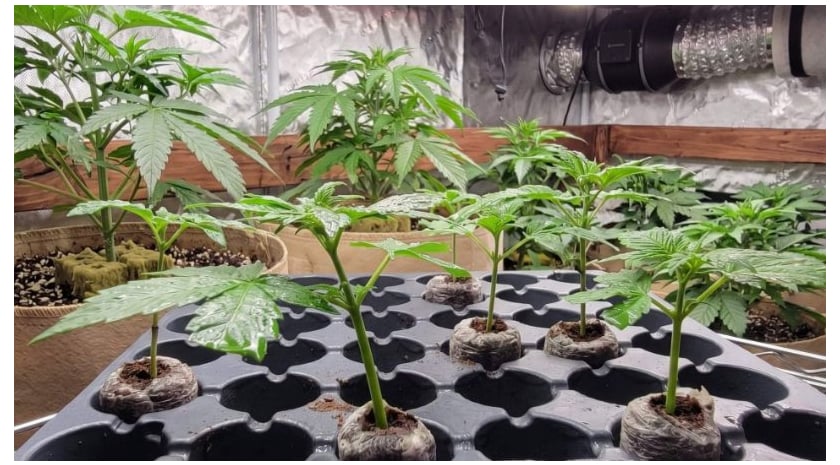
Yes, technically, autoflowering cannabis plants can be cloned. But the autoflower clones you grow will stay small, flower within weeks, and potentially yield almost nothing. This guide explains:
- Why cloning autoflowers isn’t ideal.
- What an auto clone actually looks like at harvest.
- Why and how photoperiod cloning differs.
- How to clone autoflowers (if you still want to try it).
- And which cannabis seed options give you productive harvests.
Is Cloning Autoflowers Actually Worth It?
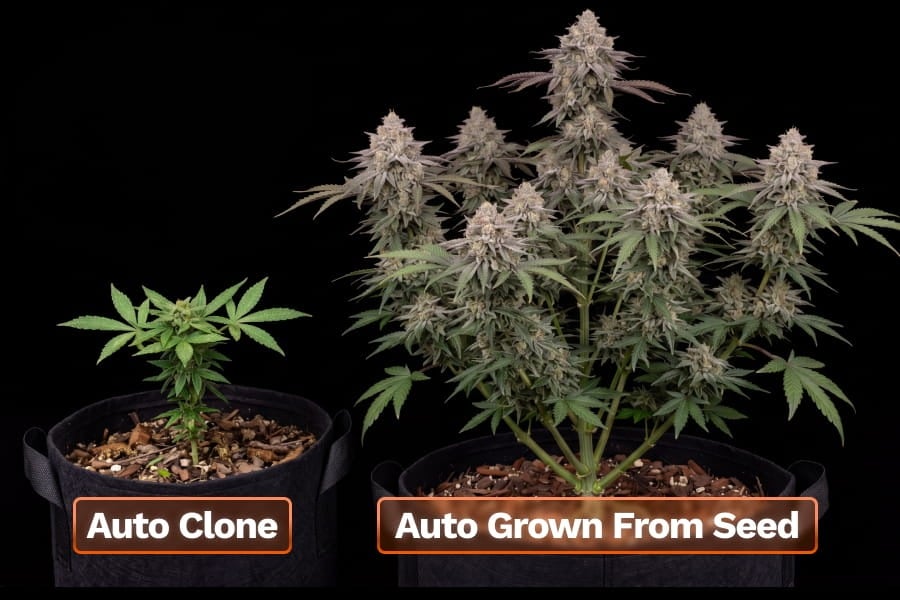
No, cloning autoflowers is rarely worth the effort because the cutting inherits the mother plant's genetic clock and flowers within weeks regardless of the light schedule. Even when a cutting does root successfully, it does not reset or extend the plant’s lifecycle, meaning the clone behaves like a shortened version of the original rather than a fresh vegetative restart. The result is a 6-9 inch plant carrying one or two small buds. For most growers, the time, light and grow-space cost is not worth the harvest.
Why Can't You Clone Autoflowers Successfully?
Autoflower cannabis plants run on a fixed genetic clock that starts at germination and triggers flowering by plant age, not by light cycle. A cutting taken from an autoflower carries the same internal clock as the mother. The cutting cannot pause, reset or extend its vegetative phase, so flowering arrives before the plant builds the size needed for a real harvest.
Three things drive the failure:
- The genetic clock: ruderalis genes lock flowering to plant age, not light hours.
- Inherited mother age: the clone starts life at the mother's current age, not at day zero.
- Limited vegetative time: by the time the cutting roots, the flowering trigger is already pulling.
The Genetic Clock in Autoflower Plants
Autoflower cannabis plants carry ruderalis genetics that lock flowering to plant age. Ruderalis is a cannabis subspecies that adapted to short northern summers by flowering on an internal timer instead of waiting for the light cycle to shift.
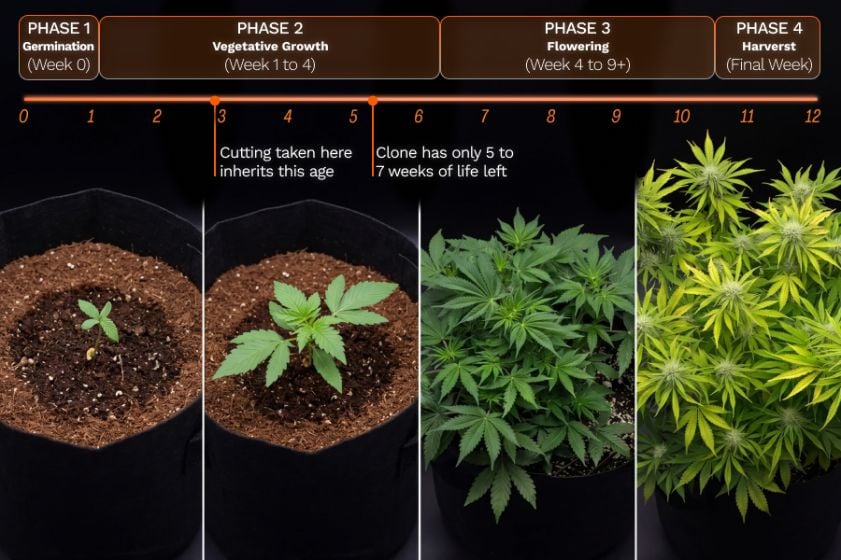
Modern autoflower weed plants keep that timer. The plant moves into bloom around weeks 3-4 from germination, and the typical life cycle runs 8-10 weeks from seed to harvest (with some sativa varieties going up to 10-12 weeks).
Photoperiod cannabis plants do the opposite. They stay in vegetative growth as long as they get 18 or more hours of light each day. Autoflower pot plants ignore the light cycle entirely. That is what makes them easy to grow, and that is also what makes them resistant to cloning.
Why Autoflower Clones Inherit the Mother's Age
Autoflower clones inherit the mother plant's age, not a reset to day zero. The cutting carries the same ruderalis clock as the parent, so the clone behaves like a plant of the mother's age the moment it roots. If the mother is four weeks old when you take the cutting, the clone acts like a 4-week-old plant and starts flowering on the same internal schedule.
That single fact is why cloning works for photoperiod weed plants and fails for autos. A photoperiod clone keeps its vegetative status as long as the light schedule says so. An autoflower clone has no light-cycle override.
Limited Vegetative Time Kills Autoflower Cuttings
Autoflower cuttings lose most of their vegetative window before they finish rooting. A typical cutting needs 7-14 days under a humidity dome to grow new roots. By then, a 3-4 week old autoflower clone is already entering pre-flower, and has 4-8 weeks of life (depending on strain genetics) left to develop a canopy, stretch and finish bloom.
The plant simply does not have time to put on the size a normal grow needs. The clone reaches a few inches tall, flowers anyway, and produces a token harvest before the genetic clock ends the cycle.
What Happens If You Clone an Autoflower Plant?
Autoflower clones produce a tiny plant before the genetic clock forces flowering. The cutting roots normally, but it never builds vegetative size. The act of cutting also puts undue stress on the mother plant — and autoflowers don’t handle high stress well.
Size and Yield of an Autoflower Clone
Autoflower clones reach around 6-9 inches tall before flowering locks growth. A typical autoflower weed plant grown from seed in a three-gallon pot reaches 24-36 inches and produces a full canopy of buds.
The clone misses almost all of that vegetative window. The grower ends up with a bonsai-style plant carrying a few buds at the tip, which is a poor return on the light, water and grow space the cutting consumed.
Stress on the Mother Autoflower Plant
Taking cuttings stresses the mother autoflower plant during its short vegetative window. Autoflower pot plants only spend 2-3 weeks in vegetative growth before bloom starts on its own. Cutting away a branch in that window removes biomass the plant cannot regrow, because the genetic clock will not pause to let the wound recover. The mother often produces a smaller final harvest, and the clone produces almost nothing. Two losing outcomes from one cut.
How Does Cloning Photoperiod Plants Differ From Cloning Autoflowers?
Photoperiod cannabis plants stay in vegetative growth as long as they get 18 or more hours of light, so their cuttings have time to grow into full plants. A photoperiod clone keeps the same vegetative status as the mother. Growers can hold a mother plant in vegetative growth for years and take cuttings from it whenever they want.
That is the practical reason serious cloners and phenohunters work with feminized photoperiod plants. With feminized vs autoflower seeds, the mother plant lives on, the cuttings turn into real plants, and the genetic line stays intact across many harvests. If cloning is the goal, the seed type to start from is photoperiod, not autoflower.
How to Clone an Autoflower Plant (If You Still Want to Try)
Autoflower cloning works the same way as photoperiod cloning, but the timing window is brutal and most attempts fail to produce a useful plant. The mechanics described below are conceptual and apply only where germination and cultivation are lawful for eligible adult buyers under federal, state and local rules.
Before you learn how to clone autoflowers, here’s what the process entails:
- Timing: cut within the first 2 to 3 weeks of the mother's life.
- Materials: sterile blade, rooting hormone, rooting medium, humidity dome, soft light.
- Recovery: roots form in 7-14 days under high humidity, but most clones flower before they grow up.
Timing the Cutting on an Autoflower Plant
Autoflower cuttings need to come off the mother plant within the first 2-3 weeks of life. Earlier is better. The cutting carries the mother's age, so every extra day shortens the vegetative window the clone has after rooting. Past week three, the plant is already entering pre-flower and the cutting has no useful runway left.
Materials Needed to Start Cloning Autoflowers
To produce autoflower clones, you’ll need a sterile blade, rooting hormone, a rooting medium, a humidity dome and 18-24 hours of soft light. The rooting medium can be rockwool cubes, peat pellets or fine soil.
The humidity dome holds 75 to 85% relative humidity, which keeps the cutting hydrated while it has no roots. Soft light from a small LED or compact fluorescent is enough, because strong lights stress the cutting.
Rooting and Recovery for an Autoflower Cutting
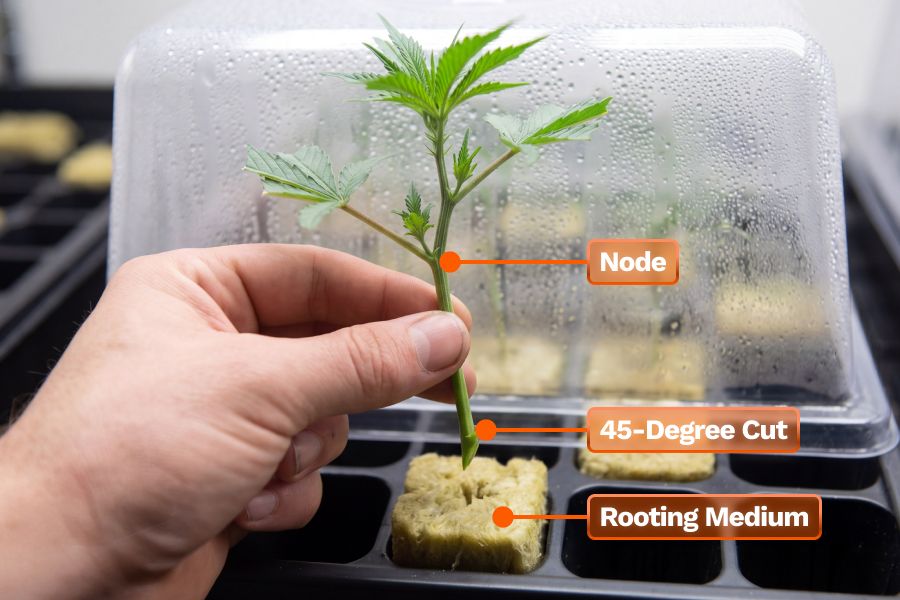
Autoflower cuttings root in 7-14 days under high humidity, but most still flower before they grow into a useful plant. Take a clean 45-degree cut just below a node, dip the cut end in rooting hormone, plant it in the rooting medium, cover it with the dome and wait.
Roots usually appear within two weeks. By then the clone is already old enough to start blooming, so what comes next is rarely a full plant. It is a small, fast finish with a small, fast yield.
Better Alternatives to Cloning Autoflower Plants
Autoflower growers get better results by starting fresh autoflower weed seeds every cycle or by switching seed types when cloning is the actual goal. Cloning autoflowers does not save time, money or grow space.
Here are three alternatives that achieve the same end goal as cloning autoflowering cannabis plants:
- Perpetual harvests: Germinate a fresh autoflower seed every two weeks for a continuous supply of buds.
- Photoperiod switch: Feminized photoperiods give you a real mother plant and real clones.
- High-yielding autos: Bigger single plants from one seed beat chasing clones.
Perpetual Harvests With Autoflower Seeds
Perpetual harvests with autoflowers replaces cloning by germinating fresh autoflower weed seeds every two weeks. A typical 4x4-foot tent holds four or five plants of staggered ages: one seedling, two in early or mid-growth and one in late bloom.
Each autoflowering marijuana plant runs the same life cycle, (if it is the same strain) and one finishes every two weeks. This way, you have a steady cadence of yields without ever holding a mother plant.
For most autoflower growers, this is the workflow cloning was supposed to deliver. It runs on fresh seed instead of cuttings, which means each plant gets a full vegetative window and reaches full size.
Switch to Feminized Photoperiod Seeds for Cloning
Feminized photoperiod cannabis seeds give growers a stable mother plant that produces clones for years. Feminized weed seeds are bred to grow into female cannabis plants almost every time, so the mother is reliably female and the clones inherit that. The light cycle holds the mother in vegetative growth indefinitely, and cuttings taken from her root, grow, and finish like normal, full-size plants.
High-Yielding Autoflower Seeds for Bigger Single Plants
High-yielding autoflower cannabis seeds replace the urge to clone by producing a larger single plant from one seed. Modern autoflower genetics boast THC levels of up to 30% in some cultivars and deliver yields per plant that older autoflower lines could not match.
A grower chasing more buds per plant gets further by growing high-yielding pot seeds than by carving cuttings off an existing mother.
How Autoflower Cloning Connects to Your Seed Choice
Autoflower cloning failure points most growers toward one of two seed-choice decisions.
The first decision keeps the speed-and-simplicity reasons that brought the grower to autoflowers in the first place. The second decision trades that simplicity for cloning flexibility.
Growers who want fast, easy, beginner-friendly cycles stay with autoflowers and run perpetual harvests from fresh seed each round.
Growers who want to capture and preserve a specific phenotype across many harvests switch to feminized photoperiod plants and keep a mother. Both paths start with high-quality cannabis seeds, and the right seed type depends on whether speed or cloning matters more to you.
Autoflower Cloning FAQs
Still have questions? Here are some answers to some common questions about cloning autoflowers.
Why Can't You Clone Autoflowers?
You can but it's not recommended. Autoflower cannabis plants run on a fixed genetic clock that triggers flowering by plant age, not light cycle. A cutting inherits the mother's age, so it cannot reset to day zero or stay in vegetative growth long enough to become a full plant. The clone roots normally but flowers within weeks and finishes as a tiny plant with one or two buds.
Can You Re-Veg (Regenerate) an Autoflower After Harvest?
No, autoflower cannabis plants cannot be revegged after harvest. Regeneration works for photoperiod plants because the grower can return them to an 18-hour light cycle to trigger new vegetative growth. Autoflower pot plants ignore the light cycle, so the same trick produces a few preflowers and another short bloom, not real vegetative recovery.
Can You Use Seeds From an Autoflower Plant?
Yes, seeds collected from an autoflower plant are viable, but the genetics are usually unstable. Commercial autoflower cannabis seeds come from stabilized breeding programs that lock the autoflower trait across generations. Seeds pulled from a single home-grown autoflower can produce a mix of expressions, including some plants that do not autoflower at all.
Are Autoflower Clones Worth It for Beginners?
No, autoflower clones are not worth the effort for beginners. The mother plant gets stressed, the clone produces almost nothing, and the grower loses grow space for weeks with little to show for it. The practice of cloning autoflowers is typically reserved for expert breeders aiming to maintain certain male or female characteristics for the purpose of seed production.