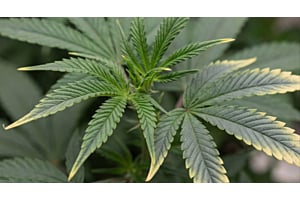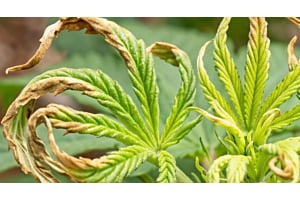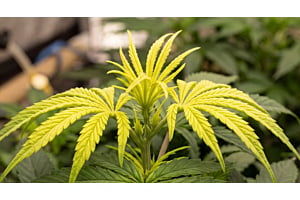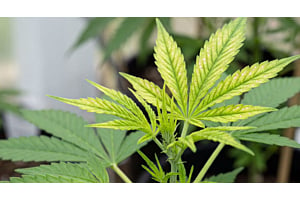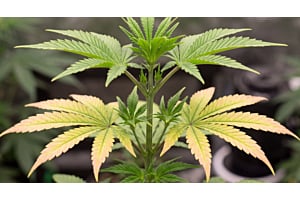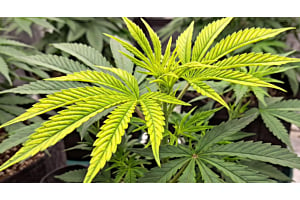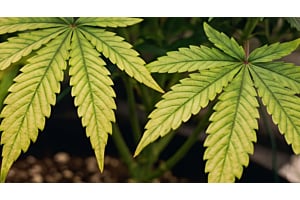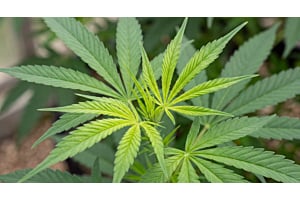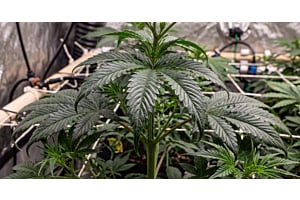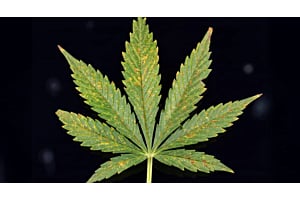
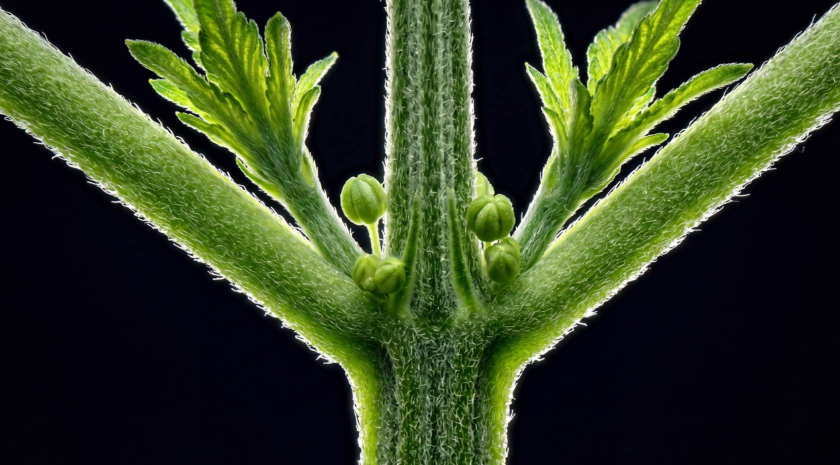
The early signs of a male cannabis plant are small, round pre-flowers forming at the nodes that look like smooth sacs with no white hairs, usually visible from week three. Female pre-flowers look different: a pointed calyx with fine white hairs emerging from the tip. Check the nodes closely, and you'll know which one you're looking at before the sacs develop into clusters.
One male plant left undetected can turn an entire crop into seeded, low-yield buds. You don't need experience to catch it early. You just need to know what to look for.
This guide covers how to identify male weed plants from the first pre-flowers to the pollen sacs. You'll find a detection timeline, a comparison of early male vs female signals, and what to do once you've confirmed one. Seed choice also affects things, and this guide covers that too.
Why Early Male Plant Identification Is Vital
Male cannabis plants release pollen that redirects female plants from bud production to seed formation. Once a female weed plant is pollinated, it shifts its energy toward making seeds instead of growing dense, resinous buds.
A single undetected male marijuana plant can pollinate an entire grow space through air circulation, fans and shared airflow. That’s why spotting male plants early is one of the most consequential skills to have when you’re growing weed.
When Do Male Cannabis Plants Show Sex?
Male cannabis plants begin showing pre-flowers at the nodes around weeks 3–4 from germination. Female cannabis plants usually follow a week or two later, with sex expression complete by around week 8. Knowing this window helps you decide when to start checking your plants closely.
The Pre-Flower Timeline for Male Plants
The earliest window to identify male cannabis plants is typically when they show their first pre-flowers and before full flowering begins. Here's what to expect at each growth stage:
Weeks 1–3: Male and female cannabis plants look identical. No visible sex markers exist at this stage. Checking nodes now produces no reliable information.
Weeks 3–4: Male plants begin forming pre-flowers at the nodes. These are the earliest reliable sex indicators. Daily node checks starting at week three pay off here.
Weeks 4–6: Male pre-flowers multiply quickly. Round pollen sacs begin forming clusters at multiple nodes. Female plants start showing their own pre-flowers around week 4 or later.
Weeks 6+: Male plants enter full pollen sac development. Sacs mature fast and can crack open within days. By this stage, plant sex should be unmistakable on both male and female plants.
What Triggers Sex Expression in Cannabis?
Sex expression in cannabis begins when the plant reaches reproductive maturity or responds to a change in light cycles. Photoperiod plants need an indoor switch to 12 hours of light and 12 hours of darkness to trigger flowering. Outdoors, shortening daylight hours do the same naturally.
Autoflowering plants express sex based on age, not light, so pre-flowers appear on their own timeline regardless of your light schedule. Stress like heat spikes or light leaks can delay or blur sex expression, so keeping conditions steady through late veg gives you the clearest read.
What Are the Early Signs of a Male Plant?
The early signs of a male plant appear at the nodes as small, round pre-flowers with no white hairs. These signals give you a clear window to act before pollen is released:
- Male cannabis pre-flowers: the earliest sex indicators at the nodes and what to look for starting at week three.
- Male vs female pre-flowers: the shape and hair comparison that confirms plant sex with high reliability.
- Male weed plant balls: what pollen sacs look like as they develop into clusters and why timing matters.
Male Cannabis Pre-Flowers: The First Signal
Male cannabis pre-flowers form at the nodes starting as early as weeks 3–4 from germination. Nodes are the junctions where branches meet the main stem, and they're where all sex indicators appear first. Checking nodes daily during weeks 3–6 is the most reliable way to catch male plants early.
Check your plants under good lighting and look specifically at the V-junction where each branch connects to the main stalk. Pre-flowers are small at first. A magnifying loupe helps significantly if you're unsure of what you're seeing.
How Do Male and Female Pre-Flowers Differ?
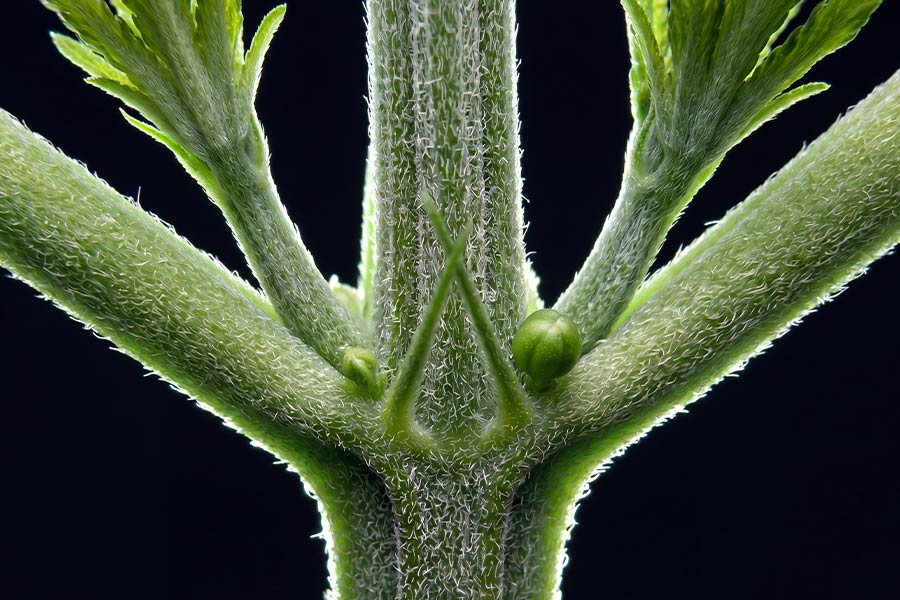
Male pre-flowers differ from female pre-flowers in both shape and whether white hairs are present. That difference is the most reliable diagnostic signal at this stage and it's visible once you know what to look for. Male pre-flowers appear as:
- Small, smooth, round or oval balls at the node with no white hairs.
- Structures that look solid and protrude slightly away from the stem.
- Single sacs at first, multiplying into clusters as the plant matures.
The early signs of a female cannabis plant look noticeably different:
- A small, teardrop-shaped calyx tucked close to the stem.
- One or two thin white hairs called pistils emerging from the tip.
- A more pointed or elongated shape rather than round.
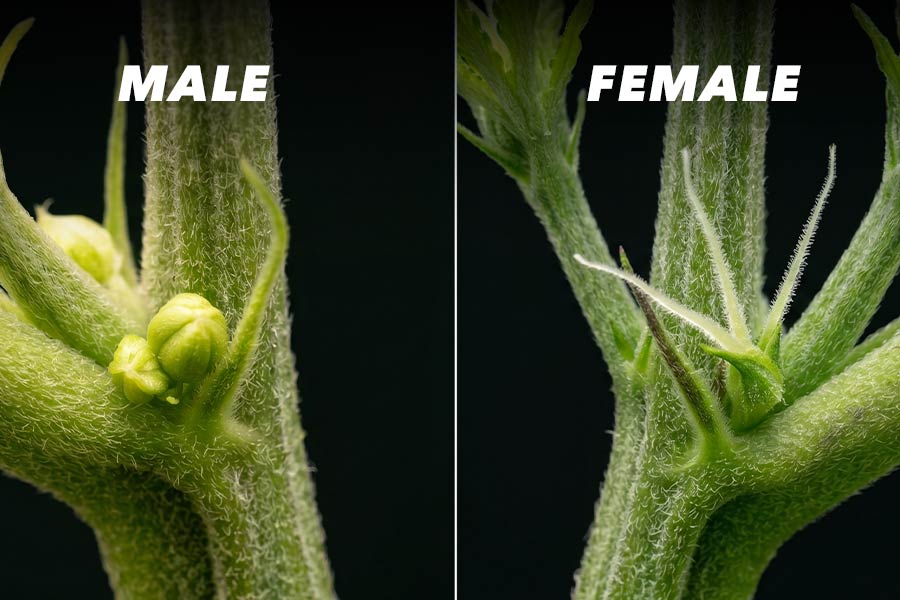
The white hairs are the decisive signal. They're bright, delicate, and visible under decent light, and they clearly confirm a female plant. If you don't see hairs and you do see round, smooth balls, you're looking at a male.
One thing trips up a lot of new growers at this stage. Every node also grows a pair of small, leaf-like stipules right where the branch meets the stem, and they show up on male and female plants alike. Stipules don't tell you anything about sex on their own.
They can also sit right in front of a pre-flower and make it harder to see. If you're not sure what you're looking at, look past the stipules to the base of the node itself. That's where the actual ball or the actual hair forms. If a pre-flower is unclear, check again in 24 hours. Male pre-flowers develop quickly and become easier to identify within a day or two.
What Do Male Weed Plant Balls Look Like?
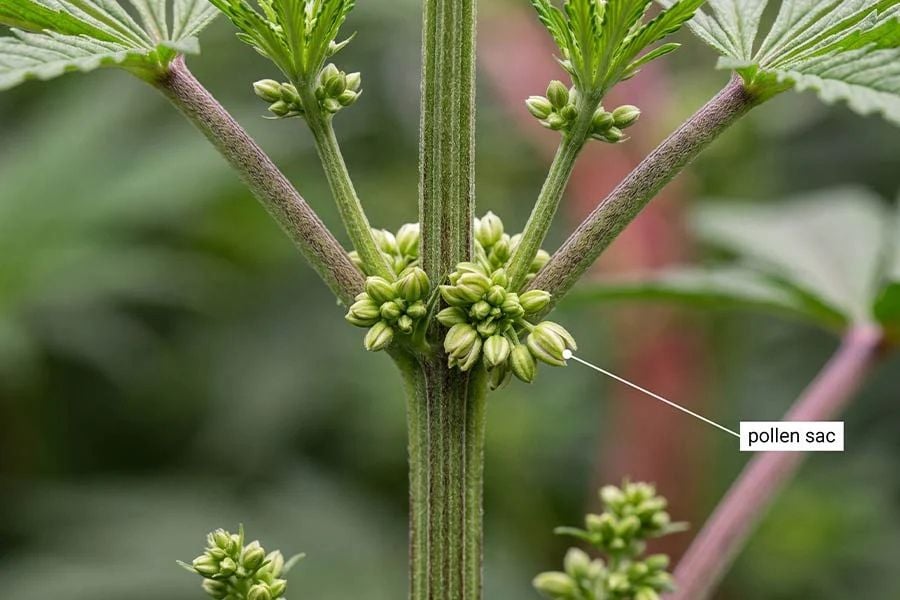
Male weed plant balls are pollen sacs that form at the nodes and multiply into grape-like clusters as the plant approaches the flowering stage. They're the most visible male sex indicator and the last clear window to remove a male plant before pollen is released. Pollen sacs share several consistent characteristics:
- Shape: Small, round or slightly oval, similar in size to a small grape.
- Surface: Smooth and uniform with no white hairs.
- Placement: Forming at nodes along the main stem and upper branches.
- Growth pattern: Appearing in small clusters rather than as single structures.
- Orientation: Hanging slightly away from the stem as they mature.
Once sacs are visible, they mature fast. Male plants don't hold back. A single day between visible sac and pollen release is common. Waiting to confirm means the risk of accidental pollination rises with every hour.
Use this table to match what you're seeing to a confidence level and a next step.
| Observation | What It Means | Confidence | What to Do |
| Round, smooth growth at the node; no white hairs | Male pre-flowers forming | High | Watch closely; confirm within 1–2 days |
| White hairs emerging from a pointed calyx | Female plant confirmed | Confirmed | No action needed |
What Does a Male Cannabis Plant Look Like?
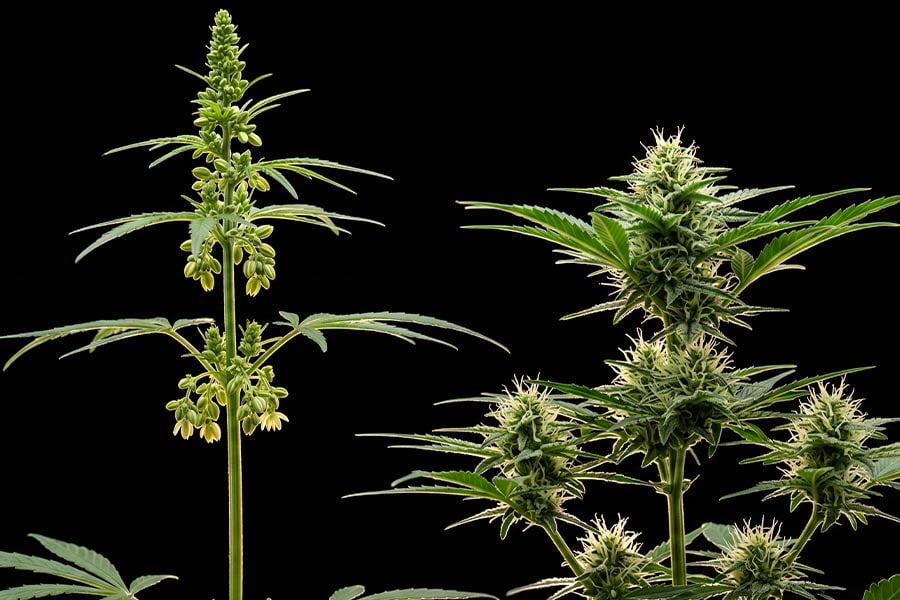
A male cannabis plant is easiest to spot by the small round pollen sacs forming at its nodes, paired with a taller, more open frame than a female plant of the same age. Fewer branches and lighter foliage round out the picture as it matures. Here's the visual profile to look for:
- Height: Male cannabis plants typically grow taller than females, especially as they approach the flowering stage. They put energy into upward growth rather than flower density.
- Frame: Lean and upright. Male pot plants don't develop the bushy, branched structure females use to support bud production.
- Foliage: Lighter leaf coverage overall. The canopy looks less full compared to female weed plants at the same stage.
- Node development: Pollen sacs appear at nodes along the main stem and upper branches. As the plant matures, these sacs multiply into clusters that become increasingly visible.
- Mature appearance: A fully grown weed plant of the male sex shows multiple clusters of pollen sacs across the upper nodes. Some sacs may begin to crack and release pollen at this stage.
Quick Rule: round balls with no hairs means male. Teardrop calyx with white hairs means female. If you're scanning a grow for the first time, check the node area on each plant before evaluating height or foliage.
Do Male Cannabis Plants Produce Buds?
No, male cannabis plants don't produce the cannabinoid-rich buds that female plants develop. Instead, they produce pollen sacs that mature and release pollen rather than forming resinous flower clusters.
Male marijuana plants do have trace trichomes on their leaves and sacs, but not in the quantity or quality that makes female buds valuable. There's no bud production to harvest from a male plant. That biological distinction is why growers focused on yield remove male weed plants as soon as they identify them.
When Do Male Cannabis Plants Release Pollen?
Male cannabis plants release pollen once their pollen sacs fully mature and crack open. This can happen within days of the sacs becoming clearly visible, which is why immediate removal matters. The process moves faster than most new growers expect.
Pollen disperses through air movement, fans, and ventilation, and a single releasing male can reach every female plant in the room. Don't wait for confirmation; once you see mature, bulging sacs at multiple nodes.
How Do Male and Female Cannabis Plants Differ?
Male vs. female weed plants differ in pre-flower structure, growth pattern and biological function. Understanding these differences allows you to read multiple signals together rather than relying on any single trait:
- Biological roles: why male and female plants are built differently and what that means for the traits you'll observe.
- Growth and structure: which structural differences are reliable and which ones need additional confirmation.
- Sex testing: DNA-based identification for growers who need to confirm sex before pre-flowers appear.
Biological Roles of Male and Female Plants
Male cannabis plants exist to spread pollen, while female cannabis plants direct their energy toward producing buds. That biological difference explains most of the physical traits growers notice once sex becomes visible.
Male plants prioritize height, airflow and pollen dispersal because their reproductive goal is to reach female plants with pollen. Female weed plants prioritize branching density and flower formation because their goal is to catch pollen and produce seeds. When kept unpollinated, they direct that same energy into the seedless buds growers are after.
Growth and Structure: Male vs. Female Weed Plants
Male weed plants tend to grow taller and leaner with fewer branches and lighter foliage overall. Female plants appear shorter, bushier and more complex in structure by comparison. These structural differences are useful as supporting signals, but not as confirmation on their own. No single growth trait reliably confirms male sex.
Check them alongside pre-flower evidence:
| Trait | Male Cannabis Plant | Female Cannabis Plant | Reliability |
| Pre-flower shape | Round, smooth sac; no white hairs | Pointed calyx with white hairs | High |
| Timing of sex expression | Weeks 3–4 from germination | Weeks 4–8 from germination | High |
| Bud or flower production | Pollen sacs only | Cannabinoid-rich buds | High |
| Pollen release | Sacs crack open; release pollen | Does not produce pollen | High |
| Plant height | Taller, more stretched | Shorter, bushier | Medium |
| Branch density | Fewer, more open branches | More lateral branching | Medium |
| Leaf density | Lighter foliage overall | Fuller, denser foliage | Low; use alongside other signals |
| Trichome density | Sparser, less visibly frosted | Denser trichome coverage in flowering | Low; a supporting clue only |
Sex Testing for Male Cannabis Plants
Sex testing for male cannabis plants uses DNA analysis to confirm plant sex before pre-flowers appear. Once blade leaves emerge, remove a cotyledon leaf with sanitized tweezers and send it to a lab for DNA sequencing. Results come back within a few days.
Testing works on seedlings as young as 1–3 weeks from germination, or as soon as the seedling's blade leaves have emerged. For most small-scale growers, visual pre-flower identification is simpler and free. For large grows or limited-space situations where acting early saves significant resources, DNA testing is worth considering.
Can a Seedling Show Signs of Being Male?
No, cannabis seedlings don't show visible sex traits before pre-flowers appear. The vegetative stage looks identical across male and female plants for the first few weeks. If you need to confirm sex before week three or four, DNA sex testing is the only reliable option.
How Seed Choice Reduces Male Plant Risk
The marijuana seeds you choose determine whether you encounter male plants in your grow room at all, although looking at a seed can't tell you anything — seed size, shape, and color don't reveal plant sex. Fortunately, trustworthy seed banks categorize weed seeds into three main types:
- Feminized cannabis seeds: bred to produce female-only plants.
- Regular seeds: carry a roughly 50/50 male-to-female ratio.
- Autoflower seeds: typically available in feminized format.
Feminized Cannabis Seeds and Male Plants
Feminized cannabis seeds are bred to produce all-female plants, which greatly reduces the male plant risk. For growers focused on bud production, they're the most practical choice. The main benefit is simplicity: You generally don't need to identify male plants, monitor for sex expression, or worry about accidental pollination.
Every plant you grow from feminized seeds goes straight into bud production 99% of the time. "Feminized" doesn't mean 100% risk-free, though. Stress from heat, light leaks, or other environmental swings can push a feminized plant to turn hermie and develop pollen sacs alongside its buds.
There's also a very small chance (usually less than 1%) that a feminized seed pack produces an actual male plant instead of a female one. No breeder can guarantee 100%. Feminized seeds shift the odds heavily in your favor, but they don't remove the reason to check nodes altogether.
The trade-off is reduced flexibility. Feminized seeds aren't suited to breeding because they're designed to consistently produce female plants. For breeders who need pollen, regular seeds remain the better option.
Regular Seeds and Male Plant Risk
Regular seeds carry roughly a 50/50 chance of producing male plants. That makes early identification skills essential for any grower or breeder cultivating them. You'll need to check nodes from week 3 onward and act quickly when pre-flowers confirm a male.
Regular cannabis seeds make sense for breeders who need male pollen for controlled pollination. Growers working with natural genetic variation or selecting their own mother plants often prefer them too. With consistent monitoring, male-plant risk is manageable.
Autoflower Seeds and Male Plant Risk
Most autoflower weed seeds available today are feminized by default. Regular autoflower seeds still exist, but they're a niche option mainly sought out by breeders. Feminized autoflowering seeds cut male plant risk down to nearly nothing — just like feminized photoperiod seeds.
The same caveats apply here too: stress can still push a feminized autoflower plant to turn into a hermaphrodite, and there's still a rare chance of getting an actual male from a feminized pack.
Regular autoflowers carry the full male plant risk, but there's an important difference to keep in mind. Autoflowering plants express sex based on age, not light cycle, so the 12/12 trigger doesn't apply.
Pre-flowers still appear on the standard 3–8 week timeline from germination regardless of your light schedule. If you’re not using feminized autoflowering seeds, check nodes on the same schedule you'd use for any other cannabis plant.
What to Do When You Spot a Male Plant
Spotting a male plant triggers one immediate decision: remove it from the grow space or isolate it for intentional breeding. For most growers, removal is the only logical move. Every hour the plant stays in a shared space is a risk once pollen sacs are visible. Here's what to do step by step when you spot a male plant:
- Remove immediately. Get the cannabis plant out of the grow space as quickly as possible. If pollen sacs are visible, handle the plant carefully to avoid disturbing them before removal.
- Isolate if breeding. Only keep a male plant if you have a completely separate space with no shared airflow, ventilation or access to female plants. Keeping a male in the same room as females is pollination (and a ruined harvest) waiting to happen.
- Clean everything that touched the plant. Pollen transfers easily through tools, clothing and skin. Wash your hands and clean any equipment that came into contact with the male plant before returning to your female plants.
- Review your airflow. Even after removal, residual pollen can linger in the grow space. Check your ventilation setup and consider a thorough clean if sacs had already begun to crack.
When Are Male Cannabis Plants Worth Keeping?
Male cannabis plants are worth keeping only when you have a specific breeding goal and a fully separate grow space. Without complete separation from female plants, any male in the room becomes a pollination risk.
Breeders use male plants to produce pollen for controlled pollination. By selecting a male with desirable traits including structure, vigor and resistance to environmental stress, breeders can pass those traits to the next generation. This is how breeders develop new strains and preserve existing genetics. Male plants are commonly kept to:
- Produce pollen for intentional breeding.
- Preserve specific traits across multiple generations.
- Create regular seeds for future grows.
- Maintain genetic diversity in a breeding program.
If bud production is your goal, remove male plants as soon as you identify them. The breeding use case is real, but it requires full separation and a clear plan. Without that, keeping a male plant puts your female plants at risk.
What Do Hermaphrodite Cannabis Plants Look Like?
The early signs of hermaphrodite cannabis plants (often called hermies) are usually both female pistils and male pollen sacs on the same plant. Unlike fully male plants, hermies typically develop pollen sacs mixed in with otherwise normal-looking female buds.
Male flowers on a hermaphrodite can take different forms: small banana-shaped staminate flowers emerging from bud sites, male flowers interspersed among otherwise normal-looking buds, tight clusters at nodes, or flowers occupying a separate branch entirely.
Stress usually triggers hermaphroditism: heat during flowering, irregular or interrupted light cycles, or other abrupt changes in the growing environment. Remove hermie plants immediately. Isolation is not a safe option here. A single open male flower can seed nearby buds, so the plant needs to leave the space before any flowers open.