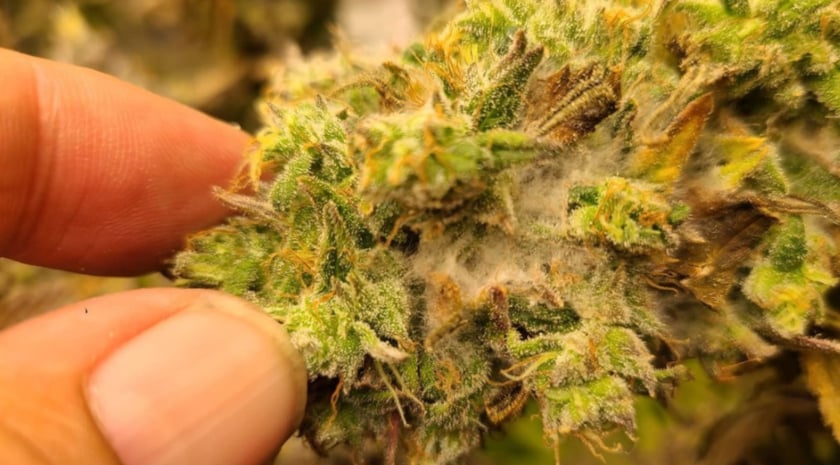
If you’ve ever checked on your plants and found a once-beautiful cola turning brown, you know how discouraging cannabis bud rot can be. Also called botrytis or gray mold, this destructive fungal disease targets developing buds, often hiding deep inside dense flowers until serious damage has already started.

After weeks of careful cultivation, losing flowers to mold feels like a punch to the gut. It’s one of the most common reasons growers lose entire harvests, especially when cultivating outdoor cannabis seeds in humid climates.

Once a bud rot infection takes hold, it can spread through nearby buds in days and threaten the entire plant if conditions stay damp. Understanding what bud rot looks like, how it develops, and how to stop it is the first step to protecting every harvest from botrytis.

What Is Bud Rot in Cannabis?

Bud rot is a common fungal infection that develops inside dense buds of cannabis plants during the flowering stage, often going unnoticed until the damage becomes apparent.

Caused by Botrytis cinerea, also called gray mold or botrytis blight, it can spread quickly and affect buds, sugar leaves, and sometimes the entire plant.

Early infections are hard to spot, which makes bud rot especially frustrating for indoor and outdoor growers. If it spreads, it can damage multiple bud sites and compromise the quality of your harvest, putting all your cultivation efforts at risk.

What Causes Bud Rot in Cannabis Plants?

  • High Relative Humidity and Excess Moisture: High humidity, humid air, wet conditions, and excess moisture trigger spore germination of Botrytis cinerea. When cannabis plants remain damp during the flowering stage, fungal spores settle on the plant surface and begin infecting plant tissue inside the cannabis bud.
  • Poor Air Circulation and Stagnant Air: Poor air circulation in a grow room or outdoor environment allows moisture to linger around bud sites. Without proper airflow and climate control, stagnant air creates ideal conditions for fungal growth and mold spores to spread across cannabis crops.
  • Dense Bud Structure and Thick Buds: Dense buds, big buds, and tightly packed colas trap moisture inside their structure. This makes thick buds especially vulnerable to cannabis bud rot, as mold growth often begins internally before visible signs appear.
  • Damp Outdoor Conditions: Outdoor plants can be exposed to rain, dew, and prolonged damp conditions. Growing outdoors during periods of high humidity increases the risk of spores landing on plants and causing botrytis bud rot.
  • Cross-Contamination From Infected Plants: Fungus spores spread easily from infected plants to healthy ones. In both indoor grow environments and outdoor settings, one infection can quickly escalate into a bud rot outbreak that affects the entire crop.
  • Unstable Climate and Improper Vapor Pressure Deficit (VPD): Fluctuating temperatures, poor climate control, and improper vapor pressure deficit settings weaken plants and encourage bud rot development. Stable temperatures and balanced humidity levels are essential to prevent mold and protect cannabis production.

How to Identify Bud Rot on Cannabis Plants

Early detection is everything when it comes to cannabis bud rot. The sooner you spot the warning signs, the better your chances of stopping a small infection from turning into a full bud rot outbreak. 

Because botrytis often begins inside thick buds, growers need to know exactly what to look for, especially during the flowering stage when plants are most vulnerable.

Early Stages of Bud Rot

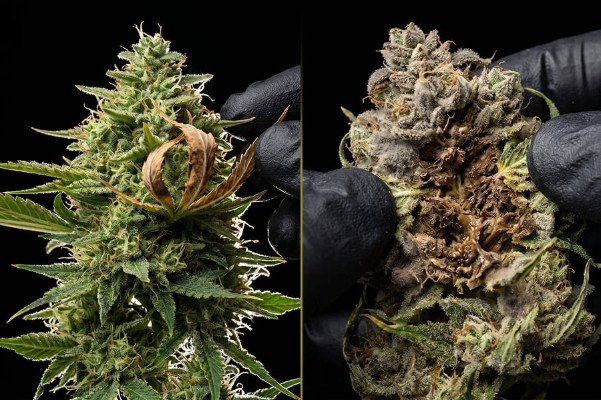
In the early stages, cannabis bud rot can be difficult to spot. The infection often begins inside the buds before becoming visible externally. One of the first warning signs is a single brown sugar leaf sticking out from an otherwise healthy cannabis bud. That sugar leaf may appear wilted, dry, or discolored.

You might also notice:

  • Small mold or brown spots on the bud
  • Slight yellowing or die-off in nearby leaves
  • A bud that feels slightly softer than others

Advanced Bud Rot Development

As bud rot progresses, the signs become much more obvious. The infected buds will develop visible gray mold, often deep within the flower. When pulled apart, the inside may appear brown, mushy, or dusty.

Other indicators include:

  • Collapsing or hollow-feeling buds
  • Moldy buds with a musty smell
  • Multiple buds are affected on the same plant. 
  • Rapid spread across nearby bud sites

At this stage, bud rot infections can move quickly and may threaten the entire plant if not addressed immediately.

Bud Rot vs Mold and Powdery Mildew: How to Tell the Difference

Bud rot is often confused with powdery mildew, but they are very different problems. The first appears as a white, powder-like coating on the surface of plant leaves and buds. It stays mostly external.

In contrast, cannabis bud rot begins inside the bud and is caused by Botrytis cinerea, producing gray, fuzzy mold and internal decay.

If the infection is coming from within the cannabis bud and spreading outward, you’re likely dealing with botrytis. Correct identification is critical, as bud rot can destroy an entire crop much faster than surface mold issues.

The broader term “mold on weed” covers three distinct problems growers commonly mix up:

  • Bud rot (botrytis): starts inside the cannabis bud, spreads outward. Gray, fuzzy mold, often with brown mushy tissue when pulled apart. Most dangerous and affects the flower directly.
  • White powdery mildew: sits on top of the plant like flour or icing sugar. Affects leaves first, buds second. Easier to spot and slower-moving.
  • White mold on buds: often confused with trichomes. Real trichomes look crystalline under magnification; white mold looks cottony or stringy and has no sparkle.

Correct identification matters because the treatment approach is different. Powdery mildew can sometimes be treated with organic fungicide sprays during vegetative growth. Bud rot, by contrast, cannot be treated once it’s inside the flower. At this stage, the only response is rapid removal. 

If you’re unsure which you’re dealing with, check our full guide to cannabis diseases for side-by-side photos and symptom profiles.

What Does Bud Rot Look Like?
 

Knowing what bud rot looks like is the fastest way to stop it before it spreads. The infection changes appearance as it progresses, so the visual signs depend on how early (or late) you catch it.

Early visual signs:

  • A single sugar leaf turning brown, yellow, or wilted, while the rest of the plant looks healthy
  • Small, dark, or discolored spots on the outside of the bud
  • Soft, hollow-feeling sections when you gently squeeze a cola
  • Stringy white or light-gray fuzz deep inside the bud when you pull it open

Advanced visual signs:

  • Thick gray fuzzy mold is visible from the outside of the bud
  • Brown, mushy, or dusty flower tissue when a bud is pulled apart
  • Whole colas are collapsing under their own weight
  • Multiple bud sites on the same plant showing the same pattern within 2–3 days

If you spot any of these symptoms during flowering, act within the hour. Bud rot on nugs can double in the affected area overnight in humid conditions. Compare what you’re seeing with the images in the “Stages of Bud Rot Progression” section below to pin down exactly where your plant is in the infection cycle.

Different Stages of Bud Rot Progression

Cannabis bud rot doesn’t appear overnight; it develops in stages, starting subtly and escalating quickly under high humidity and poor airflow conditions.

Stage 1: Spore Germination

Bud rot begins when airborne spores of Botrytis cinerea land on the plant surface. Under high relative humidity and excess moisture, spore germination occurs. The fungus penetrates vulnerable plant tissue, especially during the flowering stage when buds are forming and most susceptible.

Stage 2: Internal Fungal Growth

Once inside the cannabis bud, fungal growth spreads through the dense structure of the flower. At this stage, the outside of the bud may still look healthy. However, internal plant tissue is already breaking down as bud rot development quietly advances.

Stage 3: Visible Mold Growth

As the infection expands, visible signs begin to appear. Gray mold or gray fuzzy mold becomes noticeable within the bud, and sugar leaves may turn brown and dry out. Affected buds may feel soft, hollow, or unusually dry in certain spots.

Stage 4: Full Bud Rot Outbreak

In advanced cases, bud rot infections spread rapidly to nearby bud sites. Multiple buds affected on the same plant can quickly escalate into a full bud rot outbreak. Without immediate action, the fungus can compromise the entire plant or, in severe cases, the entire crop.

What to Do If Your Plant Has Bud Rot

Discovering bud rot on your cannabis plants can be frustrating, but acting quickly can make the difference between losing a few affected buds or your entire crop. Because bud rot spreads through fungal spores, immediate containment is critical.

Here’s how to respond if you spot cannabis bud rot in your grow.

Act Immediately and Remove Infected Buds

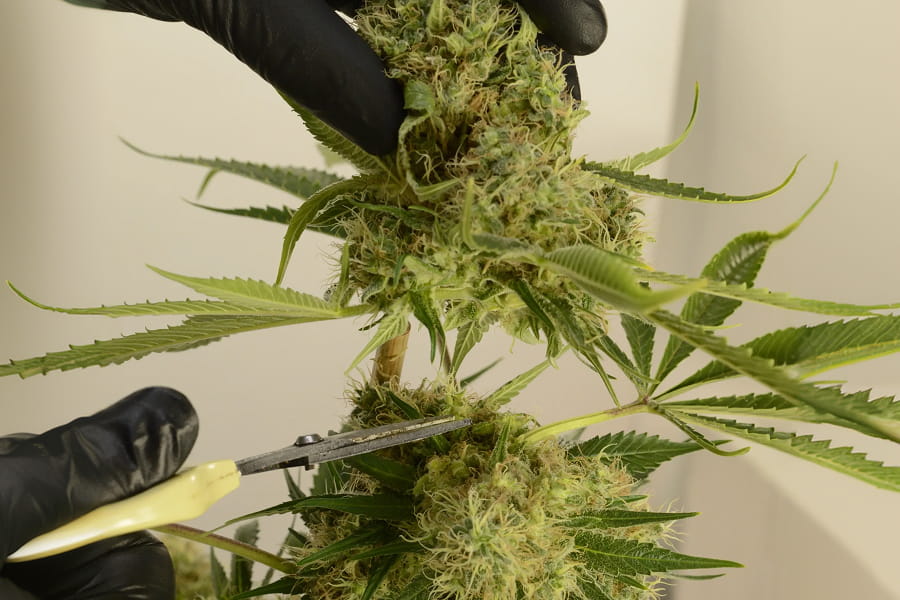
The moment you identify moldy buds, remove them immediately. Use clean, sterilized pruning shears and cut well below the visible infection to ensure you remove all compromised plant tissue.

Place infected buds directly into a sealed bag and dispose of them away from your grow space. Do not compost affected buds, as fungus spores can survive and spread.

Inspect the Entire Plant Carefully

After removing the obvious damage, inspect the whole plant thoroughly. Check every bud site (especially dense buds and thick colas) by gently pulling them apart to look for internal gray mold or brown, decaying areas.

If multiple buds are affected, consider whether the entire plant may be compromised. Pay close attention to:

  • Brown sugar leaf protruding from buds
  • Soft or hollow-feeling cannabis bud
  • Hidden gray fuzzy mold inside dense structure

Improve Environmental Conditions Immediately

Bud rot development thrives in high humidity and stagnant air. For indoor growers, tightening climate control is essential. For outdoor growers, consider pruning to improve airflow and, if possible, protect plants from further wet conditions.

Adjust your environment right away:

  • Lower relative humidity levels
  • Increase air circulation with additional fans
  • Improve proper airflow throughout the grow room
  • Remove excess moisture from plant surfaces
  • Stabilize temperatures and optimize vapor pressure deficit

Avoid Handling Healthy Plants After Contact

After working with infected plants, change gloves and sanitize tools before touching healthy plants. Cross-contamination is a common cause of spreading bud rot infections across cannabis crops.

Fungus spores can cling to clothing, hands, and equipment, easily transferring from one plant to another.

Can You Save the Harvest?

If caught early, you may be able to save unaffected buds; in some cases, bringing forward your harvest timing is the safest way to rescue what’s left. However, never attempt to consume moldy buds. Inhaling mold spores from cannabis bud contaminated with Botrytis cinerea can pose serious health risks.

If the infection is widespread, it may be safer to discard the whole plant to protect the rest of your cannabis production. While bud rot is aggressive, fast action, improved airflow, and proper humidity control can sometimes stop the spread before it affects the entire crop.

How to Prevent Bud Rot in Cannabis Cultivation
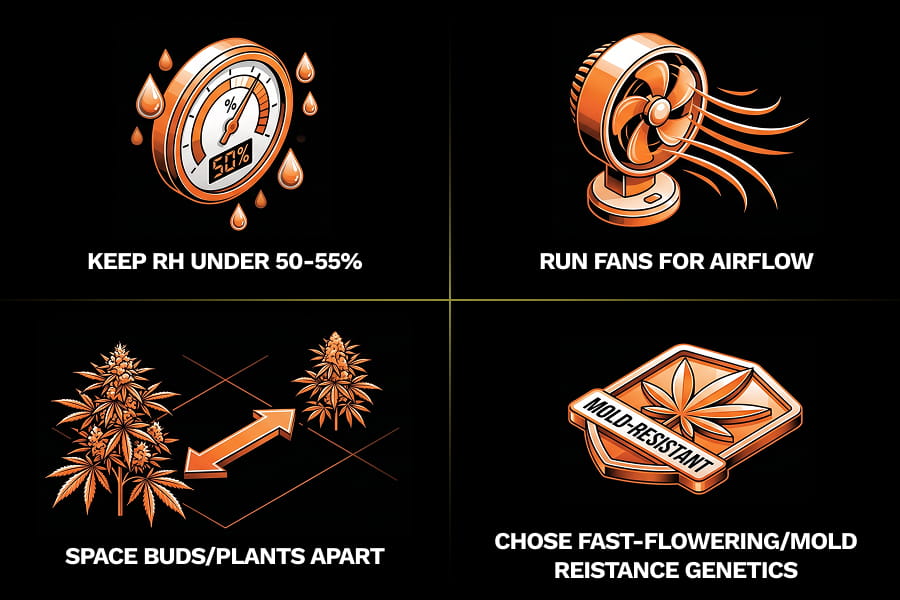
 

Early-stage bud rot is visible as browning and decay within dense cannabis flowers.

Preventing bud rot is far easier and far less costly than trying to stop an outbreak mid-flowering. Because Botrytis cinerea spores are common in the environment, prevention in cannabis cultivation comes down to controlling conditions that allow fungal growth to take hold.

  • Control Relative Humidity and Moisture Levels: Keep relative humidity in check, especially during the flowering stage. Avoid high humidity, humid air, and conditions that trigger spore germination. Maintain stable temperatures and dial in proper vapor pressure deficit (VPD) to discourage mold growth and protect developing cannabis buds.
  • Improve Air Circulation and Proper Airflow: Ensure consistent air circulation throughout your grow room or outdoor canopy. Use oscillating fans for proper airflow, prevent stagnant air, and space plants appropriately. Good ventilation helps remove excess moisture from plants and reduces the risk of bud rot development.
  • Manage Dense Bud Structure: Prune strategically to improve airflow around bud sites and reduce overly dense structure. While dense and big buds are desirable, thinning select plant leaves can help prevent trapped moisture inside them.
  • Strengthen Climate Control in Indoor Grows: Indoor growers should prioritize reliable climate control systems. Monitor humidity daily, especially late in flower, and ensure your indoor grow environment supports plants healthy enough to resist infection.
  • Be Proactive in Outdoor Grows: Outdoor growers should account for damp conditions, rainfall, and seasonal humidity shifts. Space outdoor plants properly and avoid overcrowding to reduce the chance of a bud rot outbreak spreading across your crop. Choosing fast-finishing autoflower seeds is another proven way to cut bud rot risk with a shorter flowering window, meaning fewer weeks of exposure to the humid autumn conditions botrytis loves.
  • Use Preventive Treatments in Early Growth: In vegetative stages, preventative treatments like neem oil (derived from the neem tree) may help prevent mold and deter fungal spores from settling. However, avoid spraying neem oil on buds during flowering to protect the final cannabis production quality.
  • Inspect Plants Regularly: Frequent inspections during the flowering stage help catch bud rot in its early stages before it spreads. Check dense buds carefully, look for brown sugar leaf, and monitor for mold or brown spots developing inside colas.
  • Remove Plant Debris and Infected Material Promptly: Dead plant leaves and damaged plant tissue create ideal entry points for fungus spores. Keep your grow space clean and remove suspect material immediately to protect the entire crop.

Why Bud Rot Is So Dangerous for Cannabis Plants

Bud rot is often called “the curse of the successful grower” because it targets the very thing you’ve optimized for: big, dense, resinous buds. The thicker and more compact the cannabis bud, the easier it is for moisture to become trapped inside, creating the perfect environment for the fungus to spread unnoticed.

Left unchecked, cannabis bud rot can move from one cola to multiple bud sites in just days, particularly in high humidity and stagnant air. In commercial cannabis production, even a localized bud rot outbreak can compromise large sections of plants, reduce yield, and impact overall quality.

Beyond lost harvest weight, moldy buds are unsafe to consume due to mold spores and potential respiratory risks. That’s why early detection, strong climate control, and proactive efforts to prevent mold are essential for keeping plants healthy throughout the flowering stage.

Bud Rot FAQ

What does bud rot smell like?

Bud rot has a musty, damp, almost mushroom-like smell, distinct from the sharp, skunky, or citrus aromas of healthy cannabis. Some growers describe it as wet hay or old basement. If a cola smells off even before you see any discoloration, pull it apart and inspect the inside immediately. Smell is often the earliest giveaway that botrytis has taken hold.

How do I know if my weed has mold?

Moldy weed usually shows one or more of these signs: gray or white fuzz inside or outside the bud, dark discolored spots on the flower, a musty smell, unusually soft or hollow buds, and sugar leaves that turn brown and dry while the rest of the plant looks fine. If you’re uncertain after a harvest, check our guide to drying and curing weed properly. Poor drying is the second most common reason growers end up with mold on cured buds.

Is there a treatment for bud rot on cannabis?

Once bud rot is inside the flower, there is no way to cure or treat the infected tissue; it has to be removed. What you can treat is the surrounding environment (humidity, airflow, temperature) and any nearby plants that are still healthy. During vegetative growth and early flower, preventative fungicide sprays like the i49 Mold Shield (an organic potassium-bicarbonate and neem oil blend) can stop spores from germinating in the first place. Never spray fungicide onto forming buds during late flower.

Can you smoke bud rot?

No. Smoking or vaping cannabis bud contaminated with Botrytis cinerea inhales live fungal spores directly into the lungs and poses serious respiratory risks - especially for anyone with asthma, allergies, or a compromised immune system. Any bud showing mold should be destroyed, not smoked, not saved for edibles, and not composted near other plants.

Final Thoughts: Staying Ahead of Bud Rot

Bud rot is one of the most common threats in cannabis cultivation, alongside cannabis pests and other fungal diseases, but also one of the most preventable. Now that you understand what bud rot is, what causes it, and how it progresses, the real advantage lies in awareness and control.

Healthy cannabis plants thrive in balanced environments. By managing relative humidity, improving air circulation, monitoring dense buds closely, and acting quickly at the first sign of gray mold, growers can dramatically reduce the risk of serious bud rot infections.

After all, prevention isn’t about paranoia: it’s about precision. With the right genetics, proper climate control, and attentive cultivation practices, you can protect your plants, preserve your harvest, and grow with confidence from seed to flower.

Ready to grow your next mold-resilient crop? Explore the full range of outdoor cannabis seeds at SeedSupreme, hand-picked for toughness in real-world conditions, with our germination guarantee on every pack.


Posted in: Troubleshooting - SeedSupreme Blog