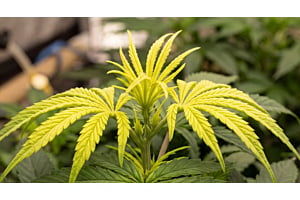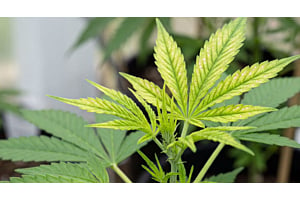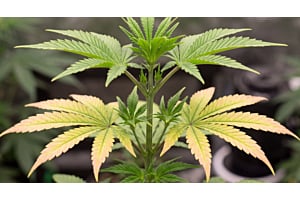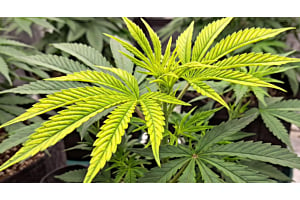
Every weed plant wants to reach for the sky, but smarter growers know that sometimes the path to a heavier harvest starts with a careful cut above the right node. Topping cannabis isn't about harming your plant, it's about guiding it.
One clean snip turns a single dominant main cola into multiple, and over the rest of the flowering stage, those extra colas fill out into a balanced, high-performing canopy built for bigger, denser yields.
What Is Topping Cannabis?
Topping cannabis is a high-stress training (HST) technique where you cut off the main growth tip of the plant to stop it from growing as a single dominant stalk. The result is two new shoots forming where one used to be, which, over time, creates more main colas, better light exposure, and typically, bigger buds.
In nature, cannabis plants prefer to naturally grow tall and upright, focusing all their energy on a single dominant top. Topping interrupts that pattern, deliberately reshaping how the plant develops from that cut forward. You can also use low-stress training (LST), which achieves a similar goal by bending branches instead of cutting them.
The Science Behind Topping: Apical Dominance

To see why topping the plant works, we need to talk about apical dominance. Cannabis plants are wired to prioritize vertical plant growth, channeling hormones into the highest point so they can outstretch neighboring plants and capture sunlight more effectively.
The highest bud site becomes the main cola, which is the large, central flower cluster at the top of the plant, typically the biggest and densest bud producer. Meanwhile, lower branches and secondary branches stay smaller because they're receiving fewer growth signals.
When you cut off the growth tip, you break that hormonal hierarchy. Without a single dominant leader, the plant redistributes energy across multiple nodes, encouraging bushier growth and turning what would have been modest side shoots into strong, competing tops.
Instead of one towering main cola, topping the plant produces multiple colas sharing the spotlight, and more bud sites get the light they need to develop fully.
What Is Topping Cannabis For?

Topping cannabis isn't just about changing how a plant looks. It's about improving how it performs. By reshaping the structure early on, growers can control light exposure, height, and overall productivity, especially in controlled environments.
Here's what topping plants actually accomplishes:
Improving Light Distribution Across the Canopy: Cannabis plants naturally grow in a Christmas tree shape, with one tall central stalk dominating the top. This causes upper bud sites to thrive while lower ones lag in the shadow. Topping encourages bushy plants that grow outward, helping light reach more bud sites evenly across the canopy, which is a significant advantage for indoor growers working with overhead lighting.
Managing Plant Height in Indoor Grows: For indoor growers, space is limited. A tall central stalk can quickly outgrow a tent or get too close to indoor grow lights. Topping plants helps manage vertical stretch, keeping cannabis plants properly structured and easier to train in tight spaces with limited vertical space.
Increasing Yield Potential: Topping supports increasing yields by spreading energy across multiple tops instead of just one. When plants properly recover, more bud sites receive light and resources, leading to a fuller canopy and heavier harvests overall. More branches mean more buds, and more buds mean a better harvest.
When to Top Cannabis Plants
Timing is everything when it comes to topping plants. The ideal moment is during the vegetative stage, when young cannabis plants are actively growing new leaves and nodes but haven't yet begun to form flowers.
How many nodes before topping? The sweet spot for most growers is between the 4th and 6th node. At this point, the plant has enough energy reserves to bounce back quickly, and there's still plenty of vegetative time ahead for the new shoots to develop.
Some growers wait until the 7th or 8th node for a bushier structure, especially on tall, stretchy sativas. Just make sure you still have at least 2–3 weeks of veg time left before flipping to flower. Count nodes from the bottom of the stem; you're cutting the stem just above your chosen node, which leaves that node's pair of side branches to take over as the new main stems.
For novice growers, especially, patience is key. Topping too early can stall progress, while waiting until the plant is vigorous and stable allows it to recover quickly and continue thriving through the vegetative phase.
When NOT to Top Cannabis
- Seedlings: Very young seedlings are still establishing roots and basic structure. Topping at this fragile point in the plant's life can cause unnecessary stress and stunt early development before the vegetative phase is fully underway.
- Flowering stage: Once plants initiate flowering, their energy shifts toward bud production rather than structural growth. Topping at this stage can significantly reduce yields and disrupt the plant's hormonal balance
- Stressed plants: If a plant is struggling with nutrient issues, pests, overwatering, or environmental instability, topping will only compound the stress. Always wait until the cannabis plant has fully recovered and is growing vigorously in its vegetative phase before making any cuts.
- When is it too late to top your plant? Any time after the first two weeks of flowering is generally too late. By that point, pistils have formed, the plant has shifted hormones away from vegetative growth, and new shoots won't have time to develop into productive colas before harvest. If you missed the window, skip topping this cycle and focus on low-stress training instead; it's gentler and still works on plants already in early flower.
How to Top Cannabis Step by Step

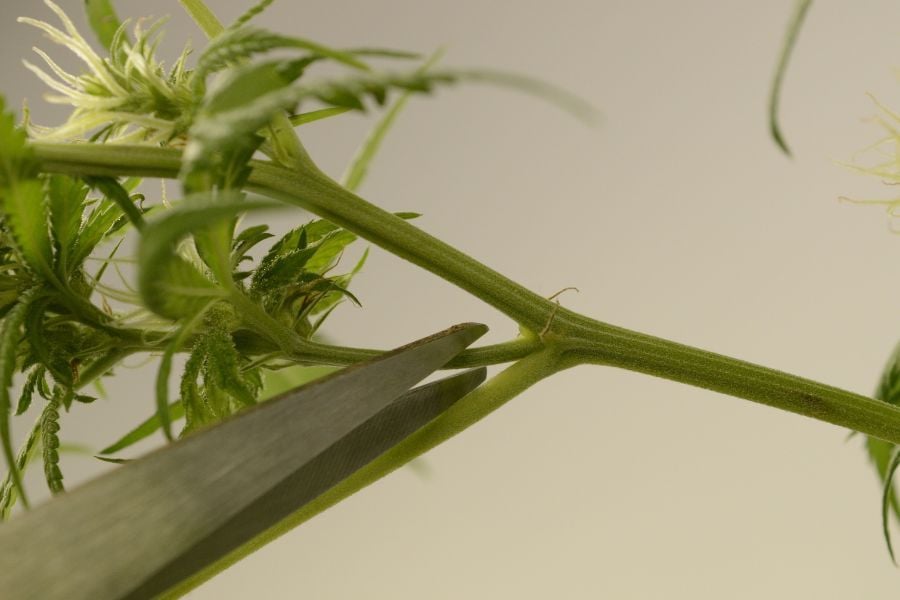
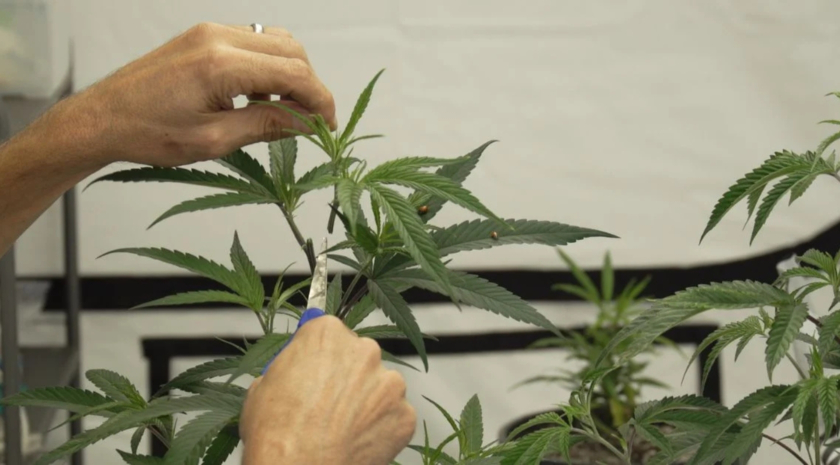
Close-up of scissors cutting the main cannabis stem just above a node during topping.
Topping cannabis isn't complicated, but it does reward precision. A clean cut at the right moment can transform a plant's structure, setting the stage for more branches, better light distribution, and a stronger overall canopy. Here's exactly how to do it.
Tools You'll Need
- Sharp pruning scissors or trimming shears
- Isopropyl alcohol (to sterilize your tools)
- Clean cloth or paper towel
- Optional: latex gloves
- Optional: plant ties (if combining with training)
Step 1: Locate the Main Stem and Growth Tip
Start by identifying the main stem, which is the primary stalk that runs vertically through the cannabis plant. At the very top of the plant, you'll see the newest cluster of growth emerging. This is the growth tip, the control center responsible for apical dominance.
It usually looks like a tight bundle of tiny leaves forming between two fan leaves. Removing this single point is what signals the plant to redirect its energy and begin forming two growth tips instead of one.
Step 2: Identify the Correct Node to Cut Above
Look just below the growth tip and count the nodes. These are the points where fan leaves and lateral branches emerge from the main stem. As a general rule, most plants are ready to be topped once they have at least 4 to 6 established nodes.
Choose the node you want to keep as your new top structure. Many growers prefer cutting above the 4th or 5th node, leaving enough lower growth intact to support recovery. Those preserved side branches will soon compete to become dominant tops.
Step 3: Make a Clean, Precise Cut
Sterilize your scissors, steady your hand, and cut the main stem just above your chosen node. The goal is a clean, decisive snip, and not a crush or tear.
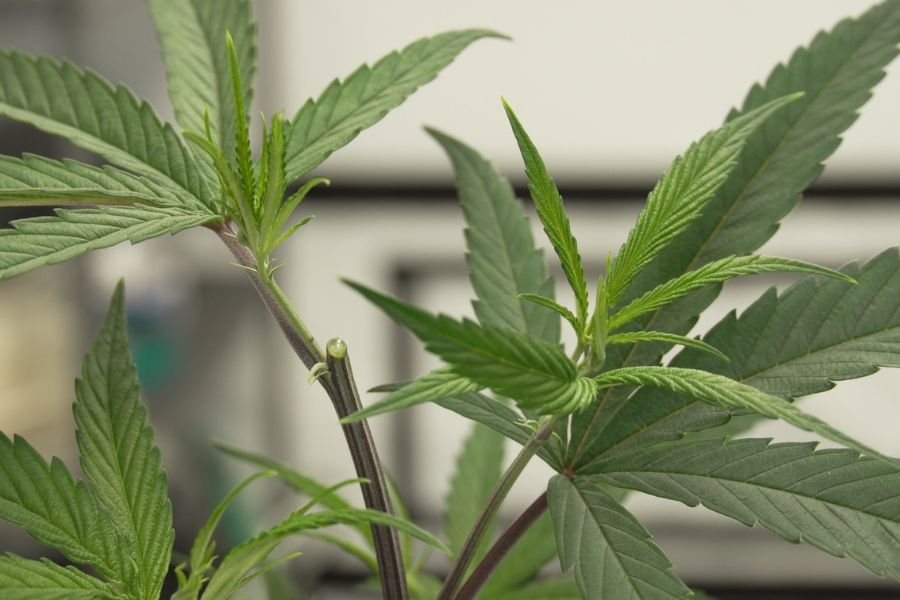
Once the top is removed, the cannabis plant will no longer prioritize a single vertical leader. Instead, it begins redirecting hormones to the two uppermost lateral branches, which develop into two growth tips. Within days, you'll notice them stretching upward, preparing to capture sunlight and claim dominance.
Step 4: Post-Topping Care and Recovery
After topping, give your cannabis plant a little breathing room. Avoid heavy feeding changes or environmental stress for several days. Most plants recover quickly if they're healthy, but they do need time to rebalance.
You may notice a short pause in vertical growth, which is normal. During this phase, the plant is strengthening its structure and redistributing energy to encourage more branches. Keep conditions stable and let the roots do their work.
What the Plant Should Look Like After Topping
Within about a week, you'll clearly see the transformation. Instead of one upward-pointing stem, you'll have two main shoots growing side by side. Lower growth that once sat quietly in the shadows now begins to stretch with purpose.
As those tops develop, the structure starts widening. With proper follow-up training, this is how you build a flat canopy rather than a tall, narrow plant.
How Long For a Plant to Recover After Topping
Most healthy plants bounce back within 3 to 7 days. Growth may slow briefly, but it resumes with a noticeable shift in shape rather than height. Many growers use this recovery window to plan their next move, whether that's another topping or transitioning into low-stress training.
Patience is essential here. When done correctly, topping doesn't weaken the plant, but strengthens its framework. Instead of chasing height, your cannabis plant begins building a wider structure designed to support more bud sites and better light exposure over time.
Topped Plant vs Non-Topped Plant: Side-by-Side Comparison
The structural difference between topped and non-topped cannabis plants becomes obvious as they mature. Here's how they compare side by side:
| Non-Topped Plants | Topped Plants | |
| Structure | Single dominant central cola, Christmas tree shape | Multiple colas, wider and more balanced canopy |
| Light distribution | Upper sites thrive, lower sites receive less light | More bud sites access the maximum amount of available light |
| Height | Grows vertically with a strong upward focus | More lateral spread, better height control |
| Best for | Outdoor grows with natural sunlight from multiple angles | Indoor grows under overhead grow lights |
| Canopy | Tall and narrow | Flat and even |
| Yield potential | Limited by a single dominant top | Higher potential with multiple productive tops |
Does Topping Cannabis Increase Yields?
Topping plants can increase yields, but it depends on how the cannabis plant is managed afterward. By topping, you redistribute energy and encourage a more balanced structure that supports more bud sites.
For growing indoors, the structural change often makes a noticeable difference. Because indoor grow lights come from above, cannabis plants with multiple evenly positioned tops use light more efficiently than one tall central cola overshadowing the rest. When plants grow in a flatter, more even canopy, more of the plant stays within the optimal light zone.
In the right conditions, topping helps transform underperforming side branches into productive multiple colas, which leads to heavier harvests overall. It's not a shortcut to bigger yields, but a structural strategy that, when executed correctly, sets the plant up to produce more buds, more efficiently.
Potential Downsides of Topping Cannabis
Topping is powerful, but it's not risk-free. Like any high-stress technique, it comes with trade-offs.
Temporary Growth Stress: Every cut is a controlled injury. After topping, plants pause vertical growth for a few days while they recover and rebalance hormones. When cannabis plants are healthy, this slowdown is minor. When they're weak or slow-growing, that pause can become a setback that affects the entire vegetative stage.
Risk of Infection or Poor Cuts: A sloppy cut can crush tissue instead of cleanly removing it. Damaged stems heal more slowly and can invite pathogens, especially in humid environments. Sterile tools and precision matter more than many growers realize.
Over-Topping and Diminishing Returns: More isn't always better. Repeated topping without proper recovery can overwhelm cannabis plants, resulting in thin stems, smaller flowers, and underdeveloped tops. Strategic shaping produces strong main colas, while excessive cutting can dilute energy across too many sites and lead to stunted growth.
Topping Cannabis vs. Other Training Techniques

Cannabis plant, after topping with the main stem removed, is often combined with low-stress training for better canopy growth.
Topping is just one tool in the cannabis training toolbox. Understanding how it compares to other popular methods helps you decide when each one makes the most sense.
Topping vs. FIMing
FIMing (short for "F**k, I Missed") is a variation of topping where you remove only part of the growth tip instead of cutting it clean off. While topping the plant typically produces two new main shoots, FIMing can result in three or four new tops, though outcomes are less predictable. Topping is cleaner and more controlled. FIMing is slightly more experimental.
Topping vs. LST (Low-Stress Training)
Low Stress Training (LST) involves bending and tying down branches rather than cutting them. Instead of removing the main tip, you gently pull it below other branches to redistribute hormones and encourage even growth.
LST avoids recovery time and is ideal for growers who want canopy control without stressing the cannabis plant. Topping is more aggressive but creates structural changes faster.
Topping vs. Super Cropping (HST)
Super cropping falls under High Stress Training (HST). It involves carefully crushing and bending stems to strengthen them and control height. Unlike topping the plant, you don't remove growth - you reshape it.
Super cropping can dramatically improve structure and resilience in cannabis plants, but it requires confidence and timing to avoid damage.
Should You Combine These Techniques?
Many experienced growers combine techniques. Topping can establish multiple main shoots, low-stress training can spread them outward, and occasional high-stress training methods can fine-tune structure. Training works best when it's intentional and when cannabis plants are healthy enough to handle it.
How to Combine Topping with LST for Maximum Yields
Topping reshapes a plant's structure, and Low Stress Training fine-tunes it. When combined, they give you control over both vertical and horizontal growth, which is where real yield gains happen.
Start by topping the plant, then allow it to recover and develop its two new main shoots. Once growth resumes, gently bend those tops outward and secure them. This opens the center of the plant and encourages lower growth to rise into the light, creating a flat canopy rather than upward competition between tops.
By continuing to adjust ties as the cannabis plant develops, you maintain a balanced structure where more bud sites sit in the optimal light zone.
Topping creates multiple leaders. Low-stress training positions them strategically. Together, they turn natural stretch into a controlled canopy designed for heavier, more consistent harvests. And remember: even the best training can only amplify what the genetics give you. Starting with high-yield cannabis seeds makes every extra cola count.
Special Considerations for Outdoor Plants
Topping works differently outdoors than it does under indoor grow lights. Here are the three things that matter most when topping outdoor cannabis plants.
- Light Distribution Is Less of a Concern
Outside, sunlight moves across the sky and reaches plants from multiple angles, which naturally reduces the shading issues common in indoor setups. Topping isn't always essential for light distribution outdoors, although it can still help manage structure and height. - Size and Structure Matter More
Outdoor plants can become very large if left untopped, especially vigorous photoperiod strains. Topping helps control vertical stretch early in the season and encourages a wider, sturdier framework that handles wind and weather better. - Timing Is Critical
Since the flowering stage is triggered naturally by seasonal light changes rather than a timer, topping must be done well before plants transition. Give them enough vegetative time to recover and expand before they shift into bloom.
Used thoughtfully, topping outdoors can improve structure and manageability, but it should match your climate, strain choice, and overall grow strategy.
Which Cannabis Strains Benefit Most from Topping?
Not all cannabis genetics respond the same way to training. Some plants explode with new growth after topping the plant, while others prefer a lighter touch. The strain's natural structure is what will help you decide whether topping will enhance performance or create unnecessary stress.
Indica vs. Sativa Growth Patterns
Sativa-dominant strains tend to grow tall and stretch aggressively during vegetative growth and early flowering stage. Because of their vertical nature, they often benefit greatly from topping, which controls height and encourages a more manageable canopy.
Indica-dominant strains typically grow shorter and bushier by default, so topping is less about height control and more about increasing top sites and building out multiple colas.
Tall, Stretchy Strains That Respond Well to Topping
Haze varieties, Sour Diesel, and other vigorous sativas are classic candidates for topping plants. Their strong apical dominance means they naturally focus on one main top, so redirecting that energy produces noticeable structural improvements.
Topping these genetics early helps prevent excessive stretch and creates a wider, more productive framework for the flowering stage.
Compact, Bushy Strains That May Need Less Training
Some indica-leaning hybrids already produce multiple strong branches without much intervention. While they can still benefit from topping, especially when growing indoors, the impact may be less dramatic. In these cases, a single topping combined with light canopy management is often enough.
Autoflower Strains: Proceed with Caution
Autoflowers have a fixed lifecycle and limited vegetative time. Because they transition to bloom automatically, there's less room for recovery if something slows them down.
Some modern autoflowers can handle topping when done early and under optimal conditions, but many growers prefer low-stress training instead of high-stress training methods to avoid risking lost growth time.
How Many Times Can You Top a Cannabis Plant?
Topping isn't a one-time-only technique, but it isn't unlimited either. Most growers top photoperiod cannabis plants once or twice during the vegetative stage, allowing full recovery between each cut. With enough time and strong plant health, some growers top three times to create multiple main colas, especially when aiming for an even, wide canopy.
The key is spacing. Each topping should be followed by several days of vigorous new growth before making another cut. Repeated topping without proper recovery can overwhelm the cannabis plant and lead to thin stems, reduced vigor, or stunted growth.
Stop topping at least a week or two before switching to the flowering stage. The goal is to enter bloom with a strong, stable structure, not plants still trying to repair themselves. Strategic cuts build strength. Excessive ones compromise it.
Common Mistakes When Topping Cannabis
Even though topping is straightforward, small missteps can limit its effectiveness. Here are the most common mistakes growers make and how to avoid them:
- Cutting too early: Topping before the cannabis plant has developed enough nodes or a strong root system can stall development. Young, underdeveloped plants need time to build strength before handling high-stress training.
- Cutting too late: Waiting too long, especially close to the flowering stage transition, reduces recovery time and can impact final yields. Topping should always be done with enough vegetative runway for the plant to bounce back fully.
- Damaging adjacent growth: A sloppy cut that tears tissue or harms nearby shoots can slow recovery and weaken structure. Clean, precise cuts with sterile tools make all the difference.
- Not allowing recovery time: Stacking multiple stress techniques too quickly after topping can overwhelm cannabis plants. Give them time to resume growing vigorously before applying additional training or making another cut.
Topping Cannabis FAQs
How do you top a weed plant?
Topping a weed plant takes one clean cut. Sterilize a sharp pair of scissors with rubbing alcohol, identify the node you want to cut above (usually the 4th to 6th), and snip the main stem just above that node, leaving about a quarter-inch stub. The two small side shoots already tucked into that node will take over as the new main stems. Water as normal, avoid high-nutrient feeds for 48 hours, and watch for new growth within 3–5 days.
When should I top my weed plant?
Top your weed plant during the vegetative stage, once it has 4–6 nodes and is growing vigorously. For most photoperiod strains, this lands around 3–5 weeks after germination. You want at least 2–3 weeks of veg time remaining after topping so the new shoots can develop before you flip the light cycle to flower. Don't top autoflowers — their short life cycle doesn't leave time to recover.
Can I top my weed plant more than once?
Yes. Each top doubles the number of main colas: one top = 2 colas, two tops = 4, three tops = 8, and so on. Most growers stop at 2–3 tops because more than that risks stressing the plant too much and delaying flower. Always wait at least 7–10 days between tops so the plant has recovered before you cut again.
What happens if you top a weed plant wrong?
The most common mistakes are cutting too low (damaging the lower node), cutting too late (not enough veg time to recover), or using dirty scissors (risking infection). If you cut too much stem off, the plant may stall, but it usually survives. Just wait longer before flipping to flower. If you topped during flower by accident, don't top again; just support the plant and accept a slightly lower yield. A clean cut in the right place almost never goes wrong.
Is Topping Cannabis Worth It
Topping cannabis is less about cutting and more about control. By interrupting natural vertical growth, you reshape the plant's structure, improve light distribution, and create the foundation for a more productive canopy. Done right, it's one of the most effective ways to guide growth with intention.
It's not mandatory for every strain or setup, but in some environments, especially indoors, topping can be the difference between a single dominant cola and a canopy full of evenly developed tops. The key is timing, recovery, and restraint.
Great results start with great genetics. Explore Seed Supreme's wide selection of premium cannabis seeds, from reliable feminized options to regular seeds for breeders and collectors. For more practical growing tips, strain guides, and cultivation insights, visit the Seed Supreme blog.
THC