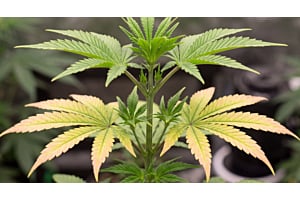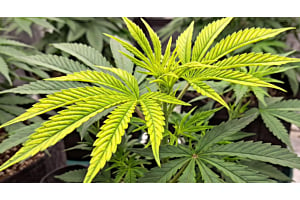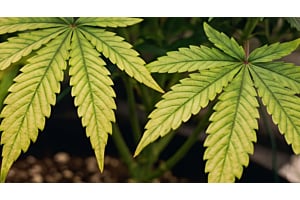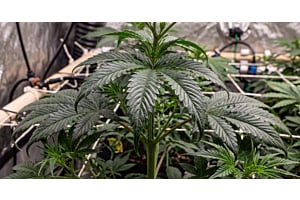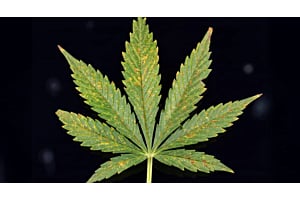

You could be giving your cannabis plants the right nutrients at the right dose and still shortchanging them. Not because of what you're giving them, but when.
The time of day you water and feed has a direct effect on how much your plants actually absorb, and it's a detail most feeding schedules don't mention at all. This guide covers the best time of day to feed weed plants, when to start feeding cannabis at each stage of growth, and how to build a feeding schedule your plants can actually use.
A Quick Primer on Cannabis Plant Nutrients
Every cannabis plant needs three essential macro nutrients to stay healthy: nitrogen, phosphorus, and potassium (N-P-K).
- Nitrogen fuels vegetative growth
- Phosphorus drives root and bud production
- Potassium supports overall plant health
Growing cannabis successfully also calls for secondary nutrients like calcium, magnesium, and sulfur to support rapid growth and flowering. Micronutrients like boron and zinc are needed in trace amounts only, but a deficiency in any of them can show up fast.
Most high-quality fertilizers cover the full spectrum. Your job is to make sure your marijuana plants get the right nutrients at the right ratios during the right stage.
The Best Time of Day to Feed Cannabis Plants
The best time to start giving cannabis plants their daily feed is within the first 30–60 minutes after lights turn on, or at dawn for outdoor grows.
At this point, the growing medium has dried slightly overnight, stomata are opening in response to light, and roots are actively drawing moisture upward. That uptake is your delivery system. Nutrients travel with the water and straight into the plant during peak absorption hours.
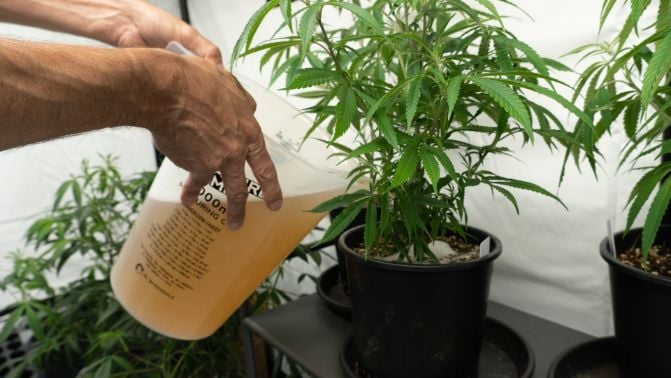
Feeding During the Light Period
With a full light period ahead, indoor cannabis plants have time to metabolize what they've taken in, and any fertilizer salts that accumulate in the root zone can disperse naturally before the next feed. This is when nutrient uptake is most efficient, and the risk of salt buildup is lowest.
Why You Should Avoid Feeding Before Lights Out
Feeding late in the light cycle or during darkness is one of the most common mistakes new growers make. When the lights go off, transpiration slows dramatically, nutrients pool in the root zone without being absorbed, and salt builds up in the growing medium, raising the risk of nutrient burn and root stress.
Timing feeds to align with the light cycle helps the plant use available nutrients more efficiently, reducing waste in the root zone and supporting more consistent growth between watering cycles.
Some growers flush their marijuana plants later in the light period to clear residual salts. This works because plain water doesn't carry the same salt load as fertilizer, so there's less risk of buildup even as transpiration is slowing.
The Importance of a Well-Timed Feeding Schedule
Cannabis plants don't absorb nutrients passively. They pull water and dissolved minerals through their roots as part of an active physiological process tied to light cycles, stomatal activity, and root zone moisture. A poorly timed cannabis feeding schedule means those nutrients sit unused, build up to toxic levels, or create conditions that invite disease.
How Cannabis Absorbs Nutrients
Nutrient uptake is driven by transpiration, a process where plants lose moisture through their leaves. As water evaporates from the leaf surface, roots draw fresh moisture carrying dissolved nutrients upward through the plant.
Transpiration peaks when the lights come on and the stomata open. The key point: cannabis nutrients only move into the plant when water is moving through it. Feeding when transpiration is low means your plants leave the table before finishing their meal.
The Role of pH in Absorption
Even a perfect feeding schedule won't help if pH is off. Nutrients become unavailable outside specific pH windows regardless of how much fertilizer you use. For soil, target 6.0–7.0. For hydro or coco, stay in the 5.5–6.5 range. Check and adjust pH every feed, especially when using liquid fertilizer, which can shift pH on its own.
Outdoor Growing: Time It With the Sun
For outdoor cannabis plants, start feeding in the early morning. You're catching plants at peak transpiration readiness before the midday heat drives moisture loss too fast. Feeding during the afternoon heat causes rapid evaporation, concentrates salt near the root surface, and increases leaf stress.
When to Start Feeding Cannabis By Grow Medium
Knowing when to start feeding your cannabis plants depends on what you're growing them in. It's one of the biggest factors in getting the timing right.
Soil and Pre-Amended Mixes
Rich soil mixes, especially those containing compost, worm castings, or other organic nutrients, can sustain cannabis plants for weeks before any additional fertilizer is needed. Most growers using pre-amended living soils don't start giving extra cannabis nutrients until week 3 or 4 of the vegetative stage, sometimes later.
Check your plants before you start adding nutrients. Healthy, deep-green leaves and vigorous new growth mean the soil is still doing its job.
Inert Mediums Like Coco Coir and Hydro
Coco coir and hydroponic systems are inert, so there's nothing in the growing medium itself to feed your plants. Nutrients need to come from you, and they need to come early. The best approach is to introduce a diluted seedling-appropriate dose toward the end of week one, scaling up as roots establish and plants start showing active growth.
How Often Should You Feed Your Cannabis Plants?
How often you feed depends on your growing medium and your environment. Neither works in isolation.
Feeding Frequency by Grow Medium
Soil retains moisture longer than other mediums, so the time between feeds naturally stretches.
- Most soil growers settle into a rhythm of every 2–3 days.
- Coco coir dries out faster and holds no nutrition of its own, so daily feeding is standard.
- Hydro systems are the most demanding since plants feed continuously, and the nutrient solution needs regular monitoring and replenishment.
How Your Growing Environment Affects Feeding Frequency
In a warm, low-humidity growing environment, cannabis plants transpire quickly and burn through nutrients fast, so feeding needs to keep pace. In a cooler, higher-humidity setup, transpiration slows and so does nutrient uptake. Overfeeding in these conditions is easy to do and often only shows up once the first signs of nutrient burn appear.
Let the medium's dry-out rate and your plants' appearance guide frequency rather than a fixed schedule.
Cannabis Feeding Schedule by Growth Stage
Cannabis plants move through four distinct growth stages, and each one calls for a different nutrient profile. Getting the ratios right at each stage is what keeps plants healthy and on track from seedling through harvest.
| Growth Phase | Nitrogen | Phosphorus | Potassium | Key Additives |
| Seedling | None/trace | None/trace | None/trace | None |
| Vegetative | High | Moderate | Moderate | Cal-Mag |
| Flowering | Low | High | High | Cal-Mag, bloom booster |
| Late bloom | None | Low | Low | Flush supplement |
The Seedling Stage
Hold off for the first 2–3 weeks. Seedlings can live off what's stored in the seed itself, plus the light nutrient load in a good starter mix.
Introduce your first diluted feed toward the end of week two, once the first true leaves are well established. Starting too early is one of the most common ways to damage seedlings before they've had a chance to develop.
The Vegetative Stage
Start building your feeding schedule around weeks 3–4, once plants are in active vegetative growth. Nitrogen leads here, fueling stem, branch, and leaf development. Start at 50–75% of your feed chart's recommended dose and work up from there. Most charts are set at the upper limit, not the starting point, so using them as an example of the ceiling rather than the target keeps plants in a healthier range.
The Flowering Phase
As soon as the first signs of flowering appear, start pulling less nitrogen into your feeding schedule and introduce bloom nutrients. Getting ahead of that shift keeps development on track and prevents nitrogen toxicity from affecting early bud formation.
Phosphorus and potassium take over, with calcium, magnesium, boron, and sulfur all playing supporting roles through peak bloom.
The Late Bloom Stage
In the final 2–3 weeks, dial everything back. Stop giving nitrogen entirely. Most growers transition to plain pH-adjusted water or a flush supplement to clear residual salts a week before harvest.
How long you flush depends on your growing medium, since soil typically needs a longer flush than coco or hydro. Some soil growers produce top-quality buds without flushing.
Organic Nutrients vs. Chemical Fertilizers
Running synthetic fertilizers or organic nutrients changes how quickly your plants can access what you're giving them.
Synthetic cannabis nutrients are immediately available. They're fast-acting but unforgiving if you overshoot. Organic inputs like compost and worm castings break down slowly through microbial activity, creating a natural buffer that makes nutrient burn far less likely.
Many experienced growers use organic as a base for steady background nutrition, with targeted chemical supplements when plants signal a specific need. It's a flexible approach that works across most growing setups and is a good example of combining the benefits of each without committing fully to one system.
Reading Your Plants: How to Spot Nutrient Deficiencies and Burn
No feed chart can replace watching your plants. Cannabis leaves show clear signals when something is off - you just need to know what you're looking at.
| What You See | Likely Cause | Where It Shows First |
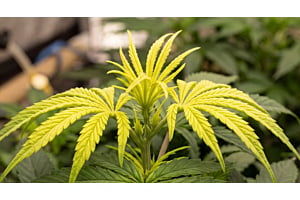
| Yellowing leaves, bottom up | Nitrogen deficiency | Older, lower leaves |
| Purple or red stems and leaf undersides | Phosphorus deficiency | Stems, leaf undersides |
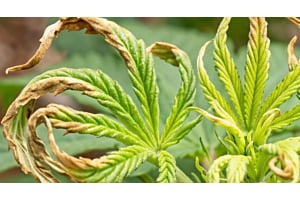
| Brown, crispy leaf edges and tips | Potassium deficiency or nutrient burn | Leaf tips and margins |
| Yellowing between veins (veins stay green) | Magnesium or sulfur deficiency | Mid-canopy leaves |
| Brown spots with yellow halos | Calcium deficiency | Newer growth |
| Burnt, curling tips on new growth | Nutrient burn (overfeeding) | Newest, fastest-growing leaves |
| Widespread yellowing, stunted growth | pH lockout (nutrients unavailable) | Whole plant |
Always check pH first. Many symptoms that look like a nutrient deficiency are actually pH lockout. The nutrients are present in the growing medium but are unavailable to the plant. Correcting pH often resolves the issue without any change to your fertilizer dose.
How to Avoid Nutrient Burn
Nutrient burn is the most common overfeeding symptom. Burnt leaf tips that curl upward are the first sign, progressing inward if left uncorrected. When you spot it, flush the growing medium with plain, pH-adjusted water to bring salt levels down, then resume feeding at a reduced dose.
To avoid nutrient burn and stay ahead of it:
- Start any new nutrient line at 50% of the recommended dose and work up gradually.
- Feed when the growing medium is slightly moist rather than bone dry. Roots absorb more evenly with some moisture present.
- Monitor runoff EC regularly. A climbing EC reading means salt is accumulating faster than the plant is using it.
- Watch leaves for 2–3 days after each feed. Darkening tips or slight curling are early warnings worth catching early.
How to Avoid Nutrient Deficiencies
Most deficiencies come down to three things: feeding too little, feeding at the wrong pH, or using a nutrient profile that doesn't match the current growth stage.
Keeping a simple log of what you gave, at what dose, and when makes it much easier to connect symptoms to specific feeding decisions and correct them quickly.
If a deficiency does appear, resist the urge to flood the plant with nutrients. Check pH first, adjust if needed, and give the plant a day or two to respond before making any changes to your fertilizer or feeding schedule.
Start Growing Cannabis Successfully
Feeding cannabis plants well comes down to timing, observation, and consistency. Hit that early-light window for daily feeds, match your nutrient ratios to the growth phase, and let your plants tell you when something's off.
A good feeding schedule isn't complicated. It just requires paying attention. Seed Supreme stocks genetics suited to every growing style and skill level. Browse our full range of cannabis seeds and find your next crop.
FAQs About Cannabis Feeding Schedules
What Time of Day Is Best to Feed Cannabis Plants?
Early morning is the best time. For outdoor grows, feed during the coolest part of the day, before heat builds up.
How Often Should You Feed Cannabis Plants During the Flowering Stage?
It depends on your growing medium. In soil, most growers feed their cannabis crops every 2–3 days during the flowering stage, but in coco or hydro, daily feeding is common.
What Nutrients Do Cannabis Plants Need During Late Bloom?
In late bloom, calcium and boron remain essential for finishing buds. Most growers scale back or eliminate nitrogen entirely in the final 2–3 weeks and begin flushing toward harvest.
What Is the Best Fertilizer for Cannabis Plants?
It depends on your growing method. Organic nutrients like compost and worm castings suit living soil grows, while synthetic fertilizers give precise, fast-acting control and work well in coco or hydro. Many experienced growers use both to achieve consistent results.
Is It Better to Fertilize at Night or in the Morning?
Feeding in the early morning means cannabis plants are not yet under heat or light stress, and the full course of the day ahead gives any moisture on the foliage time to dry out.