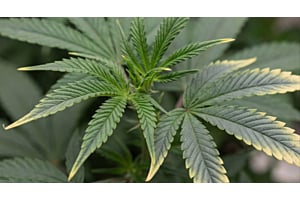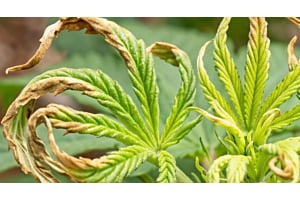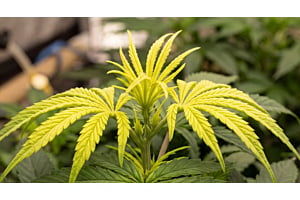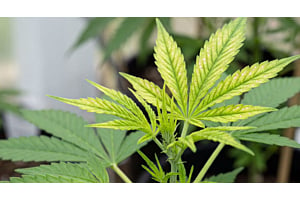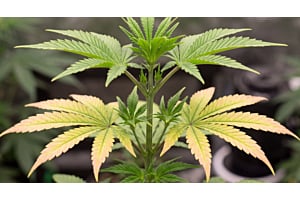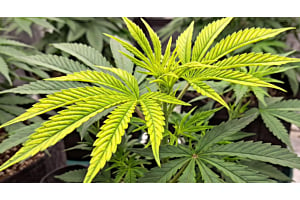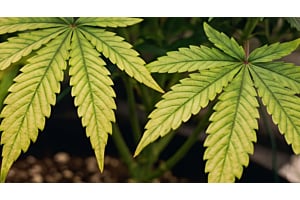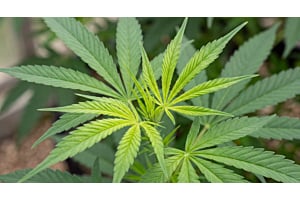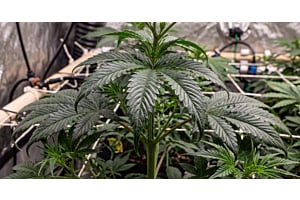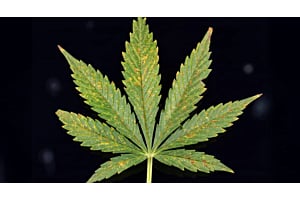
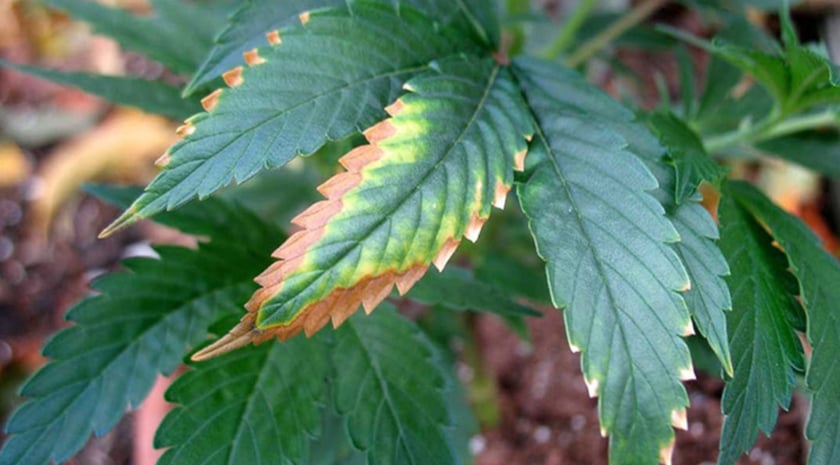
Cannabis deficiencies show up first as color and texture changes on the leaves, and the leaf's location on the plant tells you which nutrient is short. This guide gives you a symptom chart, a mobile-versus-immobile diagnostic key, the per-nutrient signs for nitrogen, phosphorus, potassium, magnesium, calcium and iron, plus how to separate nutrient burn or lockout from a deficiency.
By the end you will be able to look at a yellowing or spotted leaf and name the likely cause before you change anything in the feed.
Fast Rule: Check leaf location before anything else. Yellowing or spotting on old lower leaves points to a mobile-nutrient shortage like nitrogen, phosphorus, potassium or magnesium. Damage on fresh top growth points to an immobile-nutrient shortage like calcium, sulfur or iron. Confirm root-zone pH before you add more feed, because most "deficiencies" are really lockout.
What Are Cannabis Nutrient Deficiencies?
Cannabis nutrient deficiencies are shortages that occur when a plant cannot take up enough of a nutrient it needs to grow. The plant pulls the missing nutrient from existing tissue or simply fails to build new tissue, and the result shows on the leaves as fading color, spots, curling or dead patches.
These shortages trace to several causes, including an unbalanced feed, the wrong root-zone pH, overwatering that suffocates roots and poor-quality soil. Reading the symptom correctly matters more than reaching for more fertilizer, because adding nutrients to a pH-locked plant makes things worse.
Cannabis Nutrient Deficiency Chart by Leaf Symptom
This cannabis nutrient deficiency chart maps each common leaf symptom to a likely nutrient and tells you how much to trust that single sign. Use it as a first pass, then confirm with the per-nutrient sections below. The Reliability column tells you whether a symptom alone is enough to act on or whether you need a second confirming sign.
| Leaf symptom | Likely nutrient | Where it appears | Reliability |
| Whole-leaf pale yellowing, oldest leaves first | Nitrogen | Lower / old growth | High |
| Dark leaves, purple stems, bronze blotches | Phosphorus | Lower / old growth | Medium |
| Yellow or brown crispy leaf edges and tips | Potassium | Lower / old growth | Medium |
| Yellowing between green veins | Magnesium | Lower / mid growth | High |
| Brown spots, twisted or hooked new leaves | Calcium | Upper / new growth | Medium |
| Bright yellow new leaves with green veins | Iron | Upper / new growth | High |
| Burnt, crispy leaf tips | Nutrient burn (excess) | Tips, often upper | High |
| Dark, glossy, downward-clawing leaves | Nitrogen toxicity | Lower / old growth | High |
A symptom marked High can point you straight to the likely cause. A symptom marked Medium overlaps with other problems, so pair it with leaf location and a pH check before you correct anything.
The matrix below turns those readings into actions.
| What you see | What it suggests | Confidence | What to do |
| Old leaves pale and dropping | Mobile-nutrient shortage | Confirmed | Check feed strength, then pH, then supplement the matching nutrient |
| New leaves yellow, veins still green | Iron lockout or shortage | Confirmed | Test and correct pH first, supplement only if pH is already correct |
| Crispy tips on dark green leaves | Nutrient burn, not a shortage | Confirmed | Flush with pH-correct water and reduce feed |
| Dark green, clawing leaves | Nitrogen toxicity | Confirmed | Switch to a lower-N formula and flush in severe cases |
| Spots plus correct pH and feed | Suspected calcium or magnesium | Suspected | Add a cal-mag supplement and watch new growth |
Mobile vs Immobile Nutrient Deficiencies in Cannabis
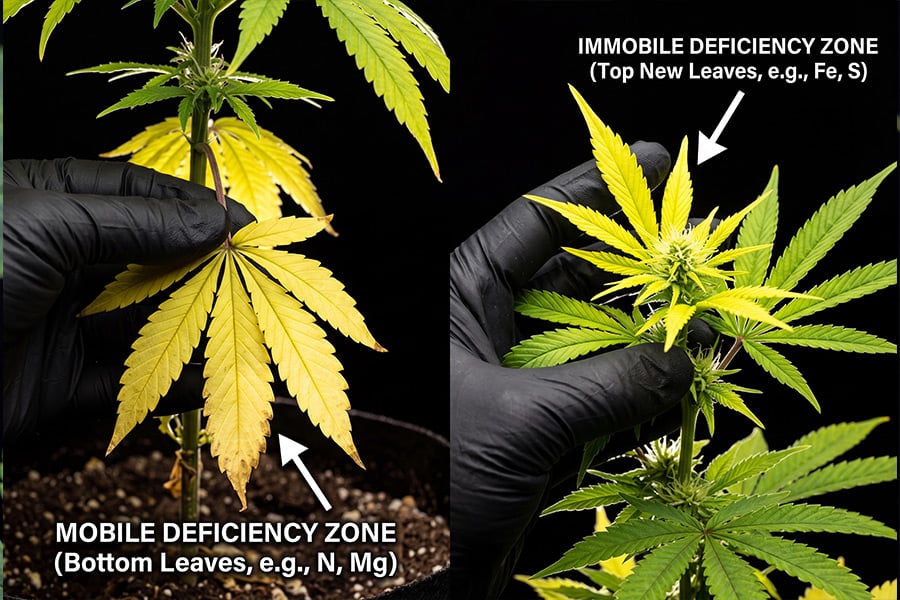
Mobile nutrient deficiencies appear on old lower leaves first, because the plant moves these nutrients out of aging leaves and into new growth when supply runs short. Immobile nutrient deficiencies appear on new top growth first, because the plant cannot relocate these nutrients once they are fixed in older tissue.
This single split is the most reliable diagnostic tool you have, so read leaf location before you read color.
Mobile Nutrient Deficiencies (Lower Leaves First)
Mobile nutrient deficiencies affect nitrogen, phosphorus, potassium and magnesium, the nutrients a cannabis plant can relocate inside itself. When the feed runs short, the plant strips these from its oldest fan leaves to protect new growth, so the bottom of the plant fades while the top stays green. A pale, yellowing lower canopy is the classic mobile-shortage signal.
Immobile Nutrient Deficiencies (New Growth First)
Immobile nutrient deficiencies affect calcium, sulfur, iron and the other micronutrients a cannabis plant cannot move once they settle in older tissue. The newest leaves at the top show damage first, because fresh growth has no internal reserve to draw on. Bright yellow or distorted new leaves point to an immobile shortage or a pH lockout blocking those nutrients.
Common Cannabis Leaf Deficiencies by Nutrient
Common cannabis leaf deficiencies follow recognizable symptom patterns that differ by nutrient, leaf location and color change. Each nutrient below gets its telltale sign, the leaves it hits first and the correction direction.
- Nitrogen: uniform pale yellowing of the oldest leaves, the most common shortage in veg
- Phosphorus: leaves darkening toward dull blue-purple, with tan or brown edges curling
- Potassium: scorched yellow-brown leaf tips and edges with red-yellow vein mottling
- Magnesium: yellowing between the veins while the veins stay green
- Calcium: brown spots and hooked or twisted new leaves
- Iron: bright yellow new leaves with sharp green veins
Nitrogen Deficiency in Cannabis
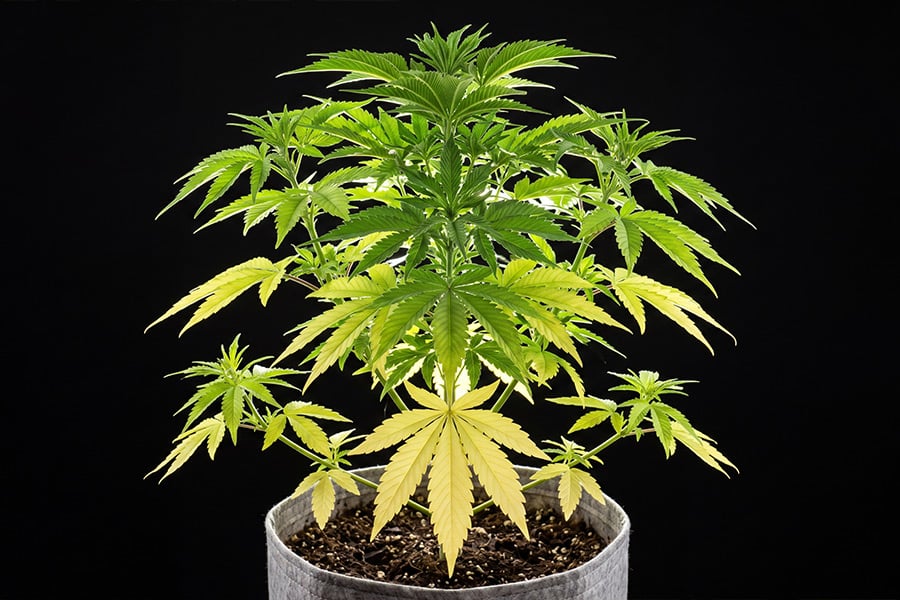
Nitrogen deficiency in cannabis turns the oldest lower leaves a uniform pale yellow, then fades them to near-white before they drop. Nitrogen is mobile, so the plant cannibalizes its bottom fan leaves to feed the top, which is why a nitrogen-short plant yellows from the ground up.
Some yellowing of old leaves late in flower is normal as the plant redirects resources, but early-veg yellowing signals a real shortage. Correct it with a nitrogen-rich feed during vegetative growth.
Phosphorus Deficiency in Cannabis (Purple Leaves)
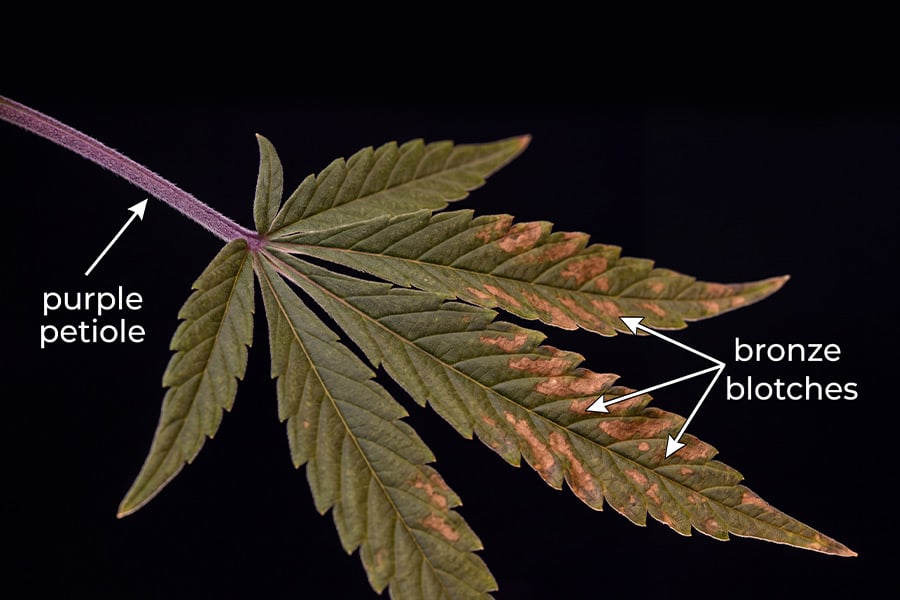
Phosphorus deficiency in cannabis darkens the lower leaves to a dull blue-green, then adds purple or red petioles and bronze-brown blotches. This is the deficiency behind most "what causes purple leaves" questions, though cold root temperatures can mimic the same purpling. Phosphorus is mobile, so the damage starts low and old.
Confirm pH is in range before adding a bloom-stage phosphorus feed, because cold and lockout both fake this look.
Potassium Deficiency in Cannabis
Potassium deficiency in cannabis scorches the edges and tips of older leaves, turning them yellow-to-brown with necrotic spots and mottled red-yellow patches between the veins, which stay green.
The burnt-edge look can resemble nutrient burn, but burn hits the very tips of upper leaves while potassium shortage rings the margins of old leaves. If you suspect the latter, adjust the feed toward a balanced bloom nutrient.
Magnesium Deficiency in Cannabis
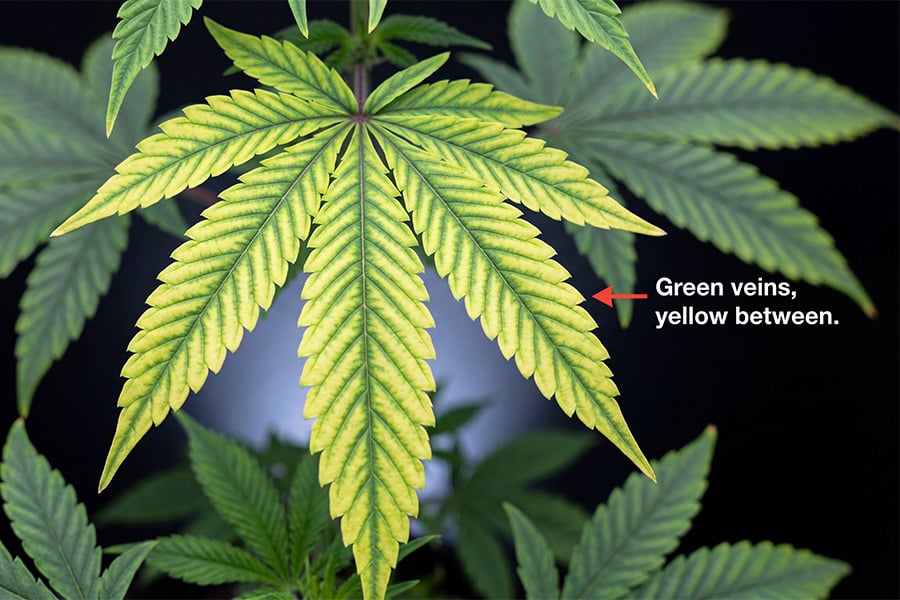
Magnesium deficiency in cannabis yellows the tissue between the veins while the veins themselves stay green, a pattern called interveinal chlorosis. It shows on lower and mid leaves first because magnesium is mobile.
This green-vein, yellow-leaf signature is highly reliable and rarely confused once you see it. A cal-mag supplement corrects it, and stable pH keeps it from returning.
Calcium Deficiency in Cannabis
Calcium deficiency spots new upper leaves with large, irregular necrotic blotches and curls or crinkles the fresh growth. Calcium is semi-mobile (not completely immobile), so while it moves less easily than nitrogen or potassium, the damage still concentrates on the youngest tissue and along leaf edges elsewhere. Soft water and coco coir grows see it most. A cal-mag product usually corrects it, and calcium and magnesium shortages can occur together.
Iron and Other Micronutrient Deficiencies in Cannabis
Iron deficiency in cannabis turns the newest top leaves bright yellow while the veins stay sharply green, the reverse-aged twin of magnesium. Iron is immobile, so new growth shows it first, and the cause is almost always pH lockout rather than a true shortage. Other micronutrients like zinc and manganese produce similar new-growth chlorosis.
Zinc and manganese produce similar new-growth chlorosis, but zinc twists the new leaf blades and manganese adds small brown specks within the yellowing — details worth checking before you assume iron. Foliar feeding with an iron chelate works fastest if a true iron shortage remains once pH is corrected.
Is It Nutrient Burn or a Deficiency?
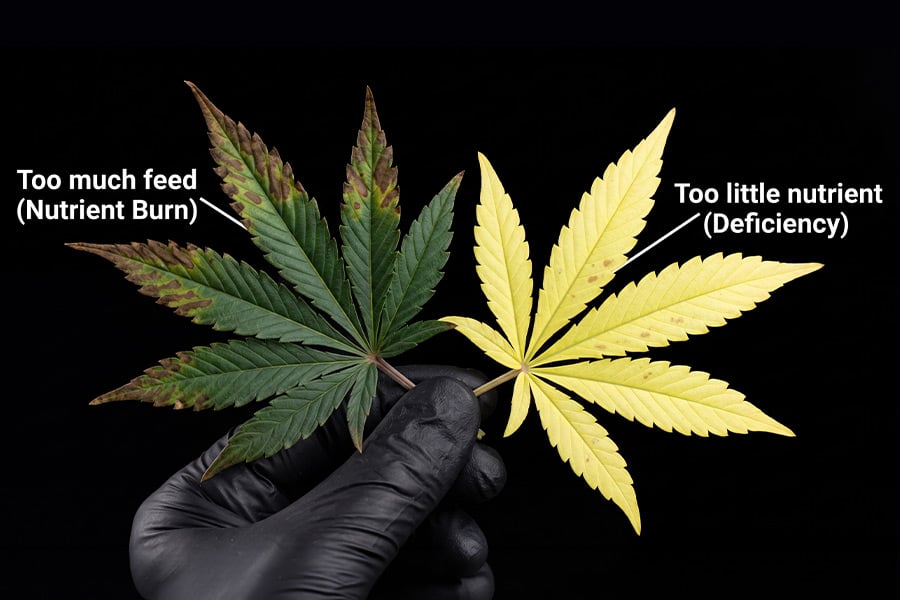
Nutrient burn and nutrient deficiencies produce opposite signs. Nutrient burn is an excess: the leaf tips turn brown and crispy, typically on the upper canopy closest to feeding. Nitrogen toxicity often shows up alongside nutrient burn, and it adds its own tell: dark, glossy leaves, sometimes with a downward claw. A deficiency is a shortage: leaves fade, yellow or spot, depending on the specific nutrient shortage.
Neither burn nor toxicity is a missing nutrient; both are too much feed. For a mild case, skip a feed and resume at reduced strength. For nitrogen toxicity specifically, ease up on nitrogen rather than just scaling back everything. Perform a full flush only if the damage has spread significantly and salts have built up, then resume feeding at a diluted strength once the root zone pH has been reset.
Why pH Causes Deficiency Symptoms Without a Real Shortage
When you’re growing weed, nutrient deficiency symptoms often appear when root-zone pH locks out a nutrient that is actually present in the feed. Each nutrient has a pH band where roots can absorb it, and a pH outside that band makes the nutrient unavailable even at full strength. This is why adding more fertilizer to a locked-out plant deepens the problem instead of solving it.
How to test pH
In soil or coco, take a ‘PourThru’ reading: water the plant fully, let it drain for about an hour, then pour a measured amount of plain water through and test what collects underneath.
In hydro, just read the reservoir directly. Either way, treat the number as a warning light for drift — not a target to chase after every single feed.
How to correct pH
The fix depends on your setup:
- Living, organic soil: the root-zone microbes buffer pH on their own, so you generally leave the water alone. If it's genuinely drifted, correct the soil itself with slow-acting amendments like dolomite or garden lime to raise pH, elemental sulfur or acidic materials like coffee grounds to lower it. Both work gradually over weeks, not overnight.
- Coco, hydro, or soil running synthetic nutrients: pH the feed instead of plain water. Mix your nutrients into the water first, then adjust that solution with a pH Up or pH Down product before it goes in.
Target pH ranges
In soil, aim for a pH of 6.0-6.3, treating 6.5 as the hard ceiling. If you’re using coco coir or a hydroponic setup, target a pH of 5.8-6.2, with 5.6-6.4 as the workable range.
Test and correct pH first, then read whether the symptom clears.
How Feeding and Seed Choice Prevent Cannabis Deficiencies
Preventing cannabis deficiencies starts with a balanced feeding routine and resilient genetics, not with chasing symptoms after they appear. A steady feed at the right pH keeps every nutrient available, and a hardy plant tolerates small swings without flagging. These two levers cover both sides of prevention.
Fertilizers That Prevent Cannabis Nutrient Deficiencies
Fertilizers prevent cannabis nutrient deficiencies by supplying the full nutrient range in the ratios a plant needs at each stage. A balanced base feed plus a cal-mag supplement covers the shortages that hit growers most, including nitrogen in veg and magnesium in flower.
Stage-matched feeding keeps the plant from ever stripping its old leaves. Natural, living-soil growers typically opt for organic weed fertilizers, although cannabis fertilizers come in organic and synthetic forms for every stage of growth.
Resilient Genetics From Quality Cannabis Seeds
Resilient genetics from quality cannabis seeds reduce how often deficiencies appear, because vigorous plants handle feed and pH swings better than weak ones. Stable seed stock expresses predictable nutrient demand, which makes a feeding routine easier to dial in.
Beginner growers who want forgiving plants often start with feminized cannabis seeds for predictable female plants, or autoflower weed seeds for a short, low-maintenance cycle. Browse the full range of marijuana seeds to match genetics to your setup, where cultivation is permitted by federal, state and local rules.
Cannabis Deficiency FAQs
What Nutrient Deficiency Causes Leaf Curl in Low Humidity?
Leaf curl in low humidity is usually an environmental stress signal rather than a single nutrient shortage. Dry air and heat make leaves taco or curl to conserve moisture, and a calcium or magnesium gap can deepen the curling. Raise humidity and check cal-mag levels before assuming a pure deficiency.
Is It Nutrient Burn or Potassium Deficiency?
Check the leaf location and color. Nutrient burn crisps the very tips of the upper leaves from too much feed, while potassium deficiency browns the tips and edges of older lower leaves from too little. Nitrogen toxicity often overlaps with burn and adds dark, glossy, sometimes clawing leaves. Burn calls for a flush, nitrogen toxicity calls for cutting nitrogen specifically and a potassium shortage calls for a balanced feed.
What Deficiency Makes Cannabis Leaves Droop?
Drooping is more often a watering problem than a deficiency, but a potassium or magnesium shortage can soften and droop older leaves. Rule out overwatering and underwatering first, then check the lower-leaf color for the mobile-nutrient signs above.
Can a Deficiency and an Excess Happen Together?
Yes. Overfeeding one nutrient can block another and trigger a lockout, so a plant can show nutrient burn on new tips and a deficiency on old leaves at the same time. When signs conflict, flush with pH-correct water and rebuild the feed from a balanced base.