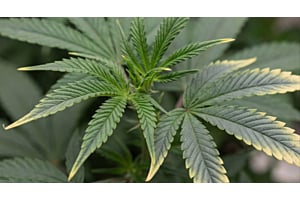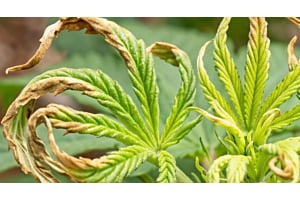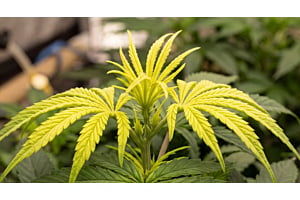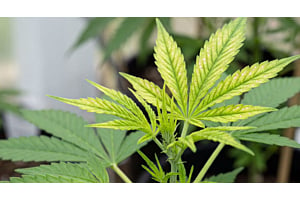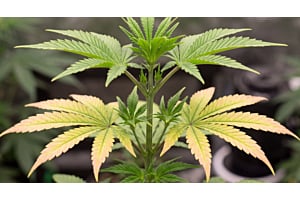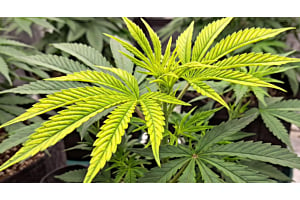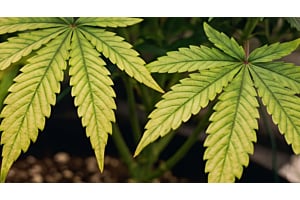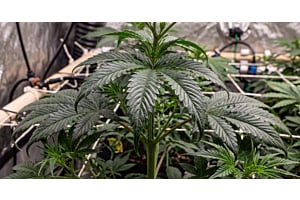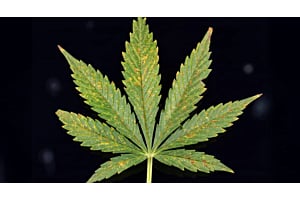
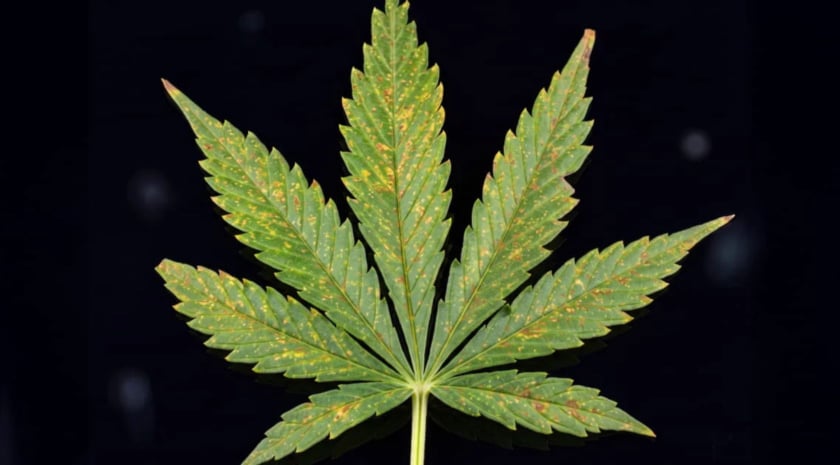
A calcium deficiency in weed shows up as big brownish blotches on new growth. Left unchecked, it weakens stems, stunts new leaves and cuts into bud density. Many growers conflate this problem with a cal-mag deficiency, but they aren't the same thing. This guide covers:
- Early to advanced signs of calcium deficiency.
- Common look-alikes like leaf septoria.
- Environmental and other causes.
- Step-by-step cal-mag and other fixes.
- Prevention tips for happy cannabis plants.
TL;DR: In cannabis, a calcium deficiency looks like stunted growth with large brown, tan or rust-colored spotting on curling newer leaves. Check your pH first, since acidic root zones lock calcium out even when it's present. Correct pH, then feed your plants with a calcium or cal-mag supplement. Expect new growth to green up within about a week, though already-damaged leaves won't recover.
What is a Calcium Deficiency in Cannabis?
A calcium deficiency in cannabis is a shortage of calcium, a secondary macronutrient that builds and strengthens cell walls, stems and root structure. When calcium runs short, structure breaks down. Stems turn weak and brittle and crack under bud weight. Roots underdevelop and become more vulnerable to root rot and disease. Flowering suffers most, since a weak structure limits how dense your buds can grow.
Is a Calcium Deficiency the Same as a Cal-Mag Deficiency?
No, a calcium deficiency and a cal-mag deficiency aren't the same thing. A cal-mag deficiency means both calcium and magnesium are running short at the same time. The two shortages show up together because they often share the same root causes, not because one deficiency causes the other.
The same water and grow medium problems that starve a plant of one usually starve it of the other too. Cal-mag supplements treat both deficiencies at once for exactly that reason.
What Are the Symptoms of a Cannabis Calcium Deficiency?
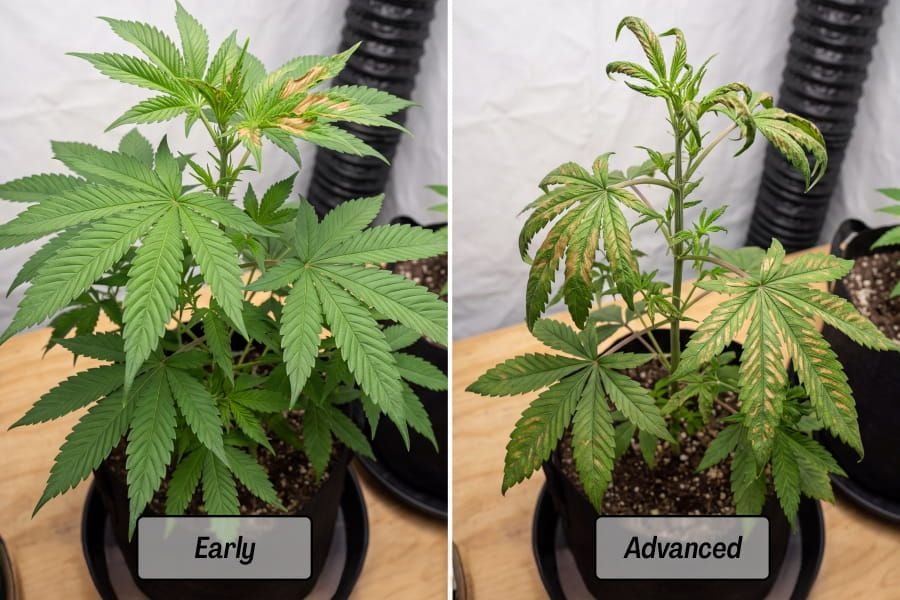
Calcium deficiency in cannabis progresses from early leaf spots to severe damage affecting the leaves and stems.
A calcium deficiency in cannabis plants moves through three recognizable stages as it worsens. Catching it early keeps the damage limited to a handful of new leaves.
- Early signs: stunted growth and tan, rust or brown blotches on new leaves.
- Progressing signs: spotting spreads and stems begin to weaken.
- Advanced signs: older growth browns and dies with lasting roots and stem damage.
- New growth vs older growth: where a calcium deficiency shows up first and why.
Early Signs: Stunted Growth and Brown Spots on Newer Leaves
Early calcium deficiency shows stunted growth and dark green leaf color, with large necrotic tan, brown or rust-colored blotches on new growth. Edge necrosis often appears elsewhere on the plant too. Young shoots crinkle and take on a yellow or purple tint, twisting in severe cases.
Progressing Signs: Weak Stems and Spotting on Older Leaves
As the deficiency progresses, it migrates from new growth toward older leaves as the shortfall continues. Stems start to weaken and feel less rigid than healthy growth. New leaves stay small, curly, and distorted, while older leaves develop the same brownish blotching.
Advanced Signs: Browning, Dying Leaves and Root Damage
Advanced calcium deficiency damages roots, stems and bud development. Older growth browns and dies alongside continued new-growth damage. Stems turn weak or brittle and crack easily, and roots underdevelop or discolor to brown.
New Growth vs Older Growth: Which Shows Symptoms First?
Calcium deficiency symptoms appear on new growth first, then progress to older leaves as the deficiency continues. New, actively expanding tissue needs the most calcium to build fresh cell walls. Older leaves already have their structure built, so demand there stays lower.
Calcium is semi-mobile rather than immobile because the damage doesn't stay confined to the new growth. As the shortfall continues, it spreads to older leaves too. That's why untreated calcium deficiency eventually browns and kills older growth as well.
Is It Calcium Deficiency or a Look-Alike?
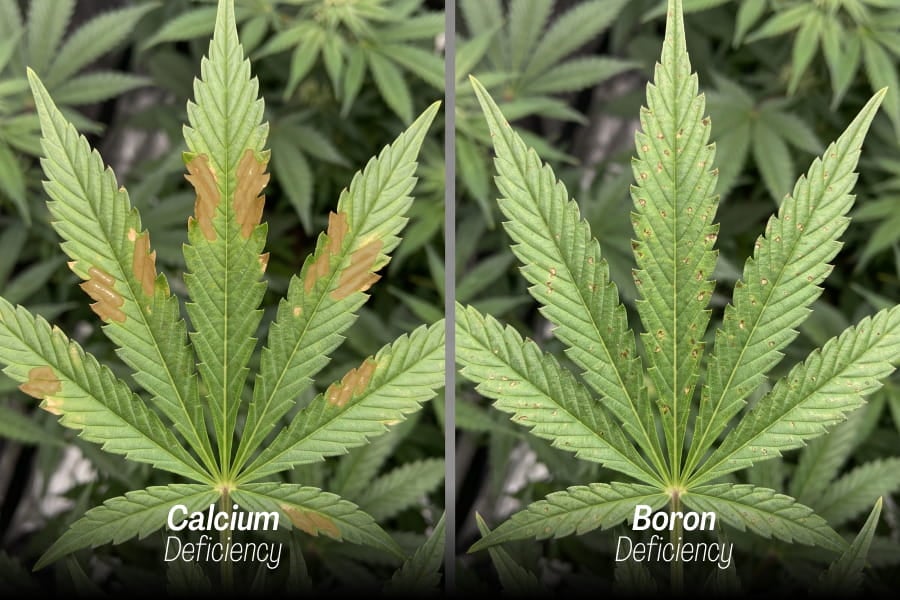
A side-by-side close-up of calcium deficiency vs. boron deficiency on cannabis leaves.
The symptoms of a calcium deficiency resemble several other cannabis plant problems closely enough to cause a potential misdiagnosis. Use the table below to compare calcium deficiency against its closest look-alikes.
| Cannabis plant problem | Where it appears | How it differs from calcium deficiency |
| Leaf Septoria | New and old leaves sporadically | Fungal spots with a yellow halo and tiny black flecks, not a nutrient shortage. |
| Boron Deficiency | New growth, same as calcium | Necrotic spots are smaller than the larger blotches from a calcium shortage. |
| Potassium Deficiency | Older, lower leaves | Browning starts at leaf edges with interveinal yellowing, not the whole leaf surface. |
| Nutrient Burn | Newest, fastest-growing leaves | Leaf tips yellow then turn brown and crispy, unlike the large brown spotting of a calcium shortage. |
A calcium deficiency shows up on new growth first, spreading to older growth as it worsens. Use that as your first clue, then check the leaf symptom patterns. If everything lines up, still check pH and water before feeding anything, since a lockout can mimic almost any deficiency.
Is it Calcium Deficiency or Calcium Toxicity?
Calcium toxicity is rare, but it happens - usually from heavy or repeated overfeeding rather than the calcium alone. Most setups start with less (rather than more) calcium, and cannabis plants also buffer excess calcium internally. This makes toxicity harder to trigger than a shortage.
That said, overfeeding or overcorrecting a calcium deficiency can still throw off other nutrients in the root zone. If you're seeing typical nutrient lockout symptoms, flush your root zone and rebalance your feed. This corrects most lockouts, regardless of which nutrient caused them.
Calcium vs. Magnesium vs. Cal-Mag Deficiency
A calcium deficiency and a magnesium deficiency are separate problems, each with their own mobility class and symptoms. A cal-mag deficiency simply means both can show up in your cannabis plant at the same time — usually because they share the same root causes: poor water quality, unbuffered coco or hydro media, or no cal-mag supplementation.
| Deficiency | Mobility Class | Where It Shows First | Appearance |
| Calcium Deficiency | Semi-mobile | New growth, then older leaves | Tan or brown necrotic blotches |
| Magnesium Deficiency | Fully mobile | Older, lower leaves first | Interveinal yellowing, veins stay green |
| Cal-Mag Deficiency (Combined) | Both nutrients affected | Both patterns can appear together | Symptoms of both patterns at once |
Most growers treat both nutrient deficiencies together with a single cal-mag fix, even if they've only confirmed one deficiency. At a normal label dose, treating the nutrient you don't need won't cause problems.
However, if your base nutrient line already supplies magnesium, cal-mag adds even more on top, and excess magnesium suppresses calcium uptake in cannabis. In that case, a calcium-only source is the safer choice. Calcium nitrate, hydrated lime and gypsum all correct a calcium shortfall without adding any magnesium.
What Causes Calcium Deficiency in Cannabis?
Calcium deficiency in cannabis comes down to a short list of recurring causes:
- Mineral-poor water, such as reverse osmosis or distilled water, which carries little to no calcium on its own
- Low or acidic pH in your growing medium or nutrient solution, which locks calcium out even when it's present in your feed.
- Coco coir or hydroponic setups running without a cal-mag supplement added.
- Heavy magnesium feeding, which competes with calcium for uptake at the root.
- High humidity or low airflow, which slows the transpiration that delivers calcium to new growth.
It’s worth noting that a calcium deficiency is rare outdoors (except in very acidic soils) since native soil calcium is usually abundant enough on its own.
How Do You Fix Calcium Deficiency in Cannabis?
To fix a calcium deficiency in your cannabis plants, follow these five steps
- Step 1: Test and correct your pH.
- Step 2: Clear salt buildup, only if that's the cause.
- Step 3: Feed a cal-mag supplement.
- Step 4: Rule out other contributing causes.
- Step 5: Watch new growth for recovery.
Step 1: Test and Correct Your pH
Grab a pH pen or test strips and check your root zone before you do anything else. Acidic conditions lock calcium out even when it's present in your feed. In soil, adjust to 6.0-6.3 pH. Treat 6.5 as a hard ceiling - lockout risk climbs fast past that point. In coco or hydro, adjust to 5.8-6.2 pH, with 5.6-6.4 as the outer acceptable range.
How you dial it in depends on the medium. Organic, living soil naturally manages its own pH so if there’s real pH drift, correct it with slow amendments (dolomite lime to raise it, wettable or elemental sulfur to lower it). In hydro, coco, or soil on synthetic nutrients, mix your feed solution first and then bring it into range with pH up or pH down. Retest before moving on.
Step 2: Clear Salt Buildup (Only If That's the Cause)
This step only applies if salt buildup is locking calcium out, which shows up as a runoff EC well above what you fed in. If calcium is simply short (mineral-poor water like RO or distilled, with no buildup), skip the flush and go straight to feeding. Rinsing a shortage strips the little calcium that's there. When buildup is the cause:
- In soil: Run plain, pH'd water through your pot at 2-3 times the pot's volume, until 20-30% drains out the bottom to carry salts out.
- In hydro: Drain your reservoir fully, rinse it out, and refill with fresh, pH'd solution.
- In coco: Run clean pH'd water through the medium as you would in soil. With coco, each feed is fresh and drains away rather than recirculating from a reservoir.
Either way, follow immediately with a full-strength feed that includes calcium. Flushing removes old salts, but it also strips out nutrients, so the plant needs a fresh feed right after, not plain water.
Step 3: Feed a Cal-Mag Supplement
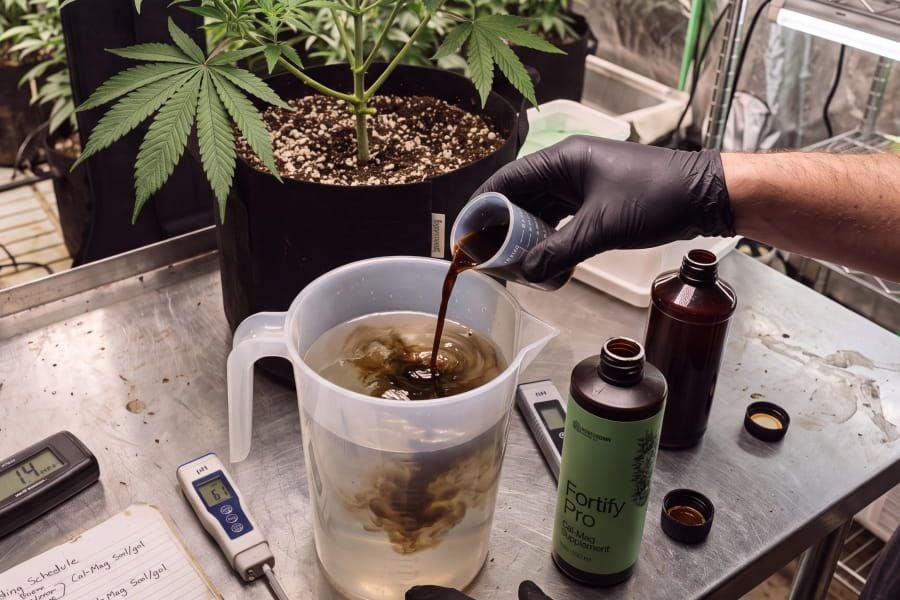
Feeding a cal-mag supplement to treat calcium deficiency.
Add a high-quality cal-mag supplement at the recommended dosage on the label - 3-5 mL per gallon of regular nutrient solution or 1 tsp per gallon of water as a foliar spray.
No cal-mag on hand, or need a calcium-only option? Pick one of these instead; each works, but the dose changes:
- Dolomite lime: mix into soil at planting for slow-release calcium over several months.
- Hydrated lime (calcium only): use 1 tsp per gallon (about 1.3 mL per liter) for faster uptake than dolomite.
- Calcium nitrate (calcium only): feed as a root drench or foliar spray for fast results. For a DIY cal-mag mix, combine 2.25 oz calcium nitrate with 6 oz Epsom salt per gallon (about 17 g plus 45 g per liter), and feed at the same rate as a commercial product.
- Gypsum (calcium only): use it to raise calcium without shifting pH much. Skip this option if your pH is below 5.5, since it can mobilize aluminum at that range.
Remember that excess magnesium can suppress calcium uptake in cannabis. If your base nutrient line already supplies magnesium, skip cal-mag and use a calcium-only source instead.
Step 4: Rule Out Other Contributing Causes
If pH, flushing and cal-mag don't fully resolve the problem within a week, check for these before assuming the deficiency is corrected:
- Are you overfeeding magnesium? Heavy magnesium can crowd out calcium even with cal-mag in the feed.
- Is humidity too high or airflow too low? Poor air movement slows transpiration, which carries calcium to new growth; symptoms can persist even with enough calcium in the root zone.
- If you're in coco or hydro, confirm cal-mag is actually part of your regular feeding routine, not just a one-time correction.
Step 5: Watch New Growth for Recovery
Check new growth every 2-3 days after correcting pH and feeding calcium. Healthy, undamaged leaves should appear within about a week. Don't expect already-damaged leaves to green back up; that tissue won't recover. Watch instead for the spread of symptoms to stop. If new growth still looks affected after a week, work back through Step 4 before troubleshooting further.
Ready For Your Next Cannabis Grow?
Strong calcium management supports sturdy stems and dense buds - and so does the genetics you start with. Healthy structure gives your plant a stronger baseline before nutrients even enter the picture.
For eligible adult growers where it's lawful to do so, a browse through marijuana seeds for sale is a good place to start planning. Quality genetics from the outset make that baseline even stronger.