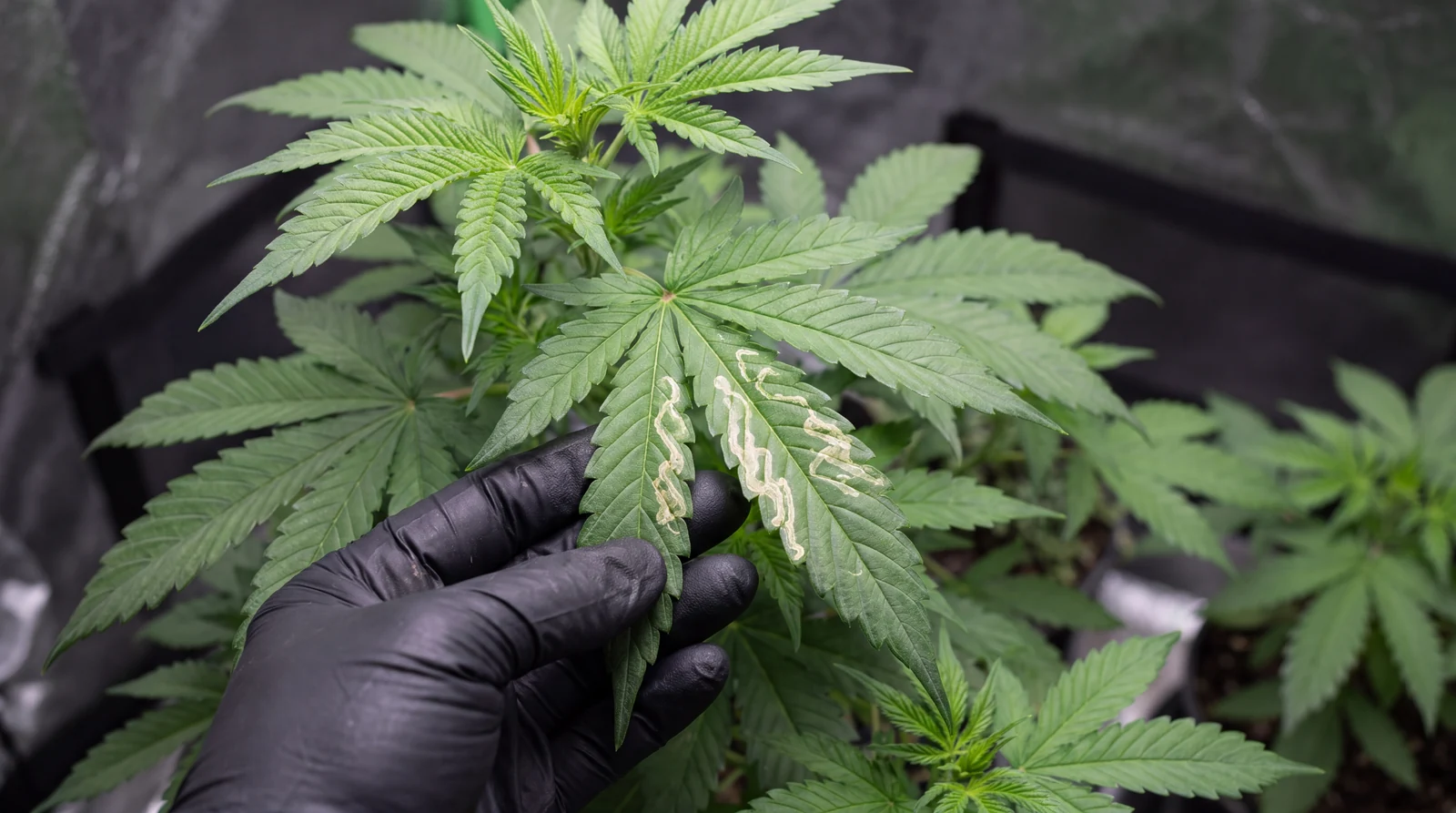
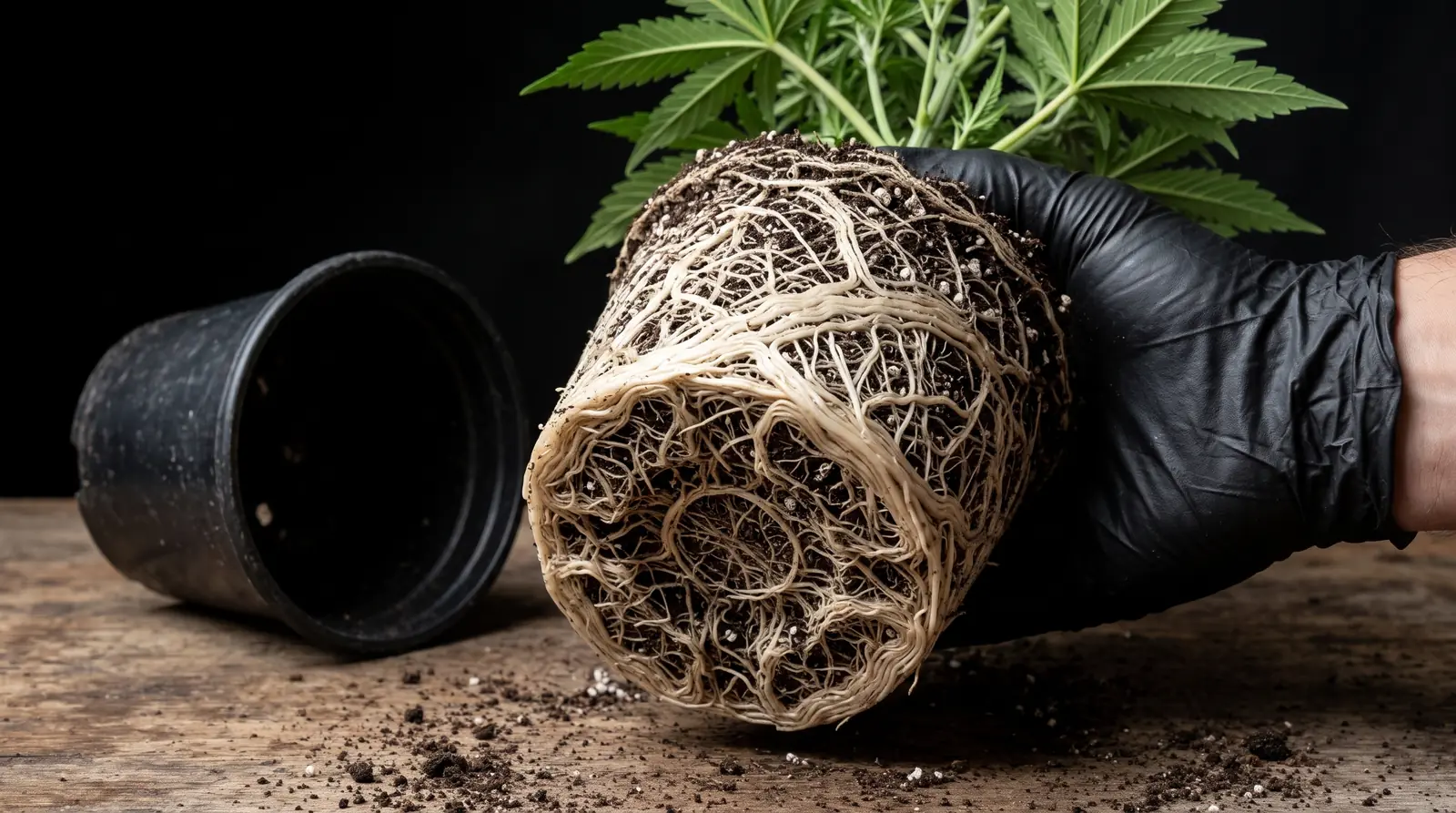
When a cannabis plant is root bound, its roots have filled the container and started circling the walls and base. With less soil left to hold water and air, the plant drinks faster, droops sooner, and slows down even though nothing else in your grow has changed.
The fix is more room: transplant in veg, or nurse your crop to harvest with more frequent waterings late in flower. Plants grown from autoflower seeds have the least time to bounce back, so the right pot size from day one does most of the work.
Below, you'll find the root bound symptoms to watch for, how to confirm it at the root ball, how to fix it in veg, and what to do in flower — for both photoperiods and autos — plus prevention tips for future grows.
What Is a Root Bound Cannabis Plant?
A cannabis plant becomes root bound (or rootbound) when its roots have outgrown its pot and there’s no fresh soil or medium left to grow into. It can happen to any plant grown in a container, and cannabis is no exception.
In a root bound plant, the roots don't stop growing when they reach the pot wall. They follow its curve around the inside and spread into a mat across the bottom, until the outside of the root ball is a dense layer of roots. The pot stays the same size, so every bit of space the roots take over is space the soil, water and air lose.
Why Being Root Bound Slows Your Weed Plant Down
A root bound weed plant has less water on hand and less air around its roots between waterings. Tightly circling roots also tend to take up less than an open root system spreading through fresh soil, so the plant gets less back from the same water and feed.
It builds up gradually. Roots keep growing while the pot stays the same, and eventually, there isn’t enough water, feed, or oxygen for what the plant uses in a day. That's why a plant can look happy one week and struggle the next while nothing changed in your setup.
How fast that happens depends on the pot size, how quickly the plant is growing, and how long it's been in that container. Left alone, growth slows and the plant falls further behind what its genetics could deliver with more room.
Root Bound, Pot Bound and Root Locked: Same Problem?
Yes, “root bound,” “rootbound,” “pot bound,” and “root locked” all describe the same container problem. Growers use the terms interchangeably, so a root-locked plant on a grow forum is simply a root bound plant by another name.
Nutrient lockout is a different issue. Lockout means nutrients are in the soil but the plant can't take them up, usually because the pH is off. It can cause similar-looking leaf problems, but it has nothing to do with pot size.
Root Bound Symptoms in a Cannabis Plant
The earliest root bound symptoms show up in your watering routine, and leaf changes usually come later, once the problem has been building for a while. These are the signs to watch for:
- Soil dries out faster and faster. A plant that used to go comfortably between waterings starts asking for water sooner, and the gap keeps shrinking instead of leveling off.
- The pot feels light soon after watering. With roots taking the place of soil, there's less in the pot to hold water, so the weight drops off quickly after a full watering.
- The plant droops shortly after watering. This one confuses a lot of growers. There was water in the pot, just not enough soil holding it to carry the plant until its next drink.
- Growth stalls against the plant's own pace. If new growth has flattened out while light, temps, and feed haven't changed, the root zone is one of the few places left to look.
- Roots show at the drainage holes or on the surface. A mat of roots across the top of the soil tells you a lot more than a few tips poking out the bottom, which healthy plants show long before they run out of room.
- The plant is much wider than its pot or tips over easily. A top-heavy plant in a small container has usually outgrown it below the soil line too.
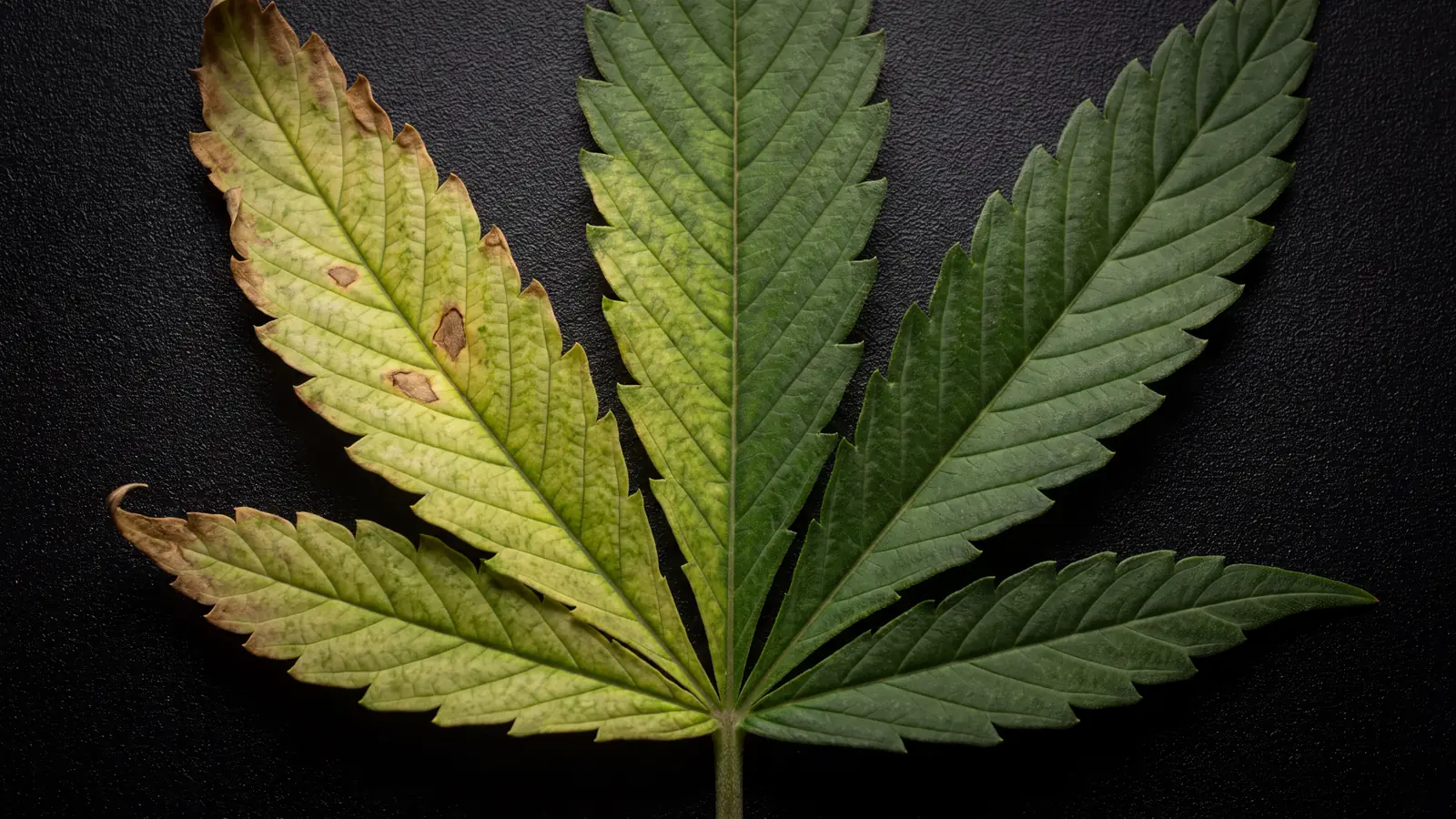
- Leaves fade or turn yellow with no change in feed. This can come with a restricted root system, but it's the least specific sign on the list.
Look for the pattern. One sign on its own doesn't confirm anything, but fast dry-down, a light pot, drooping soon after watering, and stalled growth together point squarely at the roots. When you spot several signs of root bound at once, the next step is confirming it.
How to Confirm a Rootbound Cannabis Plant
Confirm it in two steps. First, check how fast the pot dries out, because that one clue separates root binding from most of its look-alikes. Then slide the plant out and look at the root ball, which is the only way to know for sure.
Rule Out Look-Alike Problems
Bound roots make a pot dry out faster than normal, while overwatering keeps it wet and heavy. Pot weight and dry-down speed do most of the sorting for you, and the table below covers the most common mix-ups.
| What You See | Points to Root Bound | Points to Something Else |
| Droop soon after watering | The soil is already drying fast and the pot feels light for its size | The soil is still wet and the pot is heavy, which points to overwatering |
| Droop with a dry pot | Dry-down keeps speeding up with the same pot and the same routine | A one-off dry pot after a missed watering is plain underwatering, and the plant perks up after a drink |
| Pale or yellowing leaves | Color fades across the plant with no change in feed, alongside fast dry-down and stalled growth | The change follows a change in feeding or runoff and dry-down is normal, which points to a nutrient issue |
| Droop plus slow growth | The droop sticks around through the watering cycle and only lifts briefly after a drink | The droop tracks canopy temperature or sits under the strongest part of the light, and easing heat or light intensity fixes it |
What a Root Bound Root Ball Looks Like
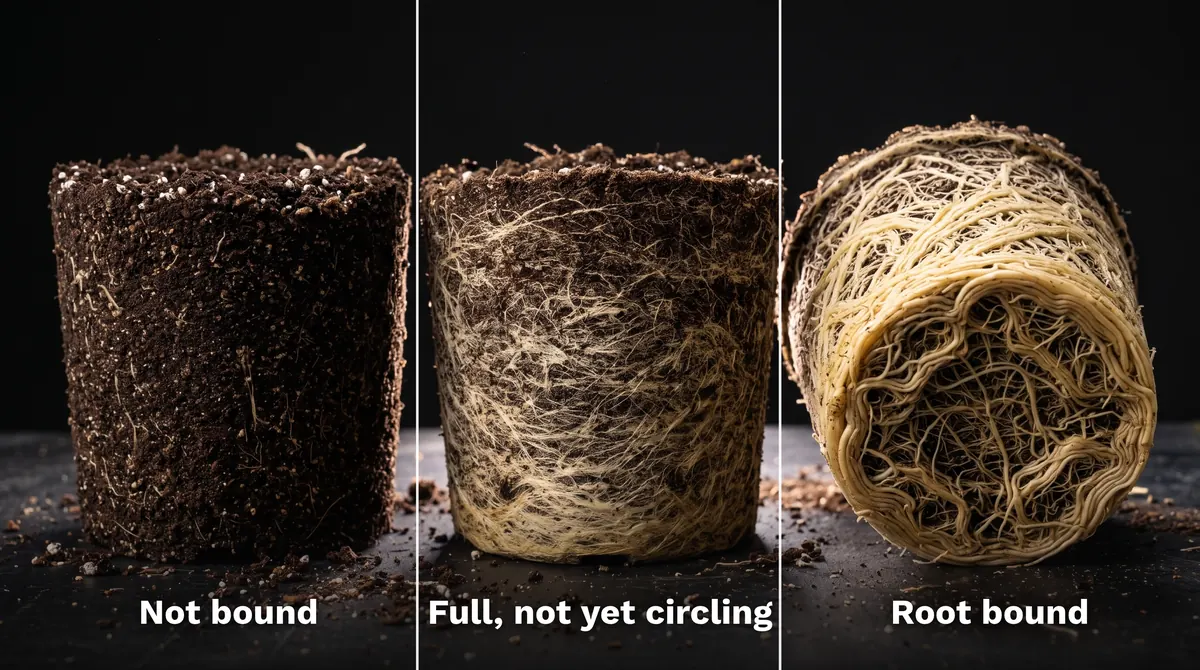
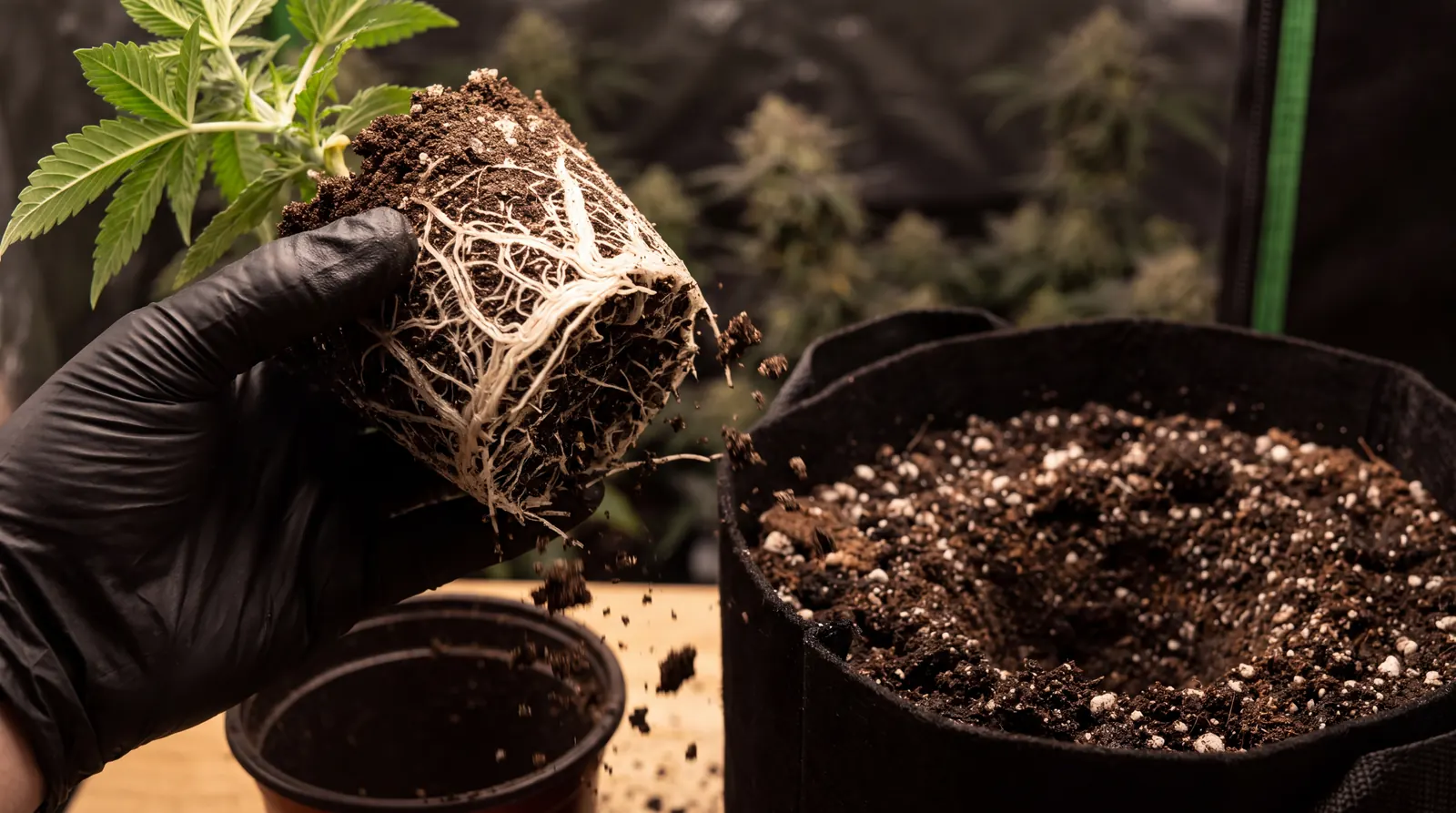
A root bound root ball keeps the exact shape of the pot. Its outside face is mostly roots, usually with a spiral wound around the base or a flat mat where the pot wall used to be.
A healthy root ball holds together too, but you can still see soil on the outside with pale root tips running through it and no circling. In between sits a root ball that's full but not circling yet. That plant is heading toward root bound, which gives you time to plan the move before it starts struggling.
If the roots look brown, feel mushy or smell bad, you're looking at root rot. That's one of the cannabis diseases with its own causes and fixes, separate from running out of space.
How to Check the Root Ball
Slide the whole root ball out of the pot in one piece, take a quick look at the outside, and put it straight back. Done gently, it's low risk, but it's still root disturbance, so do it once and do it properly following these steps:
- Get the moisture right. Slightly moist soil holds together when the pot comes off. Bone-dry soil crumbles and soaked soil tears, so water lightly first if it's very dry, or wait a while if you've just watered.
- Support the top of the root ball. Spread your fingers across the soil surface with the main stem between them, so your hand holds the root ball in place.
- Tip the pot over. Turn it on its side or upside down, carrying the plant's weight in your hand so it doesn't hang from the stem.
- Lift the pot off the plant. Pull the pot away from the root ball, not the plant out of the pot. If it sticks, gently squeeze the sides of a plastic pot or roll down the sides of a fabric pot.
- Look, then put it back right away. Return your rootbound plant to the same pot so the roots don't sit exposed. Once confirmed, you can move onto the fix.
How to Fix a Root Bound Weed Plant Step by Step
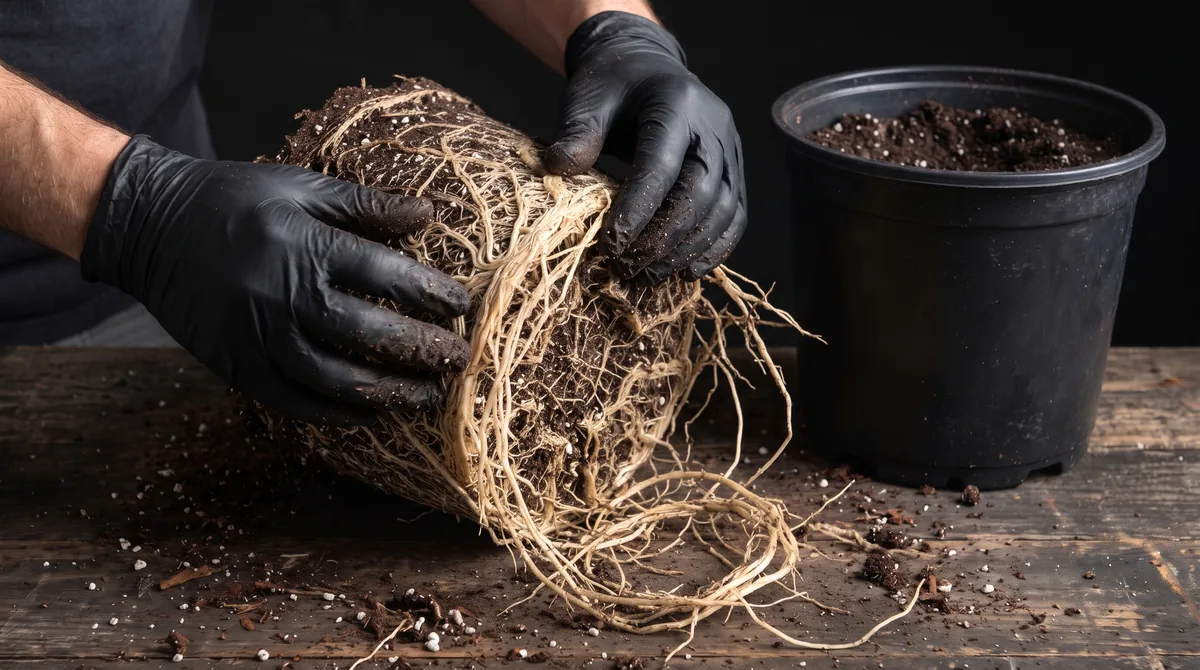
The fix for a root bound weed plant is more room. Pot it up into a bigger container and loosen the outer roots so they grow out into the fresh soil. Do the whole job in one smooth move so the roots spend as little time exposed as possible. Follow these steps in order:
- Prep the new pot first. Partly fill the bigger container with fresh, lightly moistened soil before the plant comes out, so the roots aren’t left waiting in the open.
- Slide the plant out. Support the top of the root ball with your fingers around the stem, tip the pot and lift it away, just like when you checked it.
- Loosen the outer roots. Gently tease the root mat apart with your fingers and unwind any hard spiral at the base, so the roots point outward. Cutting into or shredding the root ball is a riskier job, and most root bound plants recover well without it.
- Set it in and backfill. Sit the root ball at the same depth it was growing before and fill around it, firming the soil enough to hold the plant upright without packing it down.
- Water it in. Water slowly until some runs out of the drainage holes, so the old root ball and the new soil are both wet through and in good contact.
After that, leave it alone. Expect a short pause in growth while the roots move into the new soil. Keep your feed the same and skip any new training until fresh growth shows up.
Timing changes the plan. Plants in veg bounce back fast, but flowering plants and autos need a different approach.
Root Bound Plants in Veg
If a marijuana plant is root bound in veg, pot it up right away. Vegetative plants are still building roots and leaves rather than buds, so they move into new soil quickly and the pause after transplanting is short. They also have enough growing time left to turn the extra room into a bigger plant.
Take the same approach if the root ball looks full when you check it, even if the plant isn't entirely root bound yet. Moving a healthy vegetative plant costs you a short pause. Waiting costs you growth you won't get back.
Root Bound Plants in Flower
For a root bound marijuana plant in flower, transplant if it’s early in flower and stalling, and nurse it to harvest if it’s well into bloom. Disturbing roots during flowering carries more risk of a setback than in veg, and the plant has less time left to use new space.
Early on, a stalling plant has more to lose from staying cramped than from the move, so give it the room and let it settle.
Later on, the move is the bigger risk. Water more often and check pot weight through the day so it never sits bone dry for long. At this stage, you're carrying the plant to the finish line, not repairing it.
Root Bound Autoflowers
For a root bound autoflower, pot it up if it hasn’t started flowering yet, and nurse it to harvest if it has. Autoflowers start flowering based on age instead of waiting for a 12/12 light schedule, so their veg window is short and you can't extend it to give the roots time to catch up.
If you do pot up a young auto, do it once and gently. Waiting leaves almost no time to turn new space into growth, so a late repair is often only partial.
An auto that's already flowering is in the same spot as a photoperiod plant well into flower, so nurse it to harvest the same way.
That short window is why many growers plant autoflowers straight into their final container and skip potting up altogether. Choosing the right pot size for autos at the start does more than any fix can later on.
How to Prevent Root Bound Cannabis Plants
To prevent a root bound cannabis plant, make sure its roots always have fresh soil to grow into, from planting through to harvest. That comes down to four choices: how big the pot is, what it's made of, how open the soil mix is, and how closely you track dry-down as the plant grows.
Size the Pot for the Finished Plant
Pick the pot for the plant's final size, not its size today. A container that fits now is the one that runs out of room later, so think about how big the plant will get and how much growing time it has left. Genetics decide a lot of that. Check whether the marijuana seeds you're growing are rated short, medium or tall, and give taller plants and longer veg times the bigger pot.
Starting big is a solid move. There’s no harm in extra room, it skips the setback of potting up, and a plant with more root space can reach its full yield potential. The only catch is watering. Early on, a small root system can’t drink a big pot dry, so the soil stays wet long after the plant has taken what it needs. Water less until the roots fill out, then scale up as the plant grows.
Choose Fabric or Air Pots
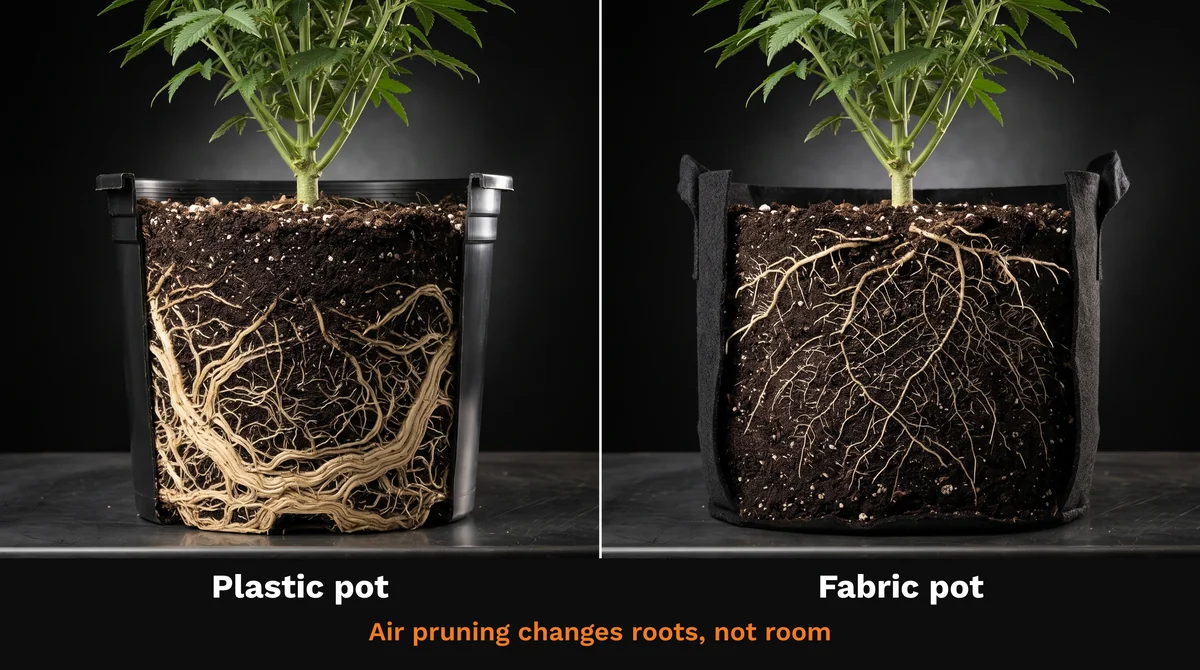
Fabric pots and air pots cut down on circling roots. Their walls let air reach the edge of the root zone, so root tips that arrive there dry out and stop growing, a process called air pruning. The roots branch back into the soil instead of running along a smooth wall.
They don't add room, though. A fabric pot that's too small for the plant still fills with roots and brings the same fast dry-down and stalled growth.
Use an Open, Well-Draining Soil Mix
An airy mix gives roots more usable space than a dense one. Heavy, poorly draining soil holds less air and less available water per gallon, so two pots of the same size don't always offer the same room. Mixing in perlite is a common way to open up a heavy soil.
Track Dry-Down as an Early Warning
Note how long the pot takes to dry out and how its weight changes week to week. When the gap between waterings starts shrinking, the plant is closing in on the limits of its pot, and you can move it before anything goes backward. Before you do, check where the plant is in its life cycle, because the right time to transplant cannabis depends on the stage as much as the pot.