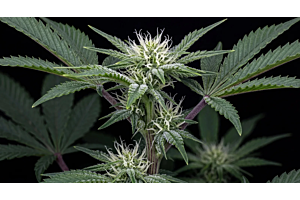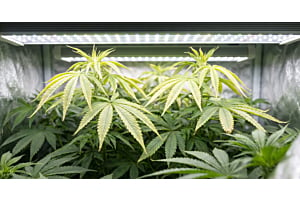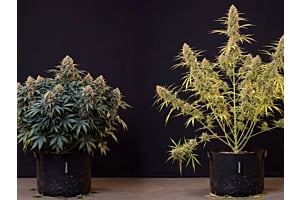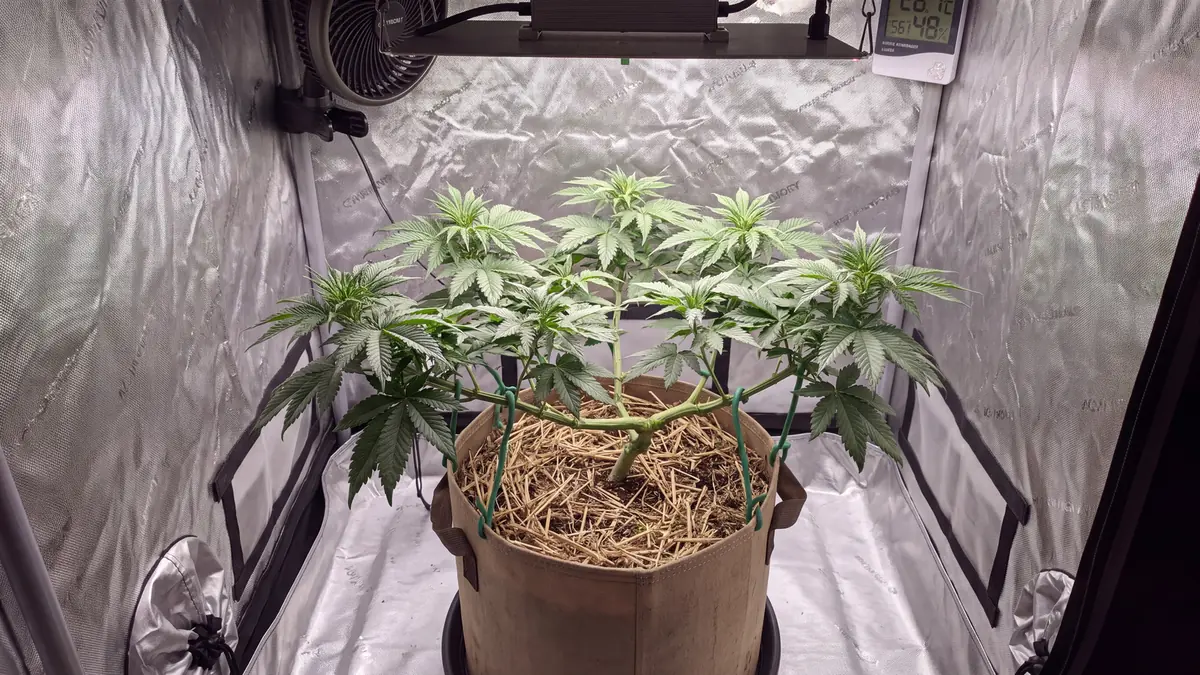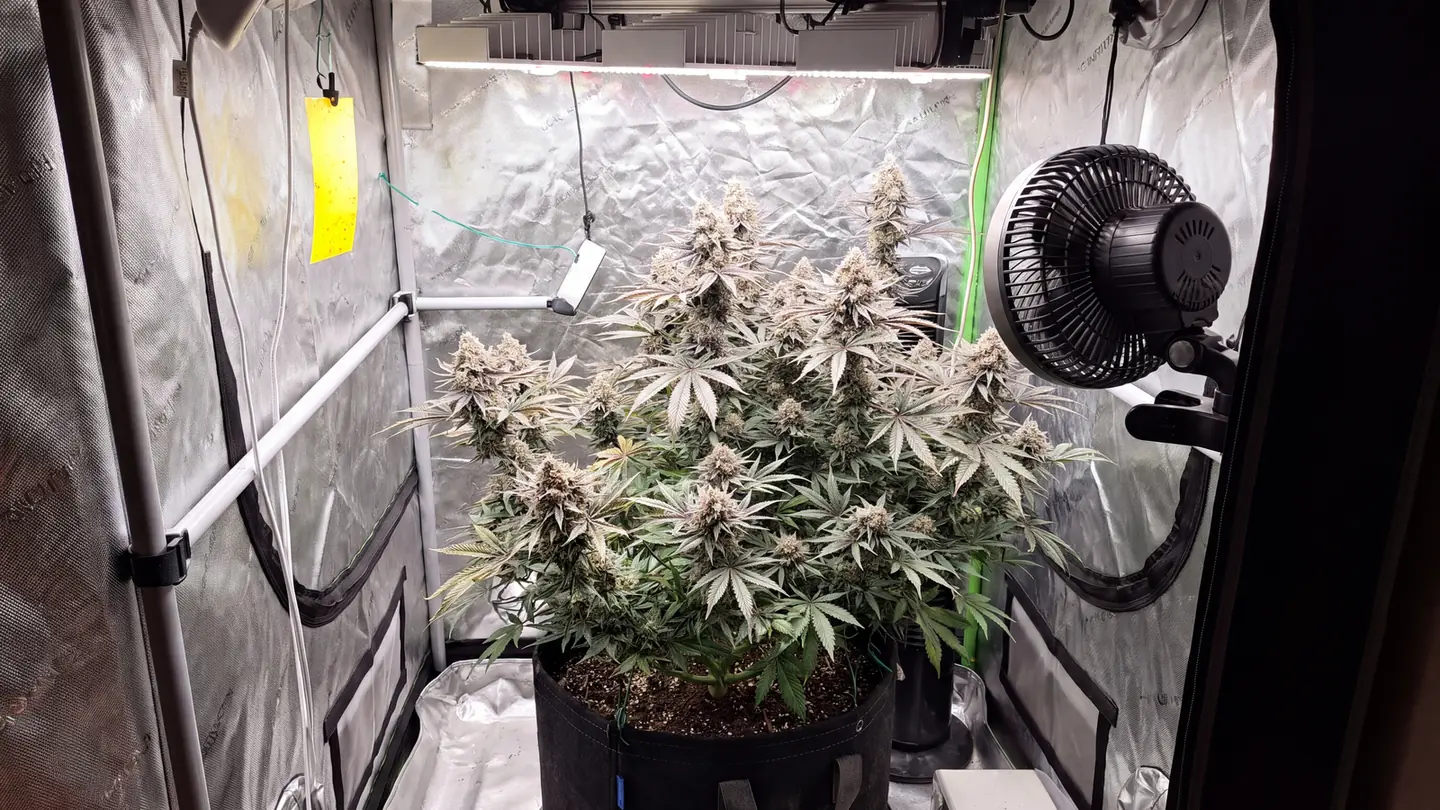
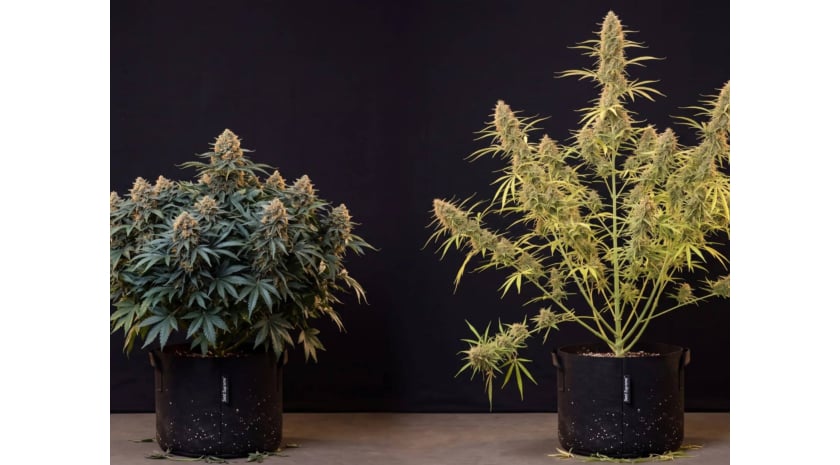
A sativa-type cannabis plant is typically tall and open, with long gaps between leaf sets and narrow, pointed leaflets, while an indica-type plant is typically short and bushy with broad leaflets. Both belong to the same species, Cannabis sativa, and each shape traces back to the climate its ancestors grew in.
Almost every variety sold today is a hybrid, so most weed plants land somewhere between the two. This guide shows how to tell them apart at every stage, from the first true leaves to finished buds, and what each type means for your grow indoors and outdoors.
What "Cannabis Sativa" Actually Means
Cannabis sativa is the name of the whole species, and indica and sativa are two forms within it. Most botanists now treat all cannabis as one species made up of varieties, so the two labels describe how a plant is built, how it grows and where its ancestors came from.
That double use of the word causes most of the confusion. When Carl Linnaeus named the plant in 1753, Cannabis sativa covered all of it, with sativa being Latin for “cultivated.” Three decades later, Jean-Baptiste Lamarck examined shorter, broader-leaved specimens collected in India and gave them a species of their own, Cannabis indica.
He was describing a real difference in shape. The split didn’t hold, though, because indica-type and sativa-type plants cross freely and their offspring are fully fertile, which is how varieties of one species behave.
Since the two never became separate species, indica and sativa survive only as names for plant types, and that’s how most growers use the terms. Sativa-type and indica-type describe structure and growth habit. They say nothing reliable about THC or flavor, though.
Indica vs Sativa Plants Side by Side: The Visual Differences
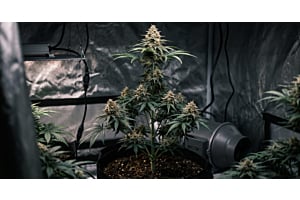
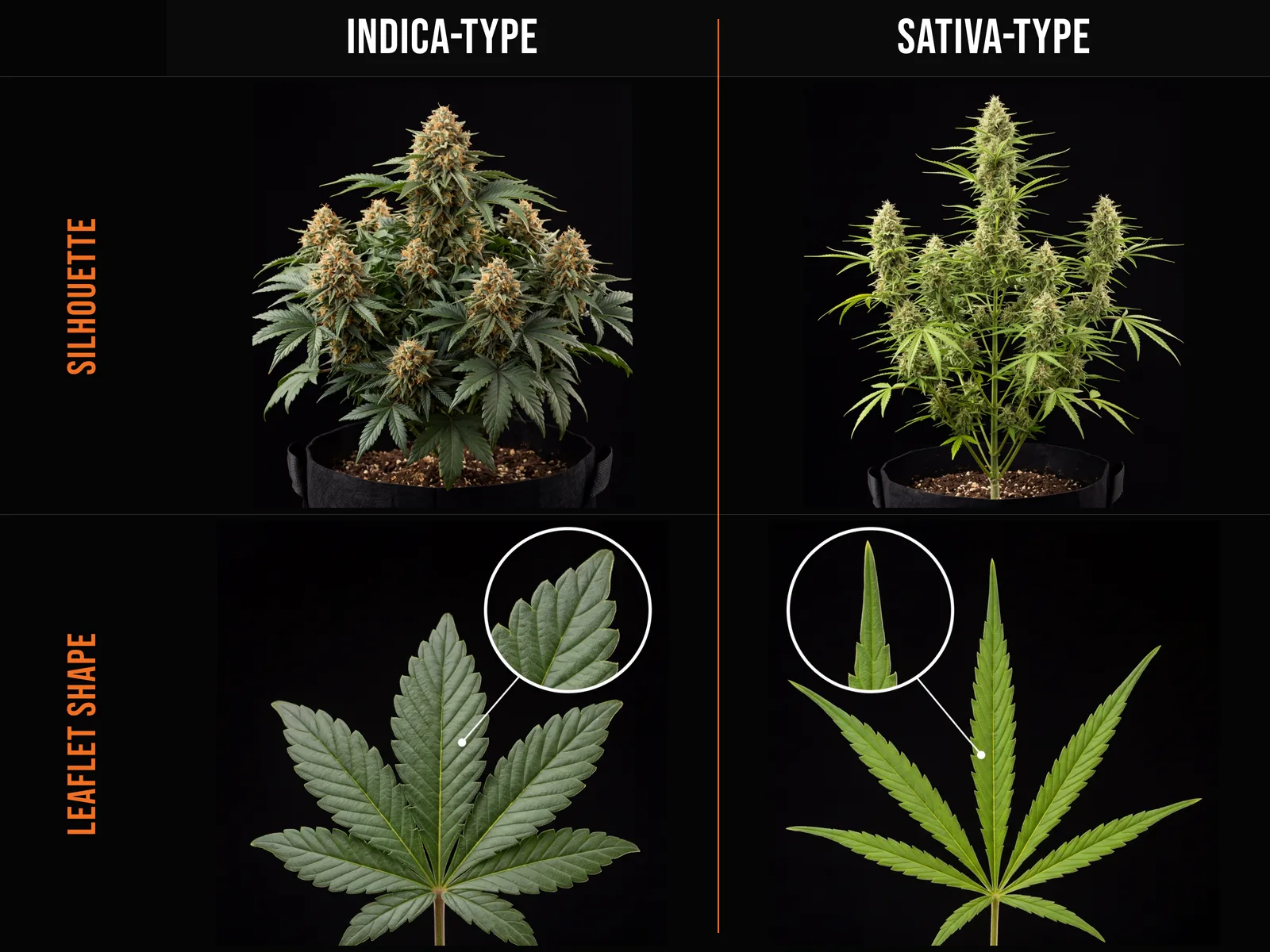
A mature sativa plant looks like a small tree: a tall main stem, branches angled upward, visible bare stem between leaf sets and long, slender leaflets in a lighter green. An indica plant looks like a shrub: wider than it is tall, with leaf sets stacked close together and broad, darker leaflets.
| What to check | Sativa-type | Indica-type | When the check is reliable |
| Leaflet shape | Long, narrow, pointed fingers | Short, wide, rounded fingers | From the first few sets of true leaves |
| Node spacing | Bare stem visible between leaf sets | Leaf sets stacked close together | From early veg |
| Branch angle | Branches climb upward near the main stem | Branches spread sideways into a dense bush | Mid veg onward |
| Silhouette | Taller than wide, airy and gappy | Wider than tall, dense | Late veg onward |
| Leaf shade | Lighter green | Darker green | A weak hint at any stage |
| Final height | Can pass 12 ft outdoors, extreme cases near 20 ft | Traditionally 3 to 6 ft | Only at the end of flower |
The silhouette is node spacing and branch angle added together. Long internodes with branches reaching up read as a tree. Short internodes with branches spreading out read as a bush. On a young marijuana plant, trust leaflet shape and node spacing. Height means little until the plant has had the time and root space to show it.
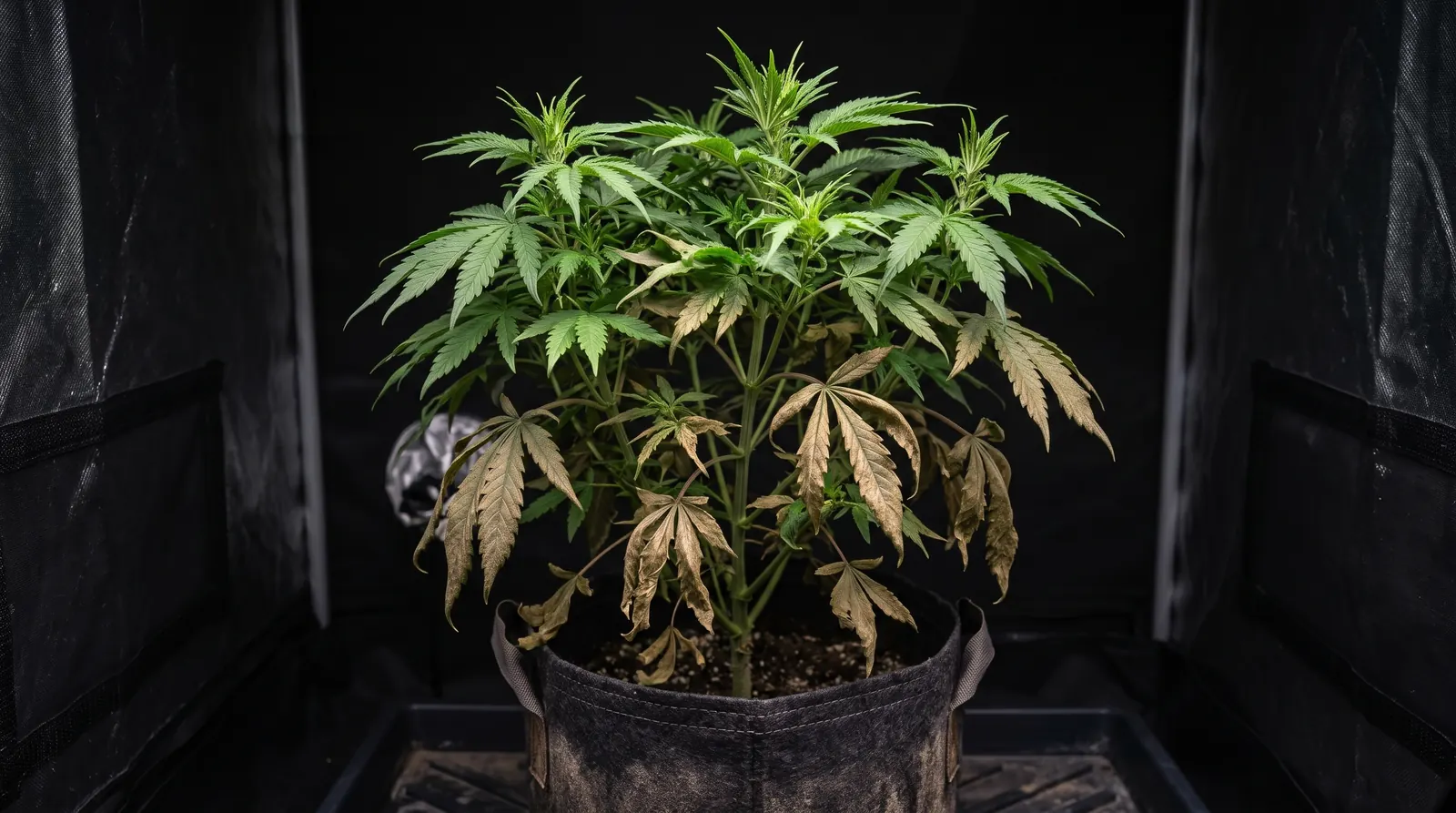
Genetics set the tendency, but light, pot size, and training decide how much of it shows, so treat any height figure as what a plant can reach, not what it will reach. Leaf shade is the weakest check, because feeding, light intensity, and stress all shift it.
Don't count leaf fingers to determine plant type, either. Leaflet count changes with age and leaf position on both types, from a single blade on a seedling's first true leaves to 5 to 9 on mature fan leaves. Leaf arrangement marks age too: young plants grow leaves in opposite pairs that shift to alternating as they mature, whatever their lineage.
Bud Structure: How Indica and Sativa Flowers Differ
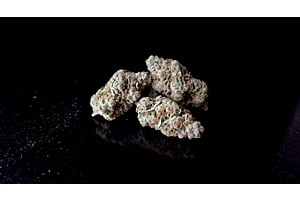
Sativa-type buds typically grow as long, tapering colas, with calyxes stacking in loose, spear-shaped clusters along the stem. Indica-type buds are typically short, dense and rounded, packed tight around each node. It’s the same open-versus-dense logic as the rest of the plant.
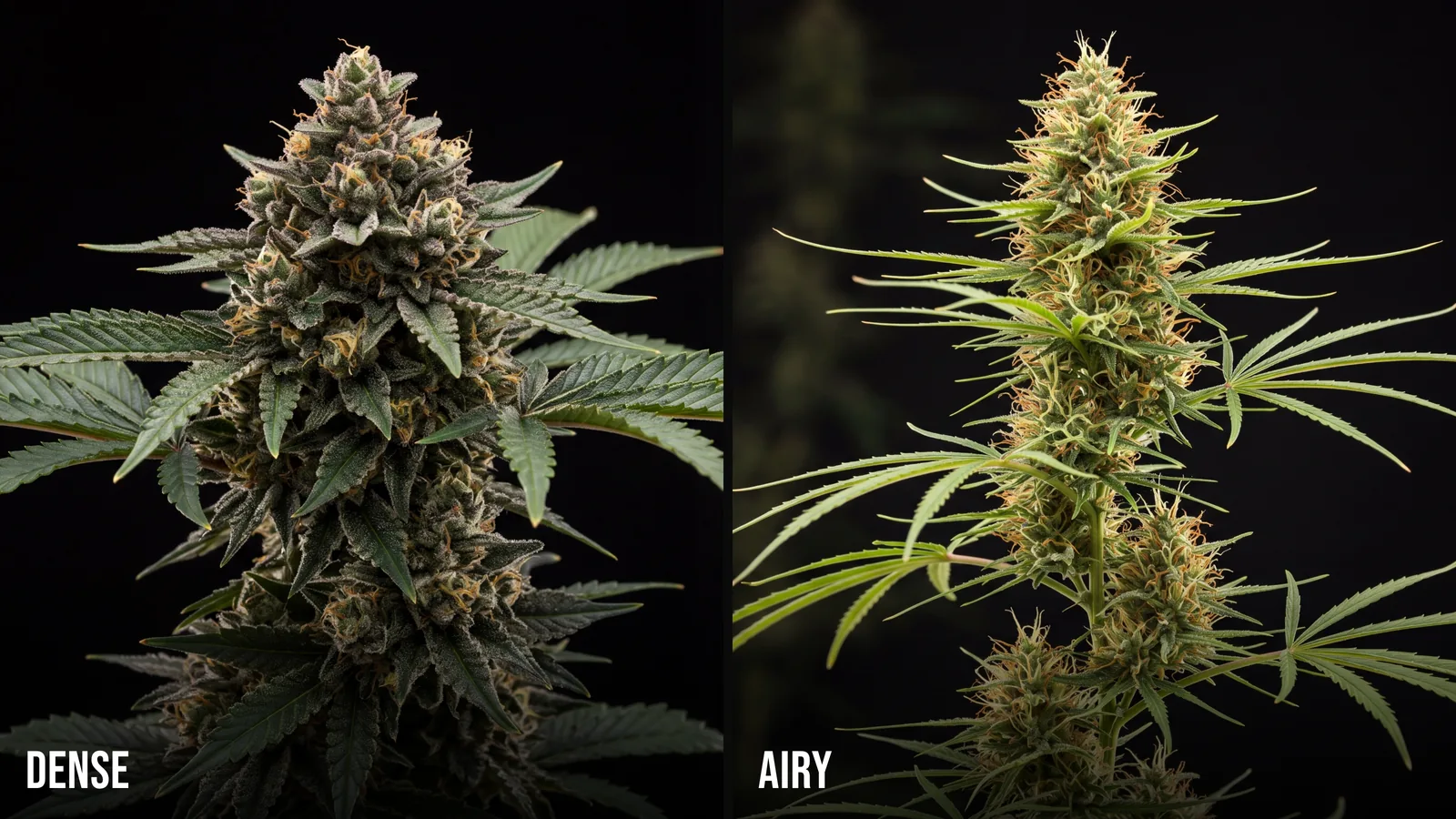
This check only opens up from mid flower, which is why veg-stage identification relies on leaves and node spacing. The shape decides how a bud handles moisture, and that matters more to a grower than looks.
- Tight indica-type buds trap moisture. Little air reaches the core, so in a humid late flower the inside stays damp, and that’s where bud rot starts.
- Open sativa-type buds dry out faster. Air moves through the gaps between calyx clusters, so the same humidity is less of a threat.
That openness fits where sativa-type plants come from. In a wet tropical season, a flower that dries quickly between rains is far less likely to rot before it sets seed.
Some plants also foxtail late in flower, pushing new calyxes out from the top of a bud that has already formed. With sativa genetics, this is often just the plant's normal habit. On any weed plant it can also signal heat or light stress, so check canopy temperatures and light distance before putting it down to genetics.
Two things bud structure can’t tell you: an airy cola takes up more space than a dense bud of the same dry weight, so judging yield by eye works poorly across the two types; and frost is not a type marker. Trichome coverage varies widely across both, and visible frost says nothing reliable about potency.
Why They Look so Different: Climate Shaped Both Plants
Sativa and indica plants look different because each adapted to a different climate. Indica-type plants stayed short and quick to finish to beat early mountain frosts, while sativa-type plants grew tall and slow through long tropical seasons where frost never came.
Indica-type plants trace to the dry, cold Hindu Kush mountains of Afghanistan and northern Pakistan, where short summers made the compact silhouette a deadline response.
Sativa-type plants trace to the tropics and subtropics, from Southeast Asia and Africa to the Americas. There, a plant that kept climbing kept winning light, and humidity pushed the flowers toward their signature open structure.
Cannabis plants that developed this way, in one region and without deliberate crossing, are called landraces. They’re the closest thing to a pure sativa or indica. Well-known sativa landraces include Durban Poison from South Africa, Thai from Thailand, and Acapulco Gold from Mexico, while Hindu Kush is the classic indica example.
Grown far from home, a landrace may not express everything it showed in its native climate, because form follows environment as well as genetics.
How Indica and Sativa Plants Behave Through a Grow
Sativa-type plants typically start slower, stretch hard after the flip, and need noticeably more weeks in flower, while indica-type plants usually veg quickly and finish sooner.
Commonly cited flowering ranges put indica-leaning plants at roughly 8–10 weeks and sativa-leaning plants at around 10–12 weeks, with some pure sativa lines running past 14 weeks. A sativa that looks unremarkable in week three of veg can be well clear of its neighbor by mid flower.
The stretch is what catches growers out. After the switch to 12/12, a sativa-type plant can double its height, and sometimes more, so the height at the end of veg isn’t the height you finish with. Plan the space for where the plant is going. Training and flipping earlier are the usual fixes, and both work best when timed to the right cannabis growth stages.
Growing Sativa vs Indica Plants Indoors
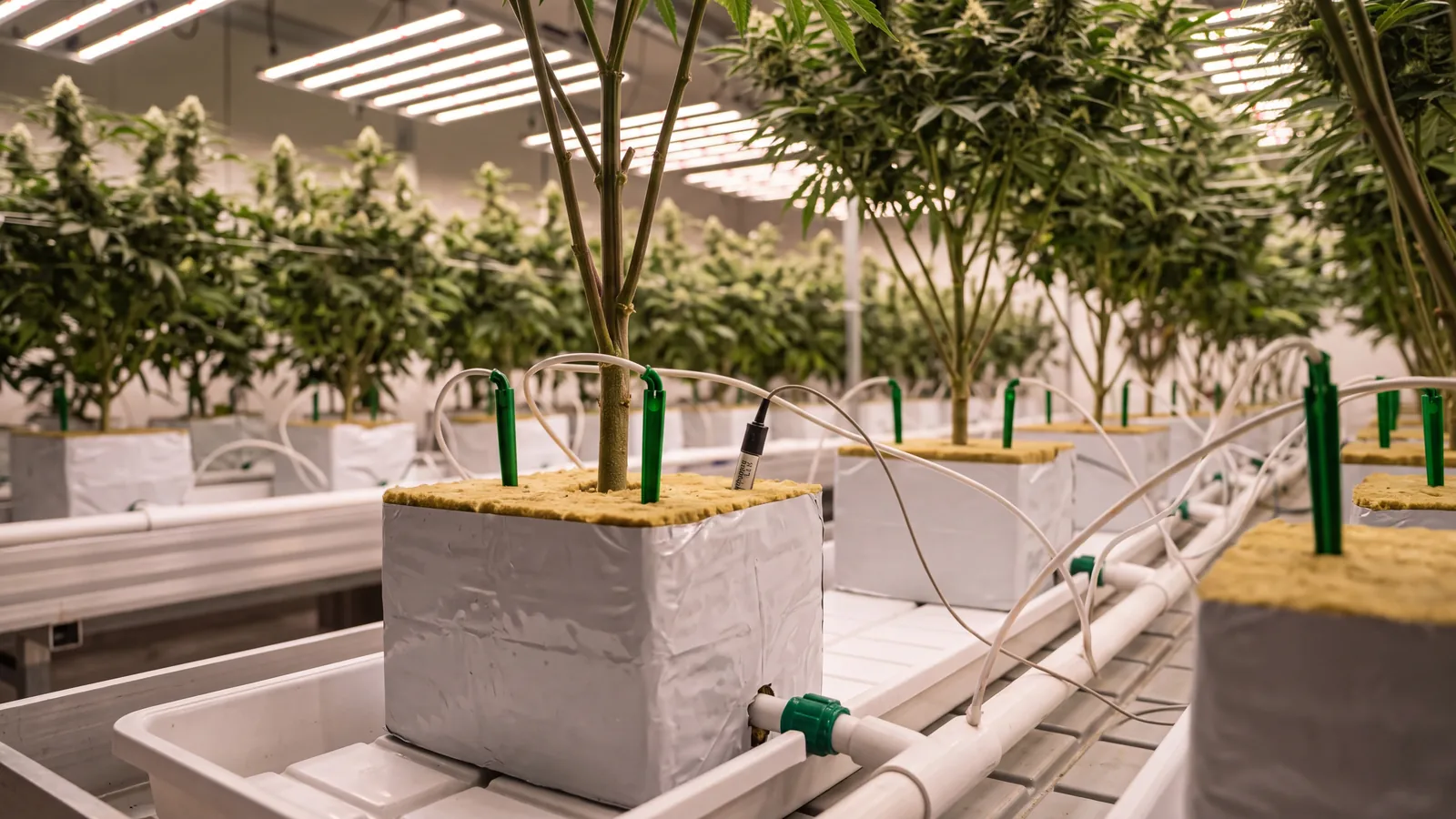
Indoors, headroom and flowering length are the two constraints, and the two types handle them differently. An indica-leaning plant stays shorter and bushier, so it fits under a fixed ceiling with little effort and needs less training to keep the canopy even. A sativa-leaning plant can do well in a tent or room, but only with a plan: flip earlier, top or train the plant to spread the canopy sideways, and leave enough clearance above the tops for the stretch.
The payoff differs too. Indica-leaning plants tend to give smaller but steadier harvests, and their shorter flowering cycle can fit more runs into a year. Sativa-leaning plants take longer per run and demand more canopy management, but a well-trained plant can fill a space with long, productive tops.
Growing Sativa vs Indica Plants Outdoors
Outdoors, the choice between sativa and indica comes down to season length. Sativas suit long, warm seasons, where their late finish pays off in bigger harvests. Indicas suit short summers and early falls, where their quicker finish gets the buds in before the weather turns. Room is rarely the problem outside. Timing is.
A photoperiod plant starts flowering when nights lengthen in late summer, so a sativa that needs 12–14 weeks of flower can still be ripening deep into fall. Given free root space and a season that stays warm, that’s where sativas reach their full size. In a short season, the first cold, wet spell can arrive while the buds are still filling out.
Indica-leaning plants avoid most of that risk because their shorter flowering time usually lets them finish before the weather breaks. Their compact frame is also easier to support and keep out of sight. Dense indica buds still need good airflow if late-season rain sets in.
Whichever type you choose, count back from your usual first frost or fall rains and check that the variety's flowering time fits inside that window.
Why You Can't Always Trust What You See
A cannabis plant's appearance doesn't reliably reveal its genetics, because both its mixed ancestry and its growing conditions shape how it turns out. Most modern strains are hybrids that inherit traits from both indica and sativa parents, and which of those traits a given plant expresses can vary from seed to seed.
That’s why one pack of the same strain can produce several distinct phenotypes, or phenos — a sativa-dominant seed can grow into a short, broad-leaved plant that looks indica, while an indica-dominant seed can produce a taller, lankier plant.
Growing conditions then shape whatever the genetics allow. Light intensity, temperature, pot size, and training all affect structure, and height and internode length react most. Run the same seed in two different rooms and you can end up with two visibly different plants.
The same principle explains why a landrace can look and grow differently once it is moved away from its home climate.
The Label Doesn’t Predict Chemistry
Indica, sativa, and hybrid labels do a poor job of predicting a plant's chemistry. A 2022 study that tested close to 90,000 commercial cannabis samples from six US states found the labels did not reliably match what the samples actually contained.
Cannabinoid researcher Dr. Ethan Russo has long argued that the indica and sativa split, as used in everyday cannabis talk, does not hold up chemically. None of that cancels the structural differences above. It only means the label can’t tell you much about potency or terpene profile.
For that, researchers describe plants by what they produce. A chemovar, short for chemical variety, is defined by a plant's cannabinoids and terpenes, whatever it looks like. A simpler grouping, the chemotype, sorts plants by their main cannabinoid:
- Type I plants are high in THC and low in CBD.
- Type II plants carry THC and CBD in roughly equal amounts.
- Type III plants are high in CBD with very little THC.
So read a seed listing in two parts. The indica or sativa lean tells you how the plant is likely to grow. The stated cannabinoid profile tells you what it’s likely to produce. Neither replaces the other.
- Good for: reading growth habit, planning for height and stretch, judging bud density and rot risk.
- Not good for: predicting THC, CBD, terpenes, or anything about the finished product.
Which Plant Type Suits Your Grow?
The decision comes down to three constraints: how much vertical space you have, how long your season or cycle is, and how humid it gets. Match those first and the plant type follows.
- Limited headroom: indica-leaning varieties, for their compact form and smaller stretch.
- Short season or faster cycles: indica-leaning again, since the shorter flowering period decides how late you finish.
- Humid climate or humid late flower: sativa-type flower structure is the advantage, because an airier bud holds less moisture.
- Long warm season, outdoor space, no height limit: sativa-leaning varieties can run to full expression, which is the one setting where that height is an asset.
When constraints point in different directions, rank them. Space and season are hard limits, while humidity is a risk factor you can manage, so the hard limits decide first. A weed plant that can’t finish in the season you have, or can’t fit under the ceiling you have, is the wrong plant regardless of anything else about it.