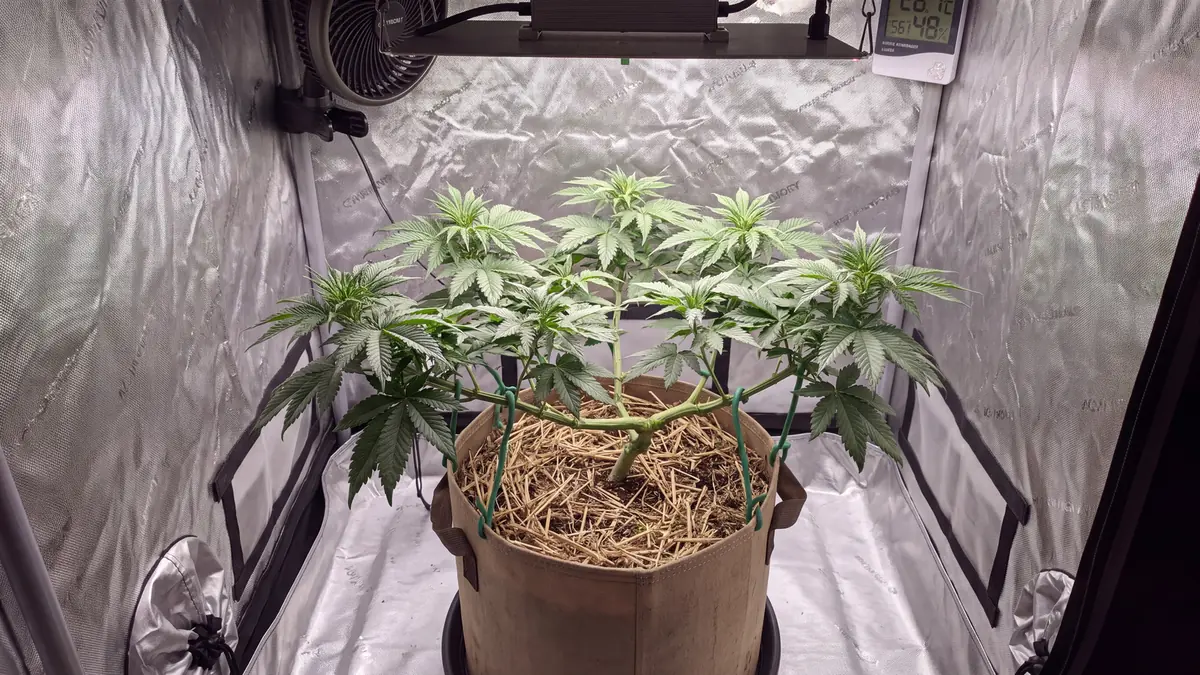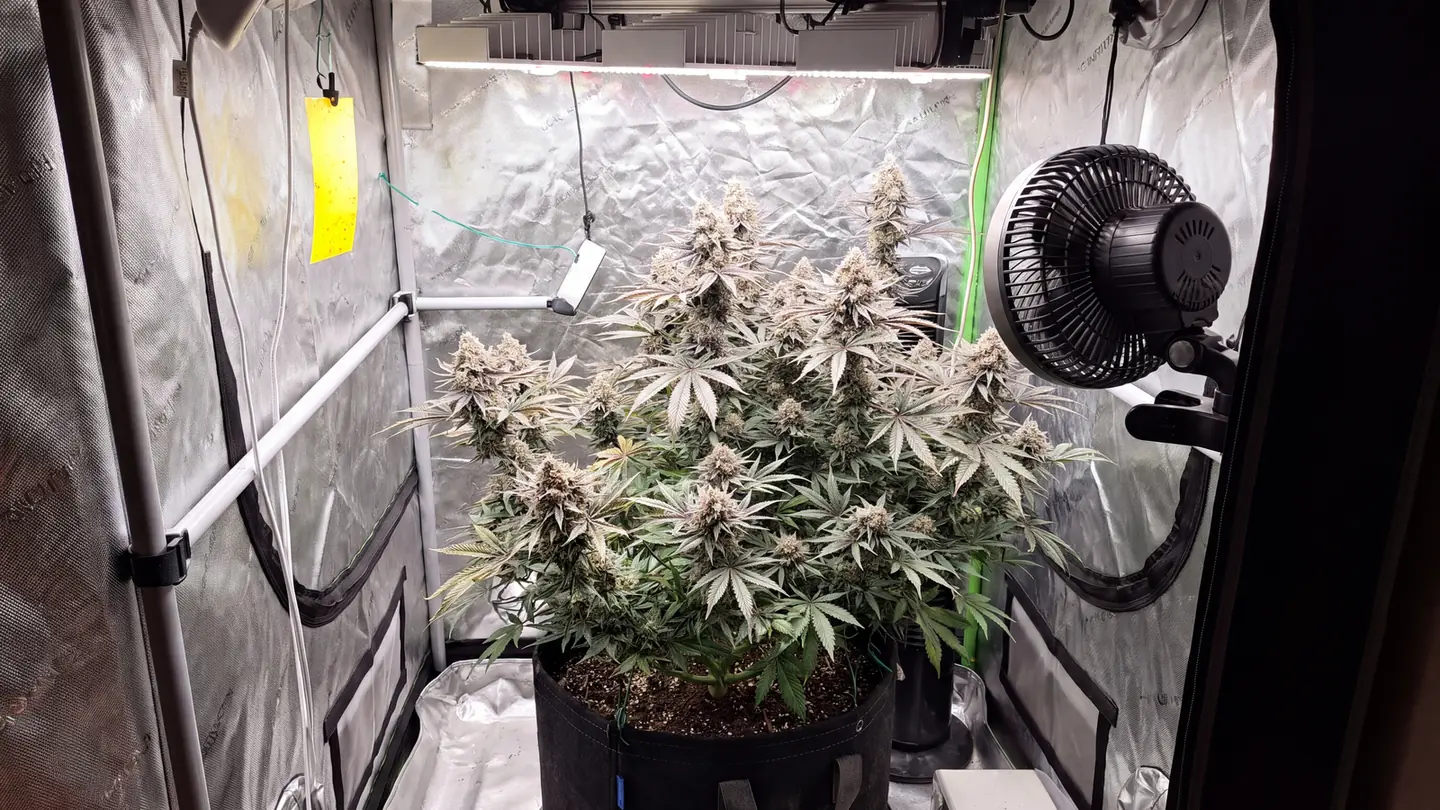
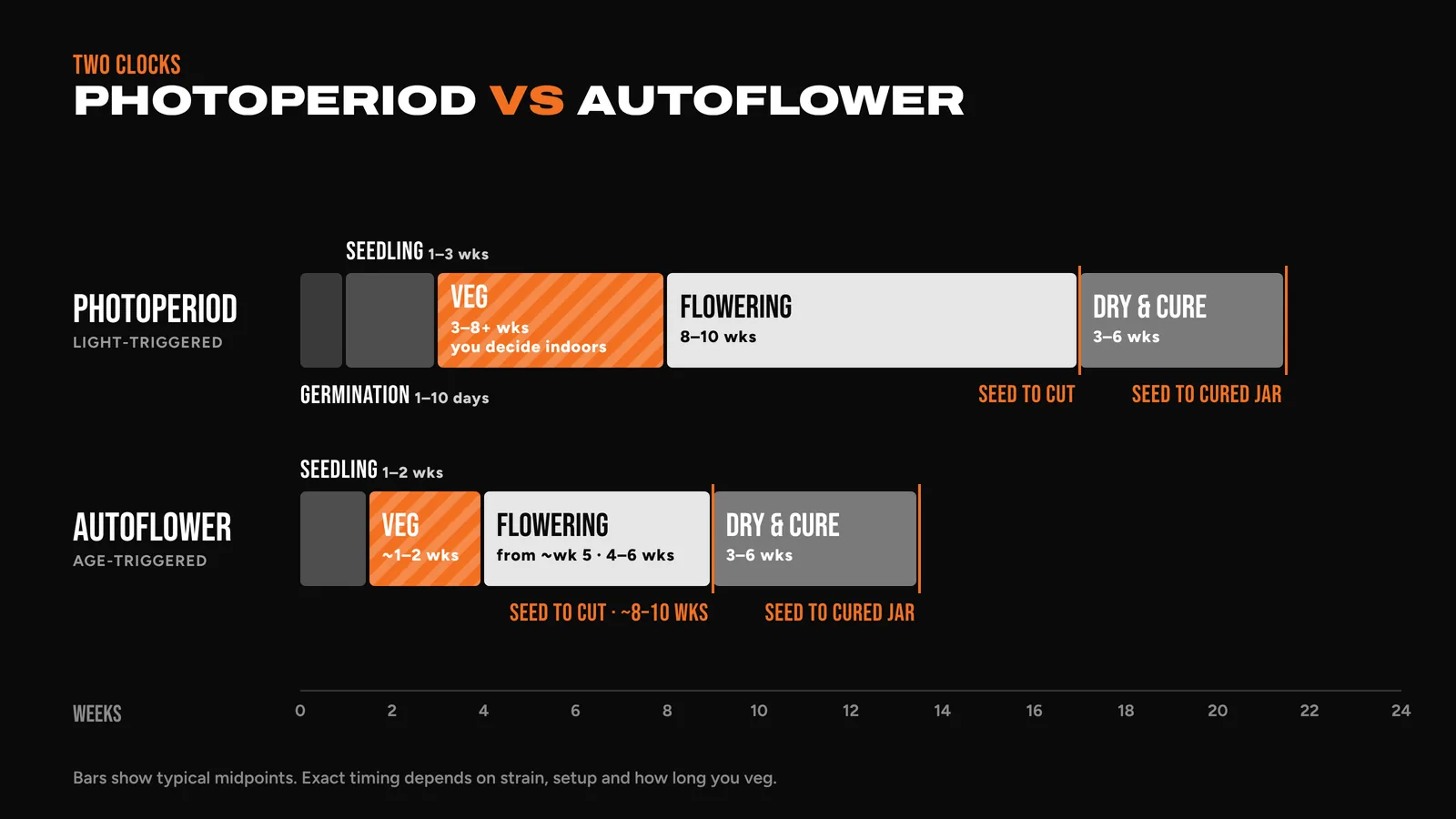
Grown indoors, weed takes roughly 3 to 5 months from seed to the day you cut, and roughly 4 to 6 months before the harvest is dried, cured and ready to use. An autoflower runs faster, at around 2 to 3.5 months from seed to the cut and 3 to 4 months to a finished jar, though a few slower cultivars take just over 4 months.
Outdoors, a photoperiod cannabis plant follows the season, and seed to cut usually takes roughly 5 to 7 months, or about 6 to 8 months to a cured jar. Most of the timeline is fixed by genetics, though indoor growers can control one part: the length of the vegetative stage.
Below, you'll find out how long each growth stage takes, the differences between photoperiod and autoflower timelines, outdoor timing, and monthly checkpoints — plus what causes delays.
How Long Does Weed Take to Grow From Seed to Harvest?
To grow from seed to harvest, weed takes about 3 to 5 months indoors and 5 to 7 months outdoors. Autos take around 2 to 3 months indoors or out. That’s the span the plant is alive and growing. Add about another 3 to 6 weeks of drying and curing to the end of every grow for your total seed-to-jar timeline.
| Seed Type | Setup | Seed to Cut | Dry and Cure | Seed to Cured Jar | What Sets the Length |
| Photoperiod feminized seeds | Indoors | About 3 to 5 months | About 3 to 6 weeks | About 4 to 6 months | The grower, mainly through veg length |
| Autoflower seeds | Indoors or outdoors | About 2 to 3 months | About 3 to 6 weeks | About 3 to 4 months | The plant's genetics |
| Photoperiod feminized seeds | Outdoors | About 5 to 7 months | About 3 to 6 weeks | About 6 to 8 months | The season and plant genetics |
Germination and the seedling stage take as long as the plant needs, flowering length is largely set by genetics, and the dry and cure need a minimum of 3 to 6 weeks. Indoors, the biggest variable stage is vegetative growth. Between veg and flowering length, estimates for the same grow can differ by two months.
A long veg or a long-flowering line can push an indoor run closer to 7 months from seed to jar. A short veg on fast genetics pulls it the other way. A stalled plant can add weeks to either figure.
Here’s how the stage lengths add up on a typical indoor photoperiod grow and a typical autoflower, counting weeks from the day the seed sprouts.
| Milestone | Indoor Photoperiod, 5-Week Veg | Autoflower |
| Seedling stage over | Week 3 | Week 1 to 2 |
| Flowering begins | Week 8, at the flip | Around week 3 to 5, on its own |
| Cut | Around week 16 to 18, after 8 to 10 weeks of flower | Around week 8 to 10, after 4 to 6 weeks of flower |
| Dry finished | Around week 17 to 20, after around 7 to 14 days of drying | Around week 9 to 12, after around 7 to 14 days of drying |
| Cured jar ready (2-week minimum cure) | Around week 19 to 22, roughly 5 to 6 months | Around week 11 to 14, roughly 3.5 months |
Add or remove veg weeks on the photoperiod side and every later row moves by the same amount. The autoflower side barely moves, because its schedule comes with the seed.
Two Clocks: Why Photoperiod and Autoflower Grows Run on Different Timelines
Every timing answer on this page depends on which of two clocks your seed runs on.
| Photoperiod | Autoflower | |
| What starts flowering | Shorter days: the flip to 12/12 indoors, late summer outdoors | Age, roughly 3 to 5 weeks from seed |
| Veg length | Your choice indoors, usually 4 to 6 weeks | About 1 to 2 weeks, set by genetics |
| Seed to cut | About 3 to 5 months indoors | About 8 to 10 weeks, up to 14 for slower cultivars |
| What you control indoors | Veg length, plant size and harvest date | Very little, in exchange for speed and a simpler schedule |
Autoflowers start flowering according to age rather than waiting for a 12/12 light schedule, a trait that comes from Cannabis ruderalis genetics. Flowering behavior is also separate from sex expression. Autoflower or photoperiod describes when a plant flowers, while feminized or regular describes what the seeds are expected to grow into.
Feminized seeds greatly reduce the likelihood of ordinary male plants compared with regular seeds, so growers generally spend less time identifying and removing males, which is its own small saving on the calendar.
The Cannabis Grow Timeline in Stages
A grow runs through five blocks in the same order every time: germination, the seedling stage, vegetative growth, flowering, and then harvest with drying and curing. Only the lengths change.
| Stage | Typical Length | How You Know It’s Over |
| Germination | 1 to 10 days | The taproot has emerged and the sprout breaks the surface |
| Seedling | 1 to 3 weeks | Three or four sets of true serrated leaves and visibly faster growth |
| Vegetative | 3 to 8+ weeks for photoperiods, 1 to 2 weeks for autos | You flip to 12/12, or the auto starts flowering on its own |
| Flowering | 8 to 10 weeks for most photoperiods, 4 to 6 weeks for autoflowers | Trichomes have ripened and the plant is ready to cut |
| Harvest, dry and cure | 3 to 6 weeks | Small stems snap, and the cure has had at least 2 weeks |
Germination: 1 to 10 Days
Most viable seeds crack and push out a taproot within 1 to 10 days, and the occasional slow one takes closer to two weeks. Seed quality, warmth and steady moisture set the pace far more than the method you use to germinate cannabis seeds.
Germination isn’t a stage you can accelerate. Scuffing shells, prying seeds open and long soaks all tend to cost more days than they save, and a seed sitting in a soaked, airless medium or buried too deep is the most common reason nothing appears.
Seedling Stage: 1 to 3 Weeks
Expect about 1 to 3 weeks from emergence. Not much seems to happen above the surface because the plant is building roots. Leaves arrive in a sequence, starting with a single blade, then three fingers, then five, then seven, and a climbing finger count tells you the seedling is moving even when height barely changes.
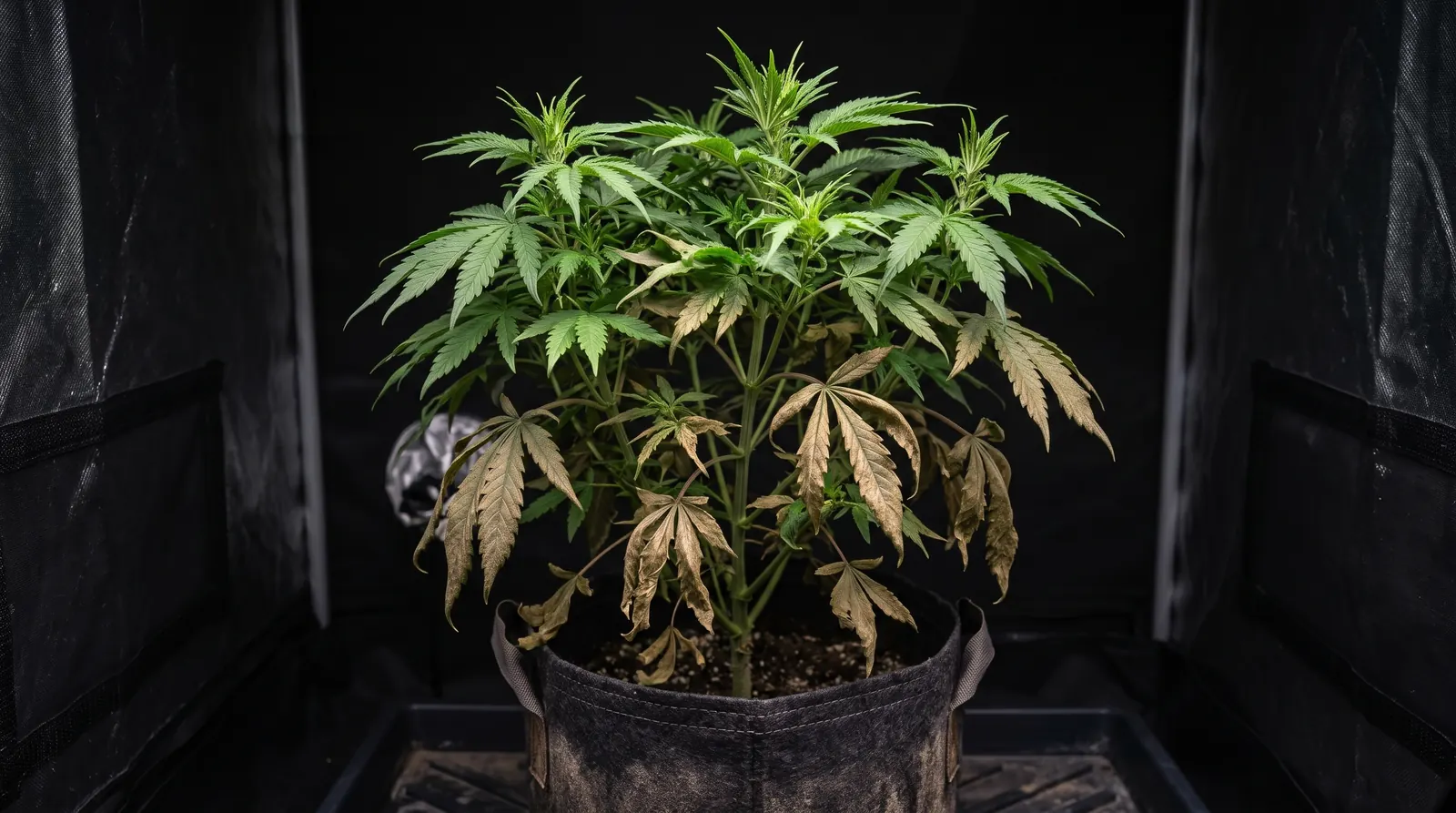
Two mistakes add the most weeks here: seedlings have tiny root systems and can’t drink much, so a constantly wet medium stalls them; and heavy feeding at this size burns young growth and can limit what the plant does later.
Vegetative Stage: 3 to 8+ Weeks (The Stage You Control Indoors)
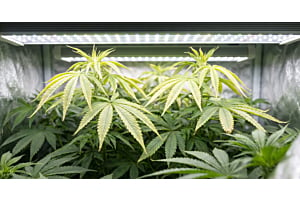
Veg commonly runs 3 to 8 weeks, with 4 to 6 the usual choice, and for a photoperiod plant grown indoors, it only ends only when you end it. Choosing a veg length is really choosing a harvest date. Veg is also when the plant grows fastest.
A healthy marijuana plant can put on visible height and new nodes from one day to the next, which is why a stall here costs time you notice on the calendar.
At the extremes, a sea-of-green approach may give plants almost no veg at all, while a large screen grow can run close to 15 weeks before the flip.
How your veg decisions shape the timeline:
- A longer veg builds a bigger frame with more bud sites, which generally means greater yield potential, at the cost of a longer total grow.
- A shorter veg brings harvest forward on a smaller plant.
- Topping or low-stress training must happen early enough in veg for the plant to recover before the flip.
Halfway through veg (usually once a plant is several weeks old), pre-flowers typically show at the nodes, with pistils on females and pollen sacs on males. That’s a sexing marker, not something that marks the start of flowering.
The usual rule is to flip to 12/12 once the plant fills about half the height you have available, leaving room for the flowering stretch. Autoflowers make this call for you.
Flowering Stage: 8 to 10 Weeks
Most modern strains flower for about 8 to 10 weeks. Fast-finishing lines come down nearer 6 to 8, and long-flowering sativa genetics can run 10 to 12 weeks or more. For an indoor photoperiod grow, the flowering clock starts at the 12/12 flip.
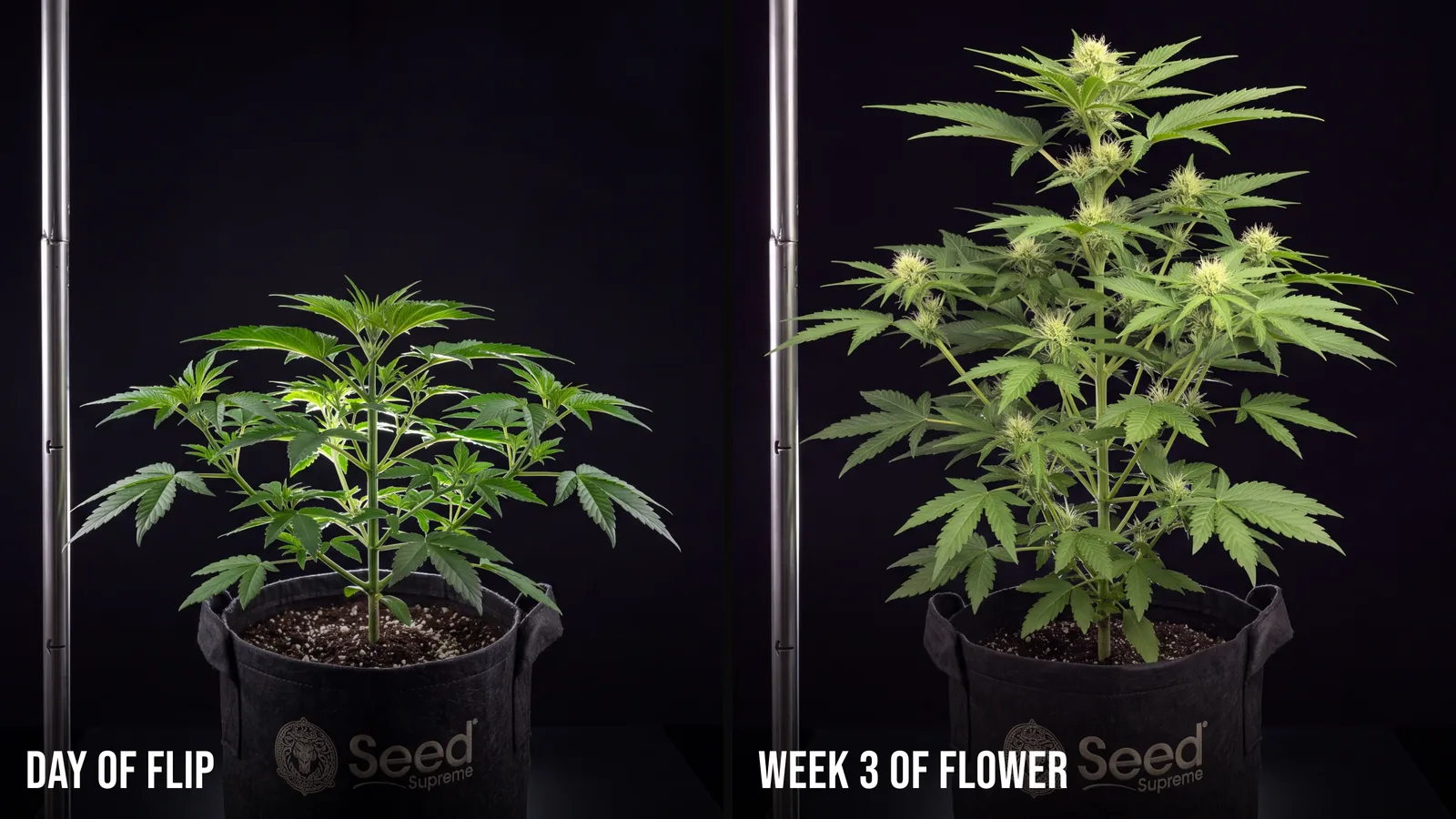
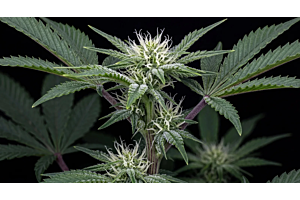
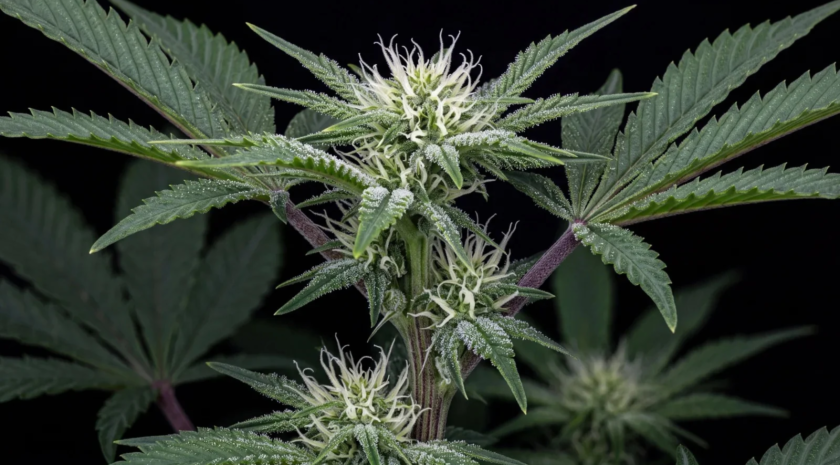
In flowering, the time it takes for a cannabis plant to bud depends on its genetic clock. A photoperiod usually shows its first flower clusters about 1 to 2 weeks after the flip, and bud sites are set across the plant by around weeks 3 to 4.
Some sativa-leaning lines take several weeks before flowers form in earnest. On a typical 4 to 6 week veg, that puts the first visible buds at roughly 7 to 12 weeks from seed.
Here’s roughly how the flowering weeks run:
- Weeks 1 to 3, the stretch. The weed plant shoots up and commonly adds 50% to 100% of its height before settling.
- Weeks 3 to 4, bud sites set. Stretch slows and pistil clusters mark every branch tip where buds will form.
- Mid to late flower. Buds generally gain most of their density and weight through roughly weeks 4 to 8, with aroma building and trichomes clouding up as ripening finishes.
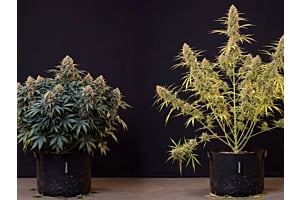
Genetics explain most of the gap between two plants flipped on the same day. Indica-leaning lines tend to finish flowering sooner, while sativa-leaning lines tend to take longer and stretch harder. Some photoperiod lines, such as fast version seeds, are bred specifically to shorten bloom. Autoflowers typically start flowering around 3 to 5 weeks from seed.
Harvest, Drying and Curing: 3 to 6 Weeks
Harvesting is a day's work. After that, drying and curing adds roughly 3 to 6 weeks to any grow — auto or photoperiod, indoors or out.
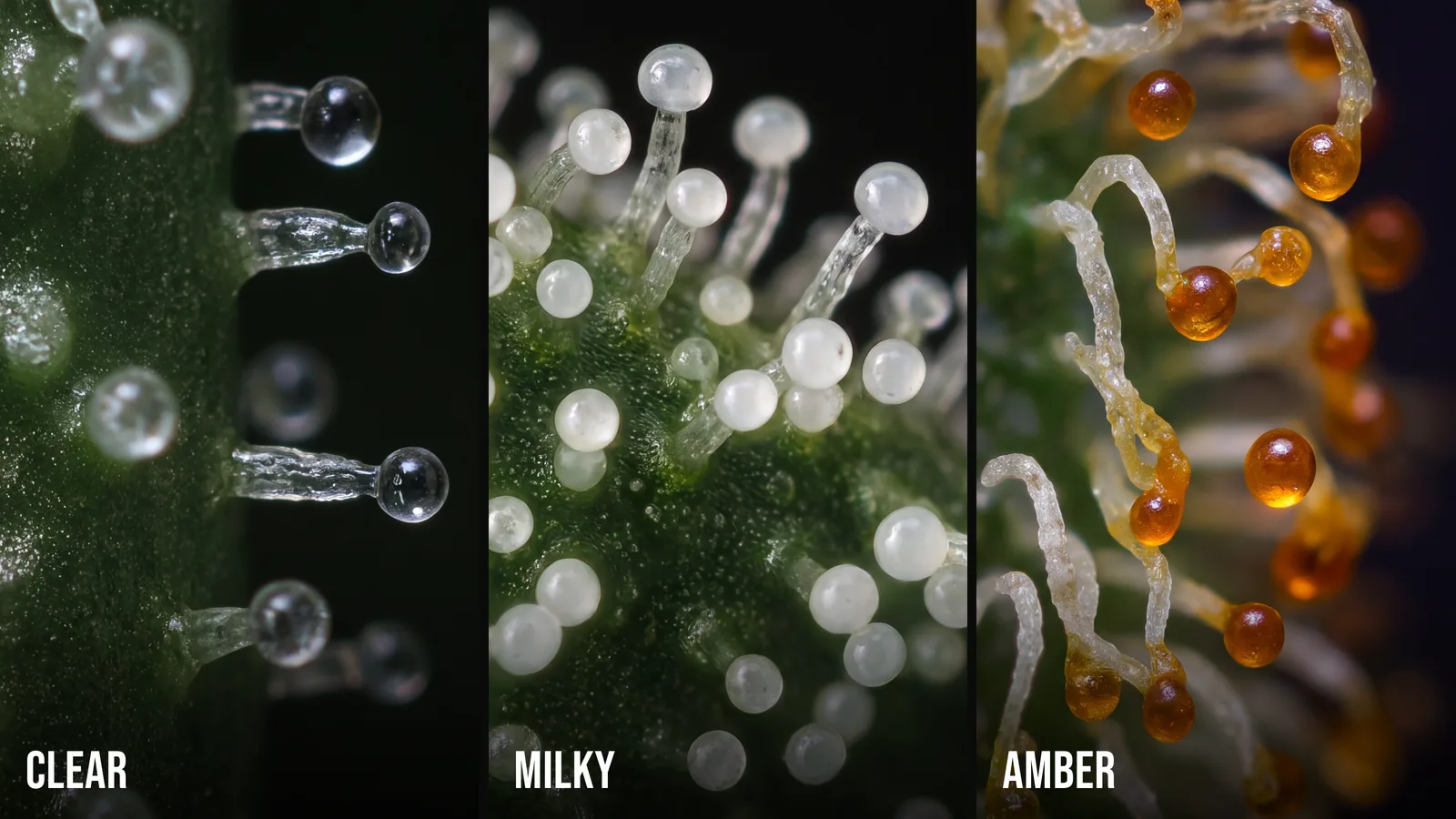
The harvest date is decided by trichome ripeness more than the strain's stated flowering time. Under a cheap loupe the resin heads move from clear to milky and then to amber, and most growers cut when these heads are mostly milky with a small share turning amber.
Drying typically takes about 7 to 14 days hanging in a dark space. Cool, damp conditions can push it noticeably longer, which is worth planning for in a wet fall, and dense buds hold moisture longer than airy ones. Drying is finished when the smaller stems snap instead of bending.
Trimming sits either side of the dry and scales with the size of the harvest, so a few weed plants take an afternoon and a big run can take several days. After that, the cure starts, where 2 weeks is the practical minimum and roughly 2 to 4 weeks is where aroma and smoothness improve markedly. Rushing these last weeks undoes months of work.
How Long Weed Takes to Grow Outdoors
An outdoor photoperiod plant runs to the season, which puts most grows at roughly 5 to 7 months from seed to cut, depending on region and cultivar. Seeds started indoors as early as March can stretch that toward 8 months.
The season by hemisphere:
- Northern Hemisphere: sow March to May, flower as the days shorten after midsummer, harvest late September to early November.
- Southern Hemisphere: sow around September, flower from late summer, harvest around March or April.
Flowering begins when daylight hours drop, the same trigger as the indoor flip. Close to the equator, days sit near 12/12 all year, so plants can move into flower almost immediately and there’s little room for a long veg.
To shorten an outdoor run, change what you plant. Autoflowers aren’t tied to the fall window at all, and in a long summer they can allow more than one crop.
Where Your Plant Should Be at One, Two, Three and Four Months
What your cannabis plant should look like at any given month depends on seed type and your setup. Here’s what you can typically expect:
| Age From Seed | Indoor Photoperiod | Autoflower | Outdoor Photoperiod |
| 1 month | Germination and the seedling stage behind it, early veg, a few sets of fan leaves, still small | Short veg done or ending, flowering starting or close to it | Usually a young seedling or early veg plant, often still under cover |
| 2 months | Mid to late veg, or recently flipped and stretching, depending on your veg length | In flower, bud sites set and buds filling out, faster strains nearing the finish | In veg, building frame through the long days |
| 3 months | Early to mid flower. On a short veg, buds are bulking up. On a longer veg, the plant is still stretching or setting bud sites | Cut and drying, or already in jars, with slower strains still ripening | Late veg or early flower as days shorten |
| 4 months | Mid to late flower for most plants, ripening toward the cut. A short veg on fast genetics may already be cut and drying | Cured and ready | In flower, with harvest still weeks out |
Final size follows the same logic. Veg length, container size, genetics and the flowering stretch set how big a weed plant finishes. But a plant reaches its full height within the first few weeks of flower. It’s not fully grown until the buds ripen and it’s ready to cut. That finish, not any particular size, is what marks a mature plant.
What Makes a Grow Take Longer, and What You Can Actually Speed Up
Almost all genuine speed comes from a few decisions made before or during veg, and almost all genuine delays come from stalls.
What adds weeks to your grow:
- Overwatering or overfeeding seedlings, covered in the seedling stage above.
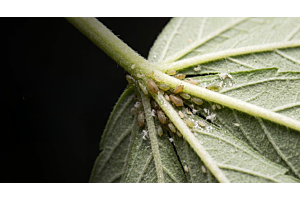
- Other stress, including pests, underfeeding, broken branches and heavy or badly timed training. A stressed photoperiod usually needs extra veg weeks to recover before you can flip it.
- Root-bound plants and late transplants, which quietly flatten the growth curve right when the plant should be stacking.
- A poor environment, since temperature, humidity, airflow and weak light all slow veg and drag out bud development.
- Light leaks, or never flipping at all. A photoperiod plant that never gets a properly dark night can sit in veg indefinitely.
What actually saves weeks:
- The seed you buy. Autoflower seeds skip the long grower-controlled veg, and short-flowering photoperiod lines cut weeks off bloom.
- Deliberately shortening veg, accepting a smaller plant in exchange for an earlier cut.
- Keeping the plant stall-free, so it grows at its natural pace instead of recovering from something.
Nothing safely compresses germination, flowering length, the harvest window or the cure. The fastest route to a jar is almost always decided by the cannabis seeds you choose before germination, rather than halfway through the grow, and that’s the one lever worth thinking hard about.
Cultivation laws differ from place to place, so check what applies where you live before planning a grow.