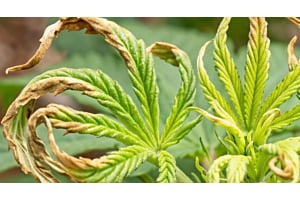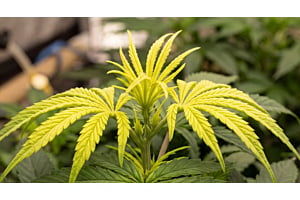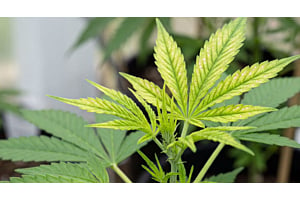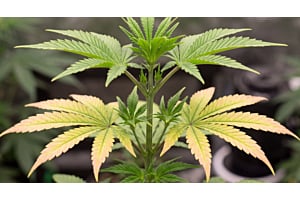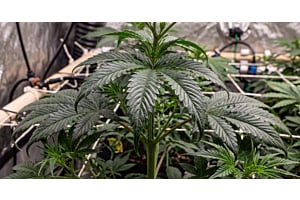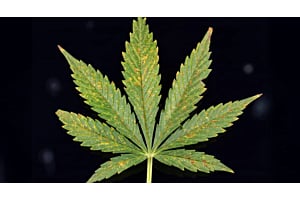
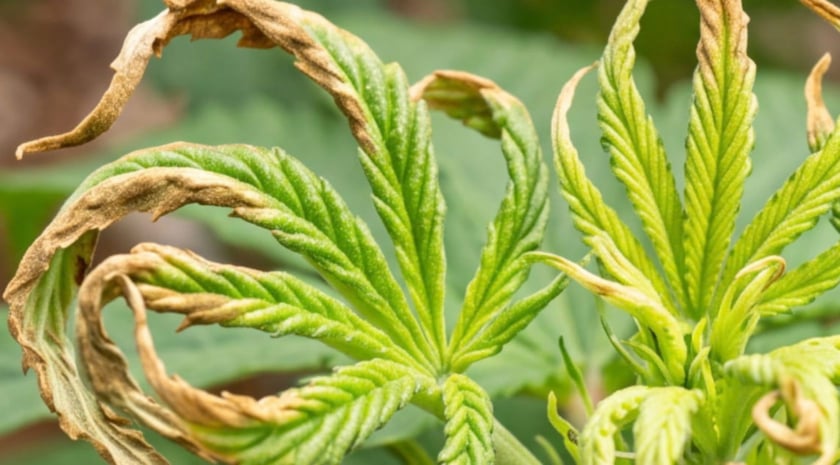
A cannabis boron deficiency shows up in the newest growth first, twisting the tips and dotting young leaves with brown or yellow spots, often with brittle stems. It stays rare, because most tap water and quality nutrients already carry enough boron for the plant.
Whether you're growing feminized seeds, autos, or anything in between, the fix is the same. This guide walks through how to recognize a boron shortage, tell it apart from the calcium deficiency it mimics, correct the issue, and give your plants the best shot at a clean recovery.
In short: when a boron deficiency appears, the cause is almost always a condition getting in the way: pH out of range, a dry medium, cold roots, poor media, or heavy potassium or nitrogen feeding, not a true shortage in the feed. Work through those causes, correct whichever one's off, and new growth usually bounces back within days.
What Is a Boron Deficiency in Cannabis?
A cannabis boron deficiency occurs when the plant cannot take up enough boron to build new cell walls, which shows first in fresh growth. Boron is a micronutrient, meaning the plant needs only a small amount, but that small amount holds new tissue together.
Once boron is absorbed, it stays fixed in place and does not move to newer parts, so a shortage always strikes the youngest growth. That single trait is what makes the symptoms so easy to locate on the plant.
What Does Boron Do for Cannabis Plants?
Boron helps cannabis form cell walls and move sugars, working alongside calcium to keep new growth firm and upright. It supports the growing tips, the root zone and the plant's reproductive structures as buds develop.
Firm stems, healthy tips and steady new leaves all trace back to this one trace element doing its job.
Why Is Boron Deficiency Rare in Cannabis?
Boron deficiency stays uncommon in cannabis because the plant only uses it in trace amounts, and most tap water, commercial potting soils, and cannabis-specific nutrients already supply what the plant needs.
In other words, a true dietary lack of boron is the exception, and a condition problem is the rule.
What Are the Symptoms of Cannabis Boron Deficiency?
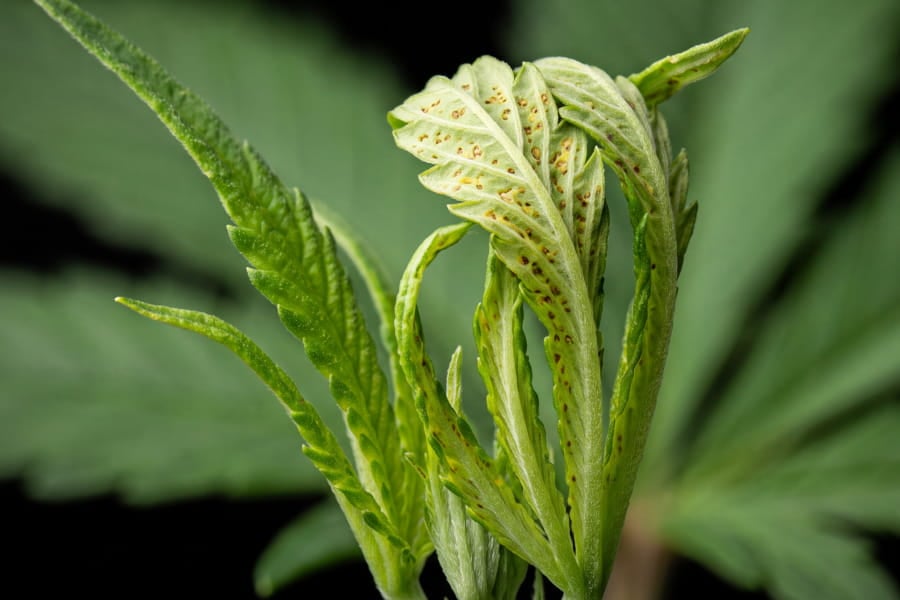
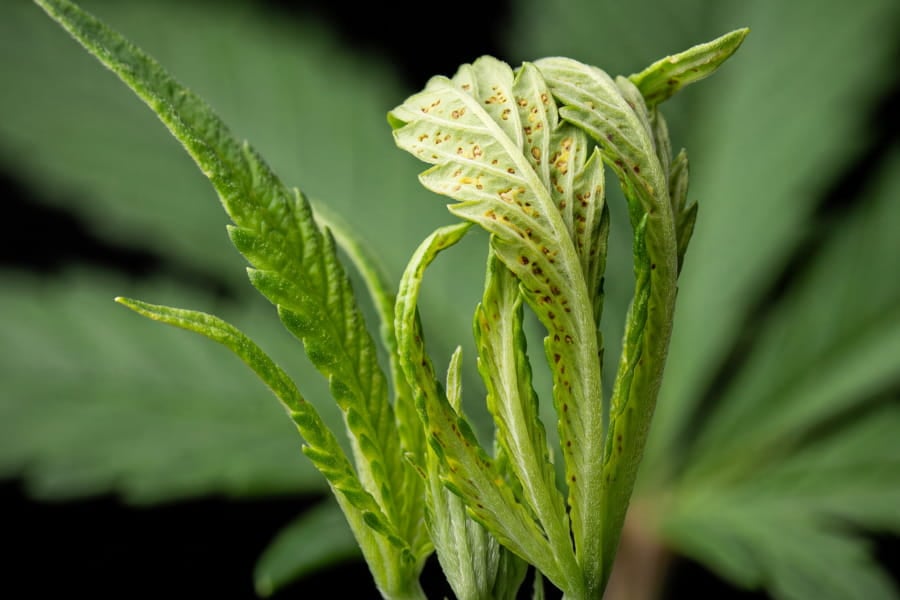
Cannabis boron deficiency shows first in new growth as twisted, thick tips and brown or yellow spotting on young leaves. Because the shortage attacks fresh tissue, everything you need to diagnose it sits at the top of the plant and the growing points. Read the signs in the order they appear.
Early Signs of Boron Deficiency in Cannabis
The first sign is easy to overlook, since it starts on just a leaf or two at the very top of the plant. New growth may look thick or slightly deformed, with tips that curl or twist instead of opening cleanly. On its own, pale new growth points to plenty of common deficiencies, so it rarely raises an alarm this early.
The tell is location: boron damage concentrates on the newest growth, not the older leaves lower down.
How Boron Deficiency Progresses in Cannabis
As boron deficiency progresses, cannabis growth tips brown and begin to die back while the damage spreads to more new leaves. Twisted tips can cluster together rather than expanding upward, and the affected shoots lose their vigor.
Left uncorrected, the growing points can die off entirely, which stalls upward growth and costs you canopy. This is the stage where a quiet problem turns into real crop loss.
Root and Stem Symptoms of Cannabis Boron Deficiency
Cannabis boron deficiency also slows root development and leaves stems rough, soft or hollow to the touch. Because boron gives tissue its structure, a shortage lets the whole plant lose firmness, and stems may feel brittle or even collapse in spots.
The root system slows overall while the fine secondary roots turn short, swollen and club-like as their tips die back, which leaves the plant more prone to rot.
Pressing gently on a suspect stem is a fast field check: healthy stems stay firm, boron-starved ones give way.
Boron Deficiency vs. Calcium Deficiency: Spotting the Difference
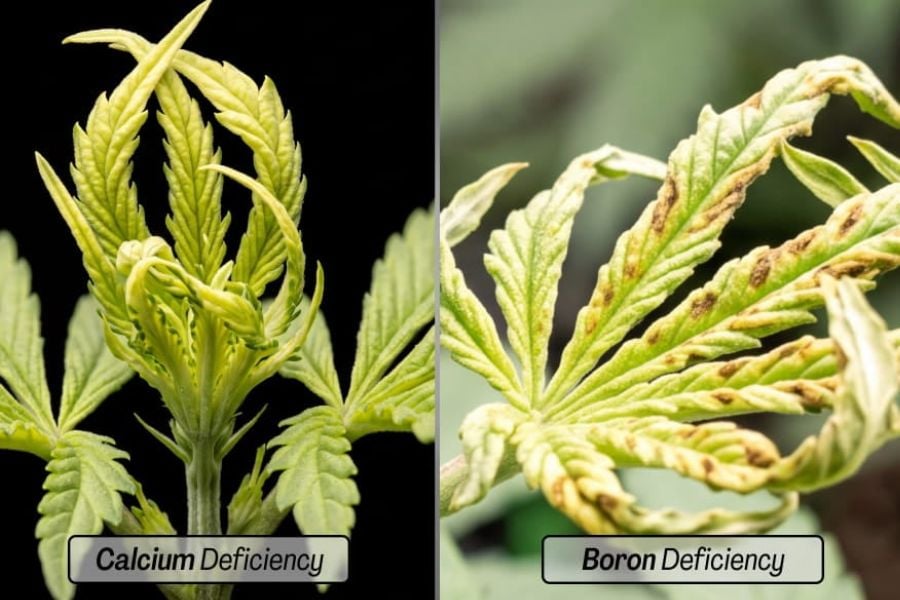
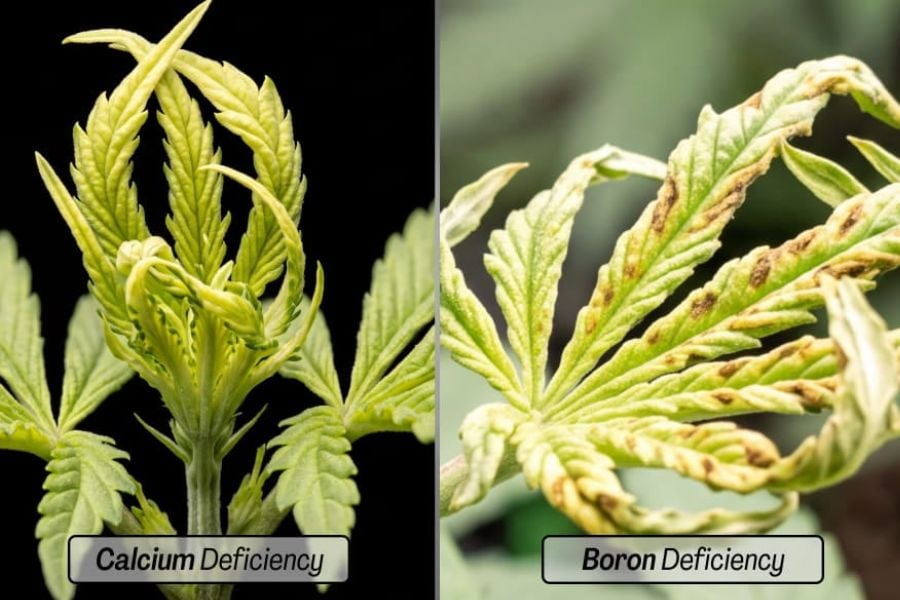
Boron and calcium deficiencies are easy to mix up. Both hit new growth first, both twist the leaves, and both leave necrotic spotting behind. The giveaway is size: boron's damage comes in small, scattered spots while a calcium deficiency shows larger, blotchier patches.
Why Boron and Calcium Deficiencies Show Up Together
Boron's job includes keeping calcium soluble so the plant can actually use it. Short the plant on boron and calcium stops being usable even when there's plenty sitting in the feed, which is why a boron shortage can end up looking like calcium deficiency symptoms.
It cuts both ways, too. Too much calcium can lock boron out. If calcium corrections aren't taking, or they seem to be tipping the plant into boron-deficient symptoms, ease off the calcium.
What Causes Boron Deficiency in Cannabis?
Cannabis boron deficiency is rarely a true shortage and is usually caused by pH sitting out of range, underwatering, low-organic growing media, cold root-zone temperatures, or very heavy potassium or nitrogen feeding. Work through these before reaching for a boron supplement:
- Out-of-range pH chemically locks boron out of reach even when it's sitting right at the roots, since the root zone can only absorb it within a narrow band. This usually means pH drifting too high for your medium.
- Underwatering cuts boron uptake because it travels into the plant on the transpiration stream. A medium left too dry moves less water and pulls up less boron even when plenty is present. Very high humidity works against you the same way, since it slows transpiration and with it the flow of boron into new growth.
- Media with low-organic-matter leaches boron away before the roots get a chance to take it up, which makes consistent feeding more important in these setups than in rich, organic soil.
- Cold root-zone temperatures generally slow nutrient uptake (boron included), so a chilly root zone can produce symptoms even when everything else checks out.
- Heavy potassium or nitrogen feeding suppresses boron availability. Push either one too hard and a boron shortage can show up right along with it, independent of anything else going on in the feed.
These conditions can get in the way of boron uptake and cause a deficiency.
How Do You Fix Boron Deficiency in Cannabis?
You fix a boron deficiency by correcting whichever condition is blocking uptake: pH, moisture, root-zone temperature, media, or heavy feeding, since the shortage is almost never about boron itself. Confirm what's off, correct it, and only add a boron supplement directly if a true shortage remains once the condition is fixed. Work through the fixes in this order:
- Set the right target pH range — for your medium, the right way.
- Restore steady conditions — moisture, humidity, and root-zone warmth.
- Check your feeding schedule — ease off heavy potassium or nitrogen.
- Flush and feed — clear salt buildup only if it is confirmed, then feed if needed.
Adjust pH to the Correct Range for Cannabis
Adjusting pH is the first fix, but the correct method depends entirely on your growing medium.
Many grow guides quote a single soil range of 6.0–6.5 and a hydro range of 5.5–6.2, and treat "pH your water" as one universal step. That consensus is close but not right, and it misleads organic soil growers in particular, so use the medium-specific targets and methods below instead.
The corrected target ranges are:
| Medium | Ideal pH | Acceptable pH |
| Soil | 6.0–6.3 | 5.5–6.5 |
| Coco | 5.8–6.2 | 5.6–6.4 |
| Hydro | 5.8–6.2 | 5.6–6.4 |
How you hit those ranges matters as much as the numbers:
- Organic or living soil: the root-zone microbes hold pH where the plant needs it, so you generally do not pH your water or reach for pH Up or pH Down. Genuinely out-of-range soil is corrected slowly with amendments, lime to raise pH and elemental sulfur to lower it, since it is water alkalinity, not the pH you feed, that moves soil pH over time.
- Synthetic-fed soil: salt-based feeds inhibit that microbial buffering, so if you feed synthetic nutrients in soil you pH the input the same way a coco or hydro grower does.
- Coco: mix your nutrients into the water first, then pH the finished solution to range, checking it regularly, usually once a week.
- True hydro (DWC, NFT, rockwool, LECA): pH the final nutrient solution and check it daily, since the nutrients themselves shift the number and that solution is what reaches the roots.
Treat runoff readings as a warning light, not a dial. A runoff pH well outside your range tells you drift has happened and it is time to look at your feed, but chasing runoff numbers up and down is not the correction itself.
Restore Moisture, Humidity & Root-Zone Temps for Cannabis
Water on a consistent schedule, going again once the top inch or two has given up some moisture — don’t let the medium dry out completely. Keep air moving and avoid high, stagnant humidity, which slows transpiration and (boron uptake with it).
Check root zone temperatures too, cold roots below ~65°F slow uptake the same way a dry medium does. In hydro aim for 68–72°F and up to 75°F in planting mix, ensuring the roots get enough oxygen.
Ease Off Heavy Potassium or Nitrogen Feeding
Potassium and nitrogen compete for the same uptake pathways at the root, so too much of either can lock boron out. This can catch growers off guard during bloom-heavy potassium feeding or aggressive vegetative nitrogen schedules — exactly when a boron shortage is easy to miss since the plant is already pushing hard growth.
If you've been feeding heavily on either front, dial back the concentration. Give your cannabis plant a feed or two to settle before judging whether new growth is cleaning up. If it’s a feed-rate problem, it’ll correct once you’ve corrected the feed.
Flush and Feed to Correct Boron Deficiency in Cannabis
Flushing and pH correction are two separate jobs, so keep them apart.
Flush only when salt buildup is confirmed by an EC or TDS reading well above your input water, rather than flushing on assumption. Run plain, pH'd water with no nutrients until about 30% drains.
When both salt buildup and pH drift are in play, the order is flush first, then correct your feed pH, then feed again only if a true boron shortage remains. Flushing on its own does not fix pH or cure the deficiency, so treat it as cleanup, not the cure.
Once pH, conditions, and salt buildup are all ruled out, a boron supplement is the last resort. Use it sparingly because too much boron is toxic and easy to overapply.
How Do You Prevent Boron Deficiency in Cannabis?
You prevent boron deficiency by keeping ahead of the same five things that cause it: pH drift, dry spells, poor media, cold roots, and heavy potassium or nitrogen feeding — before symptoms show up.
Hold pH in range for your medium and recheck it on a schedule, water consistently, and keep the root zone warm and air moving. Choose media with decent organic matter or buffering capacity if you're planting in sandy or inert mixes and stick with a complete, cannabis-specific nutrient line so boron is reliably present in the first place.
Stay on top of these and a boron shortage rarely gets a foothold.
Will Cannabis Recover From a Boron Deficiency?
Yes, cannabis recovers from a boron deficiency once uptake is restored, though the growth already damaged will not heal.
Once you’ve actioned a correction, watch the newest shoots over the next few days, because clean new growth is the sign the fix worked. Old twisted leaves and scorched tips stay damaged and can be left alone or trimmed, since the plant puts its energy into fresh tissue. Caught early, a boron shortage rarely leaves lasting marks on the harvest.
Start Strong With Healthy Cannabis Genetics
Healthy cannabis genetics give plants the vigor to shrug off stress-driven problems like boron lockout from the very start. Strong, stable seeds establish faster, root better, and hold their footing when pH or watering wobbles, which is exactly when weaker plants slip into deficiency.
Pairing quality genetics with steady pH and consistent watering is the most reliable way to keep trace-element trouble off the plant entirely. Seed Supreme carries a broad range of cannabis seeds for growers building that kind of resilient garden from seed onward.