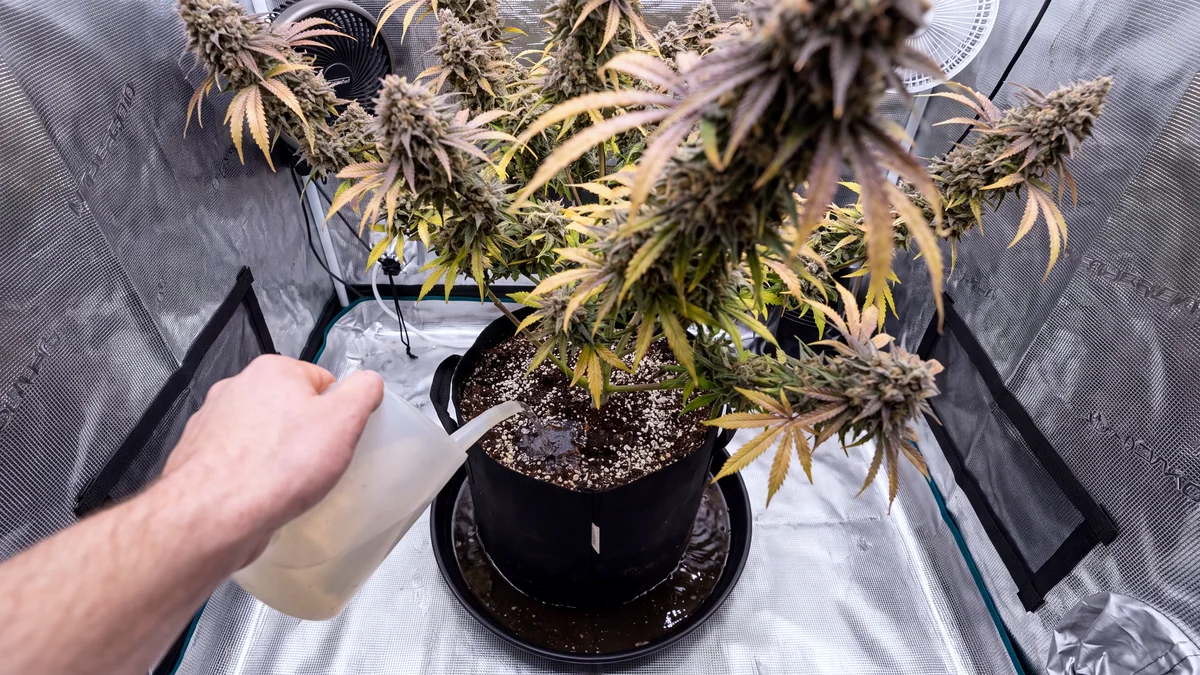
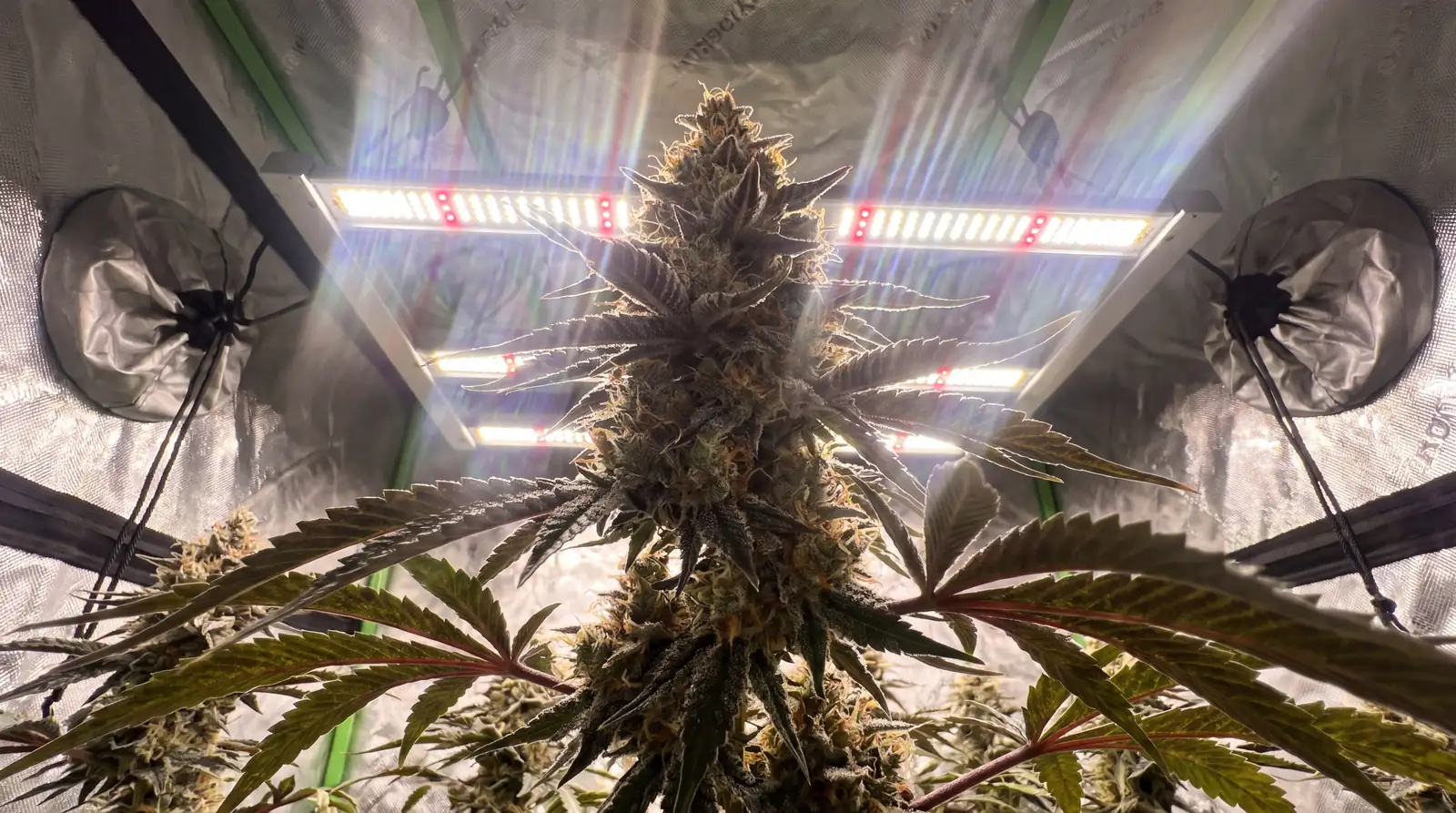
A cannabis light schedule is the daily split between light and darkness, written as two numbers like 18/6 or 12/12. If you're growing feminized photoperiod seeds, run 18/6 from seedling through veg, then switch to 12/12 to trigger flowering. Flip when your plant hits about half the height your space allows, as it'll roughly double in size afterward. Autos skip the switch.
This guide covers the best light cycle for weed at every growth stage, when to flip, what to know beforehand, how 12/12 from seed works, and tips to protect the darkness period.
What Is a Cannabis Light Schedule?
A cannabis light schedule tells a photoperiod plant whether to keep growing or start flowering. The first number is hours of light and the second is hours of darkness, so 18/6 means 18 hours on and 6 off, and 12/12 means twelve of each. A built-in lighting timer repeats the pattern at the same clock time every day.
The dark half does the real work. Photoperiod cannabis starts flowering when it gets at least 12 hours of unbroken darkness. Outdoors, the longer nights trigger this change, not the shorter days. Indoors, a 12/12 light cycle mimics that same cue an outdoor plant picks up as the season winds down.
That's why an uninterrupted darkness period counts for more than the total of hours. Six hours of darkness with a light flicking on halfway through doesn't read as six dark hours to the weed plant, so consistency beats arithmetic every time.
Hours and intensity are separate dials, too. A perfect 12/12 under a weak fixture still gives you a weak harvest, so knowing how much light a weed plant needs is still important, but it's not the same as knowing how long the lights stay on.
The Best Light Cycle for Weed by Growth Stage
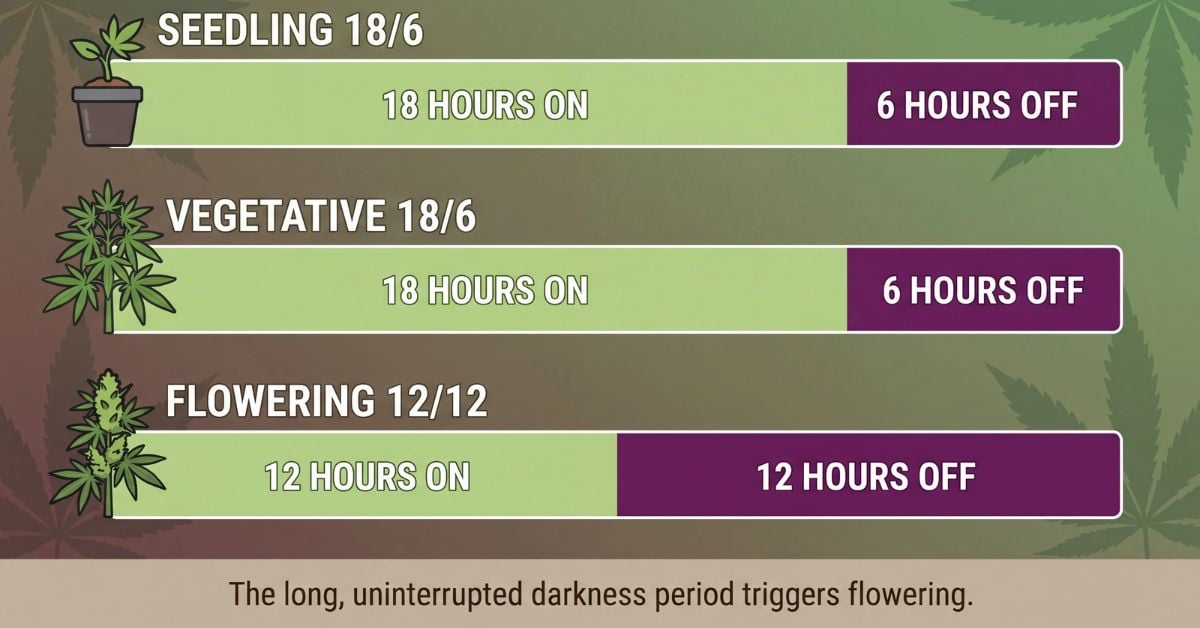
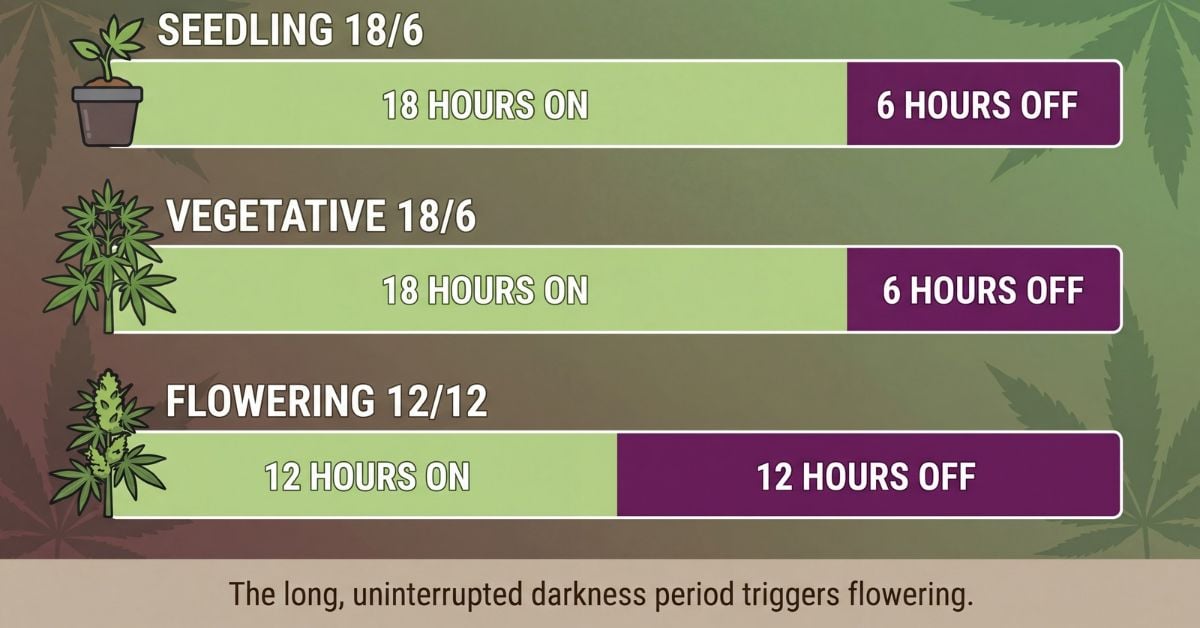
Seedlings and vegetative plants do best on an 18/6 light schedule, and flowering photoperiod plants need a 12/12 cycle until harvest. Here's how the schedule lines up with the main stages of a weed plant’s growth:
| Growth Stage | Best Light Schedule | Why It Works | Also Used | Who Sets the Length? |
| Seedling | 18/6 | Long days at gentle intensity give a small seedling plenty of total light without scorching it. | 20/4, 24/0 | You |
| Vegetative | 18/6 | 18 hours delivers enough light to feed leaf and branch growth. | 16/8, 20/4, 24/0 | You |
| Flowering | 12/12 | The extended darkness period triggers flowering and keeps it going | None as standard | Genetics |
| Late flower | 12/12, held steady | Plants still rely on the dark while buds ripen. Shorter or broken periods can slow the finish or trigger nanners | Extended darkness before harvest (optional) | Genetics |
Seedling Light Cycle: How Many Hours Do Seedlings Need?
Seedlings do best on 18/6, the same schedule most growers use in veg. Starting there means you won’t touch the timer again until the flip. Some growers run 20/4 or 24/0 through the seedling stage instead, and both work too.
At this stage, how strong the light is matters more than how long it runs. A seedling has a couple of small leaves and a short root, so it can’t use much light at once. Long days at low intensity give it enough total light without stressing it.
Watch your young plants to judge the distance. If the light is too weak or too far away, weed seedlings stretch and flop over. If it’s too strong or too close, the first leaves bleach or curl. Start with the fixture dimmed or raised, then bring it closer as new sets of true leaves come in.
Most plants leave the seedling stage after 2–3 weeks, once they’ve got several sets of true leaves and are putting on new growth fast. The light schedule doesn’t change at that point. Veg simply picks up where the seedling stage ends.
Veg Light Cycle: 18/6, 16/8 or 24/0?
18/6 is the best all-round veg light cycle for most indoor growers. It pairs a long growing day with a dark block that keeps power bills and tent temps down. Plants need roughly 13 hours of light or more to stay in veg, so 16/8 is a safe pick too. It trades a little daily growth for a shorter, cooler lights-on block.
The 24/0 cycle splits growers. Some report faster veg growth with the light never switching off, and plenty of indoor grows run anywhere from 18 to 24 hours a day. Others keep a dark block for cost, heat, and a daily rest. Some research suggests constant light may lower a plant's photosynthetic response over time, but the question isn't settled.
Whatever light cycle you pick, hold it steady. Nudging hours up and down day to day sends the plant a muddled signal and gives you nothing back.
Marijuana Flowering Stage Light Cycle: 12 Hours on, 12 Hours Off
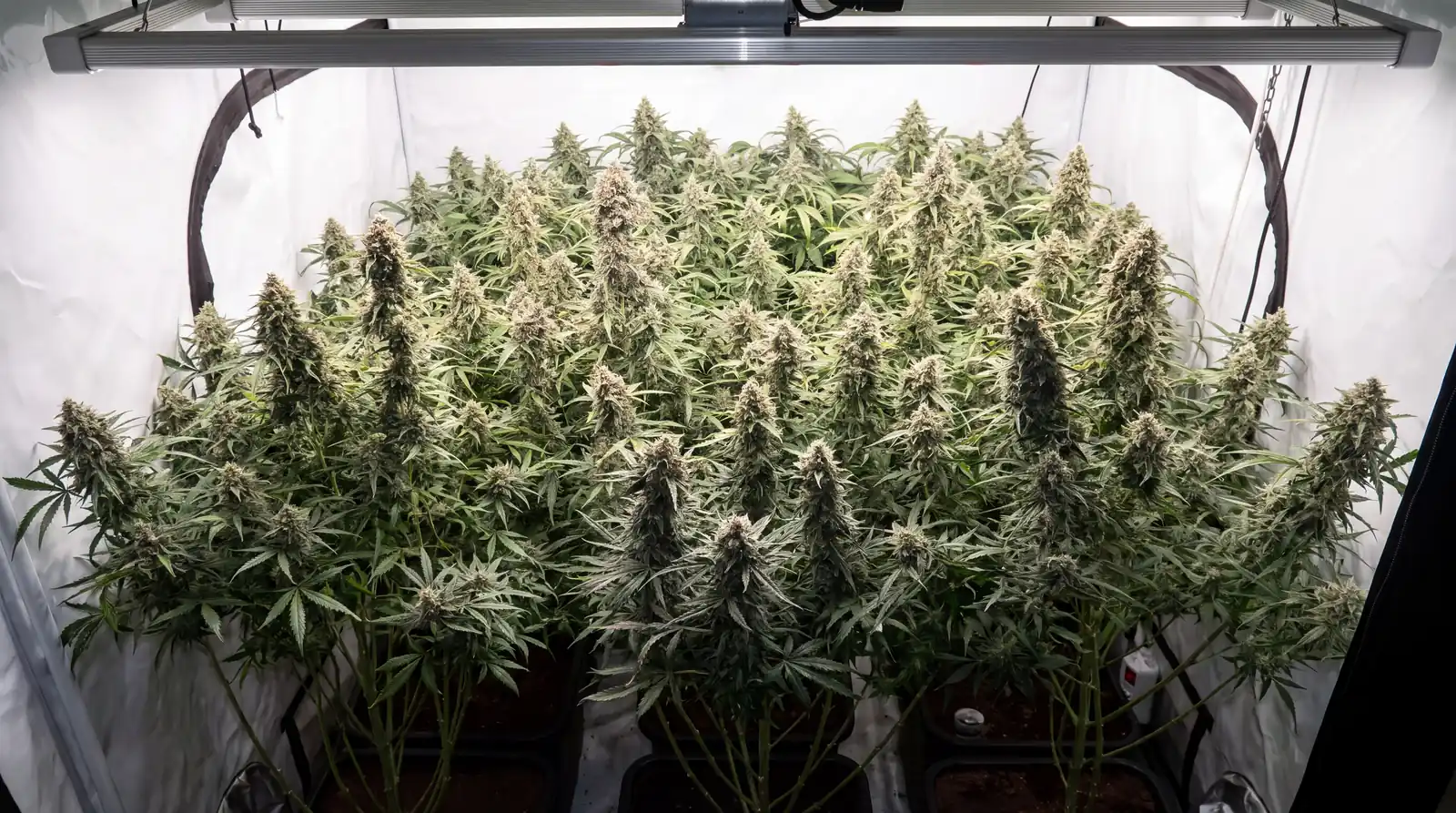
Photoperiod plants need 12 hours of light and 12 hours of uninterrupted darkness every day to enter the flowering stage. This light schedule tells your cannabis crops to stop growing leaves and branches and start building buds. Once 12/12 begins, the flowering stages follow a fairly predictable order:
- Plants stretch and set bud sites in the first few weeks.
- Buds fill out and fatten up through mid flower.
- In late flower, they ripen until they reach peak maturity.
How long flowering lasts mostly depends on genetics. Most strains finish around 8–10 weeks after the flip. Fast varieties are done sooner, and many sativas run longer, up to around 12–14 weeks. Weed seed listings typically give you a flowering period but veg length is the part you control, and it affects how big the plant gets.
Do Autoflowers Need a 12/12 Light Schedule?
No, autoflowers don't need a switch to a 12/12 light schedule. They start flowering based on age, so there's no flip and no timing call to make. Auto growers usually pick one autoflowering light schedule from seed to harvest. You can put an auto on 12/12, but it'll spend its short life on fewer light hours without finishing any sooner, which is why it's rarely the default.
When to Switch to a 12/12 Light Cycle
Flip to a 12/12 light cycle once your marijuana plant reaches about half the height your space can hold, because photoperiods keep growing upward for weeks after the change. You're really flipping for the size the plant will finish at, and that comes down to your ceiling and your strain.
How Much Do Cannabis Plants Stretch After the 12/12 Flip?
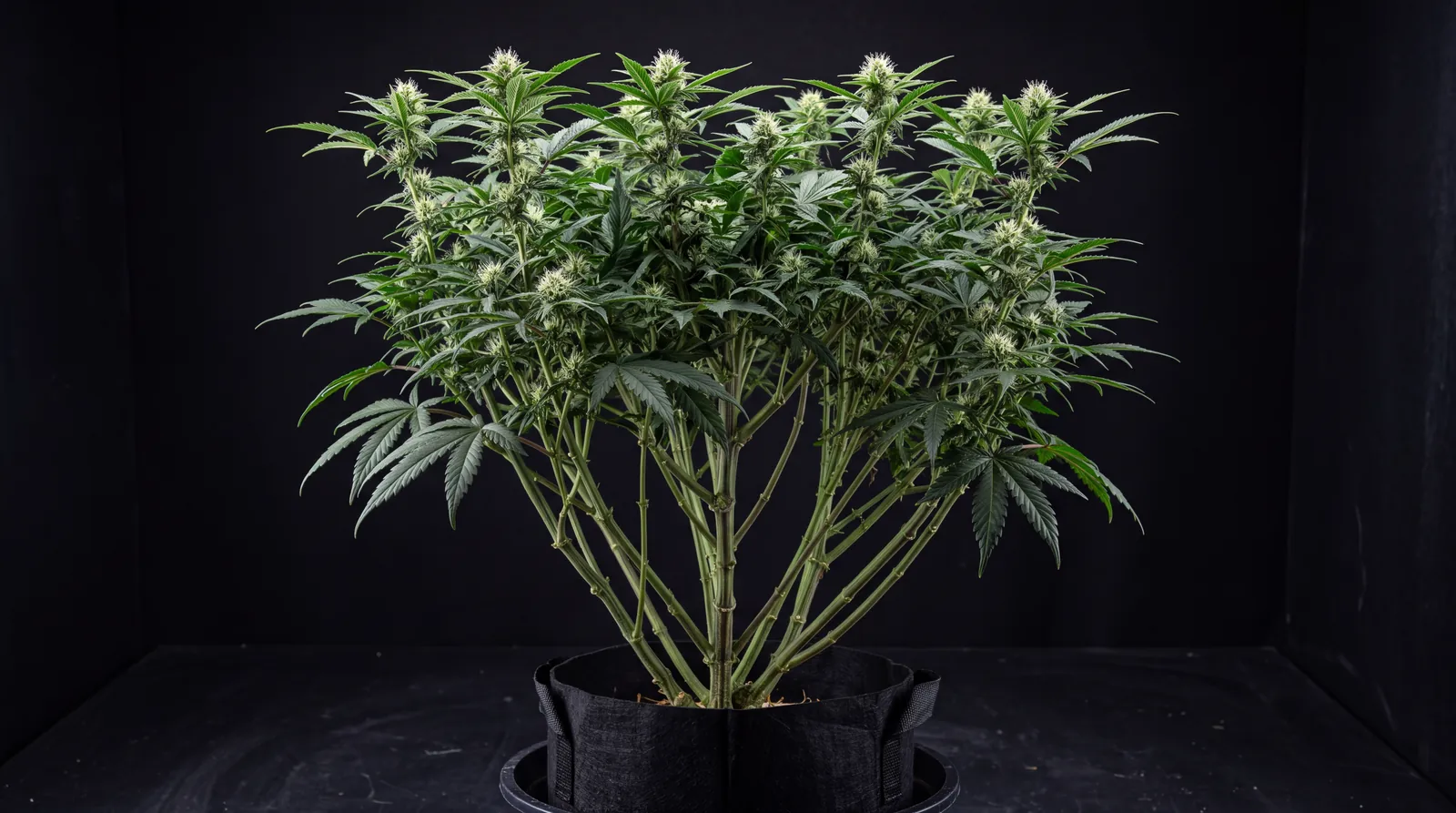
Most cannabis plants roughly double in height after the 12/12 switch, mostly in the first 2–3 weeks. Genetics swing it a lot. Indica-leaning plants are often reported to stretch around 50–100% while sativa-leaning plants can go much further. That’s why choosing cannabis seeds with your tent height and timeline in mind makes the flip more predictable.
How to Work Out Your Height Budget
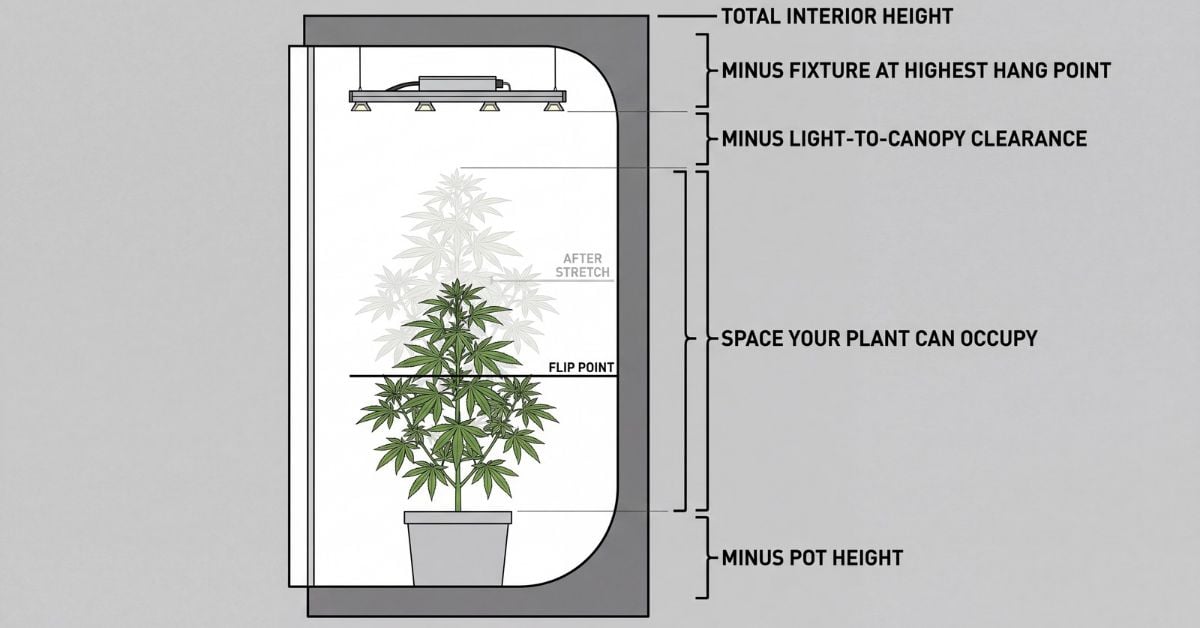
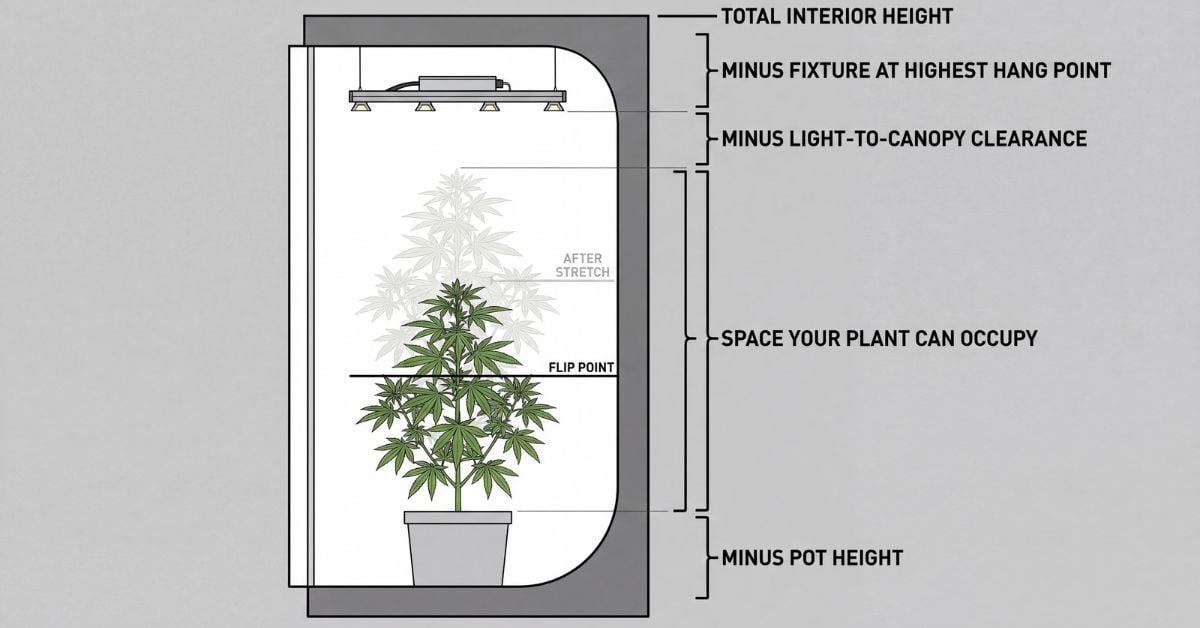
Your height budget is the vertical room your weed plant can fill before it gets too close to the light. Start with your total interior height, then subtract the light at its highest hang point, the clearance you need between light and canopy, and the height of the pot. What's left is the space your plant can occupy, so you’d flip once your plant reaches about half that figure.
It's a rule of thumb, not a spec. Some growers flip nearer 60–70% percent with short, well-trained indica-leaning plants, which works fine but gets risky with anything stretchy.
Your Pre-Flip Checklist
Your weed plant is ready for a 12/12 light schedule once it fits your height budget, the canopy is even, and training is done. Run through this checklist before you touch the timer:
- Height budget: Worked out, with light, clearance, and pot height already subtracted.
- Plant height: Roughly half that figure, or a bit less if the strain's known to stretch.
- Canopy: Spread across the footprint you plan to flower, not just tall in the middle.
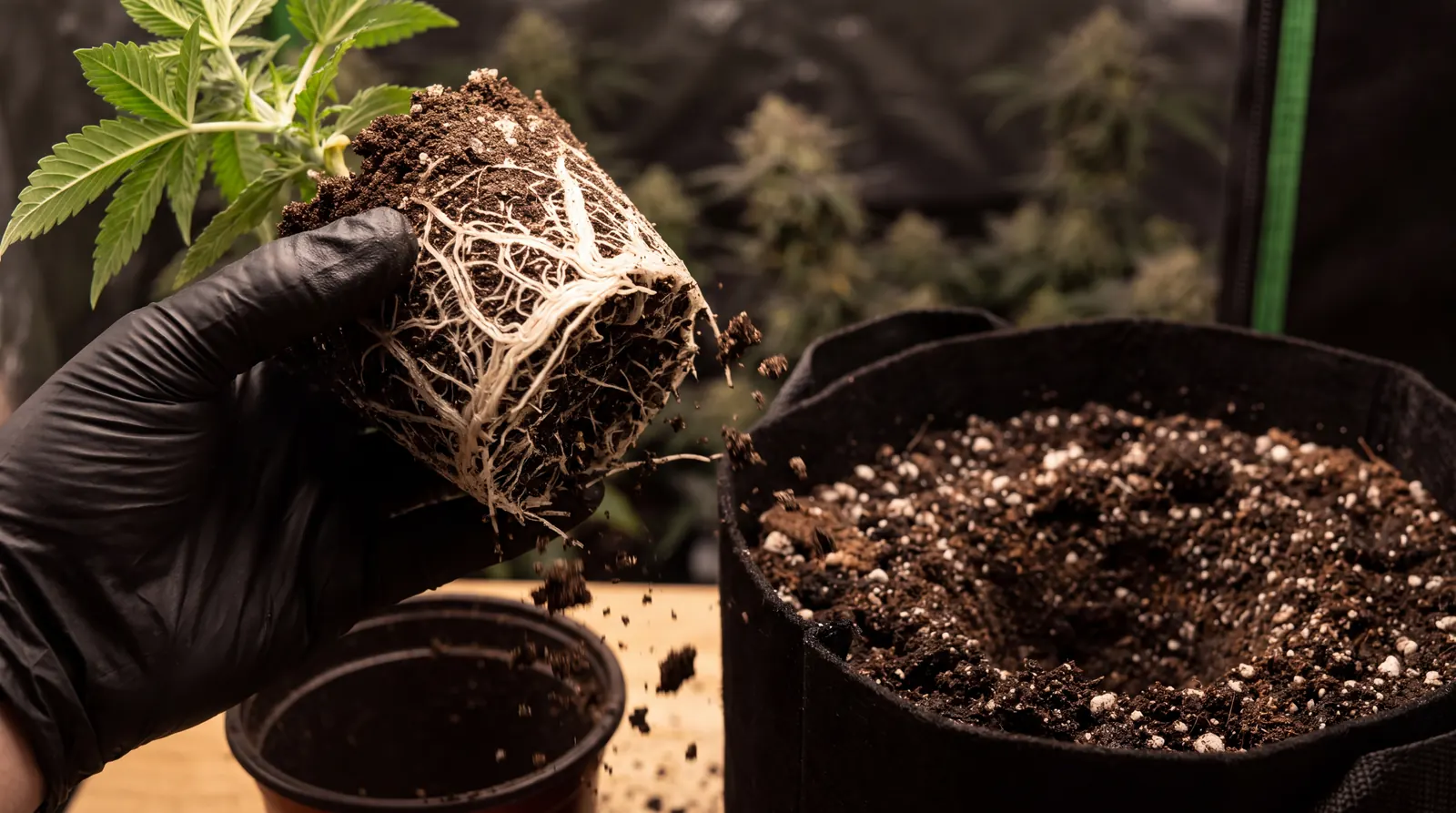
- Roots: Settled in their final pot, so there's no repotting mid-stretch.
- Training: Topping, LST, and net work finished, with the weed plant in healthy growth.
- Timer: Lights-on window set and checked by watching it actually switch.
Make the change in one step. Set the timer to 12 on and 12 off and leave it there. There's no need to taper the hours down gradually.
Flowering at 12 Inches: For Quicker vs Bigger Yields
Flipping at 12 inches means switching a photoperiod plant to 12/12 once it’s about a foot tall, ending veg early. It works, but you’ll harvest less per plant. The plant won’t stay at 12 inches, though. It keeps growing through the stretch in early flower, and many cannabis plants still end up close to double their height at the flip.
The yield drop comes down to bud sites. Buds form at the nodes along each stem and at the branch tips. A short plant has had less time to build nodes and branches, so it has fewer places to grow buds than a longer-vegged plant of the same genetics.
Flipping early is a legit strategy, not a beginner mistake. It gets you to harvest weeks sooner and keeps plants manageable in a short tent. It’s also the basis of a sea of green (SOG) setup, where many small plants fill the space instead of a few big ones. Extra veg time usually adds yield, so you’re choosing between a quicker harvest and a bigger one.
12/12 From Seed: Yield, Speed & Trade-Offs
12/12 from seed means running a photoperiod plant on a 12/12 light schedule from day one, with no dedicated veg stage. You get a smaller plant, less bud per plant, and a shorter run from seed to harvest. It's a smart fit for low ceilings and fast turnarounds, and a poor one if you want big harvests from a few plants.
Your marijuana plant won't flower right away, though. Seedlings grow vegetatively for their first few weeks whatever the light schedule, and many growers find they don't respond to 12/12 until around 3 weeks old. That's why plenty of growers give seedlings a couple of weeks on 18/6 first. Flowering kicks off at about the same time, and the plant gets a stronger start.
Per-plant yield is the wrong yardstick for this method. Individual plants stay small and container size swings the result a lot, so the useful measure is what your floor space produces per run. Fill the canopy with more plants and the total harvest can still be well worth it.
| 12/12 From Seed Is a Good Fit If... | Skip 12/12 From Seed If... |
| Your ceiling is low and stretch is your biggest limit | You want the biggest possible harvest from a few plants |
| You want faster turnarounds and don't mind running more plants | You have the headroom and patience for a proper veg |
| You're pheno-hunting or testing a new pack before committing veg time | You'd prefer to train a few plants to fill the whole space |
If a small, fast plant is the whole goal, autoflowering weed seeds get you there without any light cycle timing tricks.
How to Protect the Dark Period in Your Light Cycle
Keep the dark period completely dark and start it at the same time every day. The long, uninterrupted darkness period carries the flowering signal, so even small light leaks or a timer that drifts can delay or disrupt flowering.
Common Light Leak Sources
Most leaks come from the tent itself, the room around it, or your own habits. Check these first:
- Tent zips, seams, and worn corners.
- Room light under a door, or a window in the grow space.
- Indicator LEDs on equipment, fan controllers, and power strips.
- Opening the tent during lights-off to check on plants.
- A failed or missed timer, including one knocked out by a power cut or a daylight saving time change.
Even faint light can count. One study found very low levels of stray light delayed or blocked flowering in indoor cannabis, and growers often trace problems back to something as small as tape peeling off an indicator light.
How to Check for Light Leaks
Run a dark check from inside the tent. Wait until lights-off, zip yourself in, give your eyes a few minutes to adjust and look for anything glowing or seeping through. Tape over indicator lights and seal any gaps you find.
Do your feeding, training, and checking while the lights are on. Whether a green headlamp is safe during lights-off isn't settled, so staying out of the tent is the low-risk default.
What Happens If a Light Leak Interrupts Flowering?
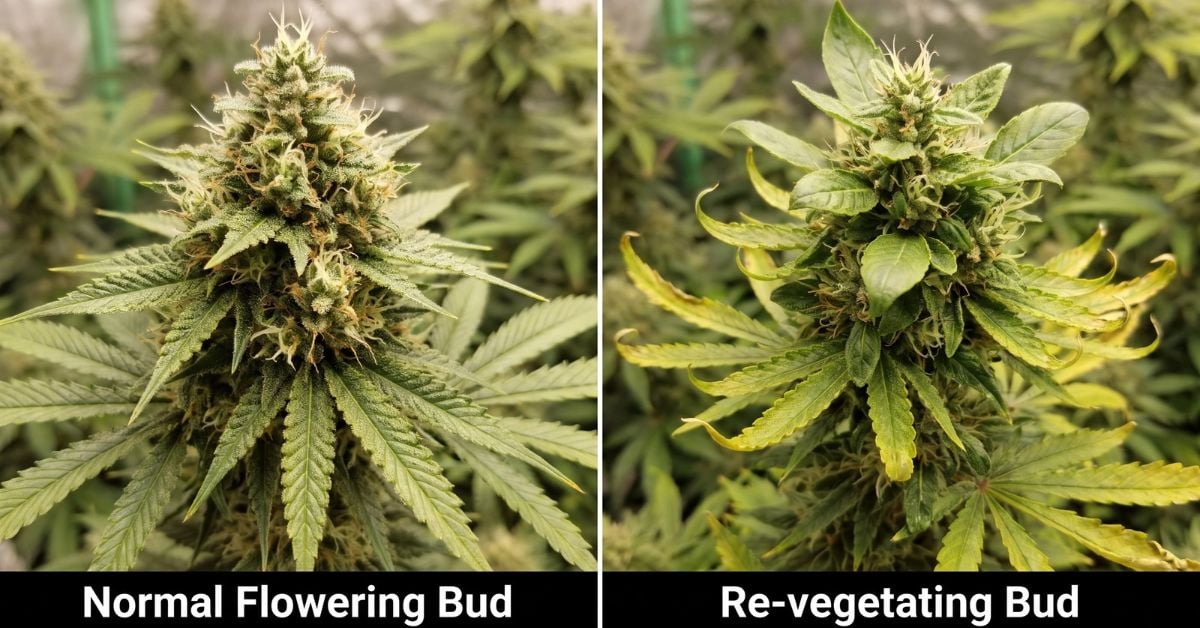
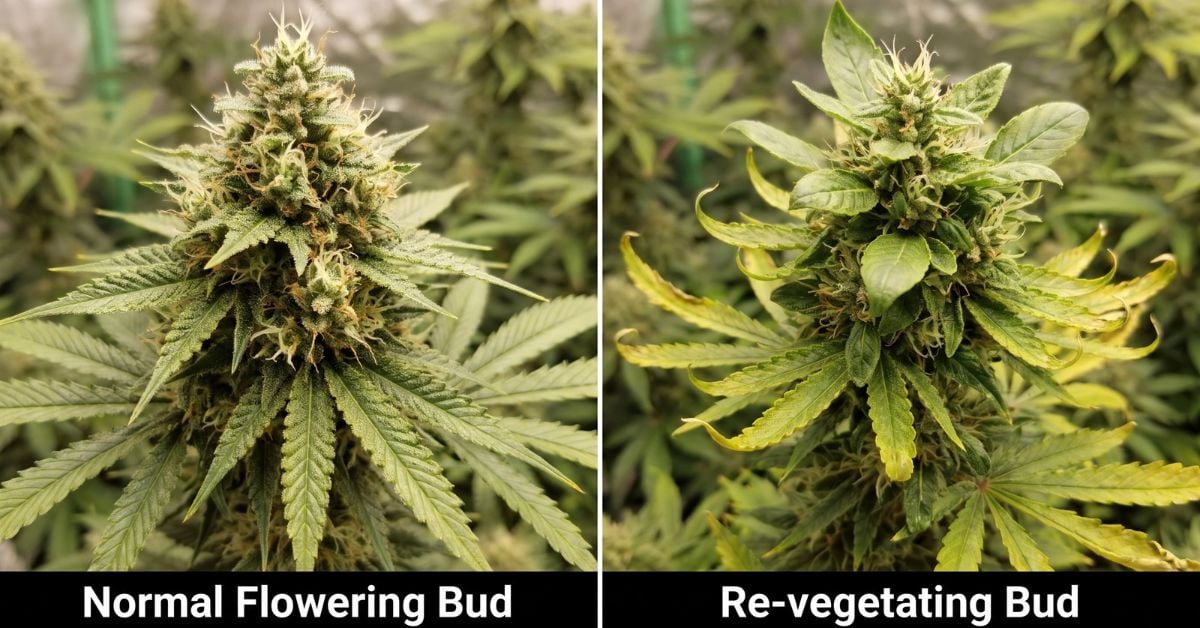
One brief interruption usually isn’t a lost crop, but repeated or significant leaks can stall flowering, push plants back into veg, or stress some into throwing hermaphroditic traits. How bad it gets depends on genetics and on how strong and frequent the light leaks were.
Find and seal the leak first, then go back to a clean 12/12 and hold it. Changing the schedule to make up for lost dark time just piles a second problem on top of the first. Once the leak is fixed, match what you’re seeing to the right response:
| Problem | What You’ll See | What to Do |
| Leak found, no symptoms yet | Plants look normal | Seal the leak and keep 12/12 steady. Check the buds over the next few weeks for nanners or leafy regrowth. |
| Stalled flowering | Buds stop gaining size and the finish runs late | Hold a strict 12/12 and keep everything else stable. Plan for a later harvest than the strain’s usual window. |
| Re-veg | Rounded single-blade leaves and leafy growth out of the buds | Hold a strict 12/12 light cycle and give plants time to switch back. Don’t add extra dark hours to speed it up. |
| Hermaphroditic traits | Pollen sacs or nanners in the buds | Pluck out the occasional nanner with tweezers and check daily. If they keep appearing, move the plant away from the others. |