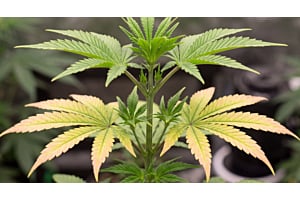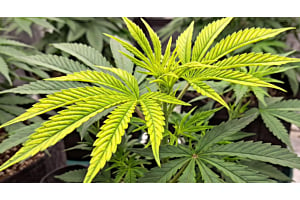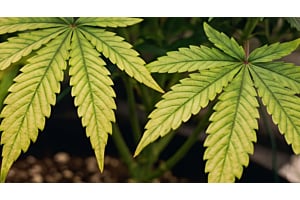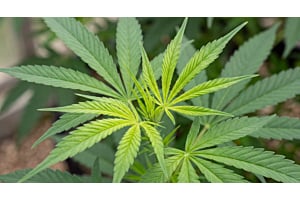
The cannabis flowering stage is the phase when a cannabis plant shifts from vegetative growth into bud development. During flowering, the plant forms bud sites, pistils, trichomes, resin, aroma, and eventually the maturity signs growers use to decide when to harvest. It's just one phase among the cannabis grow stages, sitting between the vegetative stage and harvest.
Flowering timing depends on genetics, seed type, indoor or outdoor environment, and whether the plant is photoperiod or autoflower. Photoperiod plants flower after a change in light cycle, while autoflowers begin flowering by age. The weed flowering stage is where bud quality is won or lost, so stable conditions matter more here than at any earlier point.
From here, this guide follows flowering from its first signs through the week-by-week changes, the light and feeding it needs, and the signals that tell you it is ending.
Cannabis Flowering Stage Quick Answers
- Flowering comes after vegetative growth.
- It starts with preflowers, pistils, and bud sites.
- Buds develop week by week, not all at once.
- Photoperiod plants flower after a light-cycle change.
- Autoflowers flower by age instead of a light-cycle switch.
- Trichomes and pistils help show maturity.
- Flowering ends when the plant is ready to harvest.
What Is the Cannabis Flowering Stage?
The flowering stage is the part of the cannabis lifecycle when the plant develops flowers or buds. For female cannabis plants, this is the stage where pistils, trichomes, resin, aroma, and harvestable flower develop. The marijuana flowering stage marks a shift in what the plant prioritizes, moving away from mostly leaf and stem growth toward reproduction.
Several changes define this stage:
- Bud sites form at the nodes where branches meet the stem.
- Pistils appear as fine hair-like structures on female plants.
- Trichomes and resin develop across the bud and nearby leaves.
- Aroma grows stronger as those glands mature.
The plant's needs change alongside its structure. Flowering nutrients differ from vegetative nutrients because the plant now builds flower rather than foliage.
Environmental stress carries more weight during flower because it affects bud quality directly, not just growth speed. The stage ends when buds show maturity signs, which is the point growers use to plan harvest.
When Does Cannabis Start Flowering?
Cannabis starts flowering when the plant begins forming preflowers, pistils, and bud sites. Photoperiod plants usually flower after a change in light cycle, while autoflowers begin flowering by age. The trigger differs by seed type, so the first question is always which kind of plant you are growing.
Photoperiod seeds respond to daylight length. Indoors, growers shift the light schedule to signal flowering. Outdoors, plants flower as seasonal daylight shortens toward late summer and fall. The plant reads the longer nights as the cue to begin bud development.
Autoflowers work differently. They flower on an internal clock tied to age rather than a light-cycle change, the core distinction between photoperiod and autoflower genetics. This changes how growers plan timing, because an autoflower does not wait for a schedule change to start budding.
Early signs mark the beginning either way. Stretch, preflowers, pistils, and small bud sites are the first visible cues, and preflowers also reveal whether a plant is male or female.
Indoor growers often count flowering from the light-cycle switch, but visible buds may appear a week or two later. Outdoor plants follow the season, so outdoor flowering start dates depend on your region and latitude. Timing varies by genetics, so treat any start date as an estimate rather than a promise.
Pre-Flower Stage: The Transition Into Budding
Pre-flower is the transition stage where cannabis plants begin showing early sex indicators and bud-site formation before full flowering. Female plants usually show pistils, while male plants may develop pollen sacs. This phase bridges vegetative growth and full flowering, and it is when growers confirm what each plant is going to become.
Preflowers appear near the nodes first. These preflowers are the earliest reliable signal of male vs female cannabis plants. Stretch may begin around this time as the plant adds height and spacing before buds fill in. Bud sites start forming at the nodes, marking where flowers will develop.
Seed type shapes how much sorting this stage requires. Regular seeds produce both male and female plants, so pre-flower is the window where growers identify and separate males before pollen spreads.
Feminized seeds are bred so that virtually all plants come out female, which reduces male-plant sorting for growers who want flower rather than breeding pollen. Even with feminized seeds, watching the plant through pre-flower still matters, because structure and early vigor tell you how the grow is tracking.
Cannabis Flowering Stage Week by Week
The cannabis flowering stage moves through a rough sequence: the stretch and bud sites appear first, then budlets form, they start swelling and producing resin, then they ripen as they get closer to harvest time.
Flowering week-by-week timelines are general references. Actual bud growth depends on genetics, seed type, flowering time, light, environment, plant health, nutrients, and whether the plant is indoor, outdoor, autoflower, or photoperiod.
The table below maps approximate flowering weeks to what the plant may look like and where to put your attention. Use it to orient yourself, not to set a harvest date. Two plants of different strains can look a full week apart at the same point on the calendar.
Cannabis Flowering Week-by-Week Guide
| Approximate Flowering Time | What the Plant May Look Like | Main Grower Focus |
| Week 1 | Stretch begins, early preflowers or bud sites appear | Maintain stable environment and observe sex signs |
| Week 2 | Pistils become clearer, bud sites form | Watch stretch, support structure, avoid stress |
| Week 3 | Small buds or budlets form at sites | Support flowering nutrition and airflow |
| Week 4 | Buds become more visible and structured | Monitor humidity, pests, and nutrient response |
| Week 5 | Buds gain size and aroma increases | Watch for deficiencies, mold risk, and branch support |
| Week 6 | Buds continue swelling, trichomes develop more visibly | Monitor ripening signs and environmental stability |
| Week 7-8 | Many strains enter late flower; pistils and trichomes change | Start harvest monitoring, avoid major stress |
| Week 9-10+ | Longer-flowering strains continue maturing | Check trichomes, pistils, and cultivar timing |
| Week 12+ |
Some long-flowering sativa-leaning plants may still mature |
Avoid harvesting only by calendar |
The weeks above are a reference frame, not a fixed schedule. The sections that follow break the timeline into stages so you can match what you see on your plant to the right grower focus.
Week 1–2 of Flowering: Stretch, Pistils, and Bud Sites

Fresh white pistils appearing at the stem node, showing the cannabis plant is entering the first couple of weeks of flowering.
Weeks 1 and 2 of flower open with stretch, early pistils, and the first bud sites rather than finished buds. The plant adds height and internodal spacing after the switch, and taller sativa-leaning genetics can more than double before growth stops. This is the setup phase, not the payoff phase, so buds do not swell yet.
Stretch is the headline event of week 1 and week 2. The plant extends stems and branches before it commits energy to flower, a carryover from the cannabis vegetative stage growth pattern. Early pistils or preflowers appear at the nodes, and bud sites begin forming where those pistils cluster. Plants often still look leafy and green through this window.
Indoor photoperiod growers should temper expectations here. After the switch to a flowering light schedule, visible buds do not appear overnight for photoperiod plants. Stretch and preflowers come first, and clear bud formation usually follows in the next couple of weeks.
Two tasks matter most in weeks 1 and 2:
- Sort for sex. If you are growing regular seeds, watch for pollen sacs and remove males before they open, reading the early male and female sex signs.
- Avoid heavy stress. Skip aggressive training or nutrient swings, because the plant is still establishing its flowering structure.
Week 3–4 of Flowering: Budlets and Early Bud Growth
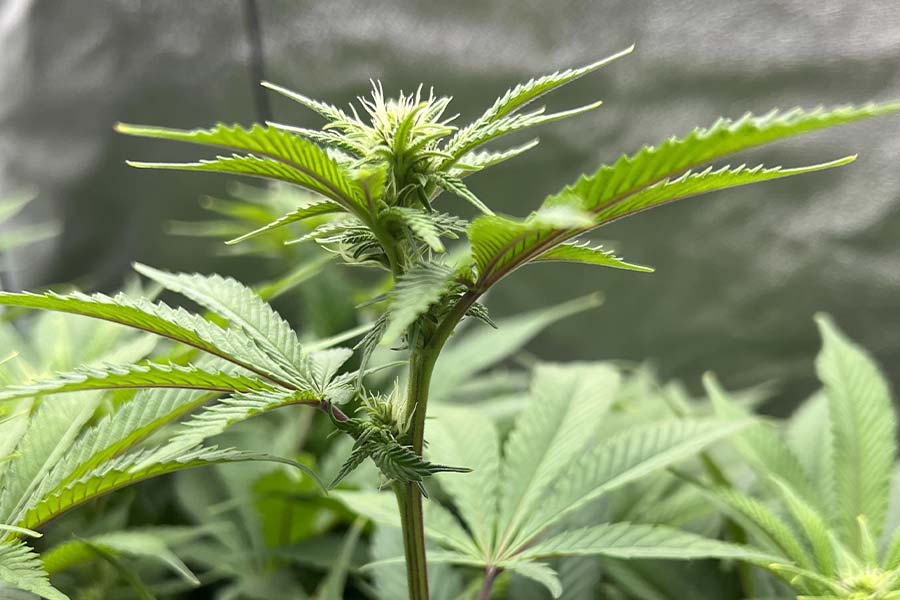
Small cannabis budlets beginning to form at the nodes around weeks 3–4, with fresh white pistils showing early flower development.
Weeks 3 and 4 of flower are when bud sites become visually obvious as budlets. Small clusters of flower tissue form at the nodes and along the tops of branches, and pistils grow more numerous and defined. The plant now looks like it is flowering rather than just stretching.
Several changes show up together:
- Budlets form and start to gain a little structure.
- Aroma may begin increasing as early trichomes develop.
- Stretch usually slows or stops by the end of week 4, so the plant's final frame is mostly set.
Nutrition and environment carry more weight now. Flowering plants shift their demand toward bloom-stage feeding, and balanced flowering nutrition supports bud development rather than leaf growth. Humidity and airflow matter more as canopy density builds.
Watch for early problems before they spread. Nutrient deficiencies can show as discoloration or spotting on leaves, and this is the stage to catch them. Pest pressure also rises as buds form, so checking the undersides of leaves early keeps small infestations from spreading.
Week 5–6 of Flowering: Bud Swelling, Aroma, and Trichomes
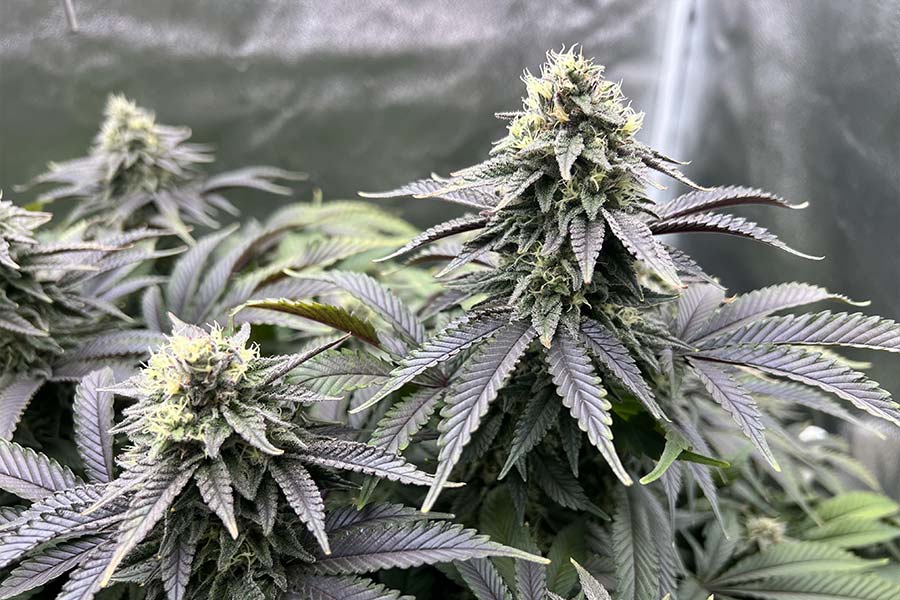
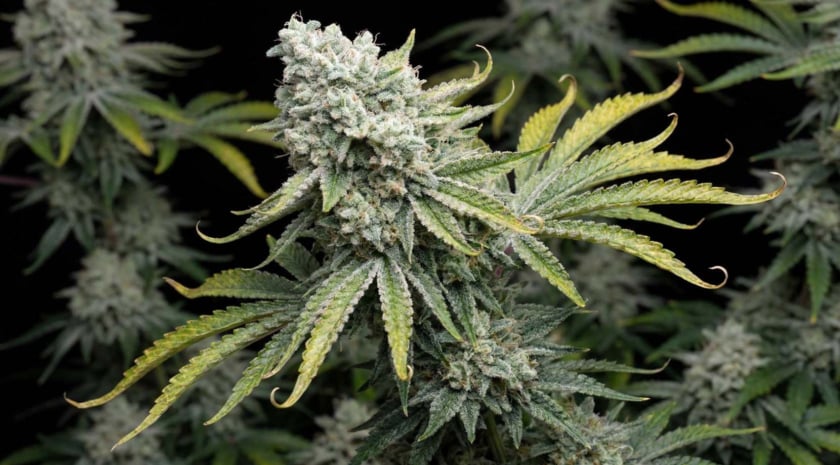
Cannabis colas in weeks 5–6 of flowering, with dense buds filling out and a frosty layer of trichomes starting to build.
Weeks 5 and 6 of flower are when buds gain real weight and resin becomes obvious. Buds fatten and firm up, aroma grows much stronger, and trichomes spread visibly across flowers and sugar leaves. This is often when growers first see the plant they were hoping for.
The plant's structure responds to the added weight. Some branches bend under swelling colas and need support with stakes or ties. Trichomes, the tiny resin glands that produce cannabinoids and terpenes, become dense enough to see clearly, and this is where flower quality starts to show. Aroma peaks in intensity for many strains, driven by the terpenes developing in the resin.
Mid-flower is also the highest-risk window for two problems. Dense buds trap moisture, so humidity control becomes critical to prevent mold and bud rot. Nutrient issues also show strongly now because the plant is working hard on bud production.
Buds visible at week 5 or 6 are not ready to harvest. It might be tempting to cut early once flowers look impressive, but most strains need several more weeks to finish. This mid-to-late window is when buds start to fatten and grow the most, though the exact timing depends on cultivar, environment, light, and plant health.
Week 7–10+ of Flowering: Ripening and Harvest Signs
Late flowering begins when buds stop mainly forming new structure and begin showing ripening signs. Growers should watch pistils, trichomes, aroma, bud density, and cultivar timing instead of harvesting only by week number. By week 7 or 8, many strains enter this ripening phase, though longer-flowering plants keep maturing well past it.
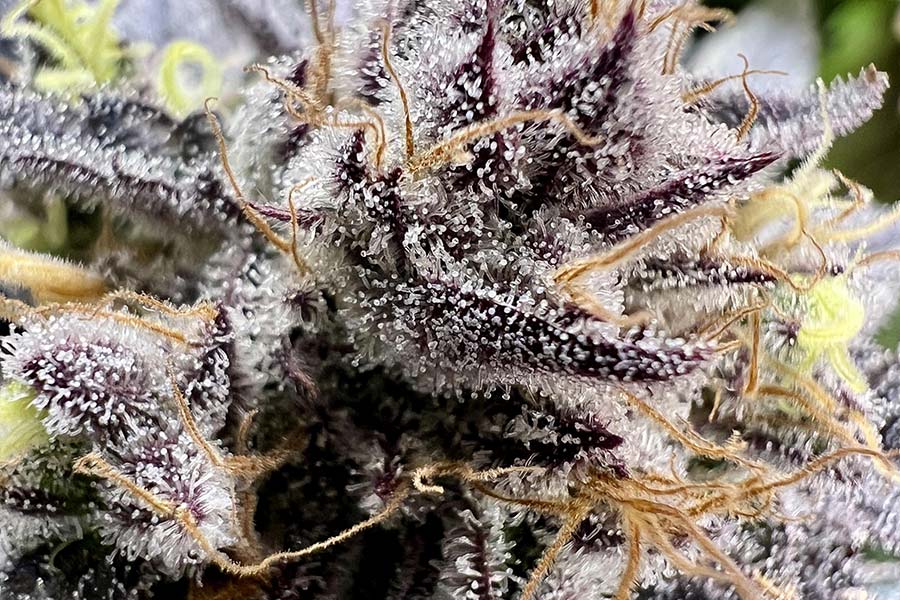
Close-up of cannabis trichomes showing clear, cloudy, and amber resin glands as the plant moves closer to the ideal harvest window.
The plant sends several signals as it ripens. Pistils that were bright white often darken and recede into the bud. Trichomes change in appearance as they mature, which is why trichome color guides harvest timing more reliably than any calendar. Aroma may reach its fullest point, and some fan leaves naturally fade or yellow as the plant redirects energy into finishing flower.
Cultivar timing sets the outer boundary. Some plants finish around week 8, while others run to week 10, 12, or beyond. Sativa-leaning and long-flowering genetics generally take more time than compact, fast-finishing plants.
This is why the harvest decision belongs to ripeness signs rather than the calendar alone, and why a dedicated read of harvest indicators pays off before you cut.
Once the plant is cut, the process moves on to drying and curing, the steps that turn ripe flower into stored, usable bud. Late-flower stress can still affect final quality, so keeping conditions stable through the last weeks protects the work of the whole grow.
Flowering Light Schedule
A flowering light schedule tells photoperiod cannabis plants to shift from vegetative growth into flowering. Autoflowers flower with age, so they do not need this light-cycle change.
Photoperiod plants respond to longer nights, not shorter days, to start flowering. Indoors, growers typically switch to 12 hours of light and 12 hours of uninterrupted darkness.
Keep the dark period completely dark, though. Light leaks can interrupt flowering and may cause stress or re-vegging. That's why consistent timing is vital when you're growing cannabis indoors, along with light intensity and canopy distance — these aspects all affect how well buds develop.
Outdoor growing works differently. Cannabis plants start flowering when daylight naturally decreases through the season and nights are long enough to provide an undisturbed period of extended darkness.
Bud, Pistil, and Trichome Development
Cannabis buds form at flowering sites and develop pistils, resin, and trichomes as the flowering stage progresses. Trichomes are especially important because they relate to resin, aroma, cannabinoids, terpenes, and harvest timing. Growers watch these three structures most closely during flower: buds, pistils, and trichomes.
Each structure has a clear role:
- Bud sites at the nodes develop into the flowers themselves, built mainly from bracts (the small resin-coated modified leaves that make up most of a bud's substance), which stack into a cola.
- Pistils (strictly, the stigmas) are the visible hair-like structures on female flowers, white at first and darkening as the plant matures.
- Trichomes are the resin glands that coat buds and sugar leaves, and they hold most of the compounds detailed in cannabis compounds.
Trichomes connect flower development to harvest and aroma directly. As trichomes mature, their appearance shifts, and reading that change is how growers judge ripeness - the core of using cannabis trichomes as a harvest signal. The same glands produce the cannabis terpenes that drive a strain's smell and flavor, so aroma intensity tracks resin development.
Bud growth is not uniform or guaranteed. Early pistils are not mature buds, and a plant covered in white hairs at week 3 is still early. Genetics, light, nutrients, environment, and plant health all shape how buds fatten, so two plants under the same roof can finish very differently.
Flowering Nutrients and Watering
During flowering, cannabis plants need stage-appropriate nutrients, careful watering, and stable conditions to support bud development. Overfeeding, underwatering, overwatering, and poor humidity control can all affect flowering performance. Nutrition and watering shift at flower, and getting the balance right supports bud development without harming the plant.
Nutrient needs change from veg to flower. The plant moves its demand toward bloom-stage feeding, but it still needs a balanced diet rather than a single nutrient. Getting that cannabis nutrition and feeding right is what keeps bud development on track. Overfeeding burns the plant, showing as scorched leaf tips, while deficiencies can slow or weaken bud development.
Watering also shifts as the plant and environment change. Water demand rises and falls with plant size, pot volume, temperature, and humidity, so watering cannabis plants during flower means reading the plant rather than following a fixed schedule. Both overwatering and underwatering stress the plant at a stage where stress costs the most.
Environment ties the whole stage together. High humidity and poor airflow around dense buds invite mold, so airflow and humidity control protect the flower. Nutrient burn and deficiency symptoms both show on the leaves, which is where flowering-problem diagnosis starts. Stable temperature, humidity, and feeding through flower give buds the best conditions to finish.
Common Cannabis Flowering Problems
Common flowering problems follow a pattern of symptom, likely cause, and next check. Most trouble in flower comes from a short list of issues: mold, mildew, pests, feeding errors, and stress. Catching them early and using symptom-to-cause reasoning keeps small problems from ruining a harvest.
The table below pairs each common flowering problem with a likely cause and what to check first. Use it as a starting point for diagnosis, but keep in mind that no table can replace looking closely at your own plant; it points you in the right direction.
Common Flowering Stage Problems
| Flowering Problem | Possible Cause | What to Check |
| Bud rot or mold | High humidity, poor airflow, dense buds | Humidity, airflow, bud density |
| Powdery mildew | Humid or stagnant conditions | Leaves, airflow, environment |
| Buds not fattening | Weak light, genetics, nutrition, stress | Light, feeding, environment |
| Burnt tips | Overfeeding | Nutrient strength |
| Yellowing leaves | Natural fade or deficiency | Timing and leaf pattern |
| Pests in flower | Insects or poor monitoring | Undersides of leaves and buds |
| Seeds in buds | Pollination or male/hermie flowers | Sex signs and pollen exposure |
| Re-veg or stress | Light leaks or schedule disruption | Dark period and timer consistency |
Catching cannabis pests and diseases early is vital since they hit hardest in dense flower. Burnt tips and yellowing leaves are usually feeding-related, tracing back to flowering nutrient strength.
Seeds in buds usually mean stray pollen or a hermie flower. Other problems show in the leaves, so read their color, spotting, and location to trace the cause.
How Long Does the Cannabis Flowering Stage Last?
The cannabis flowering stage typically lasts 8–10 weeks for indica-dominant plants and 10–12 weeks for sativa-dominant plants, though exact timing depends on genetics, seed type, environment, and whether the plant is grown indoors or outdoors:
- Genetics: Indica-leaning plants usually finish flowering sooner (in 6–8 weeks or 8–10 weeks) while sativa-leaning plants tend to take longer (in 10–12 weeks or 12–14 weeks).
- Seed type: Photoperiods have a much longer life cycle compared to autoflowering plants, which typically finish their full lifecycle in 8–10 weeks from seed (indica), up to 12–14 weeks from seed (sativa).
- Environment: Indoor flowering is often counted from the light-cycle switch, but visible flowering can lag that start by a week or more. Outdoor flowering follows the season and daylight, so harvest windows depend on region.
No single number fits every plant. Use flowering time as a guide, but confirm maturity with pistil, trichome, and bud development signs before harvest.
Autoflower vs Photoperiod Flowering Timelines
Photoperiod vs autoflower cannabis plants use different flowering triggers, so their timelines differ too. With an age-based trigger, autoflowers start budding a few weeks after sprouting regardless of the light schedule, so their timeline is measured from seed rather than from a flip. Photoperiod plants flower on the light-cycle change, when the grower or the season extends the dark period.
The autoflowering vs feminized cannabis seeds label also confuses growers, but they describe different things. 'Autoflower' refers to flowering behavior, while 'feminized' describes sex expression, so a seed can be both, either, or neither. Most feminized seeds are photoperiod, except for autos, which are usually feminized, too.
Growers who want a fast, age-based lifecycle usually choose autoflower seeds, since they're ideal for short seasons and quick harvests. Photoperiod plants suit growers who have long outdoor seasons or indoor growers who want to control the flowering trigger by managing light.
When Does Flowering End?
Flowering ends when the cannabis buds show maturity signs and the plant is ready to harvest. Growers should check pistils, trichomes, bud development, and cultivar timing instead of relying only on a week number. The end of flowering is a reading, not a date, and it opens directly into harvest.
Several signs converge as flowering closes:
- Buds fill out and firm up.
- Pistils darken and recede.
- Trichomes reach their mature appearance.
- Aroma develops fully, and major new bud growth slows because the plant has largely finished building flower.
Reading these together, rather than any one alone, gives the clearest picture. Cultivar timing frames how long to wait. Some plants reach these signs earlier and some later, so the same signs can appear at week 8 on one strain and week 11 on another.
Harvesting purely by calendar week risks cutting early or late, which is why ripeness signs should guide the decision.
What comes next is a separate process. After flowering ends, the plant is harvested, then dried and cured, and those post-harvest steps shape final aroma, potency, and storage stability. Preparing harvest and drying space before the plant finishes keeps the transition smooth and protects flower quality.
Cannabis Flowering Stage Checklist
This checklist condenses flowering-stage care into a scannable sequence. Work through it as your plant moves from the switch into ripening.
Flowering Stage Care Checklist
- Confirm the plant has transitioned from vegetative growth.
- Watch for preflowers, pistils, and bud sites.
- Maintain the correct light schedule for photoperiod plants.
- Keep the flowering environment stable.
- Support bud development with stage-appropriate flowering nutrients.
- Avoid overwatering and overfeeding.
- Monitor humidity and airflow as buds become denser.
- Watch for pests, mold, and bud rot.
- Track bud, pistil, and trichome changes.
- Do not harvest by week number only.
- Prepare for harvest, then drying and curing, once ripeness signs appear.
Run through this list weekly rather than once, since flowering conditions change as buds swell. If one habit matters more than any other, it is this: read the plant, not the calendar.
Cannabis laws vary by state and locality. Check local laws before germinating or growing cannabis seeds, and grow only where cultivation is permitted.