Cannabis leaves turning yellow? You may have a nitrogen deficiency on your hands. It's one of the most common nutrient problems and one of the most severe, with a serious shortage leading to stunted growth and reduced yields. The good news? A nitrogen deficiency in weed is easy to spot and usually quick to fix once you know what you're looking at.
This guide walks you through the signs, causes, treatments and recovery timelines. You'll also learn the differences between a nitrogen deficiency vs nitrogen toxicity vs normal yellowing.
TL;DR: A nitrogen deficiency starts on the oldest, lowest leaves and climbs upward. The leaves fade before yellowing, wilting and dropping off (while the top stays green). If that pattern shows up in veg or early flower, treat it as a nitrogen deficiency. If it only shows up in the last weeks before harvest, it's usually normal ripening.
What is a Cannabis Nitrogen Deficiency?
A cannabis nitrogen deficiency occurs when a plant can't access enough nitrogen to build chlorophyll, drive photosynthesis and sustain new growth. Nitrogen (N) is a primary macronutrient and the first number in the N-P-K ratio on every fertilizer label.
Demand runs highest in the vegetative stage, when the plant is putting on most of its leaves, stems and roots, so that's when a shortage bites hardest.
Starve a plant of nitrogen and growth doesn't just slow, it stops. Prolonged shortages during veg can permanently cap plant size and yield. A severe deficiency also slows water uptake, since the plant's vascular system starts to break down (which compounds the problem and drags recovery out even further).
Catch it early and the plant recovers. Catch it too late, though, and you lose growth you can't get back.
What Are the Signs of a Nitrogen Deficiency in Cannabis?
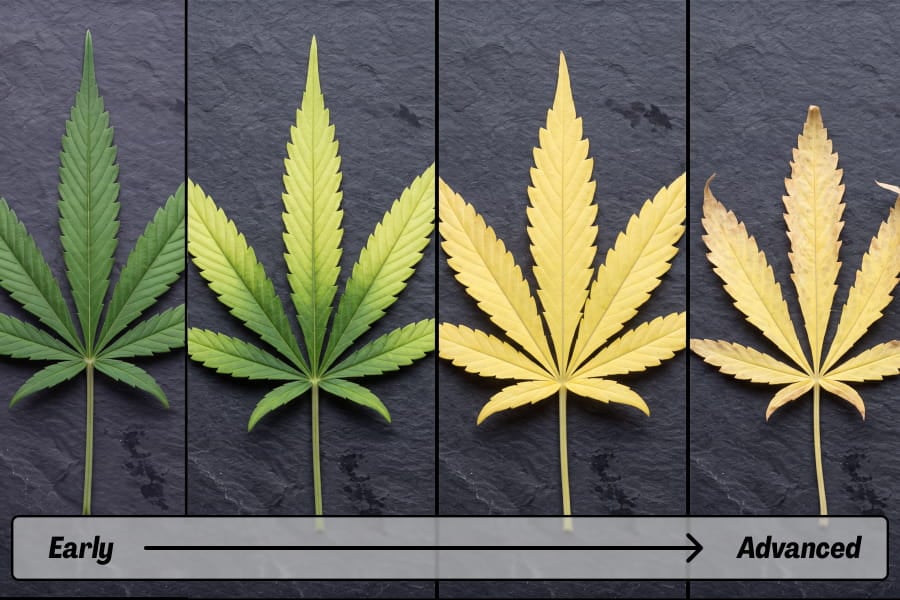
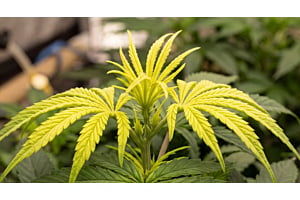
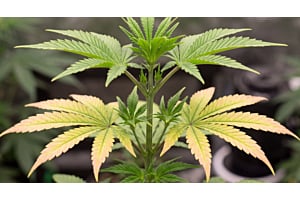
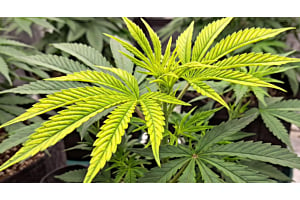
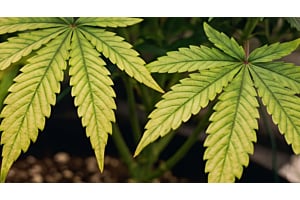
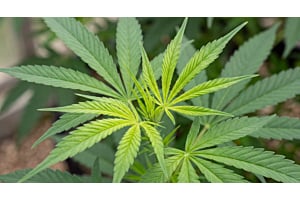
Split image showing nitrogen deficiency progression from pale lime-green to yellow.
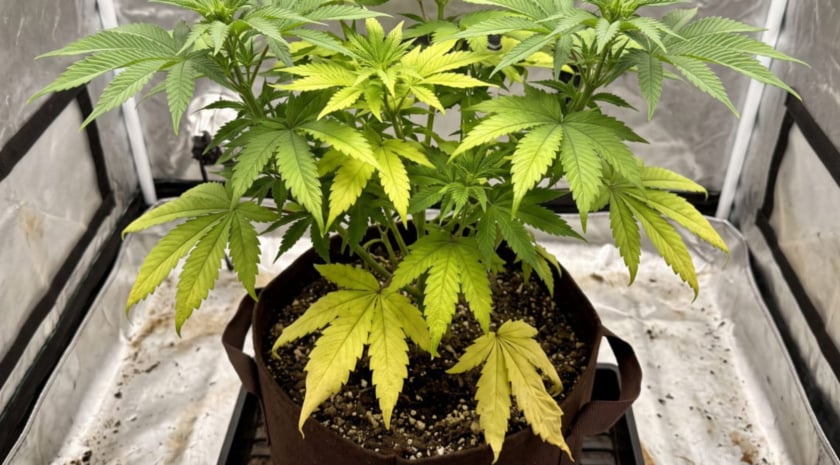
A nitrogen deficiency shows up in a marijuana plant first as fading, pale-green lower leaves that yellow and drop. The yellowing then climbs upward, so eventually only the new top growth stays green.
Affected leaves die from the tips inward, wilting and folding before they fall. Alongside the color change, you'll often see smaller leaves, slow growth and a thin, sparse plant.
Some plants also show a red or purple tinge on the stems and leaf stalks. That one isn't a sure tell, since some cultivars grow purple stems naturally. Read it together with the leaf color and where the yellowing starts, not on its own.
Why Do Lower Leaves Turn Yellow First?
Nitrogen moves from old leaves to new growth because it's a mobile nutrient. When supply runs short, a cannabis plant pulls nitrogen out of its oldest leaves to feed the youngest ones. That protects the fresh top growth and concentrates the damage on the lowest, oldest leaves. Bottom-up yellowing is the signature pattern telling you the shortage is serious.
What Do Light Green or Lime Green Leaves Mean?
Pale or lime-green foliage signals an early nitrogen shortfall before full yellowing sets in. Low nitrogen means less chlorophyll, and less chlorophyll drains the deep green out of the leaves. At this stage, the whole plant can look washed out and light. Correcting a nitrogen deficiency now - before leaves turn fully yellow - gives you the fastest turnaround.
Nitrogen Deficiency vs Nitrogen Toxicity: What's the Difference?
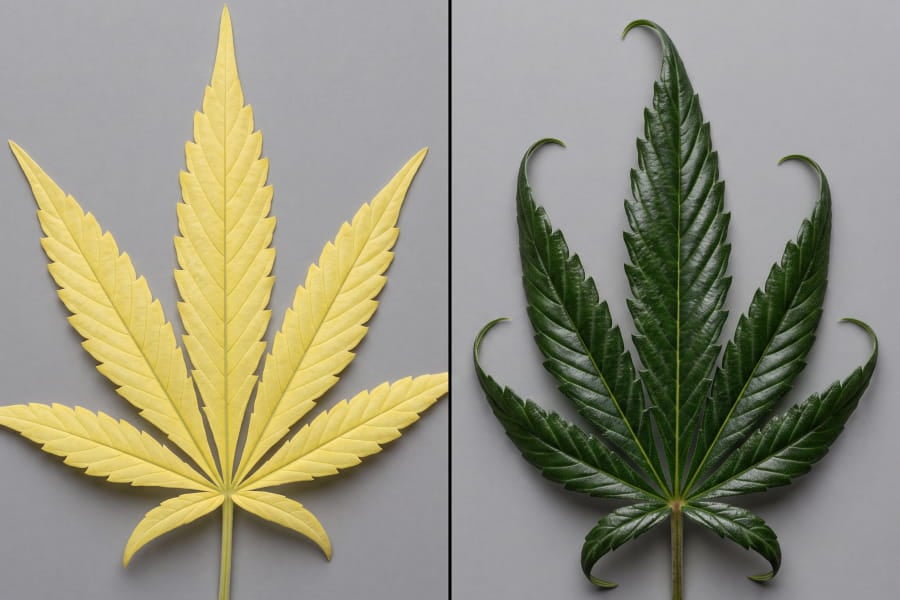
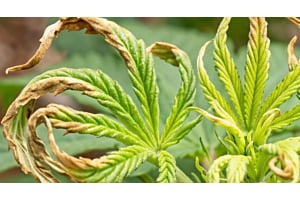
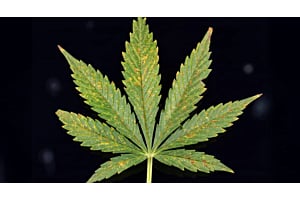
Side-by-side comparison of a nitrogen-deficient cannabis leaf and a nitrogen-toxic cannabis leaf.
A nitrogen deficiency pales and yellows old leaves, while nitrogen toxicity darkens and claws the new ones. The table below breaks down more specifics:
| Signal | Nitrogen deficiency | Nitrogen toxicity |
| Where it shows | Oldest, lowest leaves first | Often older, lower leaves too; color and shape (not location) separate it from deficiency |
| Leaf color | Pale lime fading to yellow | Very dark, glossy green |
| Leaf shape | Soft, limp and wilting | Clawed tips, curled and brittle |
| Growth | Stalled and sparse | Lush but weak |
| Knock-on effects | Stunted growth and capped yields | More prone to pests and disease |
| The fix | A nitrogen-heavy grow formula | A full flush & reduced nitrogen |
The two look almost opposite, but panicked growers can still reach for the wrong solution. The fix runs in opposite directions, so getting this right is vital.
Is Yellowing During Flowering a Nitrogen Deficiency?
It depends on the timing and speed of the yellowing happening during the flowering period.
Late-flower yellowing is usually normal ripening, not a nitrogen deficiency. In the final weeks before harvest, a weed plant cannibalizes stored nitrogen to finish its buds. The oldest fan leaves at the lower canopy yellow, wilt and drop right on schedule. Flowering nutrients carry little nitrogen by design, so this fade is expected.
If yellowing races up the plant in the first few weeks of flower, that's a problem to fix. Your plant still needs a small amount of nitrogen in the early flowering phase, so switch to a bloom-specific feed gradually rather than all at once.
What Causes Nitrogen Deficiencies in Cannabis?
Underfeeding, pH lockout, low-nutrient media or heavy leaching can all lead to a nitrogen deficiency in a marijuana plant. Four causes account for most cases:
- Underfeeding: Too light or too infrequent feeding for the vegetative stage, when nitrogen demand peaks. It can also happen with organic feeds: meals, manures and other slow sources have to be broken down by soil microbes before the roots can use them, so a plant can be "fed" and still go short on nitrogen while it waits.
- pH lockout: The nitrogen is in the medium, but the roots can't take it up because pH has drifted out of range. This is worth ruling out first because it ‘fakes’ a nitrogen shortage. Check your pH before adding more feed, since the nitrogen may already be there.
- Low-nutrient media: Inert or low-holding media (low cation exchange capacity, or CEC) can't bank nutrients between feeds. Coco, perlite and rockwool hold almost nothing, and sandy soils drain their nutrients away fast, so all of these need feeding little and often rather than in big infrequent doses.
- Heavy leaching (overwatering): Nitrogen mostly travels as nitrate, which is highly water-soluble, so it washes straight through the medium when you overwater or water too heavily. Waterlogged, airless roots also absorb nutrients poorly, so overwatering hits nitrogen uptake from both directions.
How Do You Fix a Nitrogen Deficiency in Cannabis?
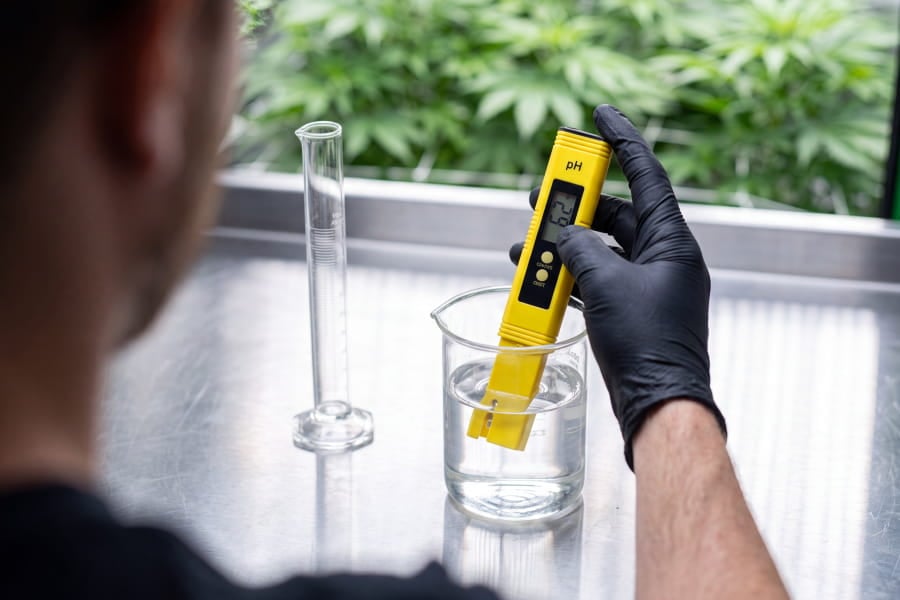
Grower checking pH and applying a nitrogen feed.
You fix a nitrogen deficiency by getting available nitrogen back to the roots, but only after you've ruled out a pH problem masking the real issue. Work through it in this order:
- Confirm it's actually a nitrogen deficiency.
- Check your pH before you feed.
- Correct the pH, then recheck.
- Feed a nitrogen-rich formula.
- Don't overcorrect.
- Judge the fix by new growth
- If nothing improves in a week, look again.
1. Confirm It's Actually a Nitrogen Deficiency
Check that the yellowing starts low and climbs, and that you're in veg or early flower. If it's the final weeks before harvest, it's typically a normal fade and needs no fix.
2. Check Your pH Before You Feed
If pH has drifted out of range, the nitrogen may already be there — just locked away, so more feed won't help. Aim for 6.0-6.3 in soil (6.5 is the ceiling) and 5.8-6.2 in coco or hydro (5.6-6.4 still works). Take a runoff or slurry reading in soil or coco, or test the reservoir in hydro, with a calibrated meter. Treat runoff as a warning light for pH drift, not a number to dial in to.
3. Correct the pH, Then Recheck
Living, organic soil buffers its own pH through the root-zone microbes. If the soil has truly drifted, fix it with organic amendments (dolomite lime to raise pH, elemental or wettable sulfur to lower pH). In soil on synthetic nutrients, coco, or hydro, mix your nutrients into the water first and bring that feed solution into the target range with pH Up or pH Down.
If lockout was the problem, the plant will start greening up in new growth within 3-5 days without any extra feed. If it doesn't, or the plant is clearly nitrogen-starved, move on to feeding.
4. Feed Your Cannabis Plants a Nitrogen-Rich Formula
Once pH is in range, feed a nutrient weighted higher in nitrogen than phosphorus and potassium at normal strength, and keep to your regular feeding schedule. Most veg-specific formulas fit the bill. For the fastest response, water-soluble nitrate (or a light foliar feed) gets nitrogen to the plant quickest, so new growth starts greening up within days.
5. Don't Overcorrect
Keep feeding normally and resist the urge to push extra nitrogen because the old leaves haven't turned green again — they won't. Overfeeding pushes the plant toward nutrient burn or nitrogen toxicity. Once new growth comes in firm and green, the deficiency is fixed.
6. Judge the Fix by New Growth
Watch the fresh top growth, not the damaged lower leaves. New leaves coming in firm and green mean it's working. The worst-hit old leaves won't turn green again, and that's expected.
7. If Nothing Improves in a Week, Look Again
No response usually means the real cause wasn't nitrogen, or a pH lockout is still blocking uptake. Recheck your diagnosis rather than adding more feed.
How Do You Quickly Add Nitrogen?
Water-soluble nitrate reaches roots almost immediately, while urea and dry organics act more slowly. Nitrate dissolves and feeds roots right away, so it's the fastest option. Calcium nitrate works fast too. You can use it as a foliar spray or in the nutrient solution, and it forms one half of CalMag.
Dry organic sources take longer because microbes have to break them down first. Fish emulsion at 5-1-1 and high-nitrogen guano release quickly, while alfalfa meal, feather meal, fishmeal and manure all feed slowly. Use the slow sources to prevent shortages, not to rescue a plant that needs nitrogen today.
How Long Does Nitrogen Deficiency Recovery Take?
Recovery depends on how far the deficiency progressed before you caught it. In every case, the first thing to watch for is the yellowing. Once nitrogen is available again, the yellowing should stop spreading up the plant within a few days, even though full recovery takes longer.
- Mild (a few pale lower leaves, caught early): The spread stops within about 3-5 days, and healthy green new growth follows within roughly a week. This is the ideal outcome and the reason early diagnosis matters.
- Moderate (yellowing climbed into the mid-canopy, some leaves dropped): The spread still halts in a few days once fed, but rebuilding a full, vigorous canopy takes a couple of weeks as the plant pushes new growth to replace what it lost.
- Severe (yellowing reached the upper plant, heavy leaf drop, stalled growth): Expect the longest road. The decline stops within days of correcting the cause, but regaining full color and vigor can take several weeks, and a badly stunted plant may never fully make up the lost growth, especially if it happened in veg.
The worst-hit leaves won't turn green again. Once a leaf has yellowed and died back, it's spent. That's normal and not a sign the fix failed. Fresh leaves coming in firm and green are the real signal the problem is solved. The plant replaces ruined foliage on its own as it goes.
How Do You Prevent Nitrogen Deficiency in Cannabis?
You prevent nitrogen deficiency by matching feed to the growth stage and keeping pH in range. Feed heavier during veg, when your plant wants the most nitrogen, then taper into flower. Keep pH in the 5.5-6.5 range in soil (6.0- 6.3 is ideal) and 5.6-6.4 in hydro so roots can absorb what's there. Check it often, since small drifts lock out nutrients before you see symptoms.
Healthy soil with good nutrient-holding capacity buffers against shortages between feeds. Don't overfeed to play it safe, because excess nitrogen causes its own damage. Steady, stage-matched feeding beats big corrective doses every time.
Which Deficiencies Look Like Nitrogen Deficiency?
Several nutrient deficiencies mimic nitrogen, but you can tell them apart by where they hit the marijuana plant first and what the yellowing actually looks like. Location is the strongest tell: mobile nutrients like nitrogen pull from the old, lower leaves first, while immobile ones show damage on the new, upper growth first.
The table below compares nitrogen deficiency with its common look-alikes.
| Deficiency | Where it strikes first | Distinctive sign |
| Nitrogen Deficiency | Oldest, lowest leaves | The whole leaf fades evenly from pale lime to yellow, then wilts and drops. |
| Magnesium Deficiency | Lower and mid leaves | Yellowing between green leaf veins with dry and crispy leaf edges. |
| Phosphorus Deficiency | Older, lower leaves | Leaves darken with dull blue or purple tints, edges turn tan or brown and curl down, and stems redden. |
| Potassium Deficiency | Lower leaves | Burnt tan or brown leaf tips and edges with necrotic spots and mottled reddish yellowing between the veins. |
| Sulfur Deficiency | Newest, top growth | Young leaves pale first, turning brittle while growth slows. |
| Molybdenum Deficiency | Middle of the plant | Mid-canopy leaves yellow while new leaves twist and distort and older leaves turn red at the tips. |
Work top-down: look at where the damage starts and when it appears - those are your first filters; then confirm with the color and pattern. If you genuinely can't separate two candidates, a tissue analysis is the only definitive call.
How Seed Genetics and Vigor Affect Nutrient Demand
Seed genetics set a plant's baseline vigor and how heavily it feeds. Strong genetics give plants the resilience to handle feeding swings without stalling.
Vigorous, high-quality cannabis seeds build that foundation before nutrients ever enter the picture. Feminized seeds take most of the male-plant guesswork off the table, so you can keep your attention on feeding and plant care. Autoflowering seeds run a shorter cycle and feed lighter, which changes how much nitrogen they need.
Premium quality seed stock is available to eligible adult buyers where local law permits.