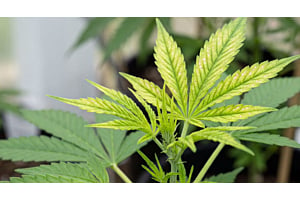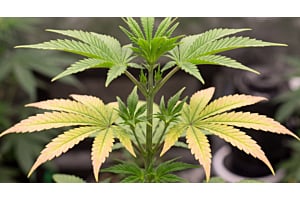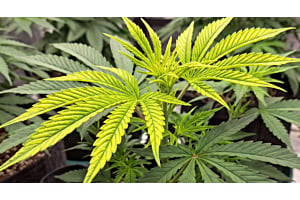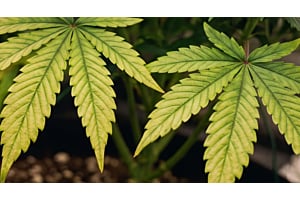
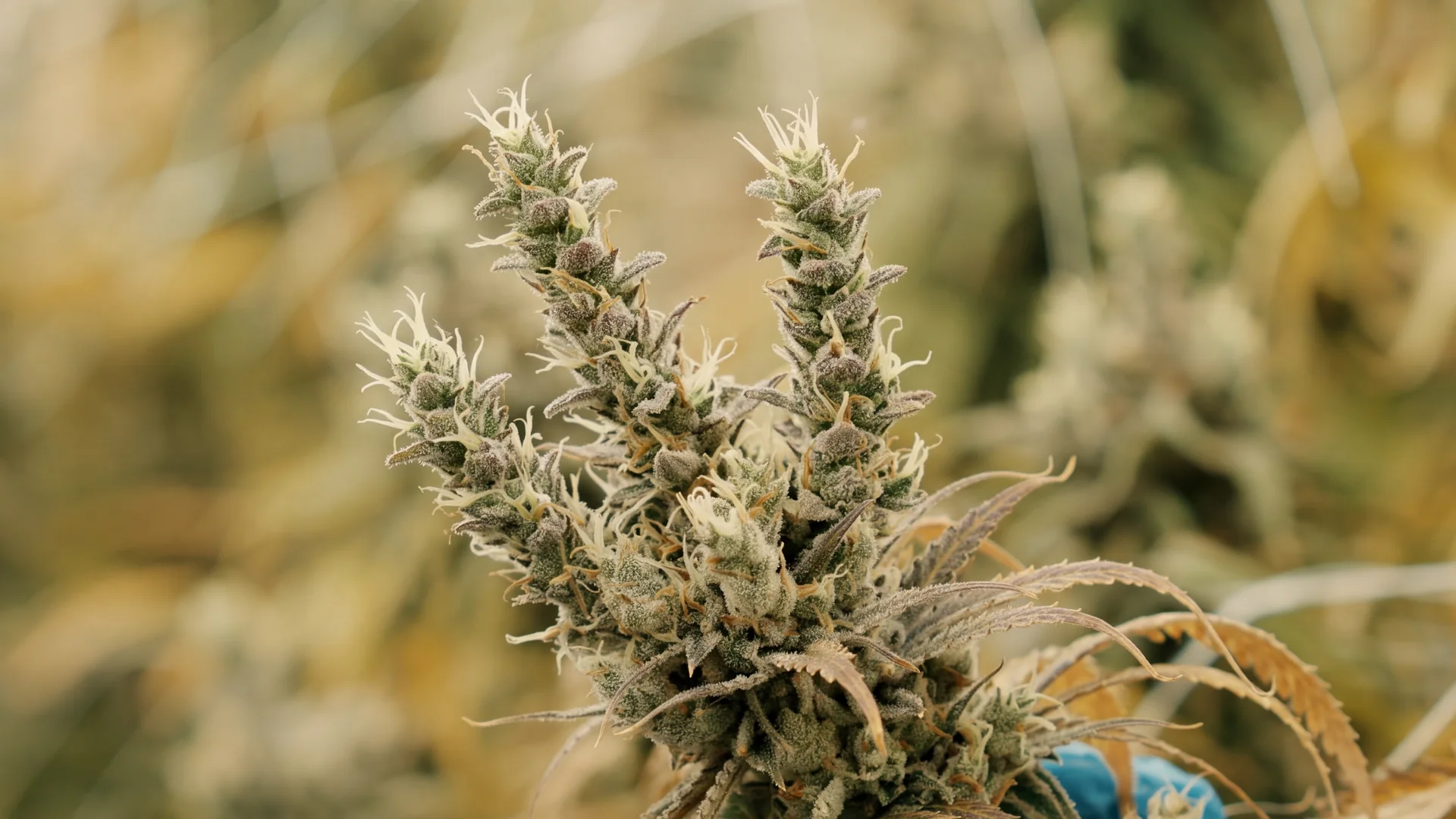
Cannabis foxtailing is when buds grow upward instead of filling out, pushing narrow, spiky towers of new calyxes off the top of a cola until it looks like a cluster of fingers or a fox’s tail. It has three typical causes: the strain’s own growth habit, heat or light stress at the top of the canopy, or too much nitrogen late in flower. It usually becomes obvious from mid flower onward.
None of the three causes automatically means a ruined harvest, which is good news when you’re growing high-yield cannabis seeds. Genetic foxtailing needs no fix, while stress and nutrient-driven foxtailing can be corrected by bringing canopy heat and light back into range or by switching to a lower-nitrogen bloom feed.
Below, you’ll learn how to spot foxtails, tell the three causes apart, what foxtailing means for potency and yield, how to fix and prevent it, and when to harvest foxtailing cannabis.
What Is Cannabis Foxtailing & What Do Fox Tail Buds Look Like?
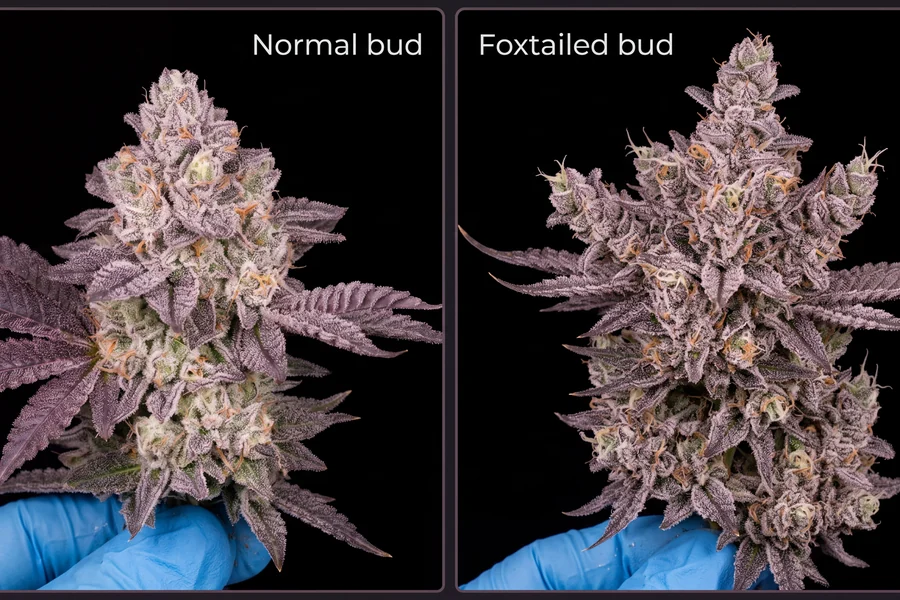
Cannabis foxtailing is when new calyxes grow upward off a bud that has already started to form, so it ends up with thin, spindly spires rather than a dense, rounded finish. Growers call them foxtails, foxtailing buds, or foxtailed colas (not to be confused with fox tail weeds known as foxtail or meadow-foxtail grasses).
That thin, spindly growth can push out from the very top of a cola or from several points along its length. Some colas throw a single spire, while others carry a cluster that makes the bud look like a handful of thin fingers instead of one solid mass.
Pistils and trichomes keep developing on that new growth, so it’s still real bud, not empty tissue. Foxtailing can show on one cola or across the whole plant, indoors or outdoors.
Before going further, make sure you’re not looking at one of these lookalikes:
- Re-vegging. Smooth-edged, single-blade leaves push out of the flowers when the plant starts getting more light hours than its flowering schedule calls for. Foxtails are stacked calyxes, not leaves.
- Hermaphroditism. Pollen sacs or banana-shaped stamens in the bud are a sex-expression issue and look nothing like a calyx tower. Spot either one and you’re dealing with a hermie, which calls for pulling the plant or removing the pollen sacs.
- Normal bud structure. A naturally airy, spear-shaped bud or calyxes swelling in late flower are just the bud’s shape. Foxtailing is when new growth stacks upward off a bud that has already started forming.
Once you’ve ruled those out, where the towers sit on the plant is the first clue to what caused them.
What Causes Foxtailing Buds?
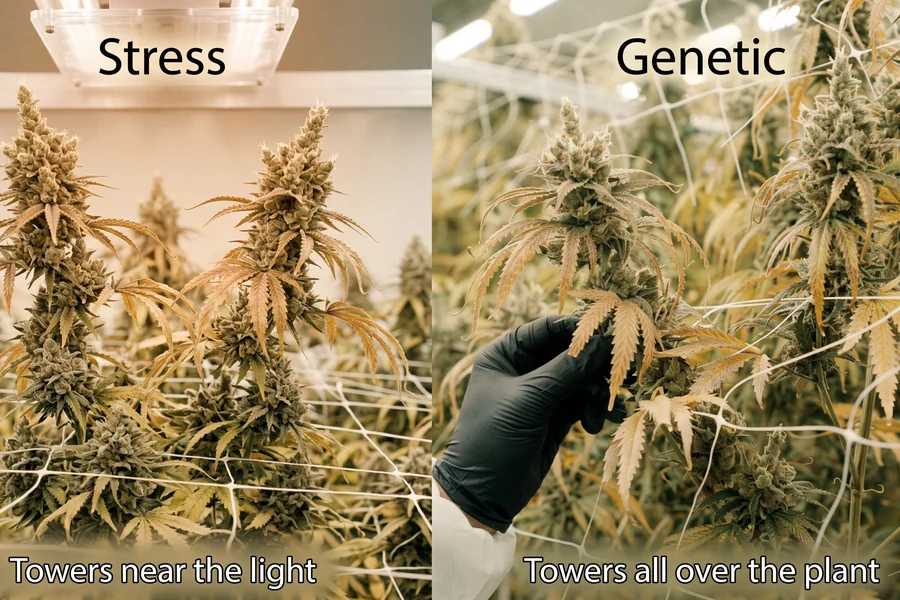
Foxtailing buds come down to genetics, environmental stress, feed timing, or some combination of the three. Some varieties simply grow this way as they finish, others foxtail because of conditions at the top of the canopy, usually excess heat, light, or both. Buds can foxtail when there’s excess nitrogen late in flowering.
All three routes can produce towering spires that look much the same, which is why one grower shrugs them off while another treats them as a disaster. They can also stack on top of each other, since a foxtail-prone strain flowering under a hot lamp on a nitrogen-heavy feed still has three separate reasons to grow foxtailing buds.
Genetic Foxtailing
Genetic foxtailing is when the towers come from the cultivar’s own growth habit rather than anything going on in the grow. Sativa-dominant genetics in particular are reported to produce elongated or stacked buds in late flower, and the habit turns up more often in haze crosses and lines drawn from equatorial or landrace stock. It isn’t a sign of poor breeding.
This kind of cannabis foxtailing generally develops across the whole plant, so you’ll see towers well away from the lamp, on lower branches and shaded bud sites, typically emerging from mid-to-late flower as the buds build.
You can also confirm it by reading up on the exact cannabis strain you’re growing. Breeder descriptions and grow reports from people running the same cross will often name the habit directly. A variety with the trait tends to express it run after run, though phenotype and environment both influence how strongly it comes through.
Heat and Light Stress Foxtailing
Stress foxtailing is the cannabis plant reacting to too much heat, too much light, or both at once, right where the top buds sit. When canopy temperatures climb past their optimal range, flowers can keep stretching instead of maturing normally, so new calyxes stack upward and outward rather than filling the bud that’s already there.
Hang a fixture too close, or let coverage areas overlap, and the upper flowers get more light than they can efficiently use. That’s why stress-related cannabis foxtailing typically concentrates on the colas nearest the light, while lower and shaded buds carry on normally.
The ranges worth checking against:
- Canopy temperature in flower: 68-85°F. The top of that band only suits plants running high light levels, and with CO₂ supplementation they handle it comfortably.
- Heat stress threshold: trouble starts once the tops hold above roughly 90°F for an extended stretch. A brief spike is survivable; a week of heat stress isn’t.
- Light intensity in flower: lighting guides generally recommend a PPFD of around 600 to 1,000 µmol/m²/s. Tolerance shifts with CO₂ supplementation, plant health, and how gradually the plant was brought up to that level.
- Lamp height: there’s no universal distance worth quoting. The right height depends on your fixture and what you measure at the canopy.
Where you take the reading matters as much as the number. Measure at canopy level with the lights on, but shade the sensor (an upturned white cup works), since a probe sitting in the beam reads its own surface temperature, not the air.
Skip the tent-wall thermometer too, it can read comfortably while the tops sit several degrees warmer, and that gap widens with poor airflow or a thick, sealed canopy. Foxtailing rarely follows one warm afternoon. It happens after a sustained stretch of stress, and outdoors, extended heatwaves and intense direct sun produce the same response.
Nutrient-Driven Foxtailing
Nutrient-driven foxtailing happens when a plant gets too much nitrogen late in flower. Nitrogen fuels leaf and stem growth, so a nitrogen-heavy feed deep into bloom keeps the plant building new tissue. It stacks fresh calyxes on top of buds that should be filling out and ripening.
This type doesn’t cluster near the lights. It usually shows up across the whole plant, often alongside other signs of excess nitrogen such as very dark, glossy leaves and leaf tips that claw downward. It’s also the easiest of the three causes to confirm.
How to Identify the Cause of Buds Foxtailing
The quickest tell is where the towers sit. Stress foxtailing stays on the colas closest to the light. Genetic and nutrient-driven foxtailing both spread across the whole plant, including lower and shaded buds, so the feed schedule separates those two. If a nitrogen-heavy feed is still running a few weeks into flower, nutrients are the likely cause.
The checks below help confirm the cause or catch a mixed case.
| Check | Points to stress | Points to nutrients | Points to genetics |
| Where are the towers? | Only on the colas closest to the light | Spread across the plant | Spread across the plant, incl. lower growth |
| What are the other plants doing? | Everything under the hottest part of the canopy foxtails | Every plant on the same feed foxtails, whatever the variety | Only one variety foxtails in a shared tent on the same feed |
| Any other symptoms? | Leaf tacoing, bleaching, crispy leaf edges, or pale bud tips | Very dark, glossy leaves and leaf tips clawing downward | No other symptoms |
| What do your readings say? | Canopy temp or PPFD above optimal ranges | Readings within range | Readings within range |
| What does the feed schedule show? | Not a deciding factor | Veg or nitrogen-heavy feed still in use in flower | Lower-nitrogen bloom feed phased in on time |
| What is the strain known for? | No foxtailing habit on record (doesn’t rule out genetics) | Not a deciding factor | Breeder or grow reports mention foxtailing |
| Did something change? | Towers appeared after a heatwave, a new fixture, a dimmer turned up, or a failed extraction fan | No environmental change, but the feed never switched to bloom | Towers emerged gradually as flowering progressed |
A mixed verdict is legitimate. A foxtail-prone plant that runs hot or gets overfed can show more than one cause at once, and fixing the environment or the feed is still worthwhile. If you’re genuinely unsure, correct both. Nothing is lost by making sure your weed plant is thriving, even if genetics turns out to be the main driver.
Does Foxtailing Reduce Potency, Yield & Bud Quality?
Foxtailing doesn’t reduce potency on its own, because bud shape doesn’t determine cannabinoid content. Whether yield or quality suffers depends on what caused the foxtails.
- Genetic foxtailing is mostly cosmetic. Buds come out looser than a compact hybrid’s, bag appeal drops, and trimming takes longer, but the towers don’t signal a quality problem.
- Heat or light stress costs more. Buds can finish less dense and ripen unevenly, the plant can yield less than it was on track for, and heat can slow resin development. Potency isn’t automatically lower, though. If trichomes keep developing normally and you harvest at the right time, THC levels can hold up.
- Nutrient-driven foxtailing mainly costs density. Excess nitrogen keeps the plant building new calyxes instead of filling out existing buds, so flowers can finish looser than expected.
How to Stop & Prevent Cannabis Foxtailing
How you fix foxtailing depends on the cause. If heat or light stress is the cause, raise or dim the light and cool the canopy. If nutrients are the cause, switch to a lower-nitrogen bloom feed. Genetic foxtailing needs no fix, so keep conditions in range and let the plant finish.
Towers that have already formed won’t shrink back, so the goal is to stop new ones and protect the flower that’s still developing. Don’t cut foxtails off a living plant, because removing the developing buds doesn’t fix the cause.
How to Fix Heat or Light Stress-Related Foxtailing
Reduce the heat and light hitting the top of the canopy as soon as you spot the towers:
- Raise or dim the light, using your fixture’s flowering height and a reading taken at the canopy.
- Lower canopy temperature with stronger extraction, more airflow over the tops, or by running the lights at night.
- Gently support or tie down the tallest colas to move them out of the hot zone, but avoid heavy training late in flower.
- Outdoors, use shade cloth or temporary cover during extreme heat.
How to Fix Nutrient-Driven Foxtailing
Switch to a lower-nitrogen bloom formula as soon as you spot the problem. Cutting back nitrogen lets the plant spend its remaining flowering time filling out existing buds instead of stacking new calyxes on top.
How to Prevent Foxtailing Buds
Dial in canopy temperature and light intensity before the flip, then re-check as plants stretch toward the lamp. Set lamp height from your fixture’s flowering spec rather than a generic distance, and phase in a bloom feed on schedule instead of running the veg feed into flower.
To avoid foxtailing buds altogether, do all of the above and check a variety’s growth habit and grow reports before you buy cannabis seeds.
When to Harvest a Foxtailed Cannabis Plant
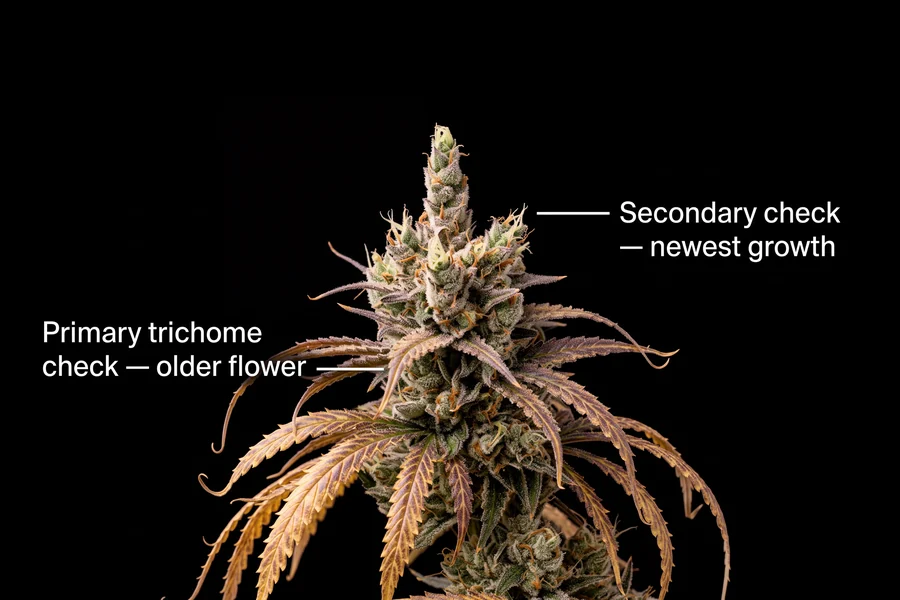
You’ll know when to harvest cannabis by checking the trichomes and pistils, whether the plant is foxtailed or not. With foxtailing, take that reading from the established flower beneath the towers, not the towers themselves. Foxtails don’t mean harvest is close. They can appear well before a plant is finished and tell you nothing about how ripe the flower is.
A foxtailed cola carries two ages of flower at once. The established bud may be at your target maturity while the tips are still building, so a trichome check on the newest growth can misrepresent the whole cola. Take your main reading from the older flower, use the tips as a secondary reference, and judge the cola on the bulk of its buds.
Waiting for the towers to catch up can push the established flower past your target window. Cutting the established bud means taking some immature tips with it. If the upper colas and the lower flower are clearly at different stages, a staggered harvest lets you take each part closer to its target.
If a plant keeps throwing new towers under conditions you haven’t corrected, don’t keep waiting for them to ripen.
Cannabis Foxtailing FAQs
Do Autoflowering Strains Foxtail?
Yes, autoflowers can foxtail from the same three causes as photoperiod plants. Plant age triggers their bloom, but that doesn’t change how buds form. Two factors raise the risk. Autos often run 18 hours of light in flower, adding heat at the canopy, and they’re lighter feeders, so photo-strength feeds can overload them with nitrogen. Monitor canopy readings closely.
Is Foxtailing More Likely Under LED or HPS Lighting?
Neither LED or HPS light types are more likely to cause foxtailing on their own. The risk depends on how much heat and intensity reach the canopy. HPS fixtures radiate heat onto the tops, so you usually feel the problem before you see it. High-output LEDs can deliver very high intensity up close without that heat warning, which makes them easy to hang too low.
Should I Remove Foxtails When Trimming After Harvest?
No, foxtailing buds are usable flower, so trim them like any other bud. They’re just looser and take a little more time to tidy. Watch them during drying, because their airier structure can dry faster than the denser buds on the same cola.