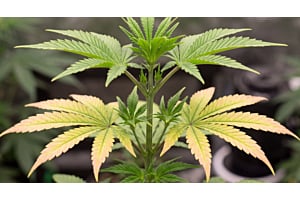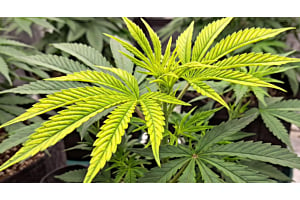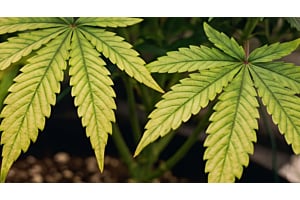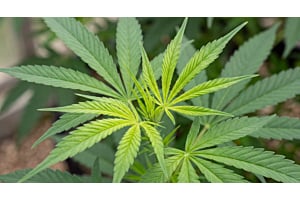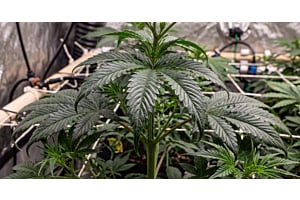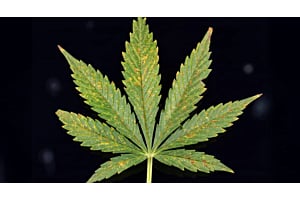
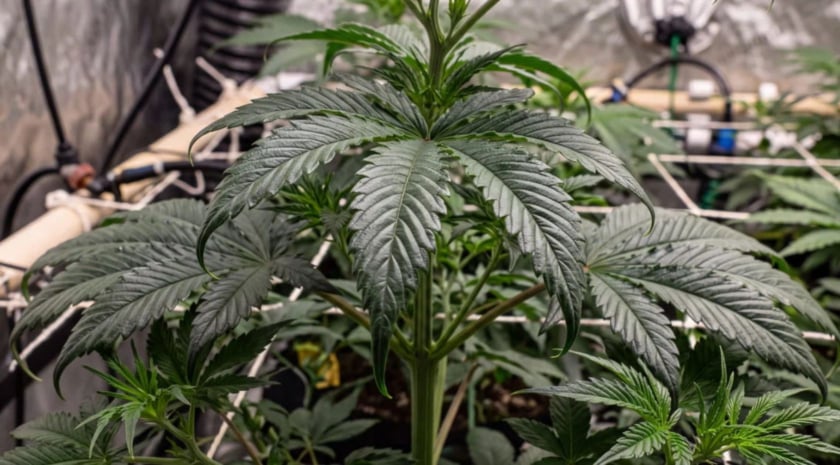
If your weed leaves have turned dark green, glossy and started curling downward like little claws, you're probably dealing with nitrogen toxicity. It's one of the most common feeding mistakes growers make, especially when a plant shifts from veg into flower. The good news is that cannabis nitrogen toxicity is easy to fix once you know what you're looking at.
This guide walks you through what causes nitrogen toxicity in weed plants and how to tell it apart from a nitrogen deficiency or plain nutrient burn. You'll also learn the exact steps to get your plant back on track before it costs you yield.
TL;DR: Very dark green, shiny and downward-curling cannabis leaves almost certainly signal nitrogen toxicity, not a deficiency. Cut nitrogen-rich feed right away and flush if the clawing has spread. Your plant should stop declining within about a week or two, depending on severity.
What is Nitrogen Toxicity in Cannabis?
Nitrogen toxicity is a condition caused by feeding a cannabis plant more nitrogen than it can use. Nitrogen is one of the three core macronutrients your plant needs, alongside phosphorus and potassium. You'll see these three represented as a ratio on every nutrient bottle, like 3-12-6, with the first number always showing the nitrogen percentage.
Marijuana plants need a lot of nitrogen during veg, since it drives leaf growth and photosynthesis. But once flowering starts, the plant's nitrogen needs drop off fast. Feeding it like it's still in veg is the number one reason growers run into toxicity.
Signs and Symptoms of Nitrogen Toxicity in Cannabis
You'll spot nitrogen toxicity through a specific set of leaf and stem changes. These three signs matter most:
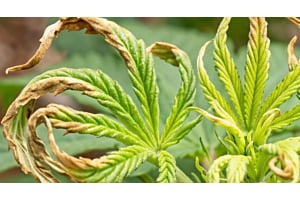
- The claw: Leaf tips curl sharply downward, almost like a talon.
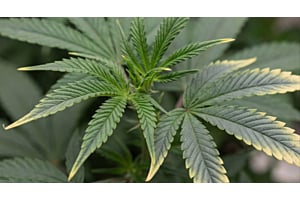
- Dark, glossy leaves: Foliage looks unusually dark green and almost shiny.
- Weak stems: Stems become brittle and bend easily under light pressure.
Why Cannabis Leaves Get "The Claw"
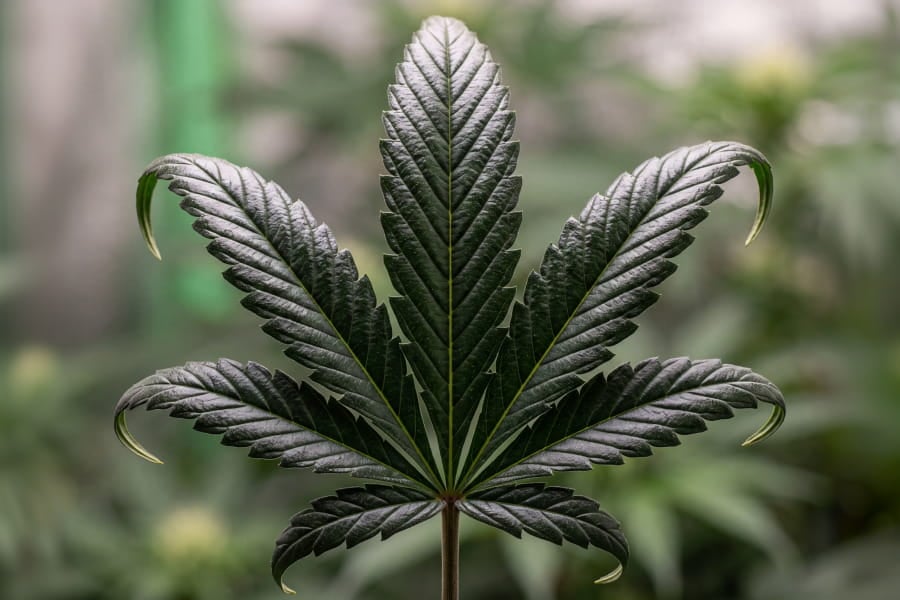
A dark, glossy cannabis leaf curling downward, showing the classic signs of nitrogen toxicity.
Clawed leaves curl downward when nitrogen builds up faster than your plant can use it. Since nitrogen is a mobile nutrient, you'll often notice this on the older, lower leaves first, similar to where a deficiency starts — though color and shape are what actually tell the two apart.
Heat stress can make the clawing worse, since it pushes your plant to drink more water and take up even more nitrogen. If you don't correct it, clawed leaves eventually die and drop off. That's a similar end result as a nitrogen deficiency, which is partially why so many growers mix the two up.
Dark, Shiny Leaves and Slowed Growth
Dark green, glossy marijuana leaves signal more nitrogen than a plant needs. Growth also tends to slow down, since the plant is spending energy managing the excess rather than building new tissue. You might notice this darkening first on older leaves that aren't getting much light, since they can't burn through their nitrogen supply as fast.
Weak, Brittle Stems
Weak stems show up alongside the claw and the dark leaves as your plant struggles to manage the excess nitrogen. Stems that should feel firm start to bend easily under light finger pressure instead of springing back. This weakness makes the plant more prone to snapping under the weight of its own growth, especially once buds start forming.
Nitrogen Toxicity vs. Nutrient Burn: What's the Difference?
Nitrogen toxicity and nutrient burn often get confused because both can leave leaf tips looking damaged. Nutrient burn usually shows up as crisping, brown tips on an otherwise normal-colored leaf.
It's driven by an overall nutrient strength that's excessive for the plant. Nitrogen toxicity, on the other hand, changes the whole leaf's color and shape, not just the tips. You can have both problems at once if you're overfeeding across the board.
A quick way to tell them apart: nutrient burn tends to show up fast, often within 1-2 days of a heavy feeding, while nitrogen toxicity builds more gradually as the excess accumulates in the tissue. If you dial back your feed and the crispy tips stop spreading but the color and shape of the leaf stay normal, you're dealing with straightforward nutrient burn rather than toxicity.
What Causes Nitrogen Toxicity in Cannabis?
Nitrogen toxicity is caused by overfeeding or growing cannabis plants in "hot," nutrient-rich soil. Most growers run into this issue during the switch from veg to bloom. They keep using a high-nitrogen formula instead of stepping down to a bloom-specific one.
Time-release fertilizers can compound this issue if you're not tracking what's still active: mix one into your soil at planting, then layer a full liquid feeding schedule on top through flower, and you can end up feeding your weed plants more nitrogen than they need without realizing the base is still releasing.
Nitrogen is only one of three core macronutrients, and a fertilizer formulated with a high nitrogen ratio typically carries proportionally less phosphorus and potassium. Fix the toxicity by cutting nitrogen, and you can tip straight into a phosphorus deficiency if the replacement feed isn't balanced. That’s why balanced feeding matters more than maxing out any single nutrient.
Is It Nitrogen Toxicity or Nitrogen Deficiency?
Nitrogen toxicity and deficiency are easy to tell apart once you know the tells. Nitrogen toxicity and nitrogen deficiency produce opposite-looking leaves, so the color and shape of the damage give you your answer.
| Trait | Nitrogen Toxicity | Nitrogen Deficiency |
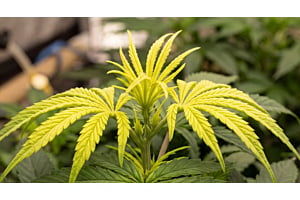
| Leaf color | Dark green, glossy | Pale yellow, dull |
| Leaf shape | Clawed, curled downward | Flat, sometimes drooping |
| Where it starts | Lower, older leaves first | Lower, older leaves first |
| Most common stage | Late veg or early bloom | Mid-to-late flower (often natural) or early veg (problem) |
Are your fan leaves turning pale yellow starting from the bottom of the plant, instead of dark green? You're likely looking at a nitrogen deficiency rather than toxicity. One exception worth knowing: fan leaves turning light green late in flowering is often natural. Your plant is simply pulling nitrogen back before harvest, not signaling a problem.
Nitrogen Toxicity During Flowering
Nitrogen toxicity in flower reduces bud density and cuts into your final yield. As your plant shifts into flowering, its nutritional priorities shift too: phosphorus drives flower formation and potassium drives bud development, while nitrogen's main job is building new leaf and stem tissue.
Carrying vegetative-strength nitrogen into bloom keeps your plant investing in foliage instead of shifting that energy into the calyx and bud development, which is exactly why buds that form under excess nitrogen tend to come in airy and lighter than they should.
Catching nitrogen toxicity early in flower makes a real difference, since the plant hasn't sunk as much energy into leaf growth at the expense of the developing buds. The sooner you ease up on nitrogen, the more of your bud potential you'll protect.
How to Fix Nitrogen Toxicity in Cannabis Plants
Fixing nitrogen toxicity in cannabis depends on two things: what stage your plant is in, and how far the clawing has progressed. Here's how to handle it in each case.
- Vegetative stage: Skip a feed in mild cases and use a flush for severe cases.
- Flowering stage: Act fast and flush immediately in serious cases.
- Flushing by growing medium: Use pH-balanced water and watch for new growth.
Fixing Nitrogen Toxicity in the Vegetative Stage
In mild cases (a few clawed leaves, no widespread darkening): Stop feeding and water with plain, pH-balanced water only. Most plants stop declining within a week. Resume feeding at half strength once new growth looks normal.
In severe cases (clawing has spread across the plant, foliage is uniformly dark and glossy): Do a full flush (see medium-specific timing below), then resume with a diluted feed at roughly half the normal strength, working back up gradually as the plant responds.
Fixing Nitrogen Toxicity in the Flowering Stage
Flowering plants have less runway to recover, so don't wait on a mild case the way you might in veg. In mild cases, skip your next scheduled feeding and switch immediately to a lower-nitrogen bloom formula rather than resuming your previous mix.
In severe cases, flush right away. Waiting to see if it clears on its own costs you bud development time you won't get back. After flushing, return only with bloom-strength nutrients, never vegetative-strength feed.
Whichever case you're dealing with, check the label on your bloom formula before switching to it. A bloom nutrient with too little potassium can trade one problem for another, so watch for potassium deficiency once you've backed off nitrogen.
Flushing by Growing Medium
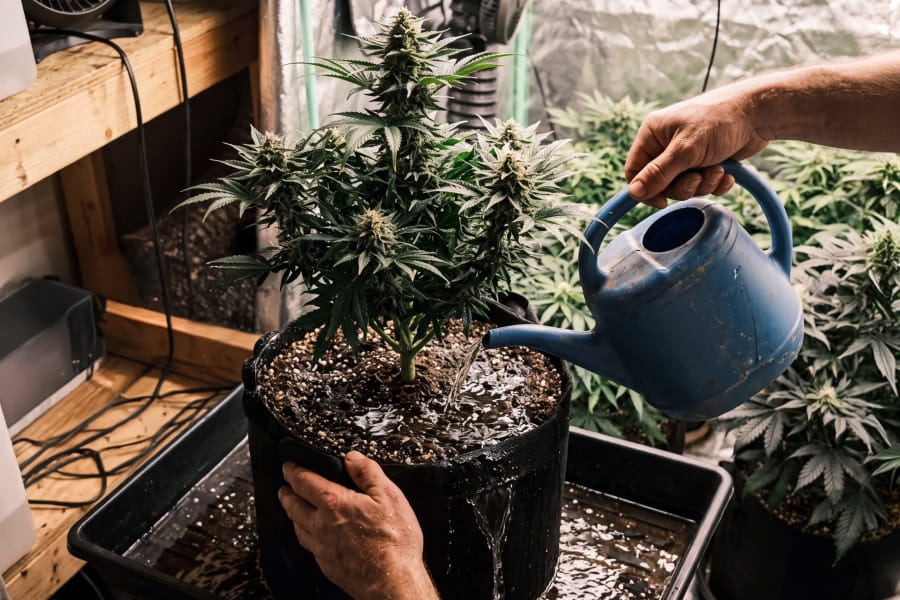
Flushing a cannabis plant with clean water to help wash excess nitrogen from the soil and restore nutrient balance.
Use plain, non-chlorinated water adjusted to a pH of about 5.8-6.0, that's the range where residual nutrients stay dissolved and actually rinse out rather than binding back into the medium.
Water slowly until at least 20-30% of what you pour in runs out the drainage holes, then give the medium time to actually shed the built-up nitrogen. How long that takes depends on what you're growing in:
- Sandy soil: About a week. It doesn't hold onto nutrients tightly, so it clears fast.
- Loam or heavier soil mixes: 10-20 days. Denser soils bind nutrients more tightly and take longer to rinse clean.
- Peat moss or coco: About a week if the lower leaves are still green, 3-4 days if they've already started yellowing.
- Hydro in inert media (rockwool, LECA, deep water culture): 3-4 days. There's no reserve holding nutrients, so the plant responds almost immediately.
- Hydro with fertigation (drip, ebb and flow, similar systems): 4-7 days.
New growth is your best signal that the flush worked. Once it comes in a normal green instead of the darker, glossier look you started with, the excess nitrogen has cleared, and you're safe to resume regular feeding.
Keep your nutrient solution pH in the normal range for your medium: soil around 6.0-6.3, coco and hydro around 5.8-6.2. The flush clears the excess, while bringing the pH back in is normal practice.
How to Prevent Nitrogen Toxicity Before It Starts
Preventing nitrogen toxicity means matching nitrogen levels to your plant's growth stage. A few habits make this easy to stay on top of:
- Switch to a bloom nutrient as soon as you flip to a 12/12 light cycle. Your plant's nutrient priorities shift right along with the light schedule, and holding onto a vegetative-strength feed past that point is one of the most common ways growers end up overfeeding nitrogen without meaning to.
- Use slow-release products to your advantage: A controlled-release fertilizer doses your plant steadily instead of all at once, which is exactly the overfeeding risk you're trying to avoid. Just don't stack a full liquid feeding schedule on top of one that's still active.
- Do a light flush right before you switch to bloom. Clearing out built-up nitrogen ahead of the transition gives your plant a clean slate for the lower-nitrogen feed that flowering calls for.
- Watch new growth closely through the first couple weeks of flower, since that's when carryover nitrogen from veg is most likely to show up as toxicity.