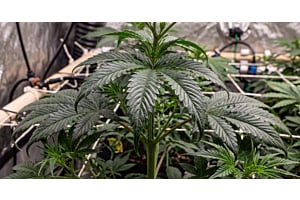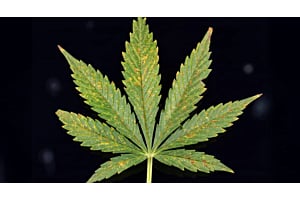
A potassium deficiency in plants can stunt vegetative growth, weaken stems, and quietly cut into yield if left uncorrected. It's one of the most common cannabis nutrient problems you'll run into - and one of the easiest to fix once you know what you’re dealing with. This guide covers what potassium deficiency in weed looks like, with:
- Leaf symptoms and other signs
- Common causes and how to spot them early
- Potassium vs other cannabis plant problems
- Steps on how to fix potassium deficiency
- Prevention tips for your next grow
TL;DR: Brown, burnt tips and edges on lower leaves with red stems point to potassium deficiency. It usually comes from an off-target pH, imbalanced feeding, cold roots, or excess calcium, ammonium, or sodium blocking uptake. Fix it with a fast-acting, water-soluble potassium feed, and expect visible improvement within 4-5 days.
What Does Potassium Do For Weed Plants?
Potassium (K) plays a role in almost everything a cannabis plant does. It drives water transport, supports both photosynthesis and respiration, and is even tied to disease resistance.
The nutrient helps build sturdy, thick stems that hold up as the plant grows. It becomes especially important once your plant hits flowering, since bud development leans heavily on a steady potassium supply.
That combination of roles is why a shortage doesn't show up as just one symptom. Instead, you'll see a mix of leaf damage, slower growth and weaker structure all at once.
What Does Potassium Deficiency Look Like in Cannabis Plants?
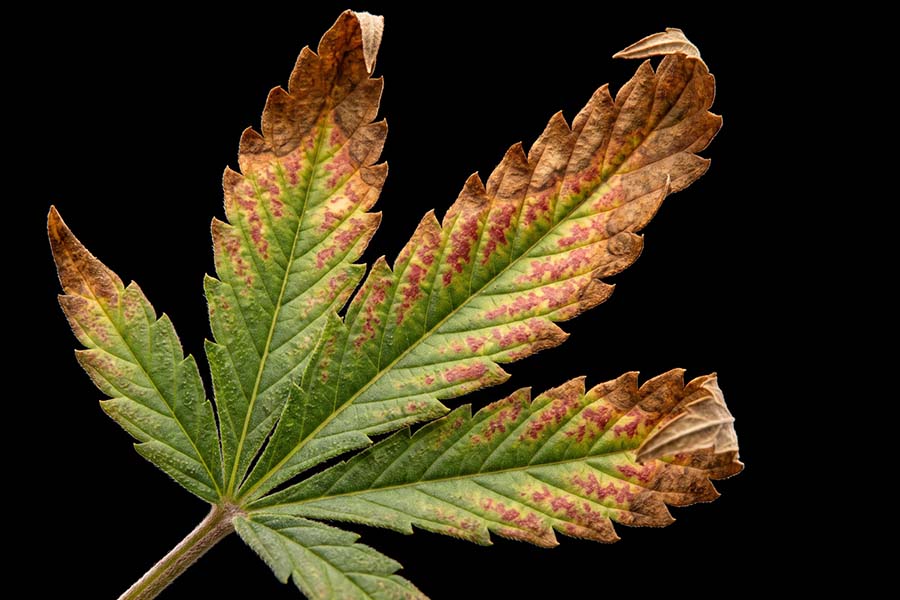
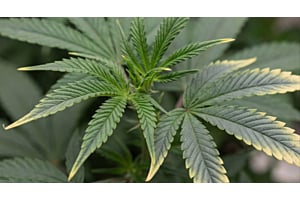
Close-up of cannabis leaf with potassium deficiency.
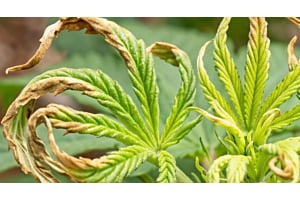
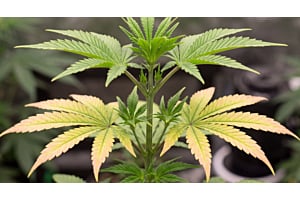
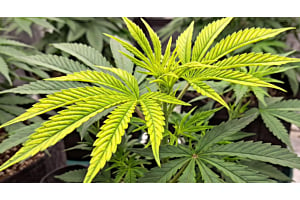
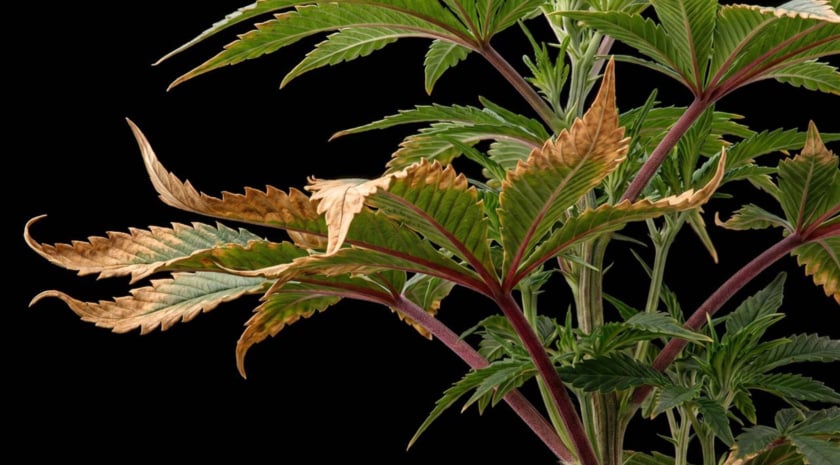
Potassium deficiency in cannabis plants shows up first as brown, tan or burnt tips and edges on the lower, older leaves. You'll often see necrotic spots spreading in from the leaf margins as the damage worsens.
Between the veins, the leaf tissue can turn a mottled mix of red and yellow, while the veins themselves stay green. That mottled pattern is one of the clearest signs you're dealing with potassium, not something else.
Red stems and petioles often show up alongside the leaf symptoms. As the deficiency progresses, damaged leaves eventually brown fully and drop off the plant. Growth slows down too (especially during the vegetative stage) and severe cases produce noticeably smaller new leaves.
A potassium-deficient plant can still look vigorous despite all this. It might even outgrow other plants in the same batch while it struggles underneath, which catches a lot of growers off guard. If a K deficiency carries into flowering, yield takes a hit too.
Here's how the symptoms progress:
| Stage | Leaf signs | Growth & other signs |
| Early | Lower leaves still green | Plant may look unusually vigorous |
| Progressing | Tan, brown, or burnt leaf tips, necrotic spots, mottled red-yellow between green veins | Lower leaves affected first, upper canopy still normal |
| Advanced | Lower leaves brown fully and drop | Stunted growth, smaller new leaves (veg), and reduced yields (flowering) |
Are Purple Stems a Sign of Potassium Deficiency in Weed?
No, purple stems usually point to a different problem. Potassium deficiency turns stems and petioles red, not purple. A true purple stem points more toward phosphorus or magnesium deficiency, and the leaves are what tell those two apart.
Genetics is the real driver behind purple stems in a lot of cases too. Some strains naturally carry a purple pigment that shows up as they mature, and cold temperatures intensify that existing trait rather than causing it outright on any plant.
So before treating for a deficiency, check whether the strain is simply prone to purple and whether the leaf pattern actually matches a phosphorus or magnesium deficiency.
Is it Potassium Deficiency Or a Lookalike Problem?
A potassium deficiency often gets confused with nutrient burn and other cannabis deficiencies, particularly phosphorus, nitrogen, magnesium, and calcium. Leaf position and vein pattern are the fastest way to tell them apart.
| Cannabis plant problem | Where it shows up first | Common signs | How it differs from potassium deficiency |
| Phosphorus deficiency | Lower leaves | Dull blue-purple leaves, tan/brown curling edges, red or purple stems | Blue-purple leaf tones |
| Nitrogen deficiency | Lower leaves | Pale green to yellow fading, sparse growth | No necrotic spotting or red-yellow mottling |
| Nutrient burn | Leaf tips across the plant | Brown, crispy leaf tips | No interveinal mottling or red stems |
| Magnesium deficiency | Lower to middle leaves | Interveinal yellowing, green veins, crispy edges | No red mottling; stems turn purple, not red |
| Calcium deficiency | New growth | Tan necrotic blotches on margins | Starts on newer leaves at the top — opposite of potassium |
Potassium deficiency's own signature is the combination that sets it apart from all five: tan/brown tips and edges on the lower leaves, mottled red and yellow between the veins, and red (not purple) stems.
It’s also worth noting that a potassium deficiency in cannabis shows up occasionally in soil and planting media, but it's rare in hydroponic systems. If you're growing hydro and seeing these symptoms, it's worth ruling out other causes first.
What Causes Potassium Deficiency in Cannabis Plants?
A handful of feeding and environmental factors keep potassium from reaching your plant's roots in the amounts it needs, even when you think you're feeding generously. Here’s the list:
- Off-target pH. General nutrient uptake becomes less efficient outside the ideal pH range, and potassium is no exception — though this plays a smaller role than the other factors. It's still the quickest thing to rule out, which is why the fix starts there.
- Salt buildup. Heavy or frequent feeding accumulates nutrient salts in the root zone, pushing EC/TDS up until uptake stalls — potassium included. An EC or TDS reading well above what you fed in is the tell.
- Imbalanced feeding. The most common cause. Organic inputs like guano, fish emulsion, alfalfa, cottonseed meal, and animal manures are relatively low in potassium compared to nitrogen and phosphorus. Lean on these too heavily and a shortage builds over time.
- Cold temperatures. Slow potassium uptake at the roots, even when potassium is available in the soil or medium. This shows up most often with cold water, a chilly root zone in an unheated space, or outdoor grows hitting a cold snap.
- Excess calcium, magnesium or ammonium. All three compete with potassium in the root zone and block uptake. This tends to happen when a grower runs a heavy cal-mag supplement without adjusting other feed, or uses an ammonium-heavy fertilizer rather than a nitrate-based one.
- High sodium. Displaces potassium at the root, making it harder to absorb even when potassium levels are fine. Tap water, well water, or amendments with a high salt content are the usual culprits.
- Flowering stage demand. Potassium needs climb sharply once the plant enters flowering, which is often when an existing shortage becomes visible or gets worse.
How Do You Fix Potassium Deficiency in Cannabis Plants?
Correcting potassium deficiency comes down to figuring out whether it's a true shortage or a lockout, then getting a fast-acting, water-soluble form of potassium to your plant's roots. Here's how to do it:
- Rule out lockout before adding more potassium.
- Correct the root cause if one applies.
- Choose a fast-acting, water-soluble potassium source.
- Consider potassium silicate for added plant strength.
- Apply and wait for visible improvements.
- Skip granite dust and greensand for an active deficiency.
- Don't overreact to mild, cosmetic damage.
- Expect some variation by strain.
1. Rule Out Nutrient Lockout and Salt Buildup
Check your root zone pH, EC, water temperature, and feed history first, because the right fix depends on what's actually blocking uptake. An EC (or TDS) reading well above what you fed in points to salt buildup. Off-target pH, high calcium, magnesium, or ammonium, or high-sodium water all point to an availability problem rather than a true shortage.
Adding more potassium on top of any of these won't fully fix it and can deepen the imbalance, so pin down the cause here, then correct it in the next step.
2. Correct the Root Cause (If One Applies)
Salt Buildup
If your EC/TDS reading came back high, clear the salts before anything else. Flush your medium with plain pH-corrected water (no nutrients added) until about 30% drains from the bottom. That resets the root zone so you can correct pH on a clean baseline.
Root Zone pH Drift
See where the root zone pH sits. For soil or coco, use the PourThru method: water fully, let it drain for an hour, then pour a measured amount of plain water over the top and test what collects. But treat it as a warning sign, not a number to chase feed after feed. For hydro, test the reservoir directly.
Target 6.0-6.3 for soil (5.5-6.5 acceptable), 5.8-6.2 for coco and hydro (5.6-6.4 acceptable). How you correct depends on the medium.
Living, organic soil keeps pH steady naturally, so only fix genuine pH drift with amendments (lime to raise it, elemental sulfur to lower it). In coco, hydro, or soil on synthetic nutrients, mix your feed first and adjust that solution with pH up or pH down before it goes in.
Cold Root Zone
Move containers off cold floors or away from drafts, or use a root zone heating mat. For hydro, warm the reservoir directly. Water temperature also affects uptake. Target 68-72°F (20-22°C) for hydro and up to 75°F (24°C) for soil.
Excess Calcium, Magnesium, Or Ammonium
Cut back on cal-mag supplementation if you've been dosing heavily, and check whether your nitrogen source is mostly ammonium-based. Switching toward a more nitrate-based fertilizer reduces ammonium competition at the root.
High Sodium
Test your water source. If sodium is consistently high, switching to filtered, reverse osmosis (RO), or distilled water removes the competing element at the source rather than fighting it every feed.
Fixing the underlying cause resolves the deficiency at its source, rather than just adding more potassium on top of a problem that will keep blocking uptake.
3. Choose a Fast-Acting, Water-Soluble Potassium Source
Once lockout is ruled out or corrected, bloom-specific formulas are a good starting point since they're typically potassium-heavy already. Liquefied kelp, wood ash, potassium bicarbonate, and potassium sulfate all deliver potassium quickly once applied.
Potassium dihydrogen phosphate is another fast-acting option. Apply through your normal watering or feeding routine, mixed at the rate given on the product label (dosing varies by brand and concentration).
4. Consider Potassium Silicate For Added Plant Strength
Potassium silicate corrects the deficiency at the same rate as the options above. The silicon it supplies (about 3% by content) strengthens cell walls, supports stronger stems and roots, and improves resistance to fungal and bacterial disease.
5. Apply and Wait For Visible Improvements
Give the correction 4-5 days. Your plant should show visible improvement in that window. Although damaged leaf tissue that's already browned or dropped won't recover, new growth will come in healthy.
6. Skip Granite Dust and Greensand For an Active Deficiency
Both granite dust and greensand contain potassium, but release it too slowly to fix a problem that's already showing. Save them for prevention instead, once the current deficiency is resolved.
7. Don't Overreact To Mild, Cosmetic Damage
If you're only seeing a leaf or two with minor tip browning, it's unlikely to meaningfully affect your final yield. Treat it, then move on rather than repeatedly adjusting the feed.
8. Expect Some Variation By Strain
Potassium tolerance isn't identical across every cannabis variety. Some strains handle a wider feed range comfortably, while others are more sensitive to both shortage and excess at the same concentration. Treat any potassium target as a starting point, and adjust based on how the cannabis plant responds.
How To Prevent Potassium Deficiency When Growing Weed
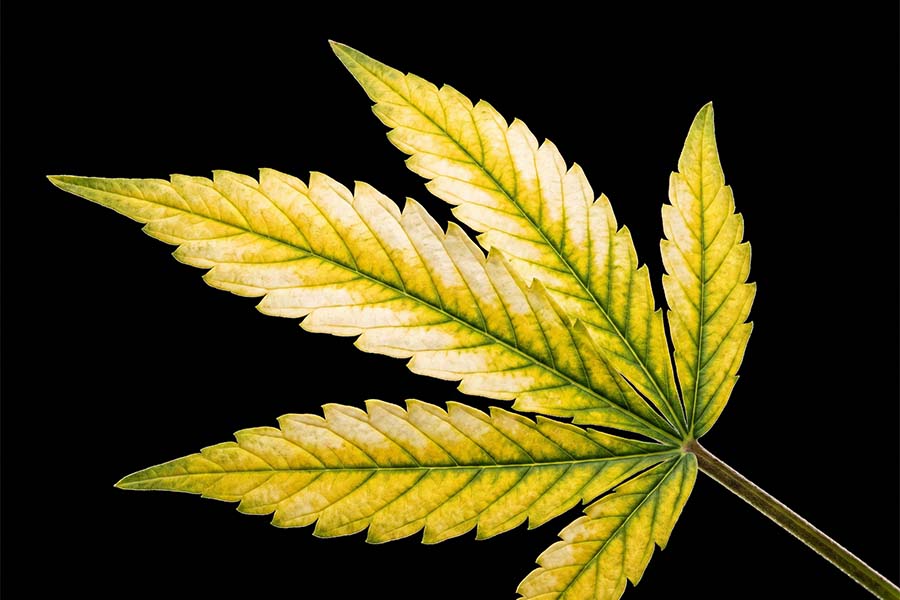
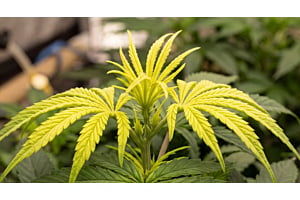
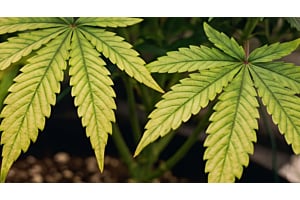
Cannabis leaf showing yellow interveinal discoloration.
When you’re growing weed, preventing a potassium deficiency mostly comes down to keeping your feed schedule balanced and your root zone stable.
- Match your feed to your marijuana plant's lifecycle stage. Potassium demand rises sharply once flowering starts. A typical bloom formula keeps potassium at medium-to-high throughout (rather than tapering it down the way nitrogen does).
- Keep your medium’s pH in range. Aim for a pH of 5.5-6.5 (6.0-6.3 is the sweet spot) in soil and 5.6-6.4 (5.8-6.2 is ideal) for coco and hydro.
- Check your water temperature. It should stay in the 68-72°F (20-22°C) range for hydro and up to 75°F (24°C) for soil.
- Work granite dust or greensand into your soil or planting mix ahead of time, ideally when you're first building or amending it. Their slow release builds a steady potassium reserve over the season.
- Keep cal-mag supplements in check. Only add them on top of a complete fertilizer if your feed schedule actually calls for it. In excess, these nutrients can bring on a potassium deficiency.
- Switch to filtered, reverse osmosis (RO), or distilled water if sodium is an issue. High-sodium tap or well water displaces potassium at the root, so removing it at the source prevents the competition before it starts.
- Favor a nitrate-based nitrogen source (over an ammonium-heavy one) since ammonium competes with potassium for uptake at the root. Nitrogen levels matter for their own reasons too — nitrogen toxicity has separate warning signs.
Starting with premium-quality cannabis seeds also gives your plant a more consistent baseline to work from as you dial in a balanced feeding schedule. Cannabis seed laws vary by location, so check your federal, state and local rules before germinating or growing from seed.
What Does Potassium Toxicity Look Like in Cannabis Plants?
Excess potassium shows up on fan leaves as a light to dark yellow discoloration between the veins, sometimes fading toward white. Unlike a true deficiency, this isn't about running low. It's usually a sign you've overcorrected or overfed.
That pattern can look a lot like magnesium deficiency at a glance. Check your feed history before treating for magnesium: if potassium levels have been running high, adding more magnesium won't solve it and can make the imbalance worse.
Excess potassium can hold back root growth, leaf and stem mass, and chlorophyll production even before any visible yellowing shows up. By the time you spot the interveinal fading, the plant may already have been running at reduced capacity for a while.
This is part of why more potassium isn't better once your feed is already in a healthy range; extra doesn't boost growth and can quietly cost you some. If you spot these symptoms, flushing your growing medium and rebalancing your feed is standard practice for correcting a nutrient excess. Give your plant a few days to respond before making further changes.