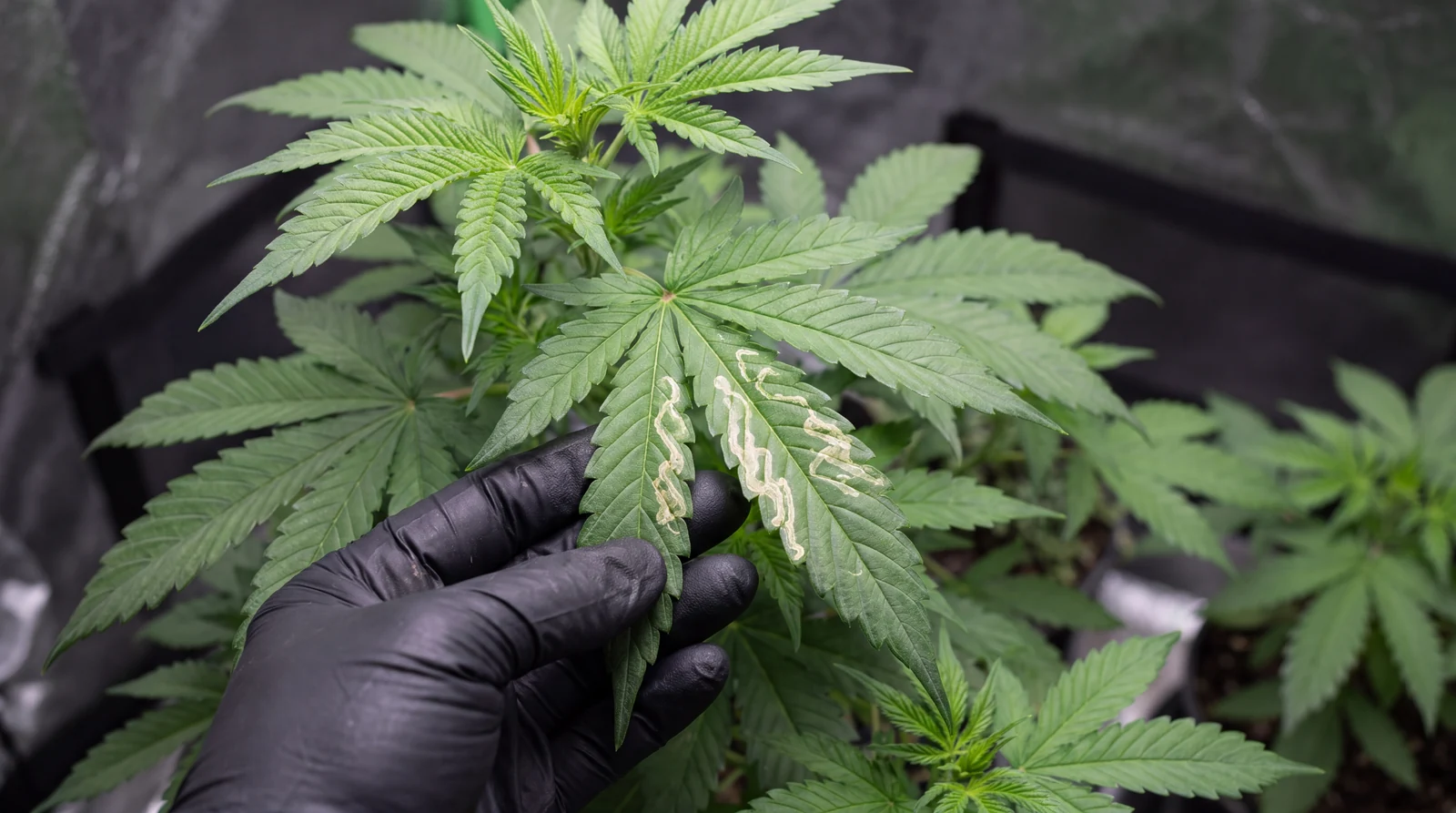
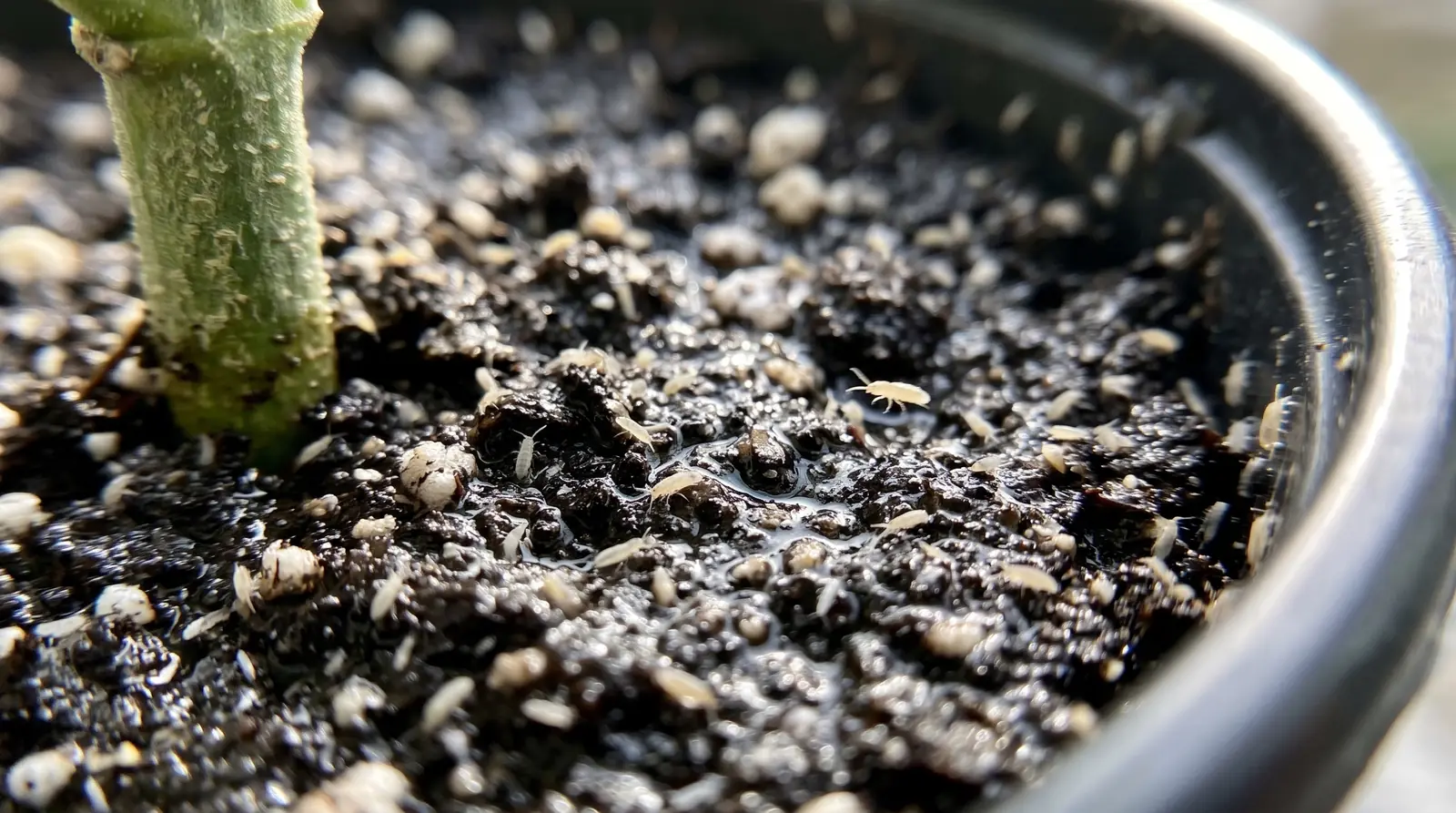
Springtails on cannabis are tiny, harmless soil bugs that hop away when you water or touch the pot. They eat decaying organic matter — not healthy plants — so they’re rarely a threat to your grow. What they usually tell you is that your medium is staying wet for too long.
Let the top inch or two of the medium dry before you water again, and in most grows, springtails thin out without a single spray. That fix works whether you’re growing fem seeds or running autos.
Below, you’ll learn how to identify springtails and tell them apart from thrips, fungus gnats, root aphids, and spider mites. You’ll also find out why they show up, when they’re worth acting on, how to clear them from your pots, and what to do when they turn up in the house.
What Are Springtails on Cannabis Plants?
Springtails on cannabis plants are tiny, wingless, six-legged soil bugs called Collembola that live in damp organic material. They're close relatives of insects, though most scientists class them separately. In a grow, they feed on decaying matter, fungi, algae, and bacteria in the medium, not on your plants.
Most of the ones you'll spot in a pot are about 1/16 to 1/8 inch long. They can be white, gray, black, brown or even purple depending on the species, so color alone won't identify them.
Are Springtail Mites Really Mites?
No, "springtail mites" aren't mites at all. Mites are arachnids with eight legs and no antennae. Springtails have six legs and a visible pair of antennae, which you can count with a loupe or a phone camera held close.
How to Identify Springtails in Soil
To identify springtails in soil, watch how they move. Most species have a forked, spring-loaded tail called a furcula folded under the body, and they fire it when disturbed. Flick the surface of the medium or trickle a little water across it, and springtails launch off in short, random hops.
That jump is your giveaway. Mites crawl, fungus gnat adults fly, and springtails can't fly at all. But they can float on water, so you may see them gathered on puddles or in a saucer.
Look wherever moisture sits. Check the surface crust after watering, under the pot rim, around drainage holes, in saucers holding runoff, and under any surface mulch.
Springtails vs Thrips, Fungus Gnats, Spider Mites & Root Aphids
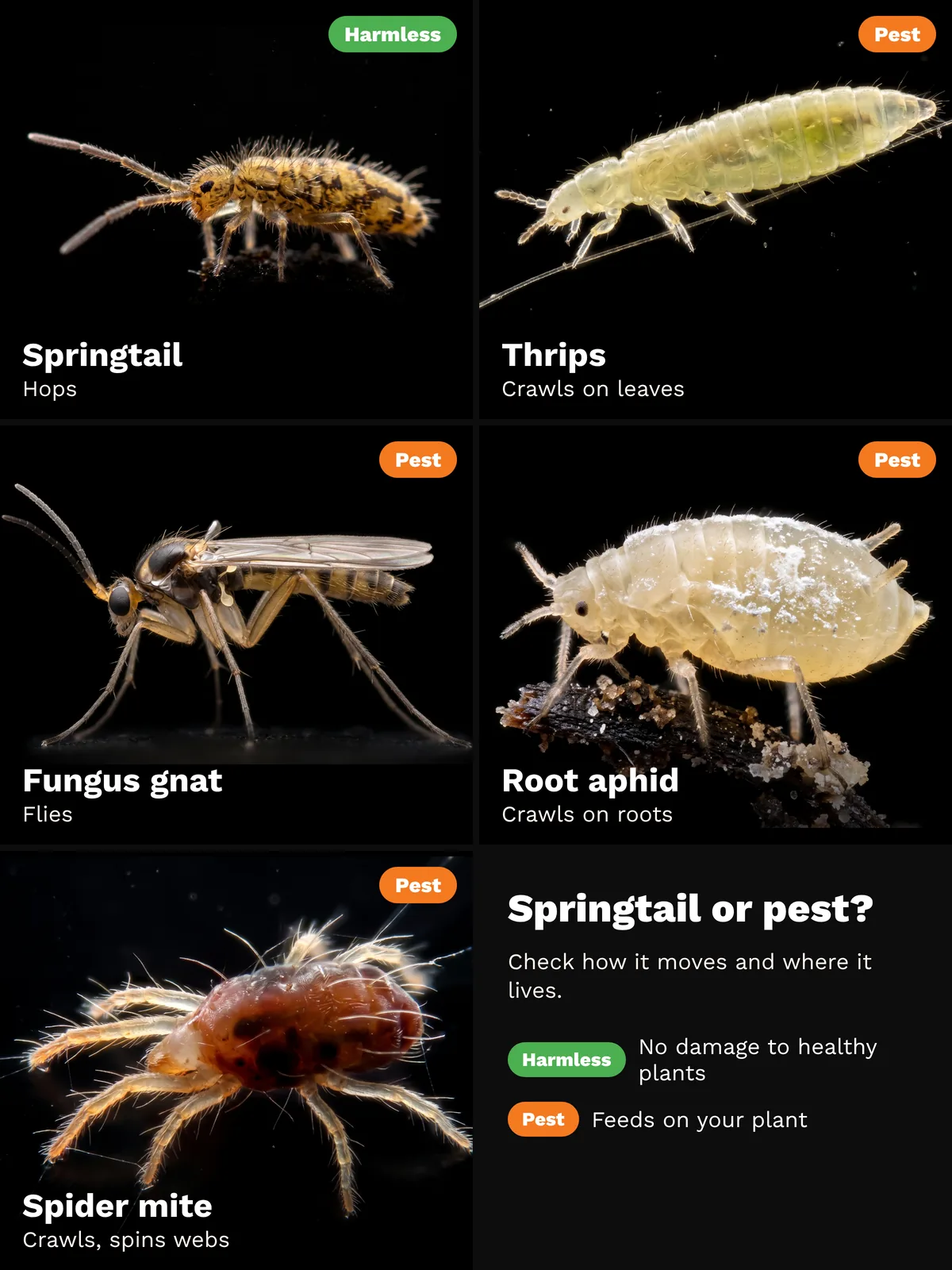
Unlike most cannabis pests, springtails leave no feeding damage on healthy plants, so chewed roots, silvery or stippled leaves, or webbing point to a different pest like gnats, aphids, or spider mites. To tell them apart, look at how the bug moves, where you find it, and what damage the plant shows.
| Cannabis Bug | Where They Appear | How They Move | Are They Harmful to Cannabis Plants? |
| Springtails | In and on damp medium, drainage holes, saucers, under mulch | Hop in random arcs, can't fly | No, they don’t damage healthy plants |
| Thrips | Leaf surfaces, with larvae dropping into the medium to pupate | Larvae crawl, adults fly weakly | Yes, they feed on leaves and leave silvery streaks with tiny black specks |
| Fungus gnats | Adults over the medium, larvae in wet medium | Adults fly | Yes, larvae feed on roots and can damage seedlings |
| Spider mites | Leaf undersides | Crawl | Yes, they feed on leaves, causing stippling and fine webbing |
| Root aphids | Root ball and around drainage holes | Crawl | Yes, they feed on roots, causing yellowing and stunting |
Thrips larvae are the pest most often confused with springtails. The mix-up usually happens when you tap a plant over white paper to check for pests, as springtails drop out of the medium alongside any larvae shaken from the leaves. Watch how they move. Springtails hop, while thrips larvae crawl.
Finding springtails is also a good reason to check for fungus gnats. The same soggy medium attracts both, and they often turn up together.
Why Springtails Show Up in Cannabis Soil
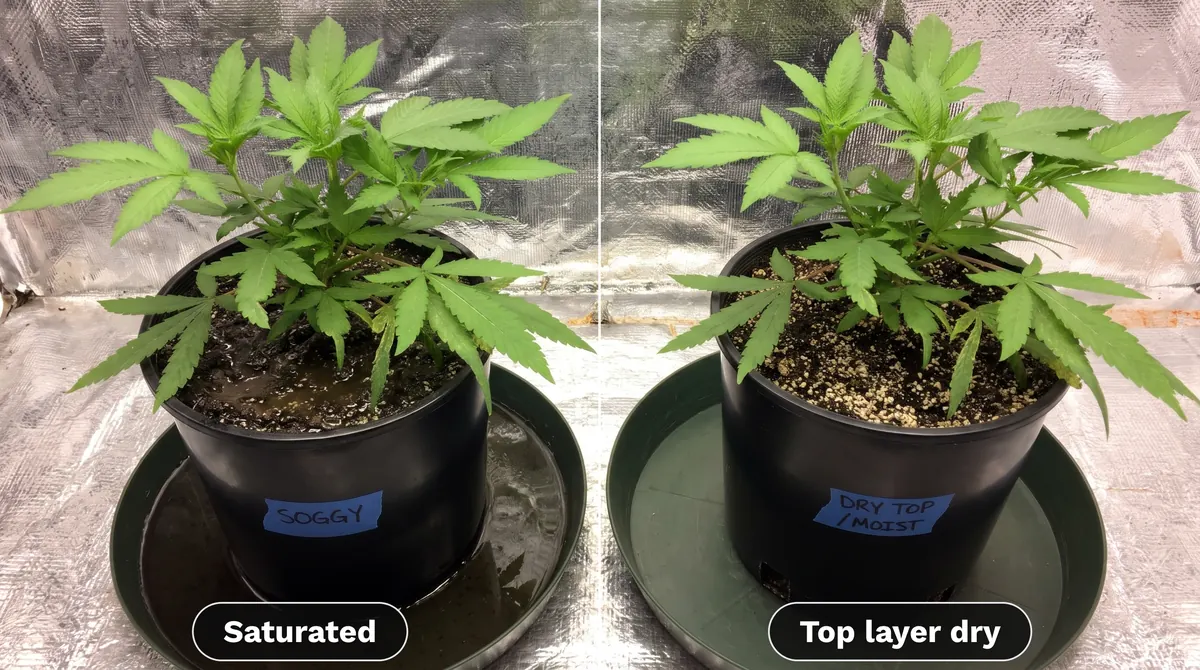
Springtails show up where constant moisture meets decaying organic matter. In a cannabis pot, that almost always means the medium is staying wetter than it should. They're not drawn to your plants. The pot has simply turned into a good habitat.
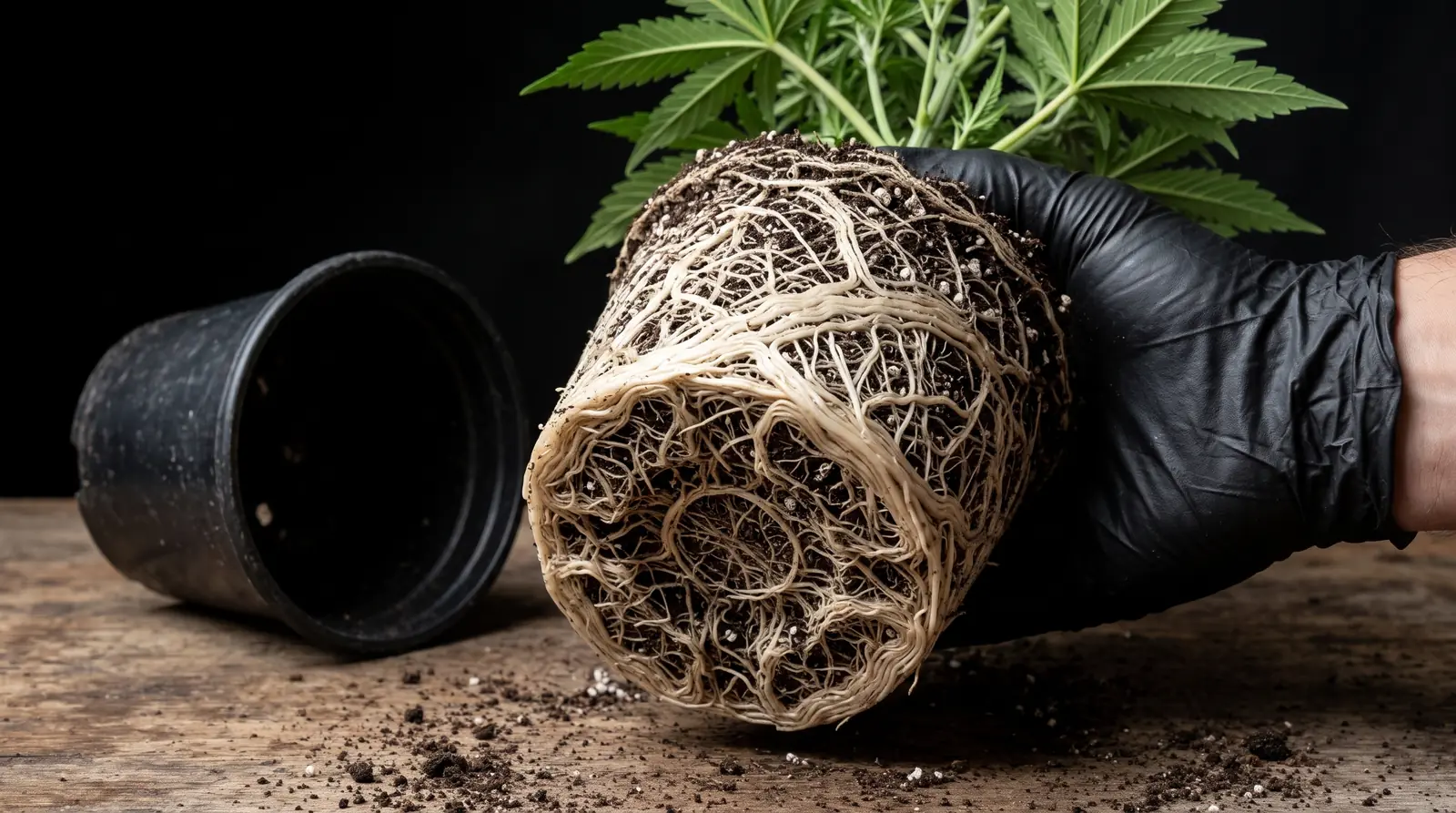
That wet medium is a problem on its own, as soggy soil starves roots of oxygen and leaves them open to rot. A big springtail population usually means the medium has been too wet for a while, not just after one heavy watering. Any drooping or yellowing growth also points to overwatered marijuana plants.
Common causes of a springtail presence include:
- Watering little and often instead of watering thoroughly and letting the medium dry back.
- Pots that are too big for the plants in them.
- Heavy, water-holding or poorly draining mixes.
- Saucers and trays left sitting full of runoff.
- Thick mulch, amendments, or leaf litter sitting on the surface.
- Low airflow and high humidity slowing surface drying.
- Cool tent temperatures stretching out the wet period.
- Bagged potting soil, compost, worm castings and amendments, especially unpasteurized ones, bringing them in.
- Plants moved indoors from outside.
Organic and living-soil grows are the exception. They host springtails even when watering is spot on, as the amendment layer is exactly what they eat. In those grows, seeing springtails tells you nothing about your watering.
Are Springtails Harmful to Cannabis Plants?
No, springtails don't feed on healthy cannabis roots, leaves, or buds. In soil, they break down organic matter, graze fungi, and help recycle nutrients, which is useful work in a living medium. The thing to fix is almost always the wet medium, not the bugs.
But there’s one rare exception, and it mainly involves a single species. When garden springtails build up to very large numbers, they can chew tiny pits into tender seedling leaves and feed on the roots, according to UConn Extension.
Even then, it’s mostly reported on vegetable seedlings in greenhouses, high tunnels, and gardens — usually when the soil dries out and they go looking for moisture. It’s not a reason to treat healthy, established cannabis plants.
Here's when to leave springtails be and when to act:
| Leave Springtails Alone When… | Take Action When… |
| Numbers are modest and plants look healthy | The medium stays soggy between waterings |
| You're running organic or living soil and they're working the amendment layer | They're dense on seedling or clone trays |
| There's no standing water and the top inch or two dries between waterings | Runoff is sitting in saucers or trays |
| No fungus gnats are flying over the medium | Fungus gnats are showing up alongside them |
How to Get Rid of Springtails in Plants and Soil
To get rid of springtails in plants and soil, let the medium dry back properly between waterings. They can't survive without constant moisture, so drying the medium is both the treatment and the prevention, and no spray needs to go near your plants. Work through these steps in order — skipping the first one undoes the rest:
- Fix your watering first: Water less often but more thoroughly, and let the medium properly dry back before the next watering. Empty saucers and trays, and don't leave runoff standing under the pots.
- Clear the surface: Remove thick mulch, dead leaves, and debris sitting on the medium, as that's their food. In living soil, thin that layer out instead of stripping it, as it's doing a job.
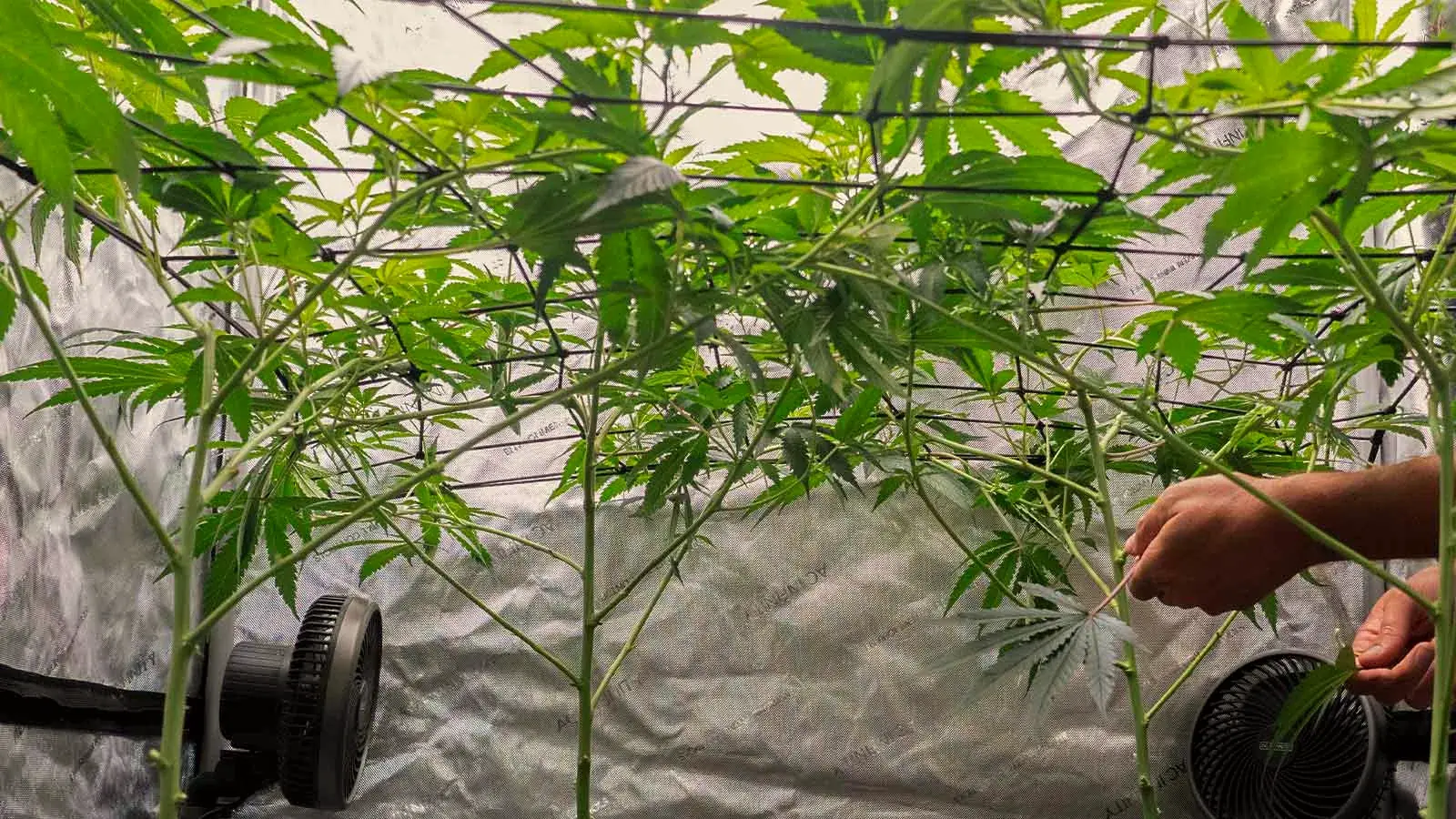
- Move air across the medium: Point a gentle fan across the pot surface. It dries the top layer much faster than airflow up in the canopy.
- Add a dry topdress for a barrier: A layer of dry sand, perlite, or diatomaceous earth keeps the surface hostile. Diatomaceous earth only works while it's completely dry, so reapply it after watering or skip it.
- Bring in predators only if you still need them: The predatory mite Stratiolaelaps scimitus feeds on springtails and fungus gnat larvae in moist medium. In living soil, keep in mind it'll eat the springtails you may want to keep.
Some popular fixes don't help. Yellow sticky traps may catch a few springtails and can help you monitor them, but they won't control the population. Blanket insecticide use treats a symptom of a symptom. Hydrogen peroxide drenches also kill beneficial soil life, so in organic or living soil they cost you more than they solve.
To stop springtails from coming back, inspect new bags of soil, compost, and castings before they go into your grow. Keep trays and saucers dry, and let the top of the medium dry between waterings. Once the surface stays dry, the population falls away on its own.
Springtails in the House Near Your Indoor Grow
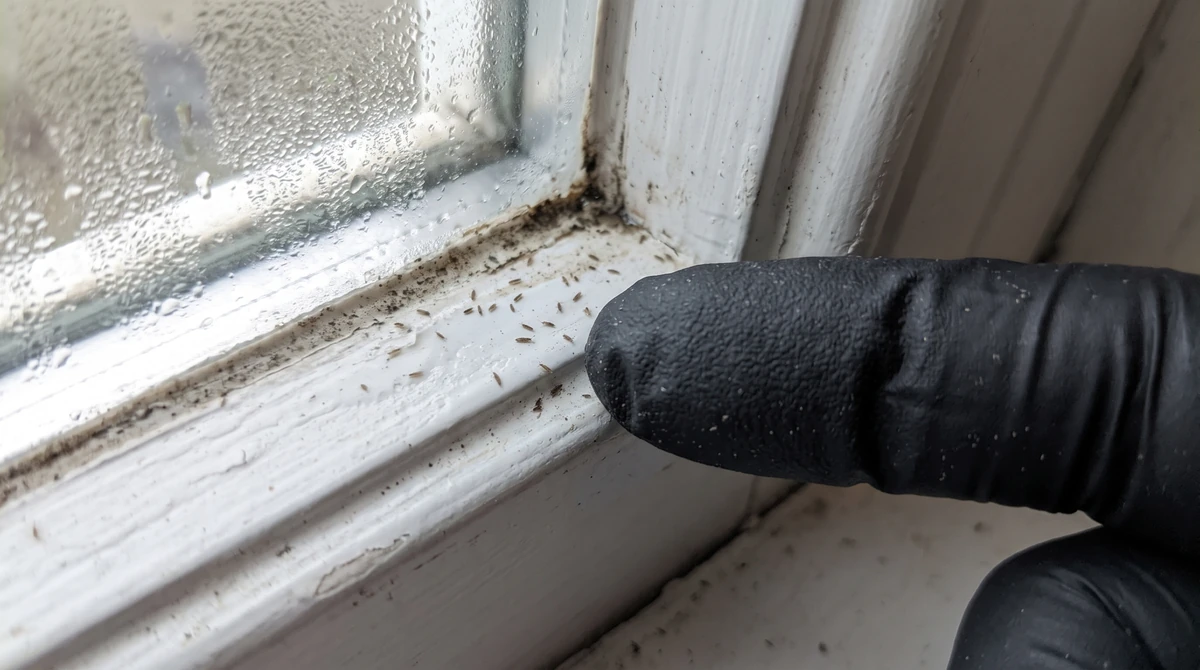
Springtails in the house usually come in from outdoors, not from your grow. They move inside when conditions outside turn too dry or too wet, then settle wherever moisture lingers. If you see them all year round, something in the home is staying damp, and that can include the pots and trays in your grow.
They’re a nuisance, not a threat. Springtails don’t bite people, spread disease, or damage wood, fabric, or your home.
The most common spots indoors are:
- Damp bathrooms and around shower trays
- Kitchens, sinks, and drains
- Basements
- Window frames with condensation
- Around potted houseplants
Where they cluster tells you where they’re coming from. Springtails crowded in your pots, saucers, or tent floor are living in the grow itself. Ones on bathroom walls, windowsills, or around drains point to household damp or a way in from outside.
To clear them, vacuum or wipe up the ones you can see, then dry out the spot where they’re gathering. They die off or move on once the moisture is gone. They don’t eat dry goods either, so pantry food, clothes, and properly stored marijuana seeds are safe from them.
To stop springtails from coming back, fix whatever keeps that spot damp. Leaks, condensation, and unventilated bathrooms need fixing at the source. Sealing gaps around windows, doors, and baseboards also helps keep new ones out. If they’re thick in your pots or trays, follow the watering steps above.