Thrips are one of the sneakiest pests you'll find on cannabis plants. They're small, quick and easy to miss until the damage is already spreading. Left untreated, thrips on plants can stunt growth and wreck yields. This guide walks you through:
- What thrips and their larvae look like.
- Early signs of thrips on marijuana plants.
- How thrips damage differs from other pests.
- The safest treatments to get rid of thrips for good.
- How to prevent trips from coming back.
TL;DR: Silvery or bronze scarring with black specks means an active thrips infestation, so treat now. Faint speckling with no visible black specks means you caught it early, when sticky traps and daily checks are enough. Fine webbing instead of scarring is spider mites, not thrips. To treat, work in order: exclusion and diatomaceous earth first, predatory mites next, and sprays like soap, neem or spinosad as a last resort.
What Are Thrips?
Thrips are tiny, fast-reproducing insects that feed on the sap inside cannabis leaves. Most adults measure about 0.04-0.06 inches (1-1.5 mm) long, so they're visible but easy to overlook. They range from pale yellow to dark brown or nearly black, and most have narrow, fringed wings. They can fly, but they're weak fliers and tend to jump or scurry when disturbed.
Thrips feed by rasping open the leaf surface and sucking up the sap that flows out. This "rasp and suck" method creates the silvery scarring you'll learn to spot below. Thrips can breed several generations a year, so a small population can turn into a real problem fast if you don't catch it early.
Left untreated, that steady sap loss adds up. Damaged leaves lose their ability to photosynthesize, which slows growth and can noticeably cut your yield. A heavy, ongoing infestation on a young or already-stressed plant can even threaten its survival. That's why it's worth taking thrips seriously well before you see heavy scarring.
What Do Thrips Look Like on Cannabis Plants?
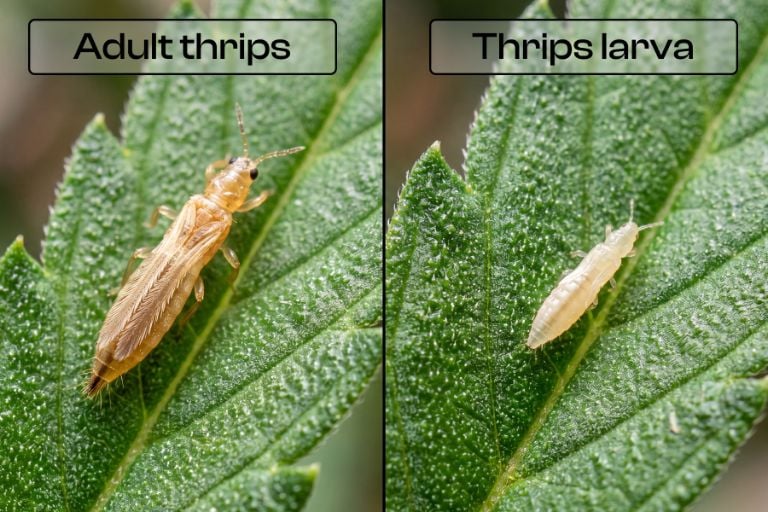
Adult thrips next to a larva on the same leaf.
Adult thrips feed on marijuana leaves and settle on both surfaces, though you'll usually find the heaviest activity on leaf undersides. Thrips have narrow, elongated bodies with two pairs of fringed wings folded over their backs. You'll see them in shades of pale yellow, golden brown or dark brown, sometimes almost black.
They're small enough that you'll need to look closely, but they're not invisible to the naked eye. Thrips larvae throw off a lot of first-time growers. They're smaller, paler and wingless, so they don't have the adults’ winged look, but they still crawl around actively on legs rather than sitting still like a grub.
Here's what to look for at each stage:
- Adults: Narrow bodies, fringed wings, quick to jump or fly when disturbed.
- Larvae (nymphs): Smaller, paler and wingless crawlers that are easy to overlook.
- Coloring: Ranges from pale yellow to dark brown across both stages.
If you want to confirm what you're seeing, hold a white sheet of paper under a leaf and tap it gently. Thrips that fall onto the paper will show up clearly against the white background.
Early Signs of Thrips on Cannabis Plants
Catching thrips early makes treatment a lot easier, so it helps to know what the first signs look like before the damage takes over. Here are the early signals of a thrips problem:
- Faint, silvery speckling on the leaf surface, smaller and lighter than full scarring.
- Slight curling at the edges of a few leaves, not the whole plant.
- A handful of isolated bite marks rather than widespread scarring.
- Occasional tiny insects visible on close inspection, especially on the undersides of leaves.
None of these signs alone confirms thrips, but together they're a strong early warning. If you spot two or more, start checking your plants daily and set out sticky traps right away.
What Does Thrips Damage Look Like
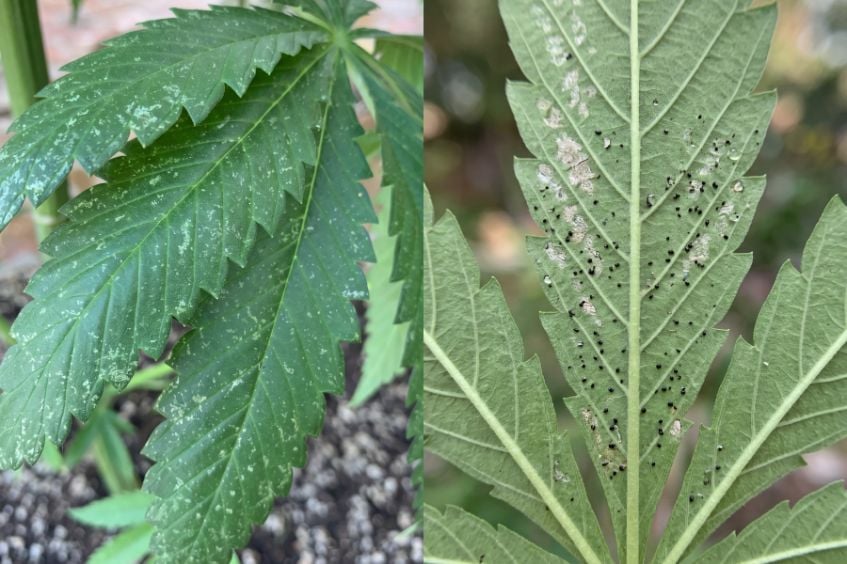
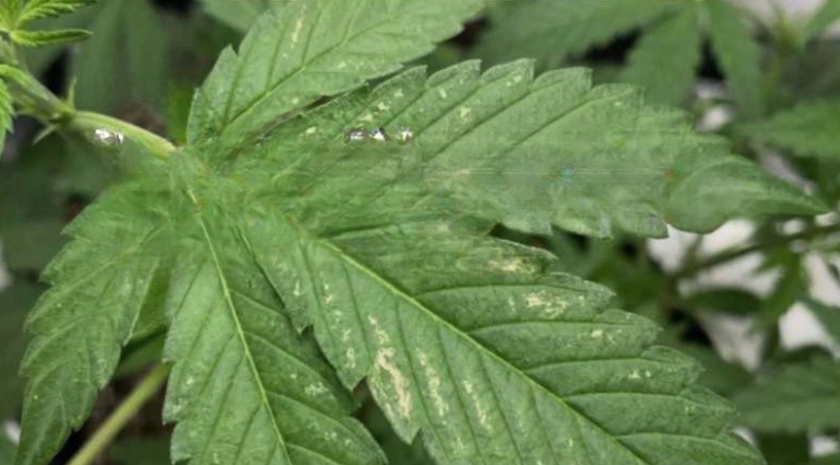
Silvery/bronze scarring next to black fecal specks.
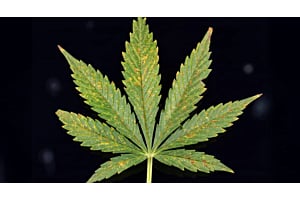
Once thrips have been feeding for a while, the damage becomes much harder to miss. Left unchecked, they can strip enough chlorophyll from a leaf to turn it pale or nearly white. This damage doesn't heal, so prevention and early treatment matter more than trying to repair an already-scarred leaf. Here's what to look for:
- Silvery or bronze scarring across the leaf surface.
- Small black fecal specks on and under the leaves.
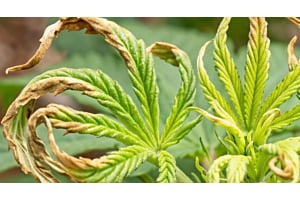
- Curling, wilting or slowed growth once the infestation is well established.
Silver or Bronze Leaf Scarring
The most obvious sign of thrips damage is patchy, silvery or bronze scarring across the leaf surface. It looks shinier and more irregular in shape than typical pest damage, and it spreads outward from wherever the thrips have been feeding. Heavy scarring can eventually cover most of a leaf.
Black Fecal Specks on Leaves
Thrips leave small, dark specks of waste on and under the leaves they feed on. These specks are one of the clearest ways to confirm thrips rather than another pest, since few other cannabis pests leave a similar mark. Check the undersides of affected leaves closely, since that's where specks tend to collect.
Curling, Wilting or Stunted Growth
Heavy thrips feeding pulls enough moisture and nutrients from a leaf to cause curling, wilting or brittleness. In young plants, a serious infestation can slow overall growth. This stage signals a well-established infestation that needs immediate attention rather than routine monitoring.
Thrips vs. Spider Mites: A Quick Comparison
Not sure if you're dealing with thrips or spider mites? Here's how the damage from each pest compares side by side.
| Trait | Thrips | Spider Mites |
| Damage shape | Larger silvery or bronze patches | Fine, uniform stippling or tiny dots |
| Webbing present | No | Yes, in heavier infestations |
| Fecal evidence | Small black specks | None visible to the naked eye |
| Movement | Jumps or flies when disturbed | Barely moves, stays in place |
How to Get Rid of Thrips on Cannabis Plants
The most effective ways to get rid of thrips on cannabis plants follow a clear order. Start with exclusion and habits that disrupt their life cycle, then bring in biological controls if the population is established. Treat sprays as a last resort rather than your first move. If you use any pest control product, always follow the label directions.
Here's what works, from gentlest to strongest:
- Exclusion and screening to keep thrips out and off the soil in the first place.
- Diatomaceous earth to target pupae in the soil.
- Predatory mites and beneficial insects for ongoing biological control.
- Insecticidal soap to break down thrips on contact.
- Neem oil to repel thrips and disrupt their feeding.
- Spinosad for stronger, organic control of an established population.
Exclusion and Screening
The cheapest thrips to deal with are the ones that never reach your plants. Screen air inlets to block adults drifting in, and run air curtains at doorways if your setup allows. A physical barrier over the topsoil is worth adding too, since it stops the pre-pupae from reaching the medium to develop, which breaks the cycle before it starts. Pair this with the quarantine and sanitation habits in the prevention section below.
Diatomaceous Earth
Diatomaceous earth is a fine, fossil-based powder that's sharp at a microscopic level, which makes it harmful to soft-bodied pests without harming your plants. Sprinkle a thin layer over the topsoil and around the base of your containers to target thrips pupae as they drop down to develop. Reapply after watering, since moisture reduces its effectiveness over time.
Predatory Mites and Beneficial Insects
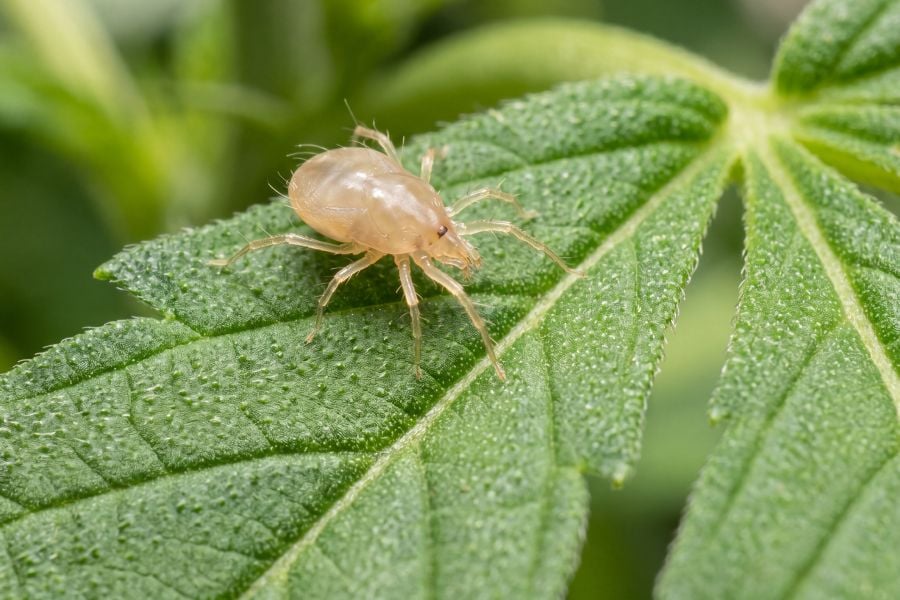
A predatory mite or pirate bug on a leaf.
Predatory mites (not predatory insects) are some of the most effective biological controls for thrips. Species like Amblyseius cucumeris and Amblyseius swirskii actively hunt thrips larvae on leaf surfaces.
Alongside these mites, insects like lacewing larvae and the minute pirate bug (Orius insidiosus) round out a strong biological control lineup. Soil-dwelling predators like rove beetles can also help target the pupal stage before adults emerge.
Insecticidal Soap
Applied as a foliar spray, insecticidal soap breaks down the outer shell of thrips on contact. It's one of the milder options, though it's still a treatment step rather than routine maintenance.
Coverage matters more than concentration, so hit both sides of every leaf and repeat every few days until you see the population drop. Avoid spraying buds directly, especially once flowering has started.
Neem Oil
Neem oil contains azadirachtin, a natural compound that repels thrips, disrupts feeding and interferes with their reproduction over time. Mix about 1 tablespoon per gallon (3.8 liters) of water with a few drops of dish soap to help it blend. Neem oil can leave an odor on buds, so it's best used during the vegetative stage rather than late flowering.
Spinosad Products
Spinosad is an organic insecticide made from a soil bacterium, and it's one of the more effective options against an established thrips population. You can apply it as a foliar spray or as a soil drench to target thrips that have dropped down to pupate. Most mixed spinosad solutions only stay effective for about 24 hours, so mix only what you'll use in one application.
How to Prevent Thrips From Coming Back
Prevention is a lot less work than treating a full infestation, and a few consistent habits go a long way:
- Change clothes and clean your shoes before entering your grow if you've been in another garden, since thrips ride in on fabric and soles.
- Quarantine new plants and clones for about two weeks before moving them into your main space, and inspect them closely under a loupe throughout. Most infestations arrive on a plant that skipped quarantine.
- Screen your air inlets and run air curtains at doorways, since adults drift in on air currents.
- Clear weeds and plant debris from around the grow, since both give thrips somewhere to shelter and breed between your crops.
- Refresh your growing medium between cycles, and use inert or pasteurized mix so you're not planting into eggs or pupae.
- Hang blue sticky traps as an early warning system. Blue pulls thrips more reliably than yellow, so check them every few days.
Why Thrips Are Tougher to Manage Indoors
Outdoors, thrips slow down and go dormant once temperatures drop below about 60°F (16°C), which gives outdoor grows a natural break each year. Indoor grow rooms stay warm year-round, usually well within a thrips' ideal range of 77°F to 82°F (25°C to 28°C).
That means they never get a seasonal reset. A soil fungus that naturally keeps thrips pupae in check outdoors is also often missing from indoor growing media. Together, these two factors are why an indoor thrips problem can persist far longer than an outdoor one without consistent intervention.
Final Thoughts on Getting Rid of Thrips
Thrips can be difficult to spot early, but once you know what to look for, you can catch an infestation before it causes serious damage. Check plants regularly for silvery or bronze scarring, black specks, and other signs of feeding, and act quickly when you find them.
Good sanitation, quarantine, sticky traps, and regular inspections can help keep thrips from becoming a recurring problem. If an infestation does take hold, start with the least disruptive treatment that fits your grow and stay consistent until the pests are gone.
Healthy plants are also better equipped to recover from pest damage. If you're starting a new grow, choosing quality cannabis seeds and giving plants the right conditions from the beginning can help set them up for strong, healthy growth.
FAQs About Thrips on Weed Plants
Can Thrips Kill a Cannabis Plant?
Thrips rarely kill a healthy plant outright, but they don't stop on their own either. Left unchecked, the constant sap loss strips chlorophyll until leaves can't photosynthesize, and a plant that can't feed itself will eventually decline. Young or already-stressed plants face the highest danger, and a heavy infestation during flowering can dent your final yield.
Are Thrips Visible to the Naked Eye?
Yes, adult thrips are visible without magnification, though their small size and quick movements make them easy to overlook. Hold a white sheet of paper under a leaf and tap it, the thrips will drop and show up clearly against the white. A loupe helps you tell adults from the smaller, paler larvae.
What Are Root Thrips?
"Root thrips" isn't really a distinct cannabis pest. Thrips drop into the growing medium to pupate, but they feed on leaves, not your roots. If you're seeing wilting or slowed growth with no leaf damage, the more likely culprits are fungus gnat larvae or root aphids, both of which do feed on roots underground.
Do Thrips Spread From Plant to Plant?
Yes. They walk short distances between touching plants and drift on air currents once the population grows, which is how one infested plant infects a whole room. Isolate anything showing damage right away, and screen your air inlets so they can't ride the airflow to clean plants.
How Long Does It Take to Get Rid of Thrips?
Plan on 2-4 weeks of consistent treatment, since you're not just killing adults, you're outlasting the eggs and soil-bound pupae that keep hatching.
Their full cycle runs anywhere from about a week to a month depending on temperature, so a single spray won't do it. Sprays need several repeat applications a few days apart, and biological controls take a bit longer to establish but hold the line better once they do.