You pull out your stash, and something looks off. Maybe there's a dusty film, a fuzzy patch or a musty smell that wasn't there before. Moldy weed is more common than people think, and smoking it can leave you coughing, nauseous or worse. The good news is you can catch weed mold fast.
This guide shows you what moldy weed looks like, smells like, how to tell it from trichomes and what to do next. You'll also learn how to store your buds so they stay fresh for months.
TL;DR: Moldy weed usually looks like a flat gray or white dusting, fuzzy patches, or dark discolored spots. It smells musty and damp — not anything like the strain's normal aroma. Healthy trichomes sparkle evenly across the bud, while mold looks dull, patchy and stuck on. If your weed smells off, feels damp or shows fuzz in the creases, don't smoke it.
What is Moldy Weed?
Moldy weed is cannabis flower that's been contaminated by fungi, usually bud rot (Botrytis) or powdery mildew. Cannabis is an agricultural product, so like any plant it's vulnerable to moisture, pests and fungal growth. Mold takes hold when damp buds meet the right temperature, often after poor curing or storage. Even premium flower can turn moldy if it's mishandled after harvest.
What Does Moldy Weed Look Like?
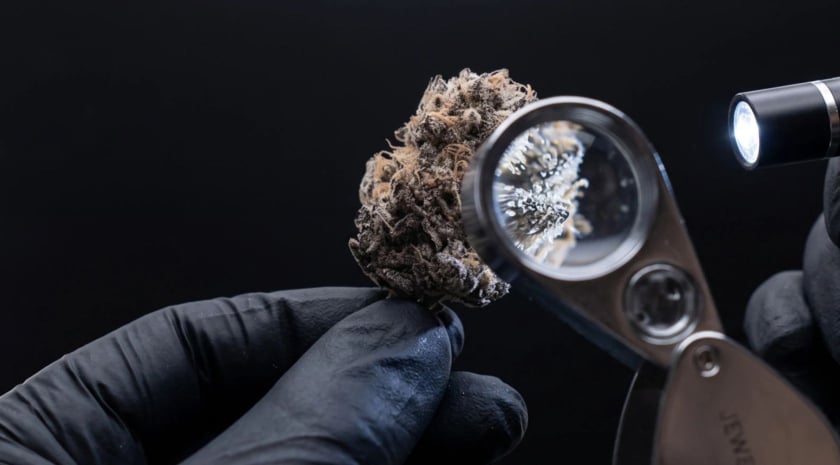
Moldy weed looks like something was added to the surface of the bud, a dull coating, fuzzy patches, or dark spots that don't belong. The growth looks uneven, and it tends to hide in tight folds, along the stem and where buds press together. Study your flower under bright light, and use a magnifying glass or phone camera if you can.
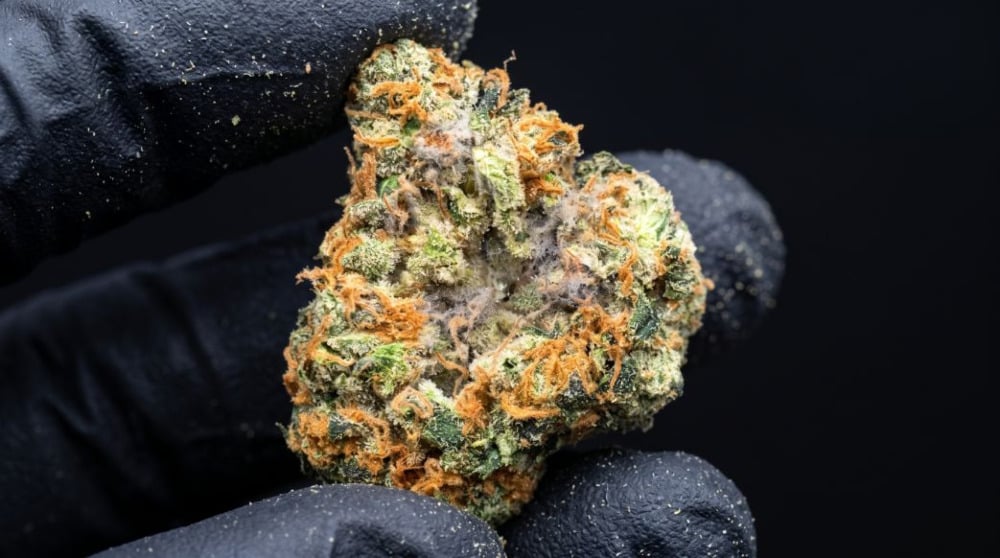
Cannabis buds showing visible signs of mold, including a white powdery coating, fuzzy patches, and dark spots.
Here's what to look for:
- White or gray powdery coating: a dull, flat film that doesn't sparkle.
- Fuzzy or cotton-like patches: lint or webbing tucked into the creases.
- Dark spots or brown areas: random staining that doesn't match the bud.
- Slimy or spongy texture: a damp feel that signals trapped moisture.
White or Gray Powdery Coating on Weed
A white or gray powdery coating usually signals powdery mildew, a fungus that looks flat and chalky. It settles in small patches, often in tight folds, along the stem or where buds touch in the jar. Unlike frosty trichomes, this coating stays dull and doesn't sparkle when you tilt the bud. If the powder looks matte and patchy instead of crystal-like, treat it as mold.
Fuzzy or Cotton-Like Patches on Weed
Fuzzy, cotton-like patches point to active mold, and they often appear where airflow is worst. This growth can look like lint stuck to the flower or thin webbing threaded through the cracks. Healthy buds never grow cottony strands, so any fuzz that looks out of place is a red flag. Set that flower aside and inspect it closely before you decide.
Dark Spots, Brown Areas or Discoloration on Weed
Dark specks, brown patches or random staining can flag mold, though not every brown spot means trouble. Dark, fuzzy patches can also appear, while bud rot often leaves brown, decayed areas. A blotchy look paired with a damp smell or wet texture should put you on alert. Dense sections and the base near the stem are worth the closest look.
Slimy, Damp or Spongy Texture on Weed
A slimy, damp or spongy feel warns of trapped moisture, which is the exact condition mold needs. Healthy flower feels springy and breaks apart cleanly with a light snap. If a bud feels soft, wet or spongy inside, skip it even when the outside looks fine. Moisture is the root cause, so texture is one of your most reliable checks.
Mold vs Trichomes: How Do You Tell the Difference?
Trichomes and mold both look whitish at a glance, but they behave very differently under light and touch.
Trichomes are the tiny, sticky glands that give cannabis its aroma, flavor and frost. They sparkle like crystals when you tilt the bud, and they spread evenly across the surface. Mold looks dull and patchy instead, and it clusters in creases rather than coating the whole flower.
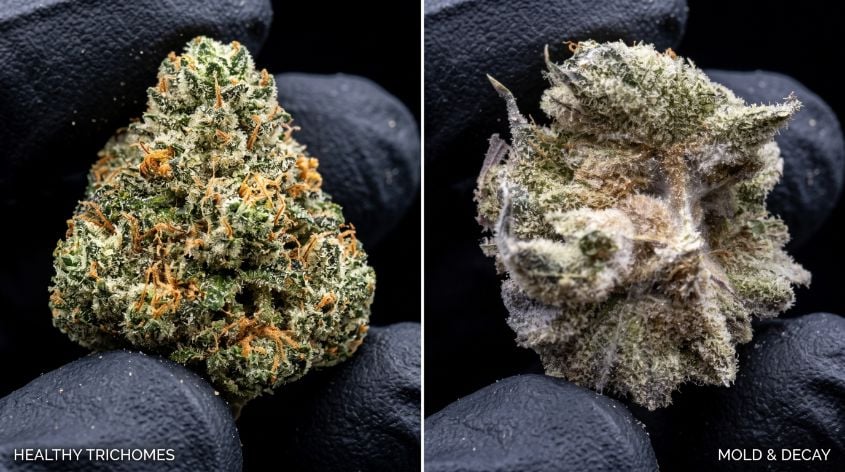
A side-by-side look at healthy cannabis trichomes versus mold.
This quick comparison sorts frosty flower from a real problem:
| Check | Healthy Trichomes | Mold on Weed | Reliability |
| Look | Even, frosty, crystal-like coverage | Patchy, flat, dusty, looks stuck on | High |
| Shine under light | Sparkles when you tilt the bud | Stays dull and matte | High |
| Pattern | Spread evenly across the whole bud | Clustered in creases, folds and dense spots | Medium |
| Texture | Sticky and springy | Damp, slimy or spongy | High |
| Smell | Piney, citrus, gassy or sweet | Musty, sour, hay-like or ammonia | High |
| Fuzz or webbing | No cottony strands | Cotton-like strands or webbing | High |
When the signals disagree, trust smell and texture first, since they're the hardest to fake.
One more point on color: pure white or bleached-looking buds are usually the result of light bleaching, not mold. Sparkle and crystals mean trichomes, so frosty, glittery flower is a good sign, not a warning.
Is the White Powder on Weed Mold or Kief?
White powder on weed is usually kief when it sparkles, but powdery mildew when it looks flat and dusty. Kief is the loose, pale trichome dust that collects at the bottom of a grinder. Like the frost still on the bud, it smells like the strain and clumps into a fine, sticky powder that catches the light. Powdery mildew, by contrast, spreads in dull patches and gives off little to no smell.
What Does Moldy Weed Smell and Taste Like?
Moldy weed smells musty, sour or hay-like, and that odor usually overrides the strain's normal aroma. Think damp basement, wet laundry or an old towel that never fully dried. Heavy bud rot can give off a sharp, ammonia-like or semi-sweet smell that turns your stomach. Your nose often catches mold before your eyes do, so a quick sniff is one of your best tools.
If you smoke it, moldy weed tastes harsh, chemical-like and unpleasant, nothing like clean flower. Clean cannabis smells and tastes earthy, gassy, sweet or fruity, so a spoiled, sour note is a clear warning. When the smell or taste seems off, trust it and set the flower aside.
Is Moldy Weed the Same as Bud Rot?
No, bud rot is one specific mold called Botrytis, while moldy weed covers any fungal growth on cannabis. Bud rot attacks the dense, moist inside of a flower and rots it from the center out. Other molds, like powdery mildew, usually coat the outer surface of the leaves and buds instead. So all bud rot is mold, but not all moldy weed is bud rot.
How Do You Find Hidden Bud Rot in a Nug?
You find hidden bud rot by breaking a dense nug open and checking the center for decay. Bud rot often starts deep inside the thickest, tightest part of the flower, so the surface can look fine.
Split the bud along the stem and look for gray-brown, crumbly or dull tissue in the middle. If the center looks dark and lifeless, or pulls apart mushy, treat the whole nug as ruined.
What Happens If You Smoke Moldy Weed?
Smoking moldy weed can cause coughing, nausea and respiratory irritation, and it carries bigger risks for some people. For a healthy person, one bad hit probably won't do lasting harm, but it isn't worth the gamble.
Reported symptoms include:
- Coughing
- Wheezing
- Headache
- Nausea
- Sinus pain
- Congestion
- Allergic reactions
Mold spores can also lodge in your lungs, where trapped moisture lets them keep growing.
Researchers have found harmful fungi like Aspergillus on cannabis samples bought from dispensaries and growers. In people with weakened immune systems, those fungi can lead to serious lung infections such as aspergillosis. That's why inspection matters more than tolerance, and why questionable flower belongs in the trash.
Who Faces the Highest Risk from Smoking Moldy Weed?
People with asthma, allergies or weakened immune systems face the highest risk from smoking moldy weed. Their bodies react harder to mold spores, which can trigger sinus pain, wheezing or a full allergic response.
Anyone with a chronic lung condition should be especially careful and inspect every batch before smoking. When your health is already compromised, the safest move is to skip anything that looks or smells off.
What Should You Do If Your Weed is Moldy?
You should stop before you grind it and throw the whole batch out rather than saving part of it. Don't try to pick off the moldy bit and smoke the rest, because mold spreads further than you can see. If you spot fuzz, smell strong mustiness or find the problem on more than one nug, toss the whole jar. Life's too short and your lungs too valuable for a risky smoke.
If you buy rather than grow, choose tested flower from a trusted source, since it's far less likely to reach you contaminated.
Why Does Weed Get Moldy?
Weed gets moldy when moisture meets an organic food source, so poor curing, high humidity and damp storage are the usual triggers. Fungal spores are everywhere in the air, and they only need trapped moisture and mild warmth to take hold.
Bud rot's fungus germinates on wet tissue between 55°F and 70°F (13°C and 21°C), which covers most homes. Dense, tightly packed buds are the most vulnerable, since they hold moisture deep inside where air can't reach.
Wet weed is the fastest route to mold, whether the flower got rained on, trimmed too wet or stored damp. Moisture left on or inside the bud gives spores everything they need to spread. If your weed ever feels damp, dry it out in open air before you seal it away.
How Do You Store Weed to Keep It Fresh and Mold-Free?
You keep weed fresh and mold-free by sealing it in an airtight glass jar and storing it cool, dark and dry. Aim for a relative humidity of 59-63%, which holds moisture steady without inviting mold. A humidity pack like Boveda keeps the jar in that range, and it lasts a couple of months. Skip plastic bags, since they trap moisture, and keep the jar out of direct sunlight and heat.
For freshness, heat and UV light are the enemies, because they evaporate terpenes and slowly cut potency. An opaque, airtight jar in a dark cupboard holds aroma and strength the longest.
Cold storage is a different trade-off. A freezer actually preserves buds the longest, and a fridge protects terpenes in the shorter term, but only if the flower is fully dried first and you handle the jar gently, since frozen trichomes turn brittle and snap off easily.
The real risk is sealing away damp buds or opening a cold jar over and over, which invites condensation. For everyday use, a cool, dark cupboard keeps most flower at its best for about 6 months.
How Can Growers Prevent Moldy Weed?
Growers prevent moldy weed by controlling humidity, airflow and cleanliness from the grow room through the cure. Mold spores are always in the air, so the goal is to deny them the moisture and stagnant conditions they need. Late flowering, drying and curing are the highest-risk stages, and each one rewards a little extra attention.
The core habits that keep mold out:
- While growing: keep humidity below 60%, prune for airflow and raise the room to at least 75°F (24°C) near harvest.
- While drying: dry on racks with a fan at around 60°F (16°C) and 60% humidity over 7-14 days, and never seal buds away wet.
- While curing: hold buds at 60-65°F (15°C-18°C) and 50-60% humidity, and burp your jars daily in week 1, easing off over the following weeks.
- Everywhere: sanitize your tools, clear away plant debris and pick mold-resistant genetics that dry faster.
An organic foliar spray like Mold Shield can stop spores before they take hold, even on forming buds in late flower. Just dilute it as directed and apply during low-light hours to avoid leaf burn.
How Mold-Resistant Cannabis Seeds Reduce Bud Rot Risk
Mold-resistant cannabis seeds lower bud rot risk because open-structured plants trap far less internal moisture than dense, compact ones. Bud rot loves tight, heavy flowers, so genetics that looser, airier buds give mold fewer places to hide.
Smaller-flowered, well-ventilated cultivars also dry more evenly, which cuts the moisture problems that lead to mold. Starting with cannabis seeds bred for airflow and mold resistance stacks the odds in your favor from the very first grow — paired with good climate control.