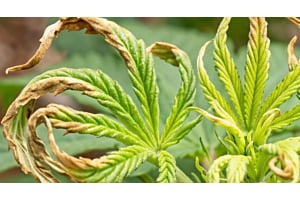
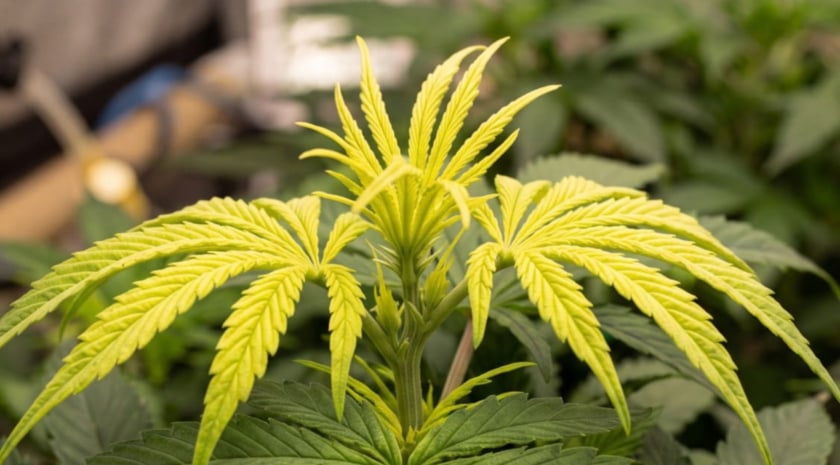
Zinc deficiency in cannabis shows up as yellowing new leaves, paired with shrinking, twisted blades, and tightly bunched nodes. Left uncorrected, it stunts plant growth, leading to deformed buds that lack density, weight, and potency, so harvest is a bust. Whether you’re growing auto weed seeds or standard fems, the good news is that zinc deficiency is rare.
The even better news is that correcting root-zone pH — not adding more zinc — is what usually fixes it. As a trace mineral, zinc is almost always present in the medium. More often than not, it’s just out of the root zone’s reach until pH is fixed. This guide covers how to spot zinc deficiency in weed plants, rule out lookalikes, and correct and prevent it in soil, coco or hydro.
The short version: Test your grow medium’s pH, aiming for soil at 6.0–6.3 and coco or hydro at 5.8–6.2. Add zinc only after you’ve ruled out any other causes and a true shortage remains.
What is Cannabis Zinc Deficiency?
Cannabis zinc deficiency develops when the plant can't take up enough of the micronutrient zinc, even though only small amounts are needed. Zinc helps produce the growth hormone auxin, and acts as a component in several enzymes. That’s why a shortage disrupts how new tissue forms and how internodes space out.
Zinc is immobile, so once uptake stalls, it can't move from older leaves to new growth. This means symptoms show up on the youngest top growth. It also plays a role in chlorophyll production — partly why the newest leaves lose color at the same time they lose size.
What Are the Effects of Zinc Deficiency on Cannabis?
Left uncorrected, a zinc deficiency follows the cannabis plant all the way to harvest. Because zinc plays a part in how the plant grows and develops through flowering, a prolonged deficiency shows up as real losses at the end of the grow with:
- Stunted plant growth
- Stalled flower development
- Reduced bud size and potency
- Severely diminished final yields
What Are the Symptoms of Zinc Deficiency in Cannabis?
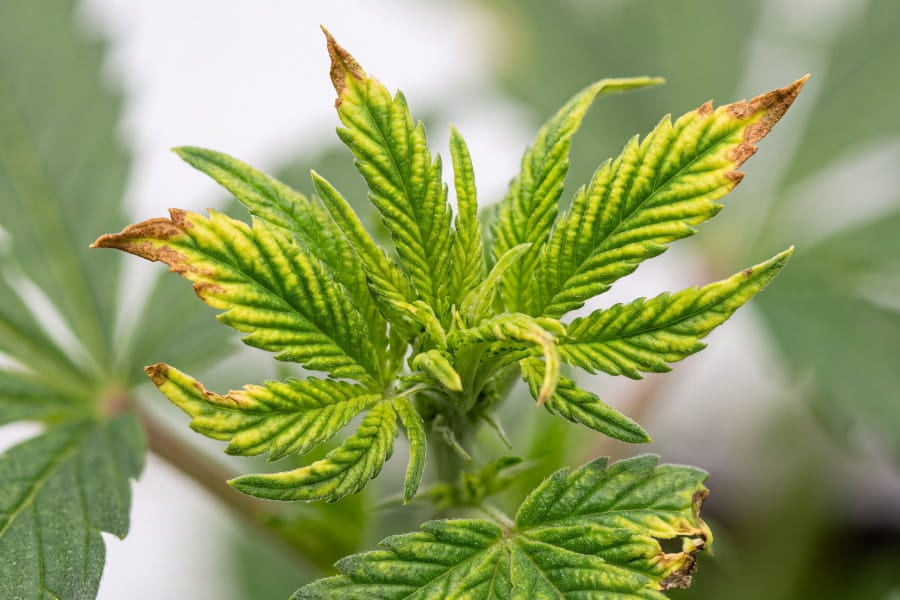
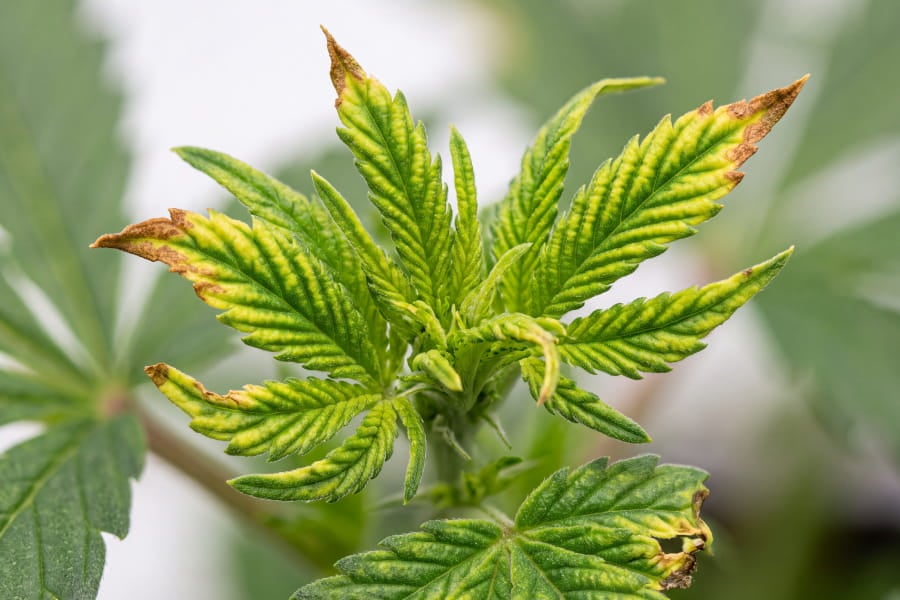
Cannabis zinc deficiency symptoms first appear as young leaves yellowing while veins stay green (interveinal chlorosis). They emerge small, thin, and often twisted or bunched, with shortened node spacing that gives the top a crowded, stacked look. In flower, buds may contort, twist too, and even harden instead of filling out normally.
That deformed and stunted growth is your strongest signal that you’re looking at a zinc deficiency and not something else.
What Causes Zinc Deficiency in Cannabis Plants?
Zinc deficiency in cannabis plants is almost always caused by zinc being locked out at the roots — not a real shortage in the feed or medium. Several root-zone conditions can cause that lockout, but a too-high pH is the single most common culprit:
- High pH lockout: When your grow medium’s pH drifts out of range.
- Salt buildup at the roots: Accumulated mineral salts from concentrated feeding.
- Competing nutrients: Heavy phosphorus or other nutrients that block zinc uptake.
- Overwatering and poor root health: Prevents roots from absorbing micronutrients.
- An actual zinc shortage: It’s rare, but possible if your medium or feed lacks zinc.
Why High pH Locks Out Zinc
At a high root-zone pH, zinc reacts with calcium and phosphate already in the medium to form compounds the roots can't absorb, so the plant can't take it up even when zinc is present. This is classic nutrient lockout, and it's the single most common reason cannabis shows zinc deficiency symptoms.
How Salt Buildup Blocks Zinc Uptake
Leftover mineral salts from feeding concentrate around the roots as water evaporates between waterings. Once that buildup accumulates, it raises the overall salt concentration in the root zone. This, in turn, throws off pH and zinc uptake stalls along with everything else.
Where Excess Phosphorus and Other Nutrients Crowd Out Zinc
Another nutrient can still crowd zinc out at the roots, even with pH in range. This is where heavy phosphorus feeding becomes the most common offender. It binds with zinc into compounds the roots can't absorb, so a shortage shows up even though there's plenty of zinc in the feed. Excess calcium, iron, copper, or nitrogen can do the same, but to a smaller degree.
When Overwatering and Root Health Reduce Zinc Uptake
When your plant’s roots are waterlogged or damaged, they can't pull zinc (or anything else) from the medium. Overwatering is among the most common causes, but a dense, poorly draining mix also starves roots of oxygen. Either way, roots that can't breathe can't feed, so zinc deficiency symptoms can show up even when pH and nutrient levels are fine.
What It Means When Zinc is Actually Missing
Every other zinc deficiency cause on this list is an access problem — the micronutrient is present but unreachable. A genuine shortage is different: the zinc simply isn't there. This shows up most in soil that's been reused across several grows without replenishing micronutrients, or in a nutrient program built without a dedicated micronutrient product.
It's the least likely explanation of the five, so it's worth ruling out the pH, salt accumulation, competing nutrients, and root-health causes above first.
How to Fix Zinc Deficiency in Weed Plants Step By Step
To fix a zinc deficiency in a weed plants, start by testing the root zone for salt buildup and pH drift, flush if needed, then correct pH to your medium's target range. From there, rule out competing nutrients and check root health if symptoms persist. Add zinc only if a true shortage exists, and watch new growth for signs of recovery.
Here's the full fix sequence, step by step:
1. Test pH and EC/TDS at the same time.
These two readings work together: An unusually high EC/TDS reading — well above your input feed’s EC signals salt buildup, while a pH reading outside your target range tells you there’s a pH lockout problem. Here’s what the right pH ranges look like:
| Growing Medium | Ideal pH | Acceptable pH |
| Soil, including organic/living or synthetic-fed | 6.0–6.3 | 5.5–6.5 |
| Coco coir or peat-based soilless mixes | 5.8–6.2 | 5.6–6.4 |
| True hydro (DWC, NFT, rockwool, LECA) | 5.8–6.2 | 5.6–6.4 |
2. If salt buildup shows up, deal with it first — before anything else.
Flush your medium only if you’re sure there’s a salt buildup to clear. In soil or coco, run plain water — pH'd to your target range — through the medium until roughly one third drains out the bottom. In hydro, drain the reservoir and refill it with a freshly mixed, correctly pH’d nutrient solution instead.
Either way, a mineral-heavy root zone needs this reset before a pH correction can actually work. Flushing clears salts; it doesn’t fix pH or cure any kind of deficiency.
3. Bring pH into range using the right method for your medium.
Living or organic soil regulates and buffers pH itself, so skip the pH pen on your water entirely. If it's genuinely drifted, nudge pH back slowly with amendments instead: calcium carbonate or lime to raise it elemental sulfur plus acidic materials to bring it down.
Everything else — coco, soilless media, true hydro, or soil running synthetic nutrients — works the opposite way: dissolve nutrients into the water first, then use a product like pH Up or pH Down to get the finished solution to the ideal pH range before it reaches the roots.
With no soil biology to buffer it, coco holds enough structure for pH to drift slowly, so weekly checks catch it in time. True hydro roots sit directly in the solution with nothing between them, so pH can move within hours — which is why hydro media need a daily check.
4. Use runoff as a warning light, not a dial.
Runoff pH and EC testing tell you whether the root zone pH has drifted — use them to spot a trend over time, not an actual target to hit. If you’re using soil or coco, collect runoff near the end of a watering for the most accurate read.
In true hydro, there's no runoff to collect, so test the reservoir directly instead. If a reading is off, treat it as a warning signal to check your feed or pH routine.
5. Check your feed to rule out competing nutrients like phosphorus.
If your cannabis plant’s root-zone pH and EC readings check out fine and zinc deficiency symptoms still show up, check your feed. Cut back on any heavy phosphorus feeding — it’s the most common zinc antagonist. While you’re at it, make sure calcium, iron, copper, or nitrogen aren’t running too high either since they can also crowd zinc out.
6. Investigate root health and check drainage, just in case.
If your medium stays wet too long between waterings, that's your cue to investigate further. Pull a plant to check if you can — healthy roots are white and firm, while brown or mushy roots confirm the oxygen starvation that's blocking zinc uptake.
From there, let the medium dry back before the next watering, work in perlite for better drainage, or repot into an airier mix to get zinc (and other nutrients) moving into the plant again.
7. Add zinc, but only if it’s truly short.
If you’ve ruled out every other cause and new growth is still showing the same zinc deficiency signs, add a small dose of zinc. Use a chelated zinc supplement, zinc sulfate, or zinc oxide but keep it very light — zinc is only needed in tiny amounts.
8. Give it some time and watch new growth for signs of recovery.
New growth typically starts improving within three to five days once whatever was blocking zinc has been corrected (be it pH, salt buildup, a competing nutrient, poor root health, or an actual shortage). Damaged leaves won't turn green again, so judge recovery by the newest growth coming in, not the older leaves.
How Do You Tell Zinc Deficiency Apart From Iron and Manganese Deficiency?
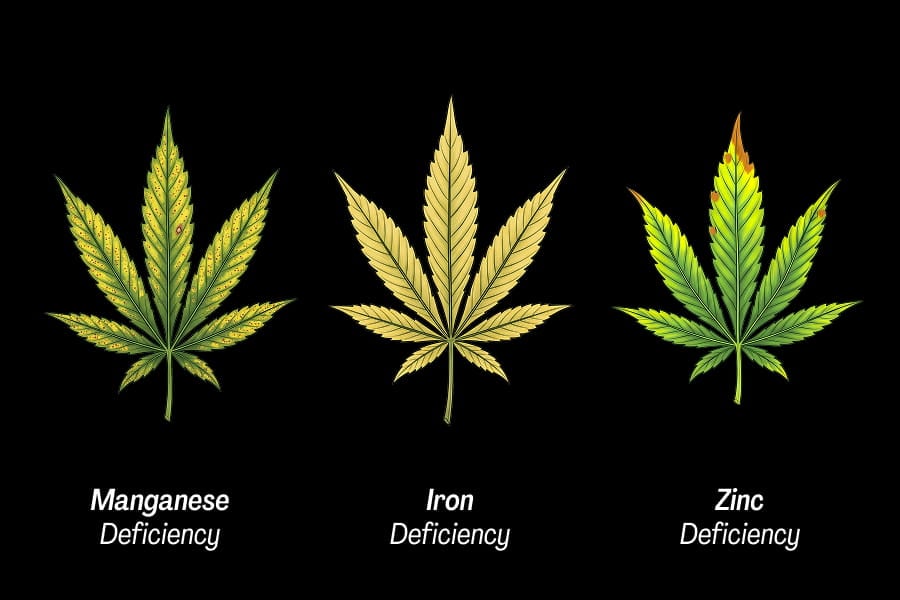
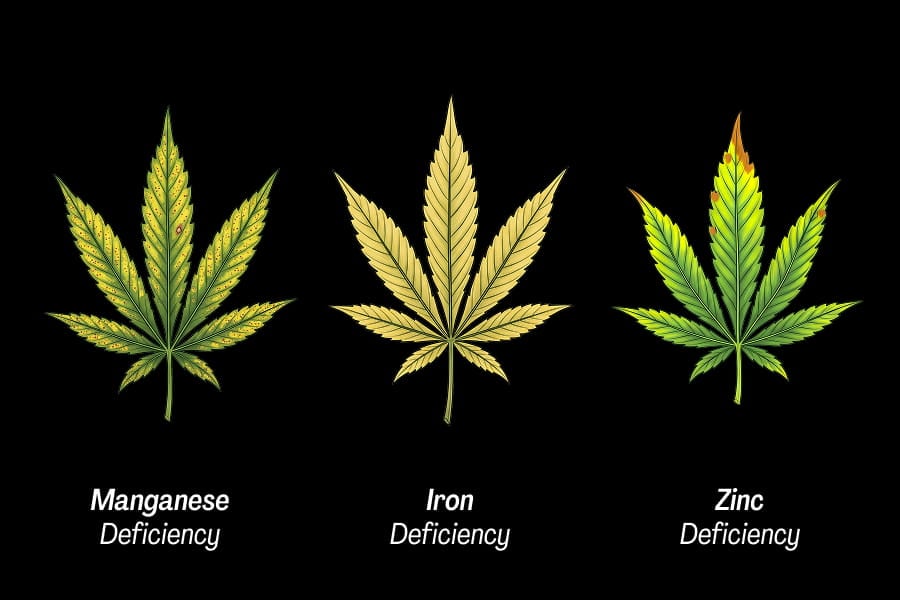
Looking at leaf symptoms and patterns is the fastest way to tell zinc, iron, and manganese deficiencies apart. A zinc shortage is the only one here that shrinks and twists new leaves. All three cannabis deficiencies start as interveinal yellowing on new growth, though, and commonly trace back to high root-zone pH. The table below breaks down exactly where they diverge:
| Trait | Manganese deficiency | Iron deficiency | Zinc deficiency | Reliability |
| Where it starts | Newest to mid growth | Newest growth | Newest growth | Low |
| Leaf symptom | Normal size | Normal size | Small & twisted with tight node spacing | High |
| Leaf pattern | Interveinal yellowing with brown spotting | Even, bright interveinal yellowing | Interveinal yellowing | Medium |
In every case, check root-zone pH before adding any single nutrient.
How Do You Prevent Zinc Deficiency in Cannabis?
To prevent zinc deficiency in cannabis, hold pH in the right range for your medium, and watch your feeding — excess nutrients drive both the salt accumulation and competing nutrient problems that lock zinc out. Good drainage and correct watering keep roots oxygenated enough to actually take zinc up.
A genuine zinc shortage is rarer, but still worth preventing directly: feed a complete micronutrient product, and don't push reused soil across grow after grow without replenishing it.
A strong start also helps. Zinc deficiency in cannabis almost always comes down to a root-zone problem, so whatever helps roots establish well from the start reduces that risk. Buy weed seeds bred with vigorous genetics that root in faster — and give you more room to catch and correct a root-zone problem before it costs you yield.