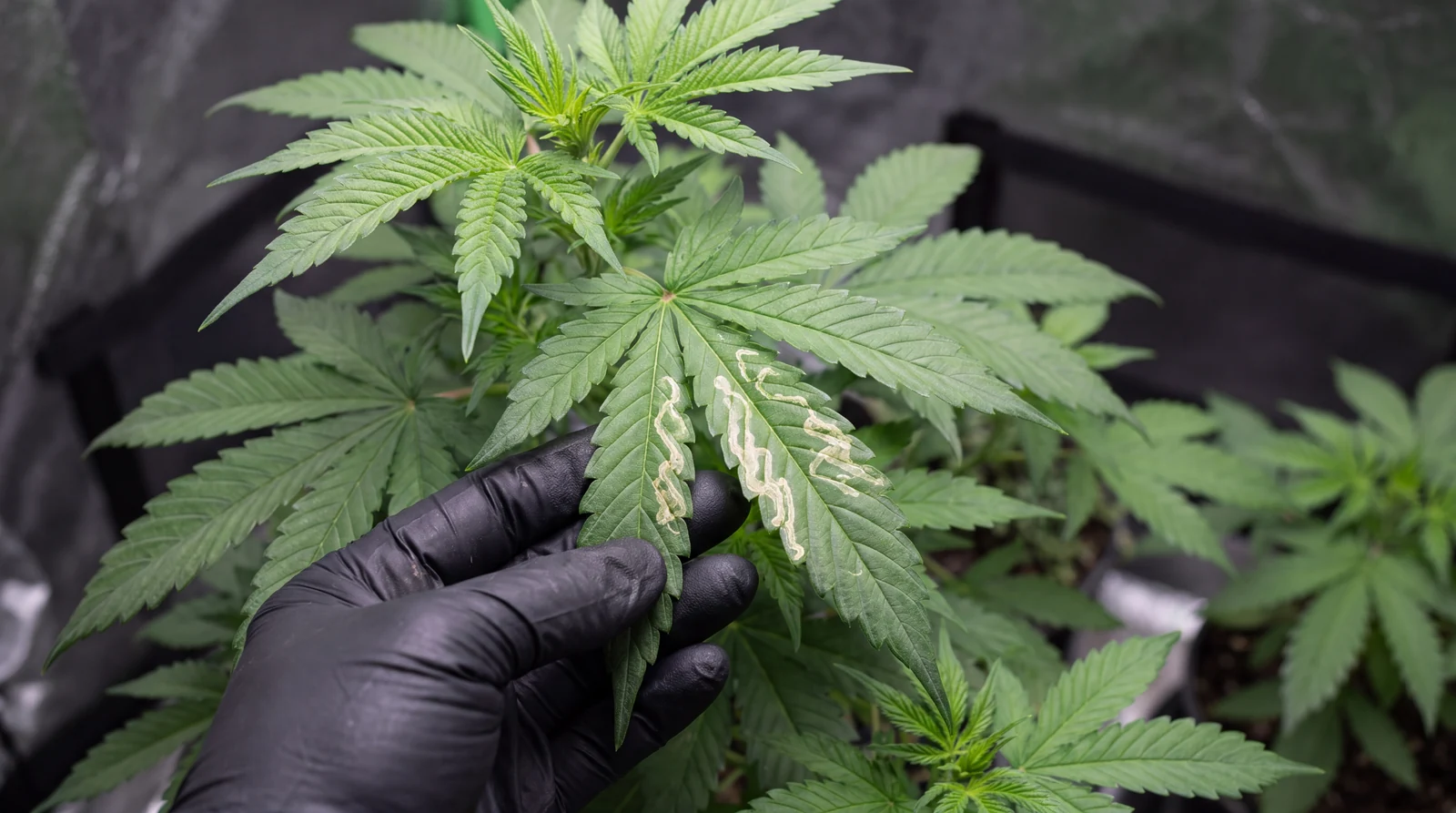
Knowing how to get rid of leaf miners on cannabis starts with confirming the damage: check leaves for see-through tunnels that widen from one end, often with a dark line of droppings. Then pinch each tunnel flat to kill them. Use a spinosad or azadirachtin-based spray, plus yellow sticky cards for the adults. Repeat until new growth stays clean.
Keep the next wave out by quarantining clones, screening vents and covering young outdoor plants. Leaf miners mostly show up in the garden, so if you’re growing from outdoor seeds, your plants share the yard with vegetables, beans, and flowers that host the same insects.
A few mines on a healthy weed plant are very fixable. Seedlings and stressed plants have less wiggle room, so act fast. Below you’ll learn how to get rid of leaf miners step by step, including identification, treatment, and prevention, plus what to do during flowering.
What Are Leaf Miners on Cannabis?
Leaf miners are the larvae of small insects, most often leaf-mining flies but sometimes moths, sawflies, or beetles, that tunnel through the inside of the leaf. They arrive as flying adults or ride in on clones and soil, then spread by cycling through a new generation every few weeks.
"Leaf miner" describes a feeding habit, not a single species. That's why the damage looks so similar regardless of which insect made it, and why some treatment choices depend on whether you're dealing with flies or moths.
Where Do Cannabis Leaf Miners Come From?
Most cannabis leaf miners reach plants on infested clones and transplants, as adults flying through open vents and doors, or as pupae hiding in reused or outdoor soil. Outdoors, vegetables, beans, and ornamentals are home to the same insects so new adults fly in all season. Indoors, an infestation usually traces back to one cause that keeps cycling.
How Do Leaf Miners Spread?
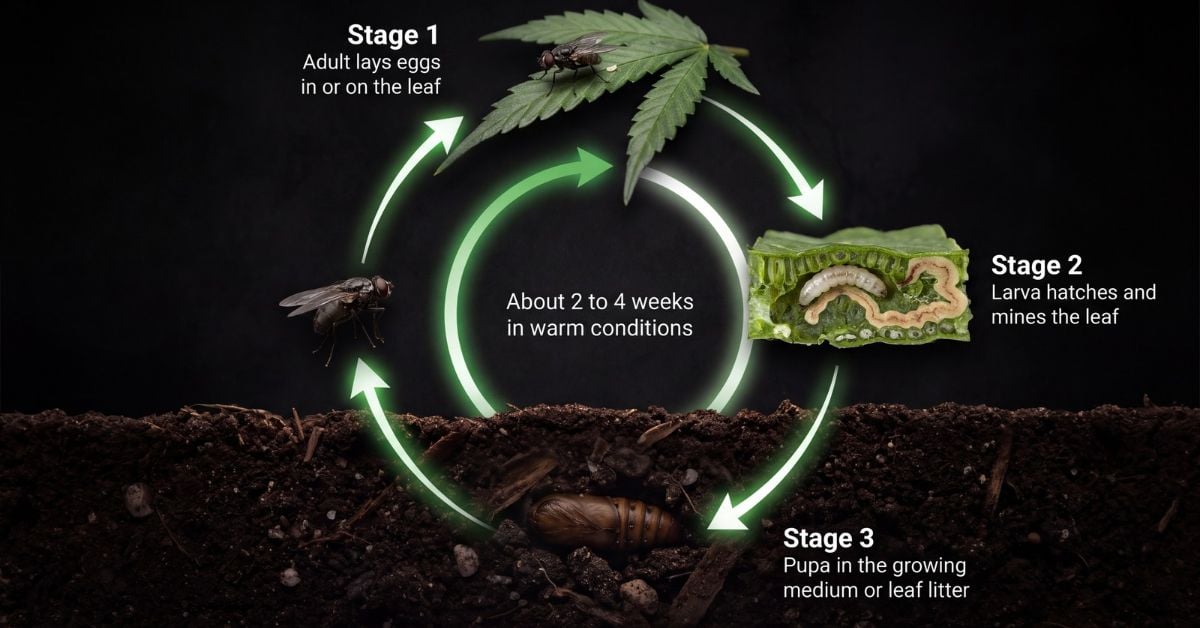
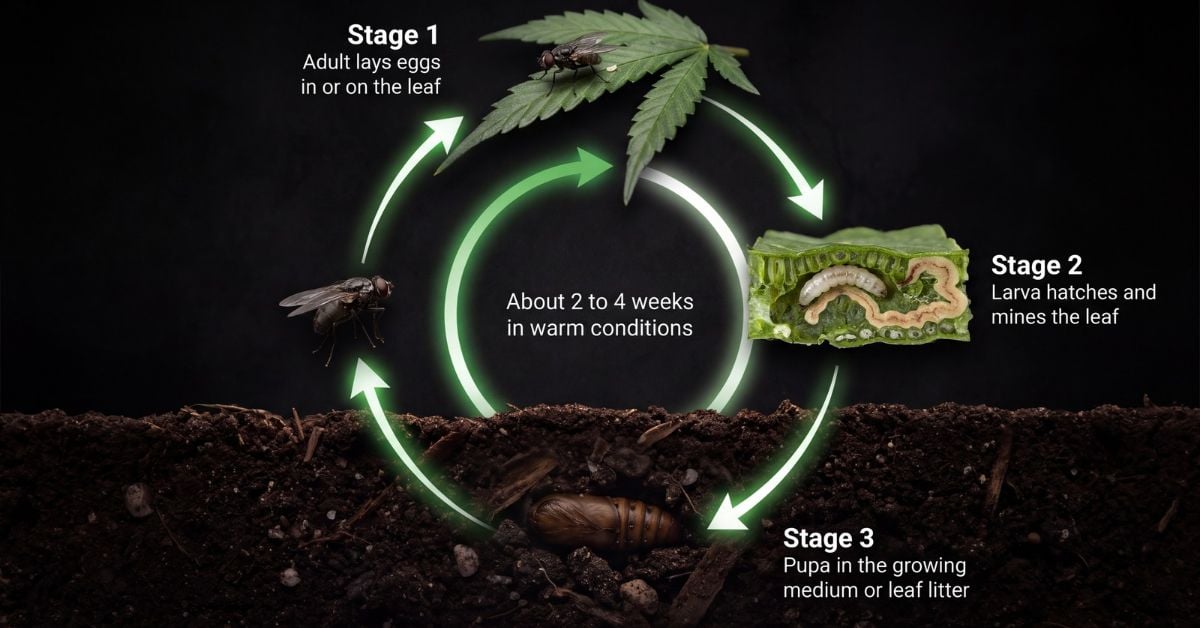
Leaf miners spread through a fast, repeating life cycle. In warm conditions one full turn often takes around 2–4 weeks, and it tends to speed up as temperatures rise. Here’s what that cycle looks like:
- An adult lays eggs in or on the cannabis leaf.
- The larva hatches and mines the leaf.
- It pupates, usually in the growing medium or leaf litter and sometimes on the leaf itself.
- A new adult emerges and starts laying again.
Generations overlap, so an established infestation usually has eggs, larvae, pupae, and adults present at once. New mines can keep showing up even after you've crushed every larva you can see, because the next wave is already developing out of sight.
How to Get Rid of Leaf Miners on Cannabis Step by Step
Getting rid of leaf miners on cannabis requires four steps: confirm the damage, crush the larvae in their tunnels, spray a product that reaches inside the leaf, then trap the adults and target the pupae in the medium. Skip one and the population rebuilds from the stage you missed.
Plan on more than one round — overlapping generations mean a single pass rarely finishes the job. Old tunnels never heal, so judge progress by your newest leaves. Falling sticky-card counts plus clean new growth mean the cycle is breaking.
Whatever you spray or drench, follow the product label, any applicable local regulations, and your plant’s growth stage. Here’s the step-by-step breakdown:
Step 1: Confirm It's Leaf Miner Damage
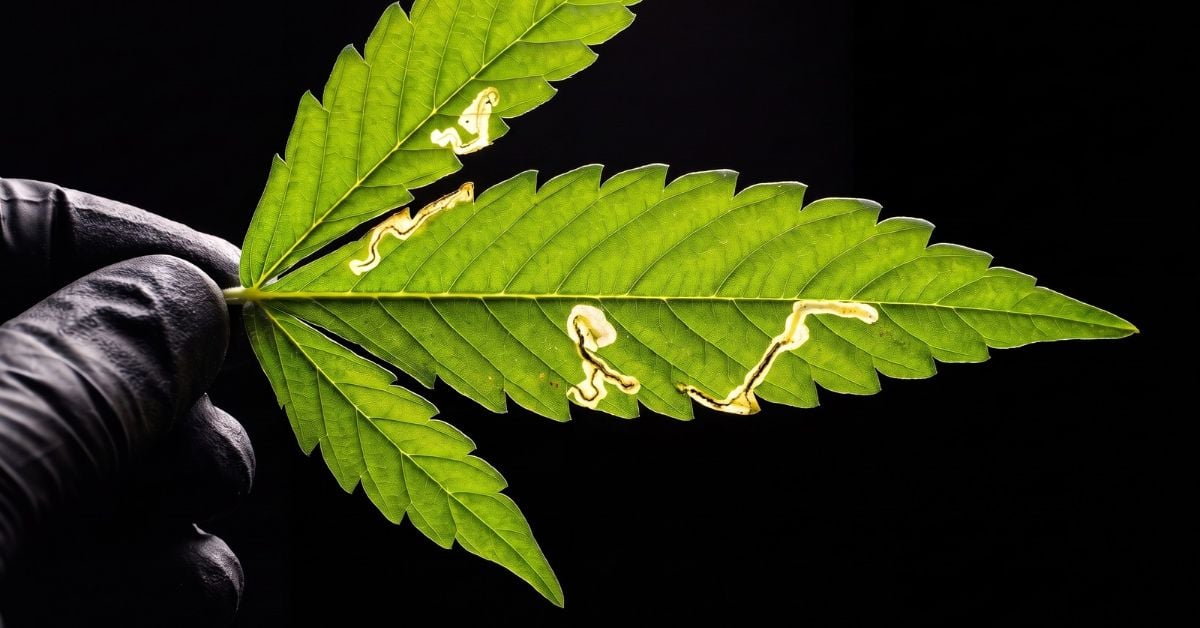
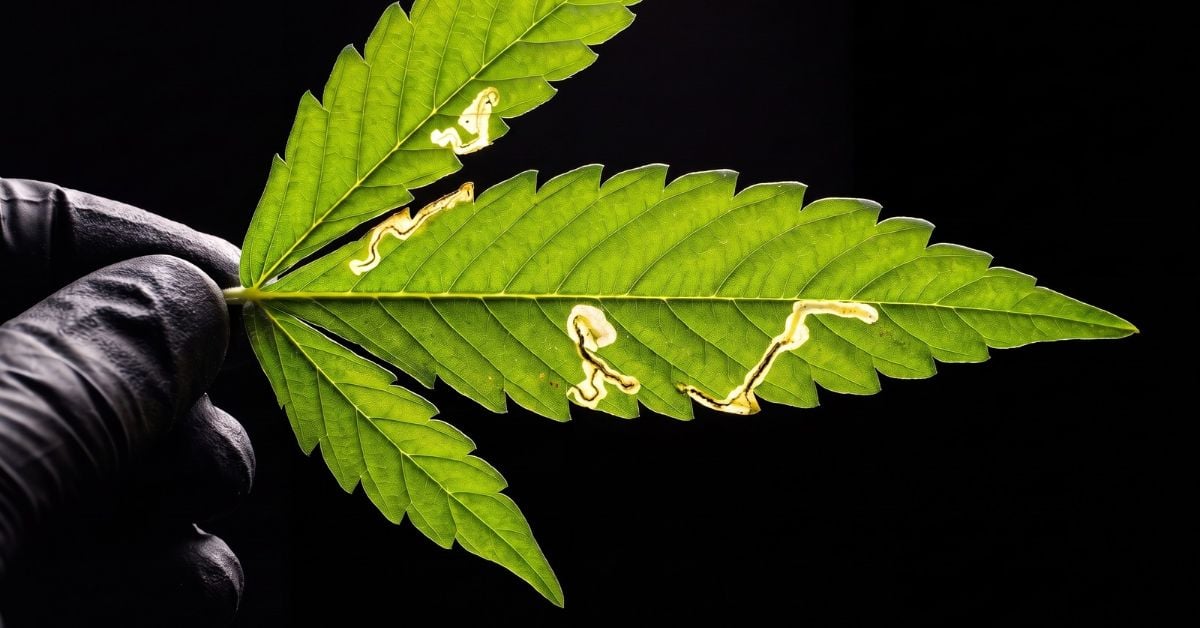
Hold a suspect leaf up to a light. Leaf miner damage looks like a pale, see-through trail inside the leaf that starts narrow and widens as the larva grows, often with a dark line of frass (droppings) running down it. The larva itself usually sits at the wide end.
The trail looks pale because the larva eats the green tissue between the two leaf surfaces and leaves the outer layers intact. Adult flies leave a second clue: tiny pale stipple dots where they've punctured the leaf to feed or lay eggs. Badly mined leaves may yellow and drop.
A thumb rub and a backlight check rule out most lookalike cannabis pests and plant problems:
| Lookalike Problem | What You'll See | How to Rule It Out |
| Thrips | Silvery or bronze scarring with dark specks of frass on top of the leaf | The damage sits on the surface and there's no continuous trail to follow |
| Caterpillars and other chewing pests | Holes and ragged edges where tissue is gone | Leaf miners leave see-through trails while chewing insects leave holes. |
| Fungal leaf spots like septoria | Round spots or lesions, often with dark borders | Septoria spots stay put and never form a widening trail |
| Nutrient deficiencies & problems | Patterns tied to veins or leaf age, repeated on many leaves at once | Cannabis leaf miner damage shows up as random, isolated trails |
| Slug trails and surface residue | Shiny or dusty marks on top of the leaf | They rub off under your thumb. A mine doesn't. |
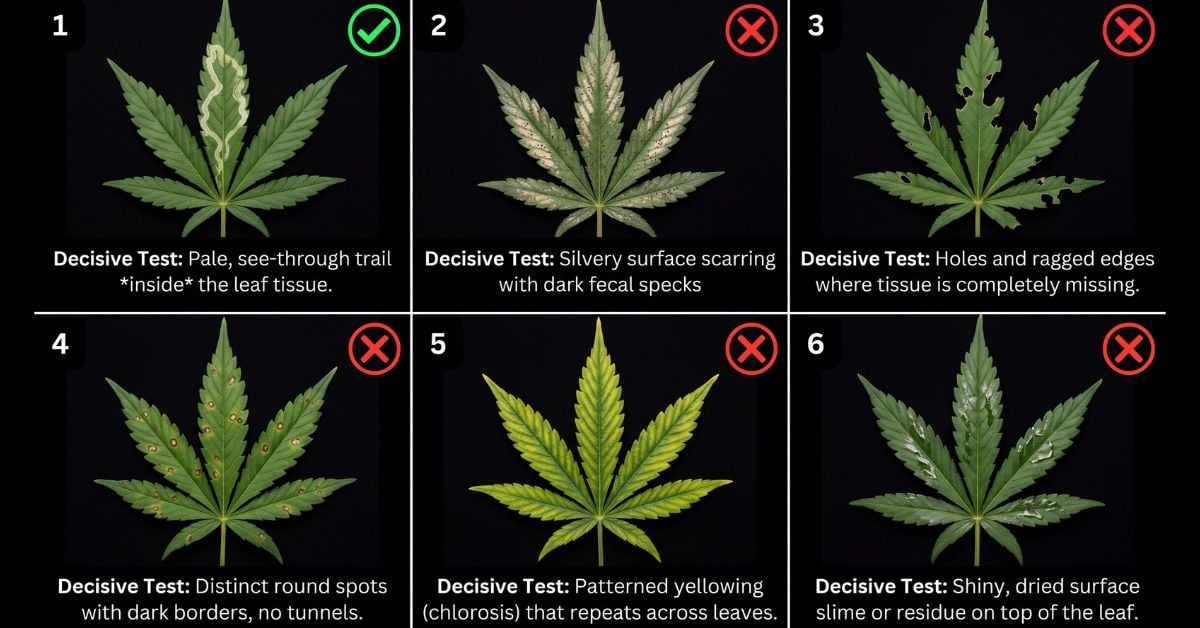
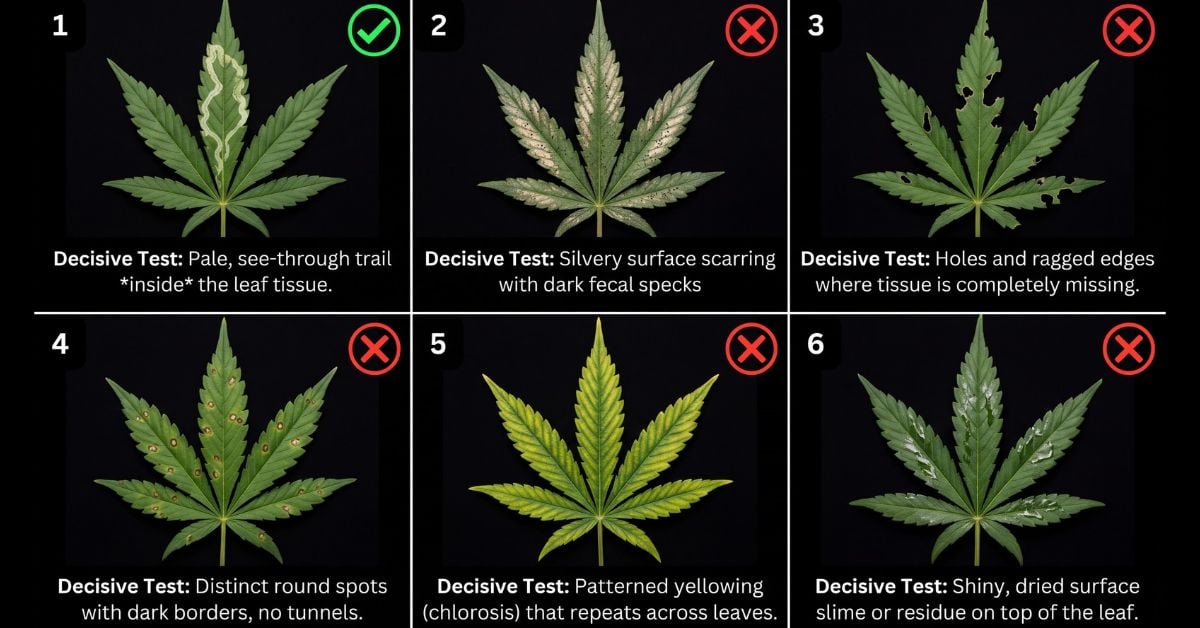
Zoom out, too. Isolated trails on one or two cannabis plants point to an insect, while matching discoloration on nearly every leaf points to feeding or environment.
Step 2: Crush the Larvae Inside Their Tunnels
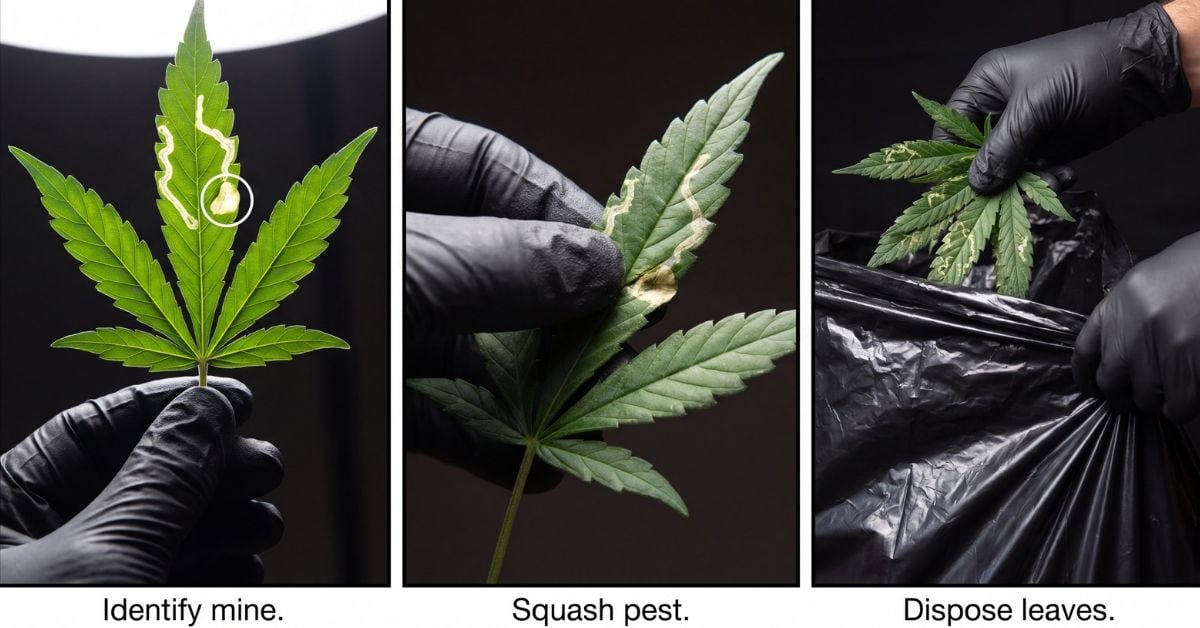
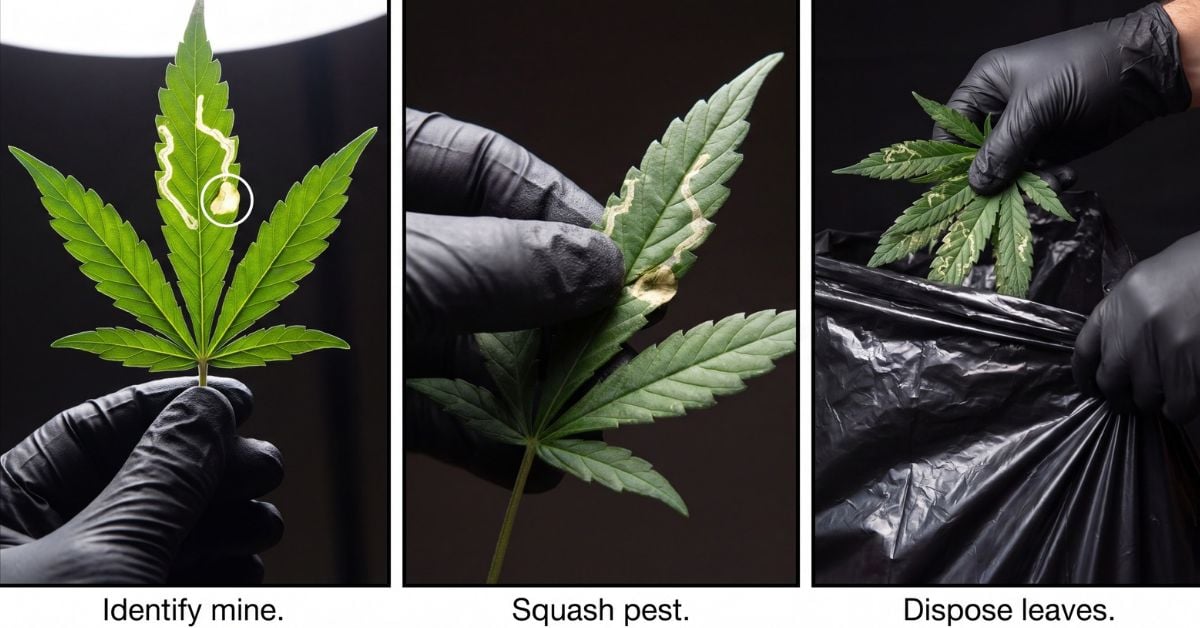
Once you’ve confirmed leaf miner damage, pinch each tunnel flat between your finger and thumb to kill the larva on the spot. Each larva is trapped in the mine it made, so this is the fastest fix, and it costs nothing:
- Find the larva: Backlight each suspect leaf and look for the wide end of every mine. That’s where the larva is feeding, often visible as a small pale speck.
- Pinch firmly: Press along the trail, concentrating on that wide end. Squeeze hard enough to flatten the tunnel, but not so hard that you tear the leaf.
- Snip only the worst leaves: Remove leaves mined across most of their surface, since they’re doing little work now. Keep any with one or two mines, because stripping a lot of foliage at once stresses a plant that’s already short on working leaf area.
- Bag and remove: Seal everything you cut in a bag and take it out of the grow space. Larvae and pupae in dropped or composted leaves can keep developing.
Once you’ve crushed every larva you can see, move on to the next step for the ones you can’t.
Step 3: Use a Spray That Reaches Inside the Leaf
Crushing only gets the larvae you can find, so the next step is a spray to reach newer larvae in tiny new mines that have just hatched. Use a translaminar product like spinosad or an azadirachtin-based neem spray, which moves into the leaf where contact sprays can’t, and repeat it at the label’s recommended interval.
Check neem labels closely — clarified neem oil has most of the azadirachtin removed. Insecticidal soaps and horticultural oils only work on contact, so they’ll knock down exposed adult leaf miners but won’t reach larvae inside the leaf.
Leaf-mining flies are the usual culprits on cannabis. If you’re also seeing moths or caterpillars, though, the mines may come from a moth larva, in which case you’ll need to use a Bt (Bacillus thuringiensis) product that targets caterpillar-type larvae. It has no effect on flies.
Once you have the right spray, here’s how to use it correctly to get rid of leaf miners:
- Spot-test first: Spray a few leaves and wait a day before treating the whole plant. That way, any leaf burn shows up on a handful of leaves instead of the whole canopy.
- Coat both sides: Wet the tops and undersides of every leaf until they’re evenly covered but not dripping. Translaminar products work from where they land, so even coverage gives them the best reach into the mines.
- Time it right: Spray at lights-off indoors or in the cool of the evening outdoors. Many sprays can burn leaves in heat or strong light, so let them dry first.
- Check the newest leaves before each round: Backlight fresh growth and look for new tunnels. New mines mean larvae are still hatching, so stay on schedule.
Repeat rounds catch larvae that were tucked away or hadn’t hatched yet when the last spray went on.
Step 4: Trap Adults and Target Pupae in the Medium
Sprays reach larvae inside the leaf, but they miss the two stages that start the next wave: adults flying in to lay eggs and pupae developing in the soil below. Catch the adults with yellow sticky cards at canopy height, and hit the pupae with a beneficial nematode drench and regular debris cleanup. Here’s the detailed breakdown:
- Yellow sticky cards: Hang them at or just above canopy height, where adult flies move between leaves. Compare the count week to week, since a falling number shows the population is shrinking.
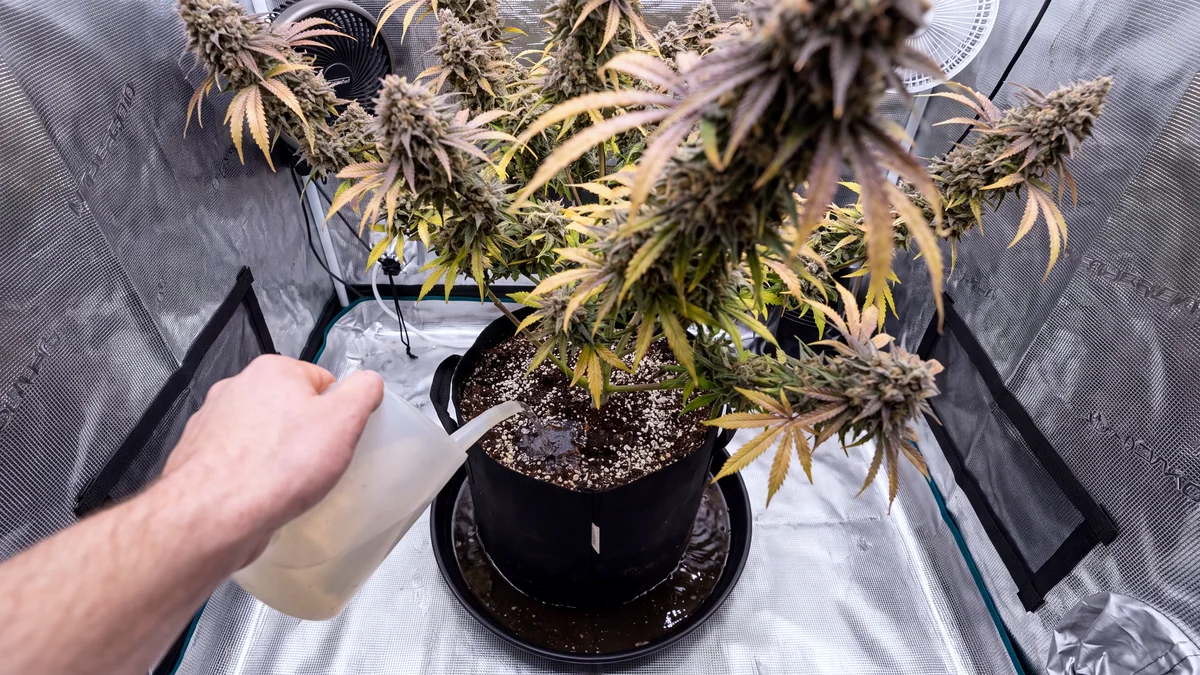
- Beneficial nematodes: Drench the medium with Steinernema feltiae, which seeks out leaf miners pupating in the soil. Follow the supplier’s directions on rate, moisture and temperature, since nematodes don’t survive in dry or overheated medium.
- Clean surfaces: Clear fallen leaves and debris from the medium surface and floor. Leaf mining pupae can finish developing in that litter and emerge as the next round of egg-laying adults.
- Parasitic wasps (optional): Diglyphus isaea and Dacnusa sibirica attack leaf-mining fly larvae inside the leaf, so they back up your spray rounds. They’re a specialist option, so check availability and whether they suit your setup.
Once you’ve worked through all four steps, keep watching the newest leaves and your sticky cards for at least one full life cycle, around 2–4 weeks in warm conditions. No fresh mines in that time means the cycle is broken. If new ones appear, repeat steps 2 and 3 until the trails stop showing up.
How to Handle Leaf Miners on Cannabis During Flowering
To handle leaf miners during flowering, switch from sprays to hands-on control. Crush mines by hand, snip a few badly mined fan leaves, keep sticky cards up, and use a nematode drench for pupae. Skip foliar sprays once buds form, since wet flowers invite bud rot and many product labels restrict spraying close to harvest.
| Tool | Use in Flower? |
| Crushing mines by hand | Yes |
| Removing badly mined fan leaves | Yes, a few at a time |
| Yellow sticky cards | Yes |
| Nematode drenches and debris cleanup | Yes |
| Foliar sprays over developing buds | No |
| Any product the label restricts at this stage | No |
| Heavy defoliation to chase a few mines | No |
Late in flower, weigh how much leaf the plant still needs. Leaf miners on cannabis tend to concentrate in the fan leaves, so with harvest close and no new mines appearing, light damage can just be watched. If fresh mines keep showing up, keep crushing and trapping right up to the chop.
Can Leaf Miners Kill Marijuana Plants?
Yes, leaf miners can kill marijuana plants, but it’s rare and mostly limited to seedlings and already-stressed plants hit by a heavy infestation. A healthy, established plant usually survives, since each mined patch only stops photosynthesizing and the plant has leaf area to spare.
Judge leaf-mining damage by proportion, not tunnel count. A scattering of mines costs a large plant in late veg a sliver of its canopy, while the same damage takes a share a seedling can’t spare. Heavily mined tissue may also give pathogens an easier way in.
Autoflowers have less margin too. They start flowering based on age instead of waiting for a 12/12 light schedule, so you can’t extend veg while a damaged canopy regrows. With autos, early detection and fast action count for more.
Step in right away if:
- New leaf mines keep appearing on fresh growth.
- Leaf miners turn up on several plants, not just one.
- A big share of young or stressed marijuana plants are affected.
For perspective, plenty of other cannabis pests do faster, more direct damage. Watch the trend and you’ll stay well ahead of leaf miners.
How to Prevent Cannabis Leaf Miners
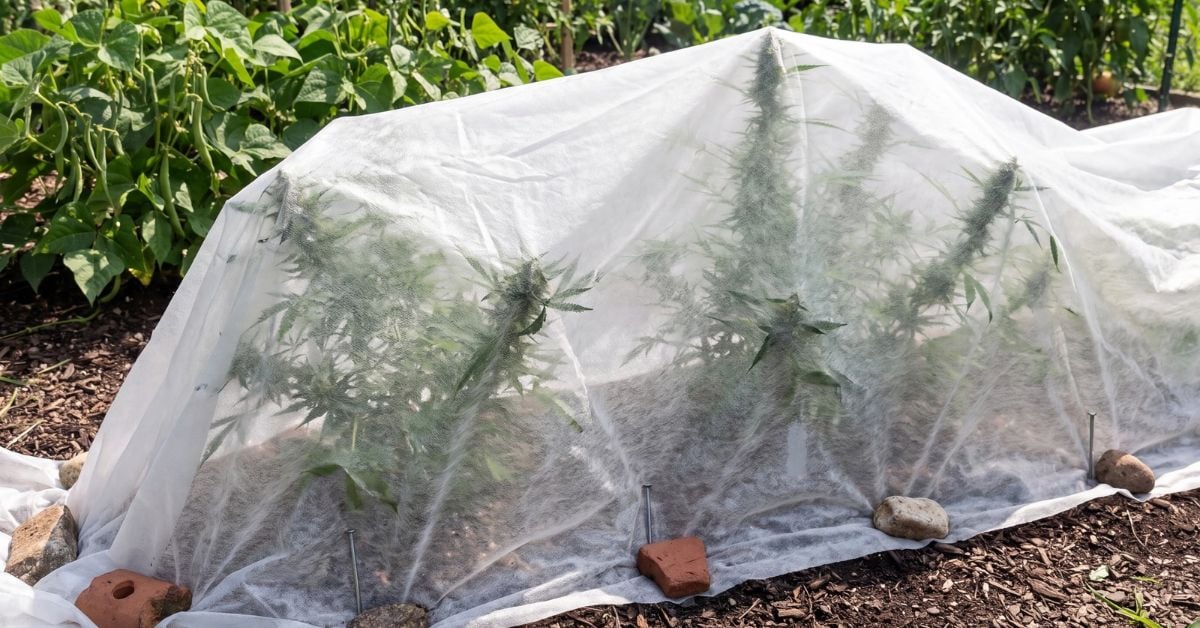
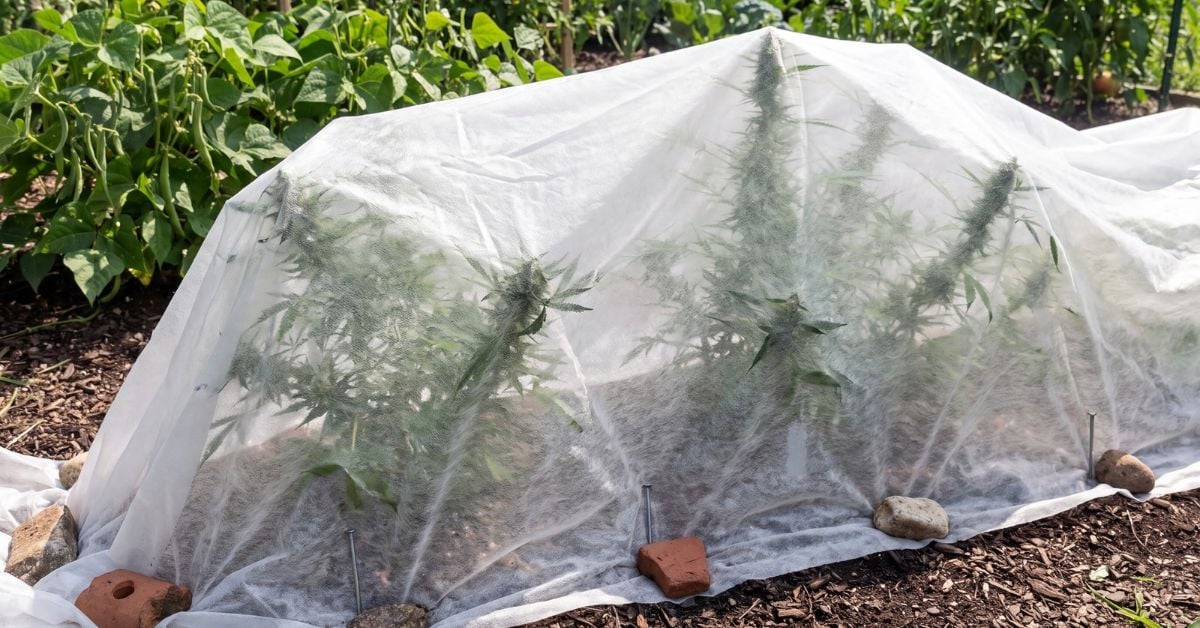
Preventing cannabis leaf miners comes down to keeping adults out and catching anything that slips through while it’s still one mine on one leaf. Indoors, you can get close to full exclusion. Outdoors, aim for steady management, since the surrounding garden keeps supplying adults. These habits cover both:
- Quarantine new plants: Keep every clone or transplant in a separate space for at least a week, checking both leaf surfaces for mines and stipple dots. Eggs laid inside the leaf don’t show as leaf mines right away, so a quick look on arrival can miss them.
- Start with a clean medium: Use fresh mix, and skip soil from an affected grow or untreated outdoor soil. Pupae can sit in that soil and emerge as egg-laying adults once your plants are in.
- Screen vents and openings: Fit fine insect mesh over intakes and keep doors closed. Adults fly in through any gap, so screens close off the main route into a tent or room.
- Cover young outdoor plants: Floating row covers let light, air, and water through while keeping egg-laying flies and moths off the leaves. Pin down the edges, check them after strong wind and remove the covers once plants outgrow them.
- Give host plants some distance: Outdoors, plant cannabis away from vegetables, beans and ornamentals where you can. Those plants host the same insects and keep feeding new adults into your garden.
- Keep watch: Leave sticky cards up as an early warning and backlight new growth every few days. One mine on one leaf is far easier to deal with than an established infestation.
Prevention works best when it’s in place before your next grow begins. Set up screens, sticky cards, and a clean mix before you germinate your next batch of weed seeds, so leaf miners never get a head start.