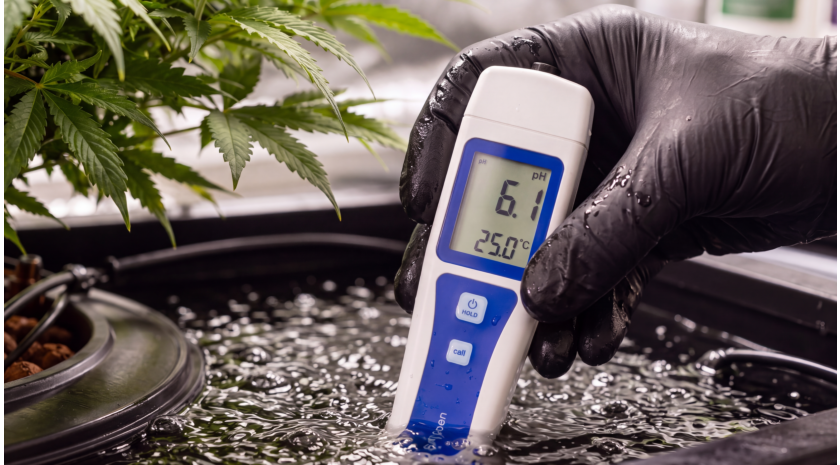
The best cannabis pH level for soil is 6.0–6.3 (5.5–6.5 acceptable) and 5.8–6.2 (5.6–6.4 acceptable) for coco coir and hydroponic setups. Keep root zone pH inside those windows and your plants can take up the nutrients you give them. Let pH drift outside the acceptable ranges, though, and those same nutrients get locked out, even when your feed is mixed perfectly.
The good news is that cannabis pH problems are cheap to fix and quick to spot once you know the signs. Catching them early protects your harvest, especially with high yield weed seeds, since a plant can only reach its yield potential when its roots can take up what you feed.
This guide covers how to hit your target pH range, read the warning signs, test and adjust pH by grow medium (organic options included), and prevent pH drift.
What Cannabis pH Levels Mean for Nutrient Absorption
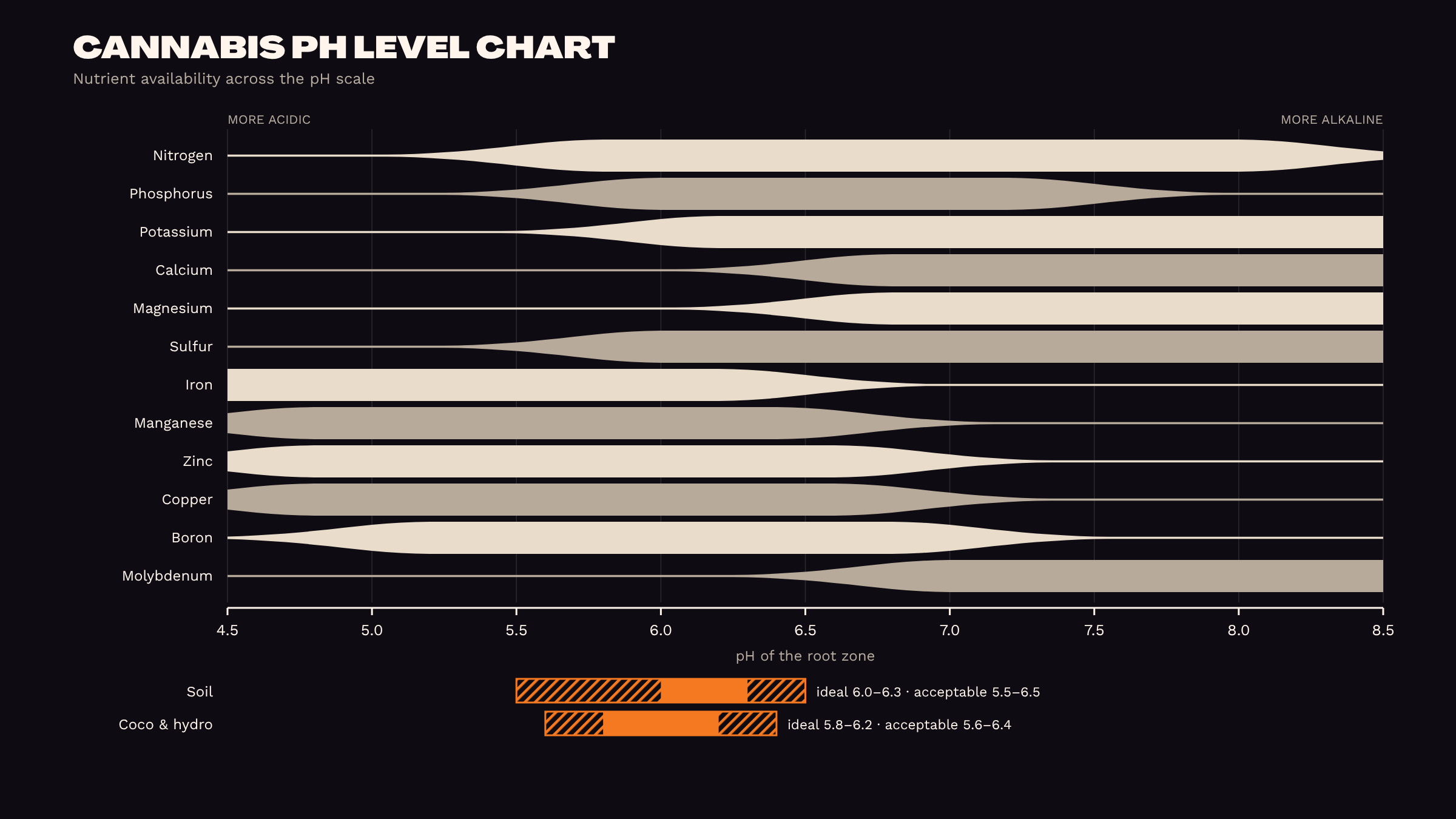
Your grow medium’s pH level controls whether the nutrients already in your root zone are in a form roots can absorb. It doesn't feed the plant itself. It measures how acidic or alkaline a solution is on a 0–14 scale, with 7.0 as neutral, and each nutrient dissolves best within its own stretch of that pH scale.
The scale is logarithmic, so every whole point is a tenfold change in acidity. Half a point looks tiny on paper, but it's a real shift in the chemistry around the roots. When pH sits outside your medium's range for long enough, you get nutrient lockout. The nutrients are still in the pot, but the roots can't take them up so your weed plant stays hungry even though there’s food.
Each end of the scale locks out different nutrients. Too acidic, and calcium, magnesium, phosphorus, potassium, and molybdenum get harder to reach, while metals like manganese can build up past useful levels. Too alkaline, and iron, manganese, zinc, copper, boron, and phosphorus get harder to absorb.
What Are the Best Cannabis pH Levels for Soil, Coco & Hydro?
Cannabis likes a slightly acidic root zone, and the best pH for weed plants depends on what you grow in. Soil pH for cannabis should sit at 6.0–6.3, with 5.5–6.5 as the acceptable band. In coco coir and hydro, aim for 5.8–6.2, with 5.6–6.4 as the acceptable band.
| Growing Medium | Ideal pH | Acceptable pH | Do You pH the Water? |
| Organic or living soil | 6.0–6.3 | 5.5–6.5 | Rarely. Soil life holds pH steady |
| Synthetic-fed soil | 6.0–6.3 | 5.5–6.5 | Yes, at every feed |
| Coco coir & soilless | 5.8–6.2 | 5.6–6.4 | Yes, at every feed |
| Hydro (DWC, rockwool) | 5.8–6.2 | 5.6–6.4 | Yes, at every feed |
Why Does Cannabis pH Drift?
pH drifts for two reasons: cannabis plants change their root zone as they feed, taking up some nutrients faster than others, and unused salts and minerals from your water build up over time. How fast pH drifts depends on how much the medium can buffer:
- Hydro has almost no buffer, so reservoir pH drifts daily as plants feed and water evaporates.
- Coco and soilless media have little buffering so pH drifts faster than soil, which is why weekly checks are standard.
- Synthetic-fed soil pH moves slowly, and living soil pH rarely drifts at all because root-zone microbes and organic matter act as a buffer.
Some coco and hydro growers deliberately let pH drift upward across the grow cycle, starting around 5.6–5.8 in early veg and finishing near 6.3 by late flower based on the idea that nutrient availability shifts at slightly different points. But while plenty of pH charts list a different pH for each stage, there's no solid evidence that cannabis plants need stage-specific numbers.
Your target pH range doesn't need to change as your marijuana plants grow. A steady reading inside your ideal band does the job, and small wobbles within the acceptable range are nothing to correct.
How to Test pH for Cannabis Accurately
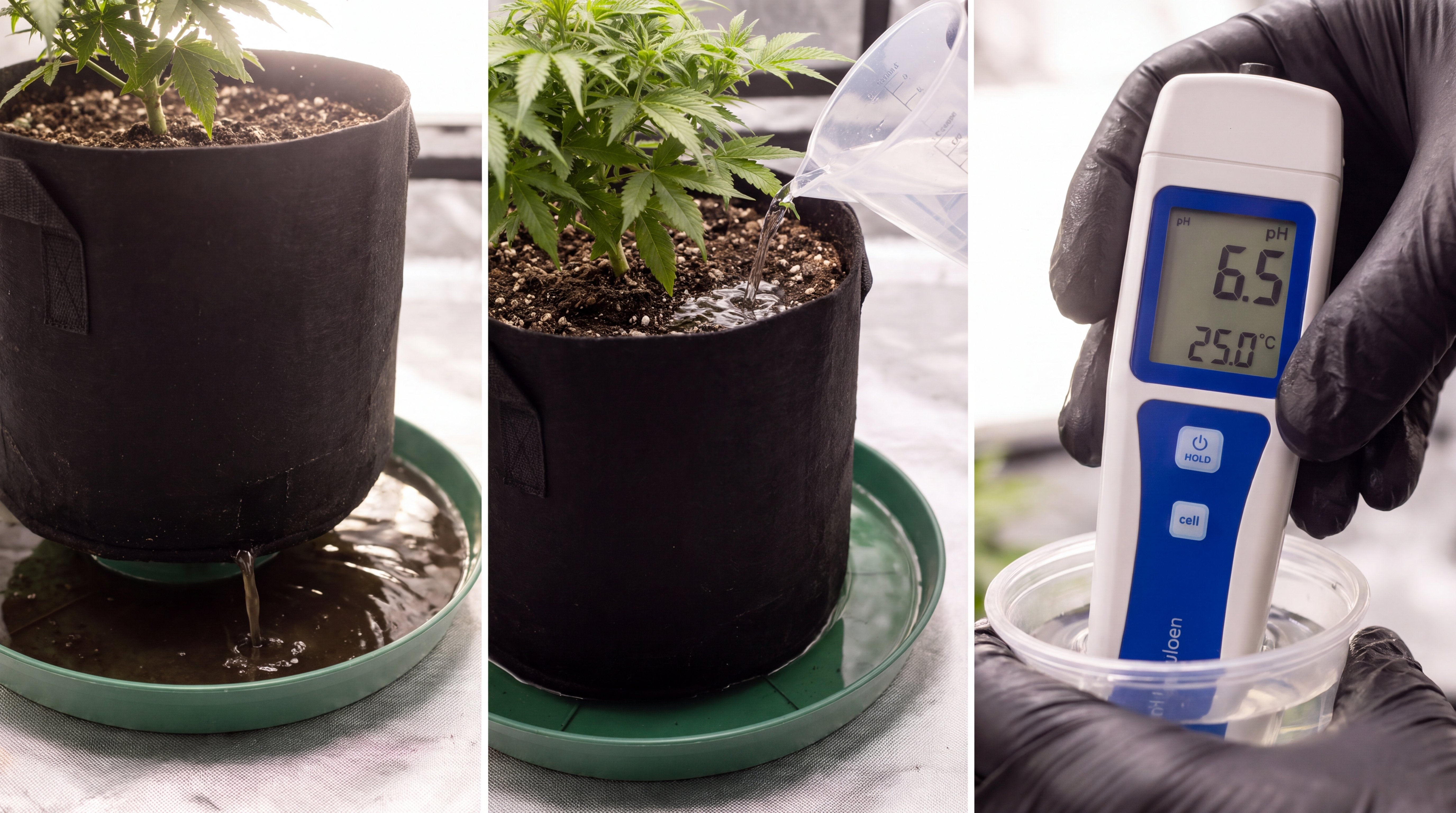
For cannabis plants, test pH with a calibrated digital pH pen, and test the right sample for your setup. In hydro, dip the pen straight into the reservoir. In soil and soilless media like coco, test a liquid sample instead, made by pouring water through the pot (the runoff or PourThru method) or by mixing soil with water (a slurry test).
Here’s how to test pH step by step by grow medium, and how often:
| Setup | How to Test | How Often |
| Hydro (DWC, rockwool) | 1. Calibrate your pen and rinse the probe. 2. Stir the reservoir so the solution is evenly mixed. 3. Dip the probe in away from where you add pH Up or Down. 4. Wait for the reading to settle before you note it. | Daily |
| Coco & soilless mixes | PourThru/runoff test: 1. Water or feed until about 30% drains out the bottom. 2. Wait 30–60 minutes, then set the pot in a clean saucer. 3. Slowly pour just enough distilled water over the medium. 4. Test the drainage that collects right away, about 2 fl oz. | Weekly |
| Soil | Runoff as above or a slurry test: 1. Take a sample from the middle of the root zone. 2. Mix 1 part soil with 2 parts distilled water. 3. Stir and let it steep for about 30 minutes. 4. Test the liquid. | When you suspect a problem |
Runoff shows you what the medium is doing to the pH you feed, and a growing gap between input and runoff is an early warning sign of pH drift. Use it to spot trouble, but don't adjust your feed based on runoff alone, or you'll likely over-correct, especially in soil.
Tips for Accurate pH Readings
- Calibrate often. Meters drift, so calibrate against pH 4 and pH 7 solutions anywhere from daily to weekly, depending on how much you use yours.
- Store the probe wet. Keep the tip in the storage solution it came with. Storing it dry or in distilled water degrades the sensor.
- Keep your timing consistent. Test at the same point after feeding each time, since root-zone readings shift as the medium dries out. That way, your results stay comparable from week to week.
- Mind the temperature. Meters are calibrated at around 77°F and readings shift as temperature changes, so a pen with automatic temperature compensation is a smart buy.
Causes & Signs of pH Problems in Cannabis Plants
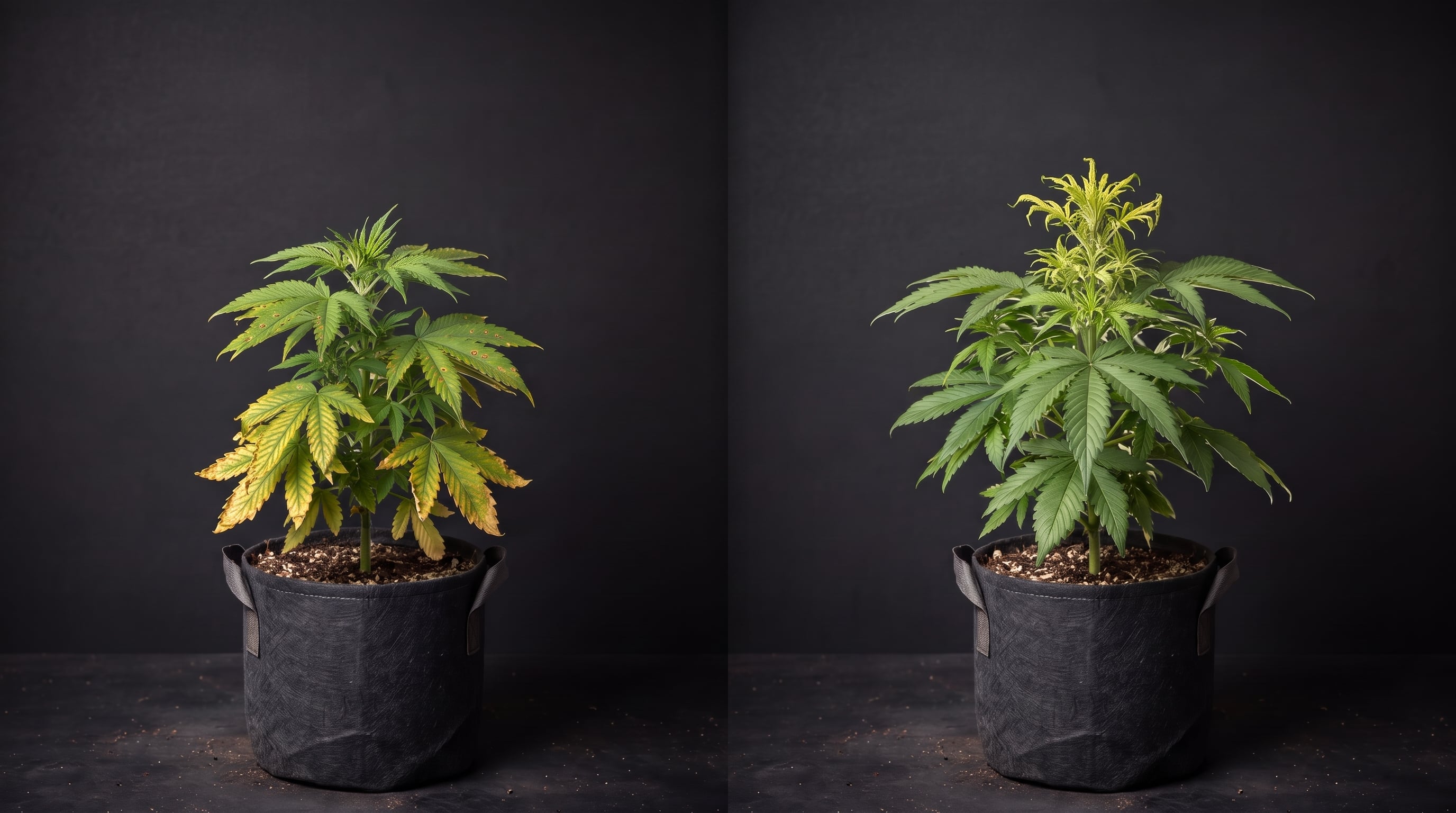
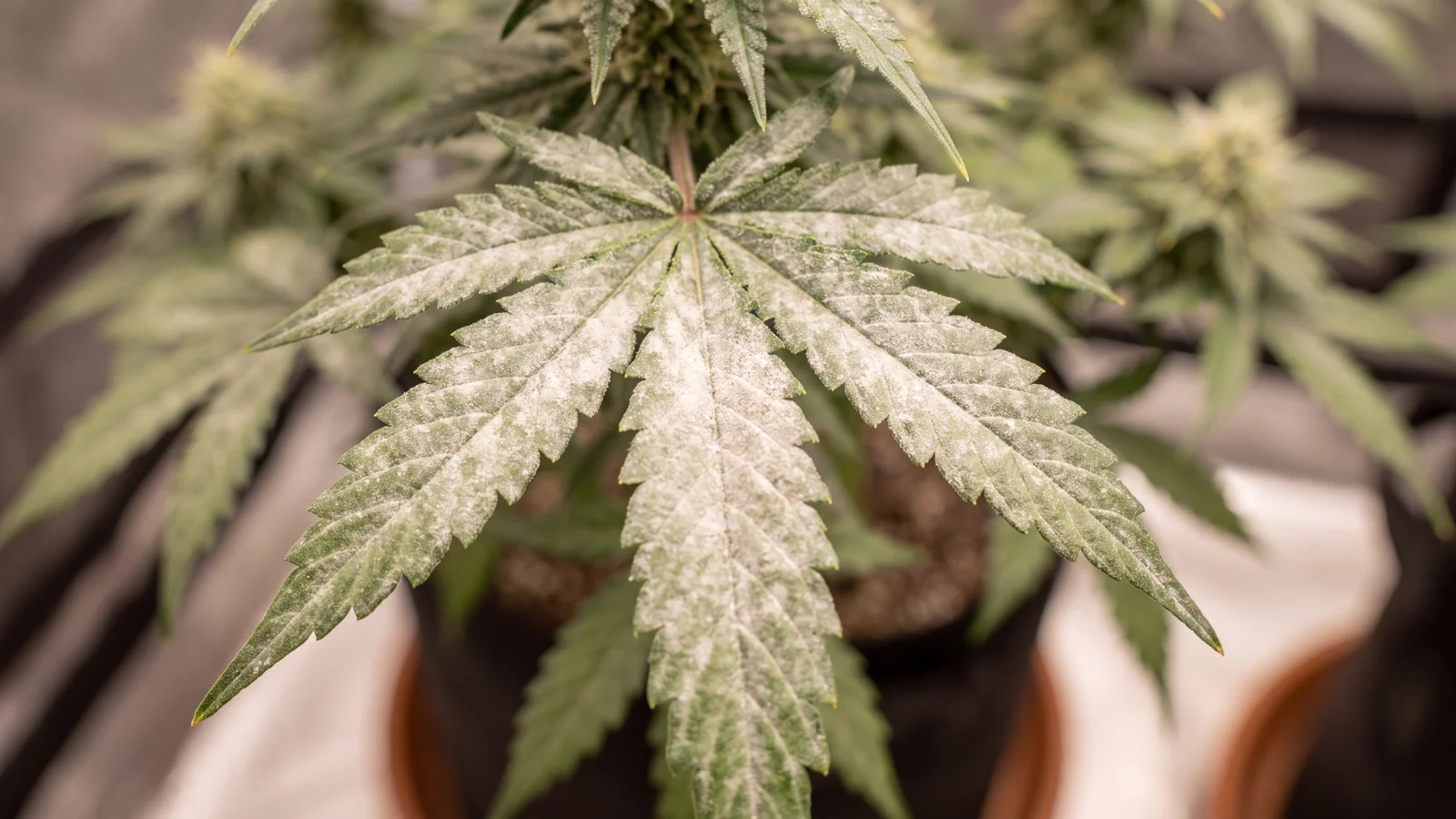
pH problems usually come from your water, your feed, or a salt buildup in the medium. Since nutrients are locked out, the clearest signs of a pH problem are nutrient deficiency symptoms that get worse while you’re feeding normally, often across several plants that share the same feed and medium.
Where the damage starts tells you which way pH has moved, because some nutrients can travel through the plant and others can’t:
- Low pH mainly locks out mobile nutrients like magnesium, potassium, and phosphorus, which the plant pulls from older leaves, so older and middle leaves suffer first.
- High pH mainly locks out immobile nutes like iron, manganese and zinc, so the newest growth at the top shows it first.
A true nutrient shortage improves when you add the missing nutrient, but lockout doesn’t. Since lockout symptoms look so much like real nutrient deficiencies, check pH before changing your feed. In soil and coco, check runoff EC too. High EC means salts have built up in the medium, and more feed will only make it worse.
Causes & Signs of Low pH in Weed Plants
Low pH, meaning a root zone below 5.5 in soil or 5.6 in coco and hydro, is usually caused by acidic source water, overdoing the pH Down, or fertilizer salts building up from heavy feeding. It often shows first as slow, stunted growth, with damage on older and middle leaves following.
Research trials on young cannabis plants found stunting was the main sign, so check pH early if growth stalls for no clear reason. Watch for:
- Slow, stunted growth across the whole plant.
- Yellowing between the veins on older leaves, with the veins staying green.
- Yellow or brown edges on older leaves.
- Brown spots on middle and upper leaves.
- Damage creeping up the plant the longer it goes on.
Causes & Signs of High pH in Weed Plants
High pH, meaning a root zone above 6.5 in soil or 6.4 in coco and hydro, is usually caused by alkaline tap water, too much lime in soil, or overdoing the pH Up. It shows first in the newest growth at the top of the plant, since immobile nutrients can’t move out of older leaves to cover a shortfall.
Research suggests cannabis copes with mildly high pH better than many crops, so clear symptoms often mean pH has stayed high for a while. Watch for:
- Pale or yellow new leaves at the top, often with greener veins.
- Yellowing between the veins in fresh growth while older leaves look normal.
- New growth that stalls, stays small or comes in twisted.
How to Adjust Nutrient Solution & Water pH for Cannabis
Whatever your cannabis feeding schedule looks like, always pH your water after the nutrients are mixed in, then adjust the finished nutrient solution to your medium's ideal pH band. Nutrients shift pH on their own, usually downward, so a reading taken before you add nutes won't match what reaches the roots.
Follow these steps to pH the nutrient solution and water for your cannabis plants:
- Fill your container with source water.
- Add your cannabis nutrients and let them dissolve fully. If you use silica, add it first.
- Stir well and take a pH reading.
- If pH is out of the ideal range, add a small amount of pH Up or pH Down.
- Stir your nutrient solution, wait a moment, and re-test pH.
- Only feed once the pH reading sits inside your ideal band.
Plain water between feeds gets the same treatment in synthetic soil, coco or soilless mediums, and hydro, since it still passes through the root zone. Whatever your watering rhythm, every drink should land in the same pH band.
In living soil, you can usually skip this step because its microbes and organic matter hold pH steady on their own, so adjusting the water makes little difference.
How Water Source Affects pH
Your source water decides how easy your pH will be to hold, so test your own supply before you assume anything. Two growers on the same nutrients can get very different readings just because their water differs.
| Water source | Usability | Buffering | What to Do |
| Tap water | Usually fine | Varies, often high | Test it and check the alkalinity on your water report. |
| Hard water | Usable, often an asset | High | If it’s above about 1.0 EC, blend with RO or rainwater to stop pH creeping up. |
| RO and distilled water | Usable with cal-mag | None | Add cal-mag, then adjust in small steps, since pH swings easily. |
| Rainwater | Usable | Very low | Treat it like RO, or blend it in to soften hard tap water. |
| Softened water | Avoid | Usually still high | Use a tap that bypasses the softener, since sodium builds up in the root zone. |
If your pH keeps creeping up no matter how carefully you adjust each feed, high water alkalinity is the likely cause. pH tells you how acidic your water is right now. Alkalinity is how much dissolved carbonate and bicarbonate it carries, and that's what resists change and pushes root-zone pH upward over time.
So you can pH every feed perfectly and still watch your medium’s pH climb. Your water report lists alkalinity. To bring it down, neutralize it with a little acid or blend in RO or rainwater.
How to Fix pH for Weed Plants: Raising & Lowering pH
To fix pH for your weed plants, raise or lower pH with liquid pH Up and pH Down in synthetic-fed soil, coco, and hydro, and with slow-acting organic amendments like lime and sulfur in living soil. Liquid adjusters work in minutes, while soil amendments take weeks:
| Grow Medium | To Raise pH | To Lower pH | Speed |
| Organic or living soil | Dolomite or garden lime | Elemental or wettable sulfur | Slow (weeks) |
| Synthetic-fed soil, coco & soilless, hydro | pH Up (potassium hydroxide) | pH Down (phosphoric acid) | Fast (minutes) |
How to Fix pH in Coco, Hydro & Synthetic-Fed Soil
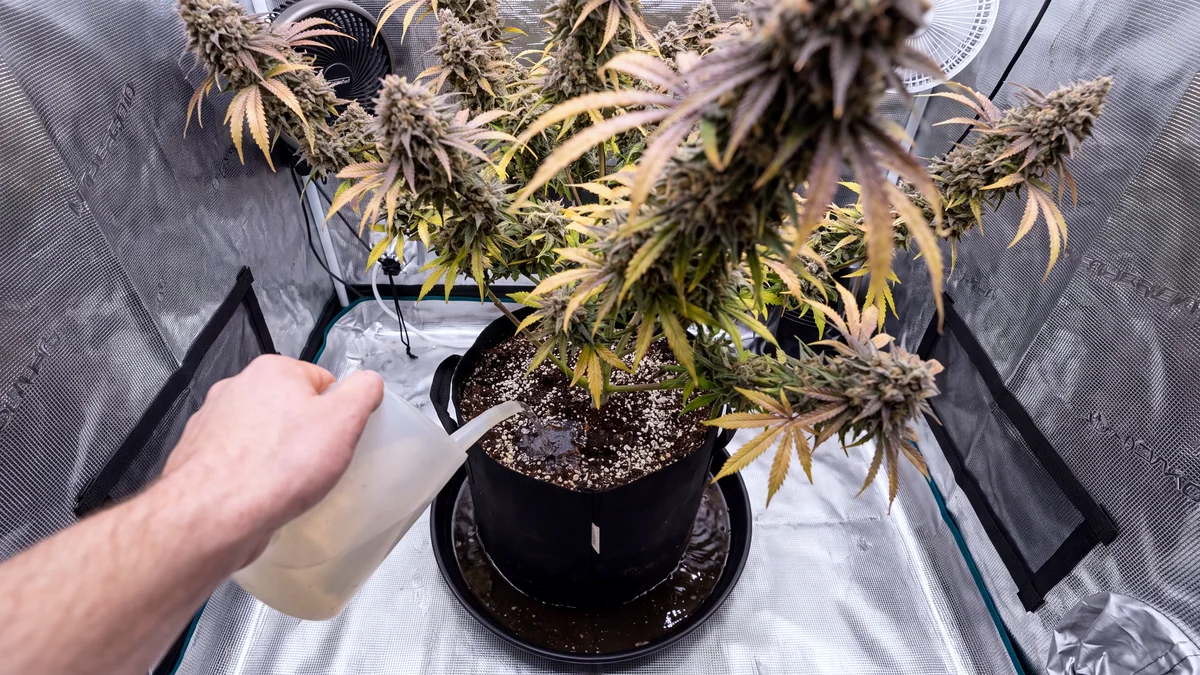
Adjust the mixed nutrient solution right before you feed, since it takes effect as soon as it reaches the roots. Add pH Up or Down a few drops at a time, stir, wait, and re-test. Concentrates are strong, so a big dose overshoots fast, and undiluted adjuster should never go near the root zone.
Get close, stay inside your band, and move on. Chasing the number back and forth stresses marijuana plants more than a small miss does. Phosphoric acid (pH Down) also adds a little phosphorus and potassium hydroxide (pH Up) adds potassium, so they do more than move the number.
How to Fix pH in Living Organic Soil
Genuine pH drift is rare in living soil, so confirm it with a slurry test before you act. If it truly tests out of range, work in a slow-acting amendment and give it a few weeks.
Elemental sulfur lowers pH as soil microbes convert it. Dolomite lime raises pH and adds calcium and magnesium at the same time, which helps if you're short on both. Plain garden lime only raises pH. None of these act fast, so they’re ideal for building a living mix or fixing soil between runs.
Natural & Organic pH Up & pH Down Options
The main organic pH up options are potassium bicarbonate, dolomite lime, and wood ash. The main organic pH down options are citric acid and elemental sulfur. Liquid options suit organic feeds in coco or containers, while amendments work slowly in soil.
| Organic pH Up & Down Options | Raises or Lowers pH? | Best For | What to Keep in Mind |
| Citric acid | Lowers | Organic nutrient solutions and single batches | Weakly buffered, so pH often rebounds within a day. Re-test the next day |
| Lemon juice | Lowers | A small batch in a pinch | Strength varies bottle to bottle, so dosing is guesswork |
| Vinegar | Lowers | Last resort only | Short-lived and a poor fit for living soil |
| Elemental sulfur | Lowers | Soil | Takes weeks to months to work |
| Potassium bicarbonate | Raises | Nutrient solutions | Gentler than baking soda, and adds potassium instead of sodium |
| Baking soda | Raises | Emergencies only | Every dose adds sodium, which builds up in the medium |
| Dolomite lime | Raises | Soil mixes | Slow, but adds calcium and magnesium and holds pH steady |
| Wood ash | Raises | Soil, used sparingly | Strong, inconsistent and easy to overshoot. High in potassium |
Organic acids rebound, so they're a poor match for recirculating reservoirs, where today's fix turns into tomorrow's drift. They work best in soil feeds and one-off batches you use right away.
When to Flush Instead of Adjusting Cannabis pH
Flush soil and coco plants when runoff EC is high. That means salt buildup is behind the lockout, and adjusting pH alone won’t clear it. If pH is the only problem, you don’t need to flush:
- High runoff EC, pH in range: Flush with plain water at your medium’s ideal pH, about 2–3 times the pot’s volume, until runoff EC drops close to what you feed.
- Normal runoff EC, pH out of range: Skip the flush and correct pH according to your grow medium.
- High runoff EC and pH out of range: Flush the same way, which often brings pH back too.
Test the last of the runoff for both pH and EC before you go back to normal feeding. If pH is still off, correct it with your next feed. Flushing strips nutrients along with salts, so never flush a plant that’s simply hungry.
How to Prevent pH Drift
The best way to prevent pH drift is to build buffering in from the start, feed at a consistent pH, and stop buildup before it happens. A few habits keep your pH band steady:
- Buffer coco with cal-mag before planting, and mix dolomite into soil when you build it.
- pH every feed to the same target, not just when something looks off.
- In hydro, keep the reservoir around 68–72°F and change the solution regularly instead of topping it up again and again.
- Avoid overfeeding, since unused nutrients are what build up as salts.
- If your water is hard or alkaline, blend in RO or rainwater to fix it at the source.
Once these habits are in place, pH mostly takes care of itself, and your plants can put their energy into growing. That’s when the genetics you chose get to show what they can do, so starting with quality marijuana seeds and a steady root zone gives every grow its best shot.