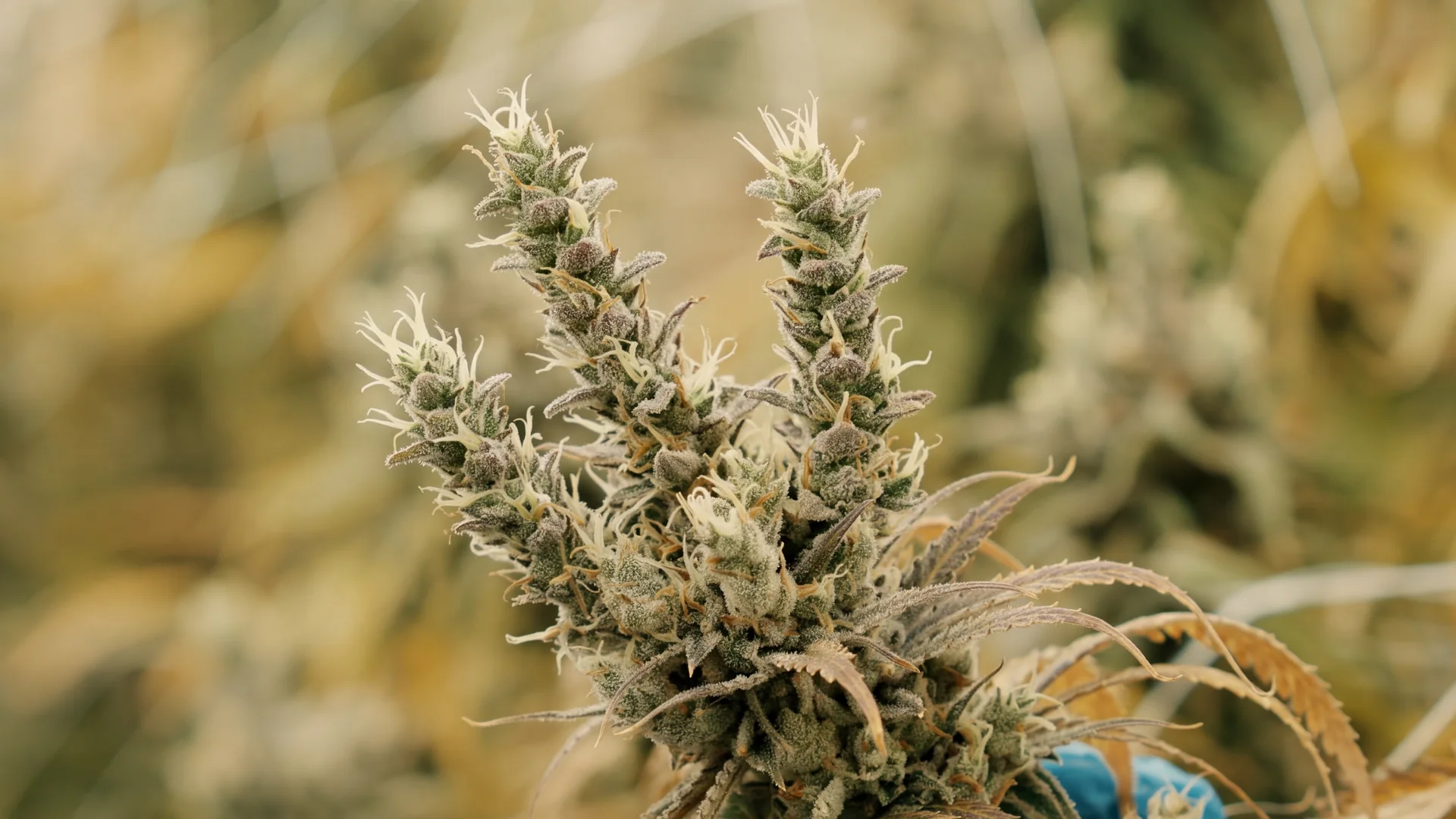
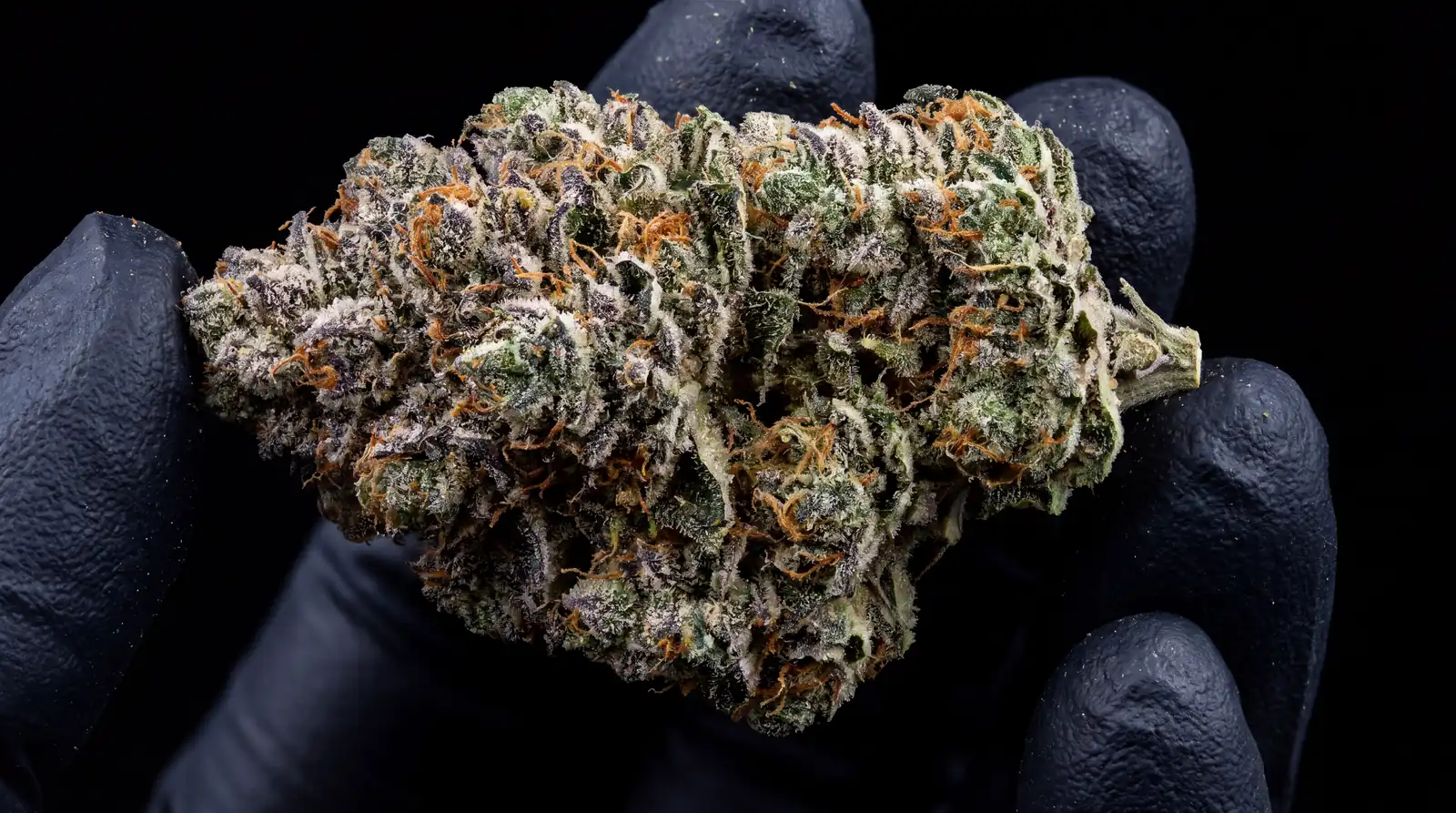
Plant growth regulators (PGRs) are natural or synthetic substances that change plant hormone activity to manipulate growth, development, and flowering. In cannabis cultivation, PGRs are used commercially to grow plants with faster cycles and denser, heavier buds. PGR vs non-PGR weed feels stiff, looks dull, and smells faint — and the residues raise health concerns.
Clean flower can be just as dense but springs back, sparkles with trichomes, and smells like it’s supposed to. Density alone doesn't prove anything, though. Good genetics and a dialed-in room build tight, heavy flower too, which is why so many growers start with high-yield seeds bred for big harvests.
This guide covers synthetic and natural PGR differences, health risks linked to synthetic PGRs, PGR weed vs non-PGR weed signs, and how to grow dense buds the clean, natural way.
What Are PGRs in Cannabis?
PGRs, or plant growth regulators, are any substances that change how a cannabis plant grows and develops. The term covers three groups: the natural hormones the plant makes itself, organic products that influence those hormones and the synthetic growth retardants behind the phrase “PGR weed.”
Natural Plant Hormones
Cannabis makes its own growth regulators, mainly auxins, cytokinins, gibberellins, abscisic acid and ethylene. Together they control stretching, branching, rooting, ripening, and how the plant handles stress. That’s why the term “PGR-free” isn’t entirely accurate — every plant contains growth regulators in this sense.
Organic PGRs
Organic PGRs are products that contain or influence hormone-active compounds, such as kelp and seaweed extracts, triacontanol, and humic and fulvic products. They sit much closer to the plant’s natural hormones and work very differently from synthetic retardants, so they aren’t what anyone means by PGR weed.
Synthetic PGRs
Synthetic PGRs are growth retardants that limit stretch and harden buds, and they’re what growers and smokers mean when they talk about PGR weed. None of the PGRs linked to cannabis is cleared for a crop you smoke or eat.
What PGRs Are Used in Cannabis & How Do They Work?
The three synthetic PGRs that come up again and again with cannabis are paclobutrazol, daminozide, and chlormequat chloride. All three block the plant’s gibberellin production to hold back stretch and compress flower.
Paclobutrazol
Paclobutrazol, or paclo, is a triazole compound that blocks one of the early steps in the plant’s gibberellin production. The result is shorter, stockier stems, darker leaves, and a bigger root system. Indoor growers used it to keep plants short and bushy and to harden tops into dense, rock-hard buds with heavy bag appeal.
The bigger issue is how long paclo hangs around. It’s known for lingering in growing media long after it’s applied, and in the US it has no food-use registrations. It’s registered for uses like ornamentals, turf, and trees, so any paclo left in cannabis flower comes from a chemical never cleared for something you smoke or eat.
Daminozide
Daminozide is a growth retardant once sold to apple orchards under the brand name Alar, where it helped keep fruit firm and on the tree longer. Nurseries still use it to keep potted flowers compact. In cannabis, it showed up in bloom additives meant to shorten internodes and tighten bud structure during the stretch, the same job it does for bedding plants.
Its regulatory history is what made it notorious. The main concern is UDMH, a breakdown product that forms as daminozide degrades, especially when treated produce is heated. Its maker voluntarily canceled all US food uses in 1989 after an EPA review flagged cancer concerns. The EPA revoked its food tolerances in 1990, though some non-food uses remain.
Chlormequat Chloride
Chlormequat chloride is a growth retardant best known for keeping cereal stems short and stiff. In Canada and the EU, farmers use it on wheat, oats, and barley so the stalks don’t bend or break before harvest, a problem known as lodging. In the US, it’s registered as a growth regulator for ornamentals grown in greenhouses and nurseries.
It isn’t approved for use on cannabis plants. Even on food crops, its US status is contested. The EPA proposed the first domestic food uses on wheat, barley, oats, and triticale in 2023, and health groups pushed back hard over residues already showing up in imported oat products. That’s not a track record you want in flower you’ll smoke.
How Growth Retardants Compress Buds
Growth retardants don’t grow more flower. They pack the same material, or less of it, into a smaller space. Gibberellins drive cell stretching, so blocking them shortens internodes and stacks bud sites closer together. That’s why weight can hold up while quality falls.
Timing follows from the same mechanism. Growers applied these chemicals through veg and the early flower stretch, while the plant was still elongating. The commercial payoff was controlled stretch, an even canopy and heavy, tight tops with plenty of bag appeal.
Why Is Phosphoload Bad? Hidden PGRs in Bloom Boosters
Phosphoload drew warnings because lab tests reportedly found daminozide in it, a growth retardant that wasn’t on the label and isn’t suitable for consumable cannabis. Growers thought they were buying a phosphorus booster. What they actually got was an undisclosed bud hardener.
The same lab analyses, obtained through a Freedom of Information Act request, reportedly found daminozide in Flower Dragon and Top Load too. Bushmaster and Gravity, quarantined in a California Department of Food and Agriculture sweep, were reported to contain paclobutrazol. All were marketed on kelp, phosphorus, and humate claims instead of their active ingredients.
Several of these products were quarantined or pulled from sale, and none of this says anything about what current formulas contain. The takeaway still holds: if a bloom additive promises hard, swollen buds and won’t name every active ingredient, best to leave it on the shelf.
PGR Weed vs Non-PGR Weed: How to Tell the Difference
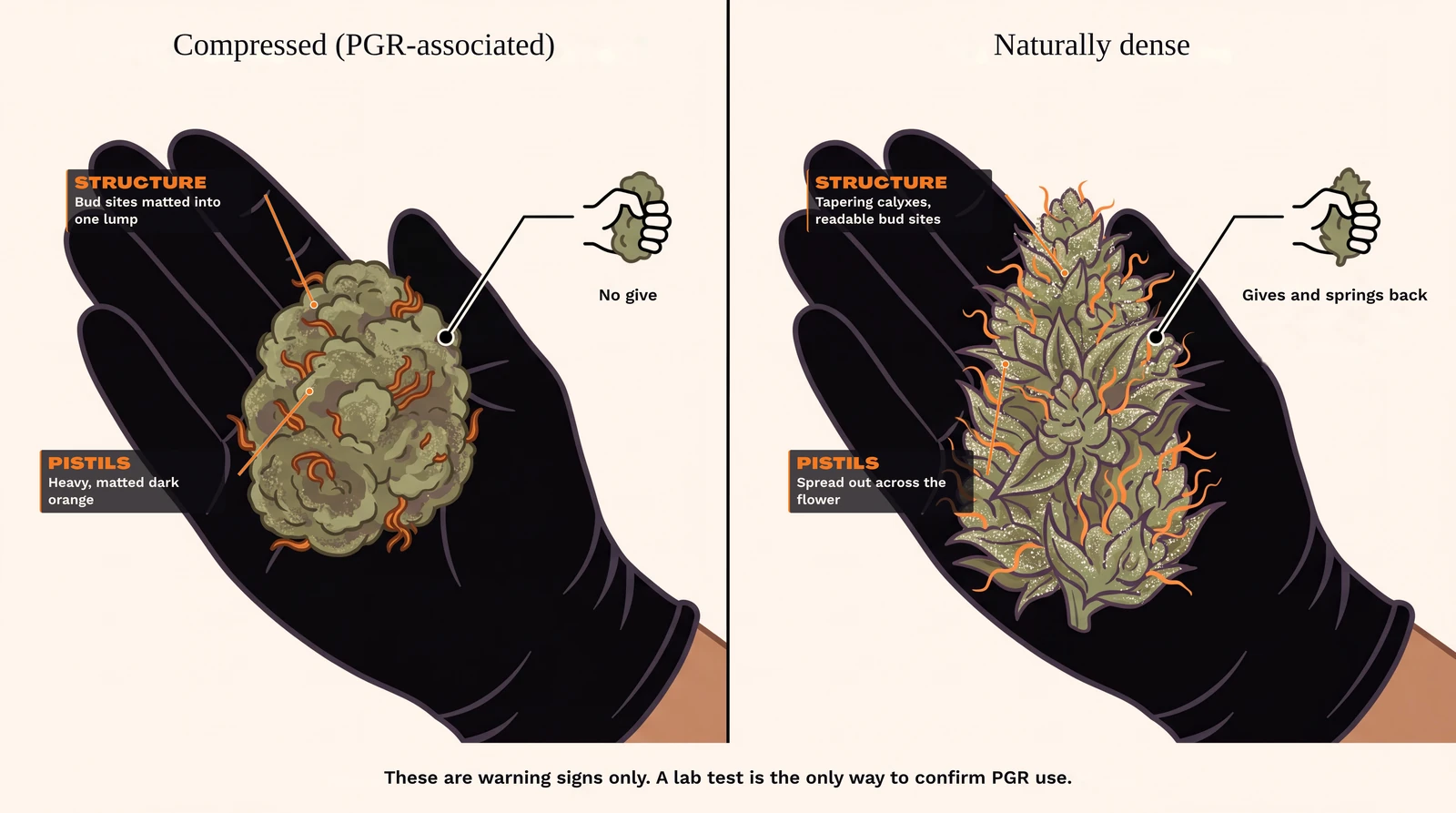
PGR weed usually gives itself away through four things: feel, looks, smell, and burn. Also called growth retardants, PGRs shrink the plant's natural spacing, so treated buds tend to come out abnormally hard, heavy for their size, and light on resin. Well-grown non-PGR flower can be just as dense while staying springy, frosty, and true to its strain genetics.
| Trait | PGR Weed | Well-Grown Non-PGR Weed |
| Bud feel under light pressure | Rock hard with almost no give | Firm and springy, compresses slightly and bounces back |
| Structure | Small, compressed, and rounded, with bud sites matted into one solid lump | Tapering calyx structure where you can still pick out individual bud sites |
| Pistils | Heavy coverage of dark brown or orange pistils, often matted flat across the surface | Present but spread out, not dominating the surface |
| Trichome coverage | Often sparse, with little frost under a loupe despite the density | Frosty, with trichome heads visible across calyxes and sugar leaves |
| Leaf material | More leaf buried inside the bud and awkward to trim out | Cleaner calyx-to-leaf ratio that trims tidily |
| Aroma | Often muted, hay-like, or faintly chemical | Terpene-based and specific to the cultivar |
| Smoke | Often reported as harsh, with little flavor | Smoother, with flavor that tracks the aroma |
| Weight for size | Heavy for how big it looks | Weight tracks size and resin content |
The squeeze test is your best first check. Dense non-PGR flower gives a little and springs back. PGR nugs give nothing at all, which is where the slang term “hardball weed” comes from. It's grower and smoker shorthand for unnaturally hard buds, not a technical term.
Aroma and smoke are weaker clues on their own. A rushed dry, a poor cure, or a sloppy finish can also leave non-PGR weed smelling like hay and burning harshly. Heavy orange pistils don't prove much either, because pistil color shifts with maturity and genetics.
Why You Can't Confirm PGR Nugs by Looks Alone
Only a lab test can confirm whether PGRs are actually present. Every sign above raises suspicion, but none of them proves it. Strong genetics, high light intensity, and tight environmental control can all produce hard, heavy buds with no chemicals involved. It works the other way too. Airy, low-aroma, harsh flower isn’t necessarily evidence of chemical treatment.
PGRs count as agricultural chemicals, so many regulated markets screen for them on the same panel as pesticides. In a legal market, your best tool is the batch certificate of analysis (COA). Skip past the THC numbers to the pesticide panel, which shows whether the batch passed or failed residue testing.
Outside regulated supply chains there’s no screening at all, and that’s where the real risk sits.
Is PGR Weed Safe? Health and Residue Concerns
PGR weed hasn't been proven to harm smokers, but mostly because nobody has studied it properly. The case against PGR cannabis rests on three solid points:
- PGRs aren’t cleared for anything you smoke or eat. These retardants are registered for ornamental and other non-food uses, so there's no inhalation safety data on their residues or what they turn into when burned.
- PGR residues stay inside the bud. These compounds are systemic, meaning the plant absorbs them and moves them through its tissue. Washing, rinsing, or trimming after harvest can't remove them.
- You pay for compression, not quality. Flower sells by weight, and PGR weed delivers weight without the resin, cannabinoids, and terpenes you're paying for. The heaviest gram in the jar can carry the least frost.
The firmest evidence is regulatory history. EPA opened a Special Review of daminozide in 1984 after animal studies tied it and its breakdown product, UDMH, to tumors at multiple organ sites across several species. That review ended its food uses. It's evidence about eating treated food, though, and doesn't predict what happens with smoked cannabis.
You'll also see claims that burning paclobutrazol creates nitrosamines. It's widely repeated in cannabis media but poorly supported in peer-reviewed research, so treat it as unverified. The real concern is the gap in the evidence, not a proven harm.
PGR Weed in California: Legal Status and Pesticide Testing
PGRs like paclobutrazol and daminozide aren't approved for use on cannabis in regulated markets, and states enforce that through lab testing. Each batch is sampled and screened for pesticide residues before sale. If the sample fails, the whole batch can't be released for retail.
California is the usual reference point. Paclobutrazol and daminozide both sat on the state's Category I list, where any detection meant a failed test. On October 1, 2026, the Department of Cannabis Control dropped the Category I and II split and gave each former Category I pesticide a numeric action level, set at 0.1 parts per million in this first phase.
A second phase starting April 1, 2028, moves many limits to health-based levels. Either way, the limits sit at trace levels, so flower carrying more than a trace of these residues can't reach a licensed shelf.
Buying a PGR and using it on cannabis are two different questions. Paclobutrazol is still legally sold for ornamentals, so spotting it at a garden center says nothing about using it on a crop people smoke. Pesticide approval is specific to the crop and the use. Outside regulated markets, nobody screens flower at all.
How to Grow Dense, Heavy Buds Without PGRs
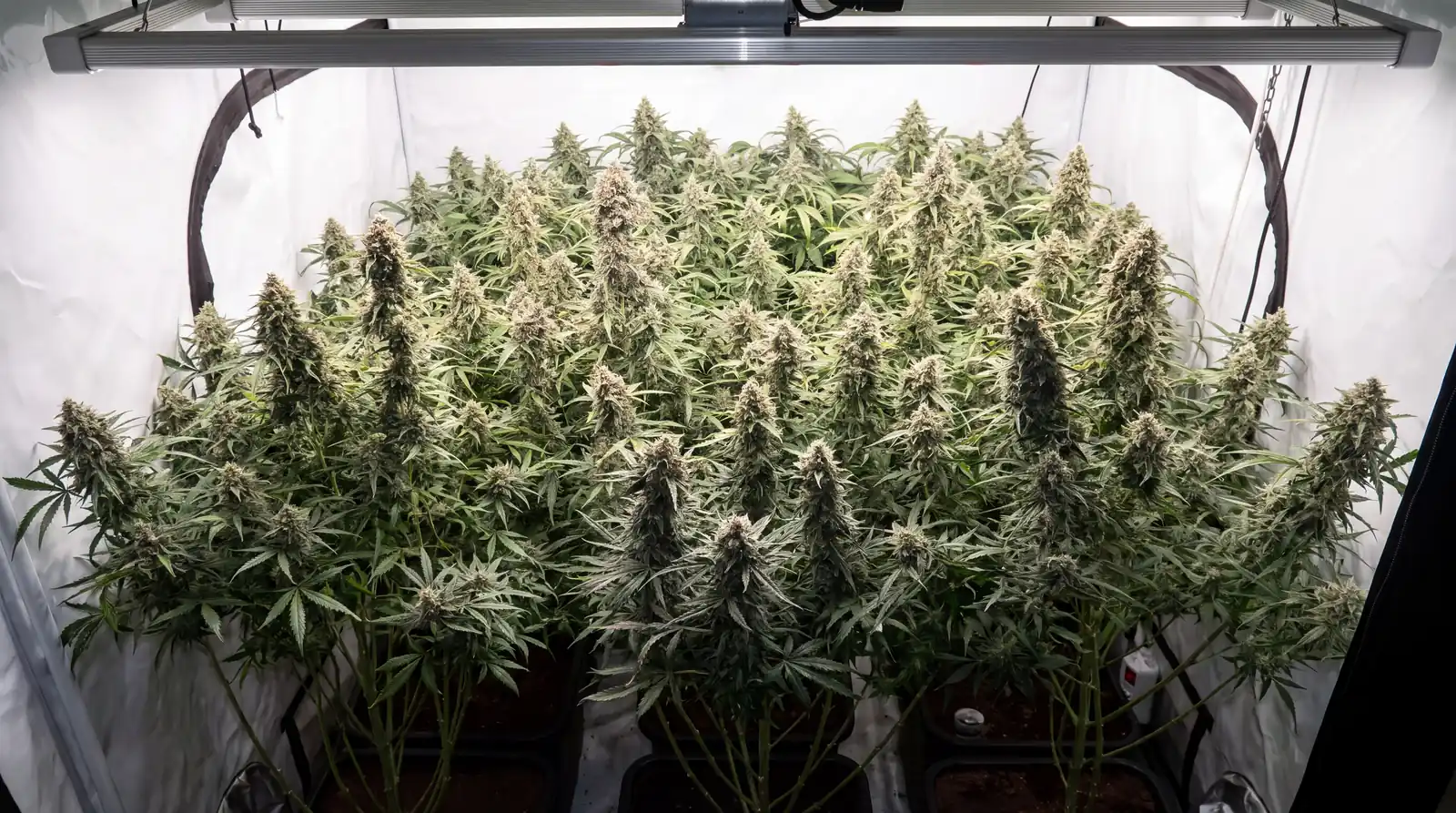
You can grow dense buds without PGRs by stacking genetics, light, environment, canopy training, feeding and harvest timing in your favor. A retardant squeezes growth into a smaller space, while good cultivation builds more calyxes and resin. That’s the real difference between PGR and no-PGR weed, and these steps get you there.
- Start with genetics bred for density. Your strain sets the ceiling for bud density and calyx-to-leaf ratio, and no amount of dialing in will make an airy line finish tight. Choose dense bud seeds and read each strain’s description for compact, resinous flower before you buy.
- Lock in strong, steady light. Good genetics only reach that ceiling under consistent light. Sit inside your tent with the lights off to spot leaks, and run your flower schedule on a reliable timer. Set your fixture distance by the manufacturer’s chart and raise it if the tops start to bleach.
- Control humidity and airflow as buds tighten. Denser buds trap more moisture, so the room has to work harder as flower progresses. Lower humidity through flower, keep fans moving air through the canopy (and not just over it), and pull large fan leaves that block airflow around the main colas.
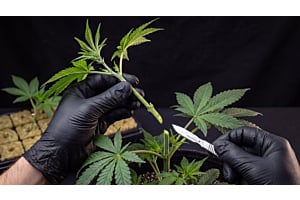
- Top and train for an even canopy. With light and air sorted, the next step is getting more bud sites into both. Top in veg and use low-stress training to keep the tops level. Clear out weak lower growth that’ll never reach strong light so the plant puts its energy into the main sites.
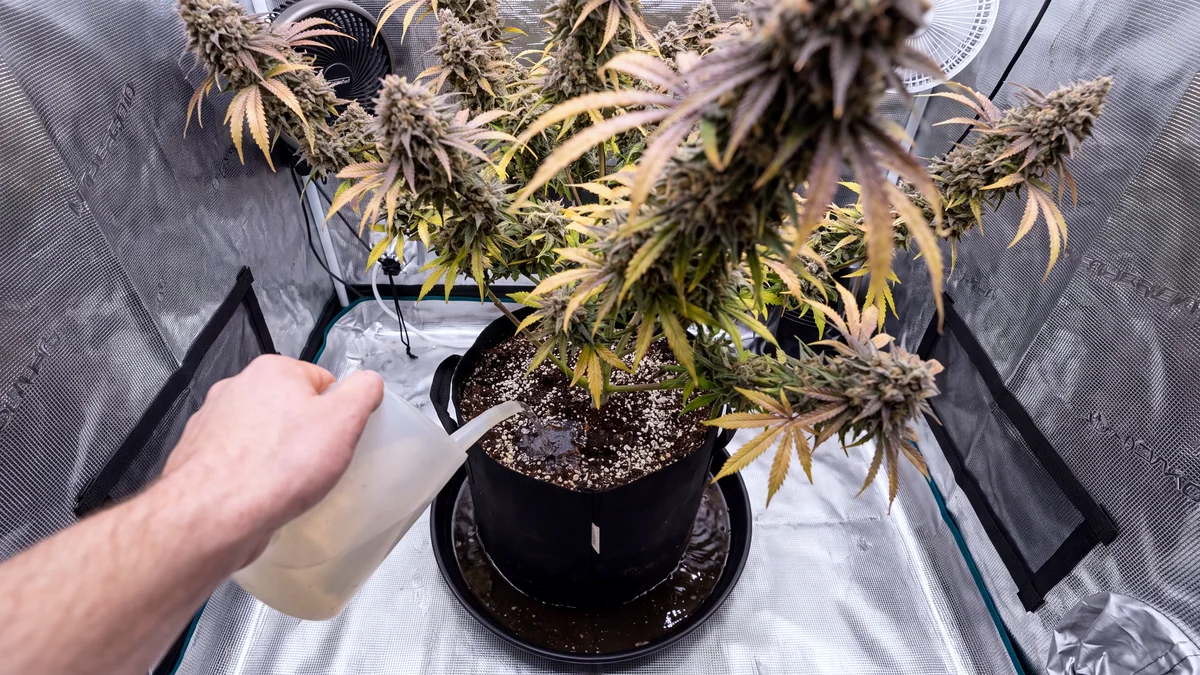
- Feed to the stage and don’t push it late. An even canopy can only bulk up on balanced nutrition. Follow a clean cannabis feeding schedule, water until about 30% drains out the bottom, and back off if leaf tips start to burn. Extra feed late in flower costs you aroma and smoothness without adding weight.
- Harvest by the trichomes, not the calendar. Chopping early is one of the most common reasons buds finish light and under-resinous. Grab a jeweler’s loupe and check trichomes on the buds themselves, not the sugar leaves. Learn when to harvest cannabis from how cloudy and amber they’ve turned.
- Dry slowly and cure properly. Everything you built in the grow can still be lost after the chop. Hang branches in a dark, well-ventilated space until the small stems snap instead of bend, then jar the buds and burp the jars regularly. Rushing the dry turns good buds harsh, so check the jars for any sign of lingering moisture in the first few weeks.
Clean, dense bud is the result of a run where every stage gets the plant’s full attention, from the marijuana seeds you pick to the last burp of the jar. When you know exactly what went into your flower, you never have to wonder what’s hiding in it.