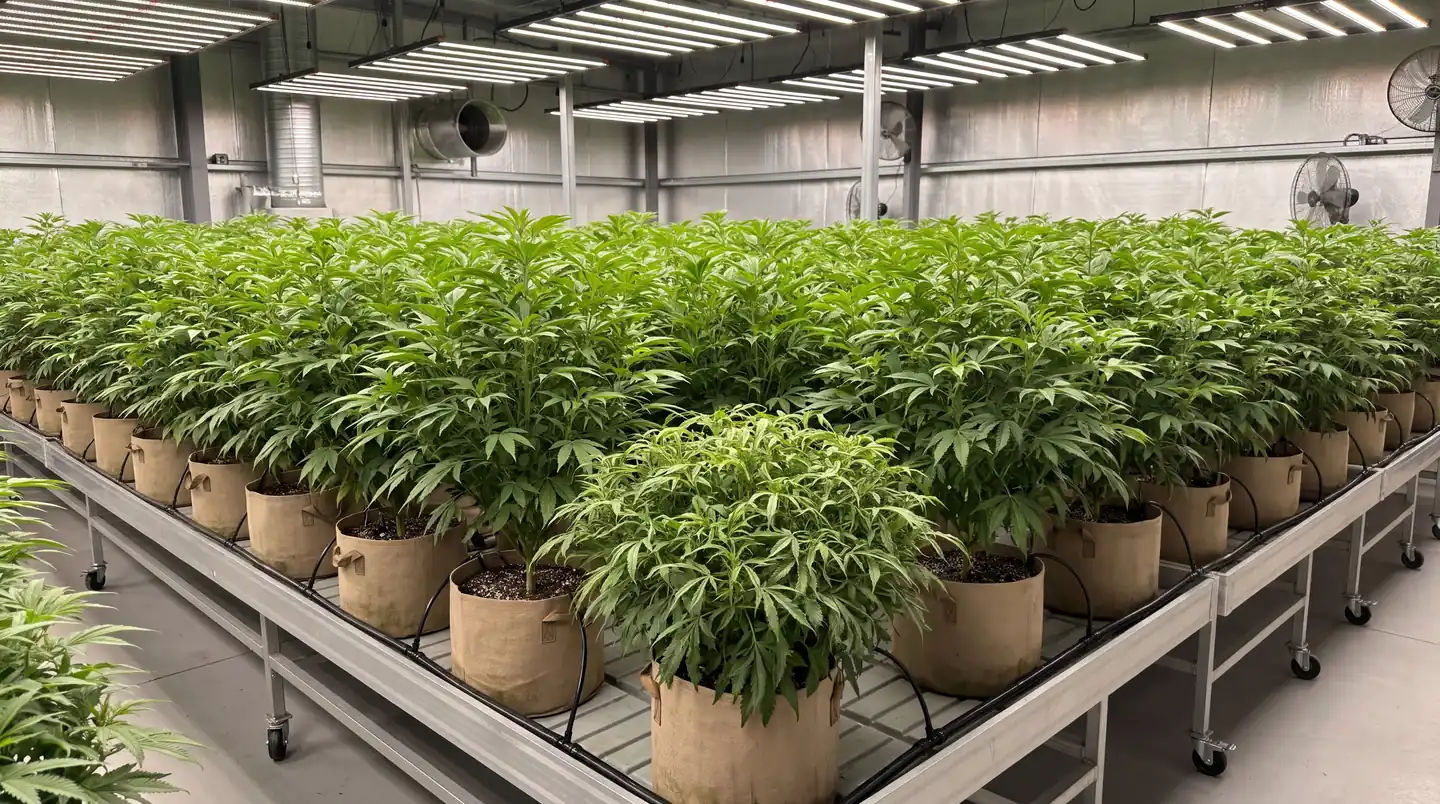
Hop latent viroid (HLVd) is a tiny strand of infectious RNA that causes dudding disease in cannabis. Infected plants and clones show severely stunted growth and shrunken buds with diminished yields and reduced potency. There's no cure, and plenty of infected cannabis plants look normal until harvest weight gives them away.
HLVd moves through plant sap, mostly on unsterilized blades and in clone cuttings taken from infected mother plants. That's a big reason why many growers prefer starting from fresh, high-quality feminized seeds, since every seedling begins outside the clone chain that carries the viroid from garden to garden.
Below, you’ll see hop latent viroid (HLVd) symptoms with pictures, learn how it spreads, what you can do to stop it, ways to test for it, and how to prevent it from reaching your grow.
What Is Hop Latent Viroid?
Hop latent viroid (HLVd) is a plant pathogen that causes dudding disease in cannabis, also known as cannabis stunting disease. It spreads through the whole plant and saps its vigor.
Growers often call it the “hop virus” or “HLVd virus,” but HLVd isn’t a virus or a fungus. It’s a viroid — the smallest kind of plant pathogen — made of a single loop of RNA with no protective protein coat.
HLVd lives inside the plant’s cells and copies itself using the plant’s own machinery. That makes it much harder to deal with than the fungal and viral cannabis diseases most growers know. No spray can reach hop latent viroid without killing the plant too, and standard antibody tests can’t detect it, either.
The name comes from hops, where researchers in Spain first identified the viroid in 1987. Infected hops rarely show symptoms, so it was called “latent.” Cannabis is a different story. HLVd was first linked to dudding in California in 2019 and has spread widely since, with 26% of nearly 16,000 samples tested by one Canadian lab between 2020 and 2022 coming back positive.
HLVd Symptoms in Cannabis
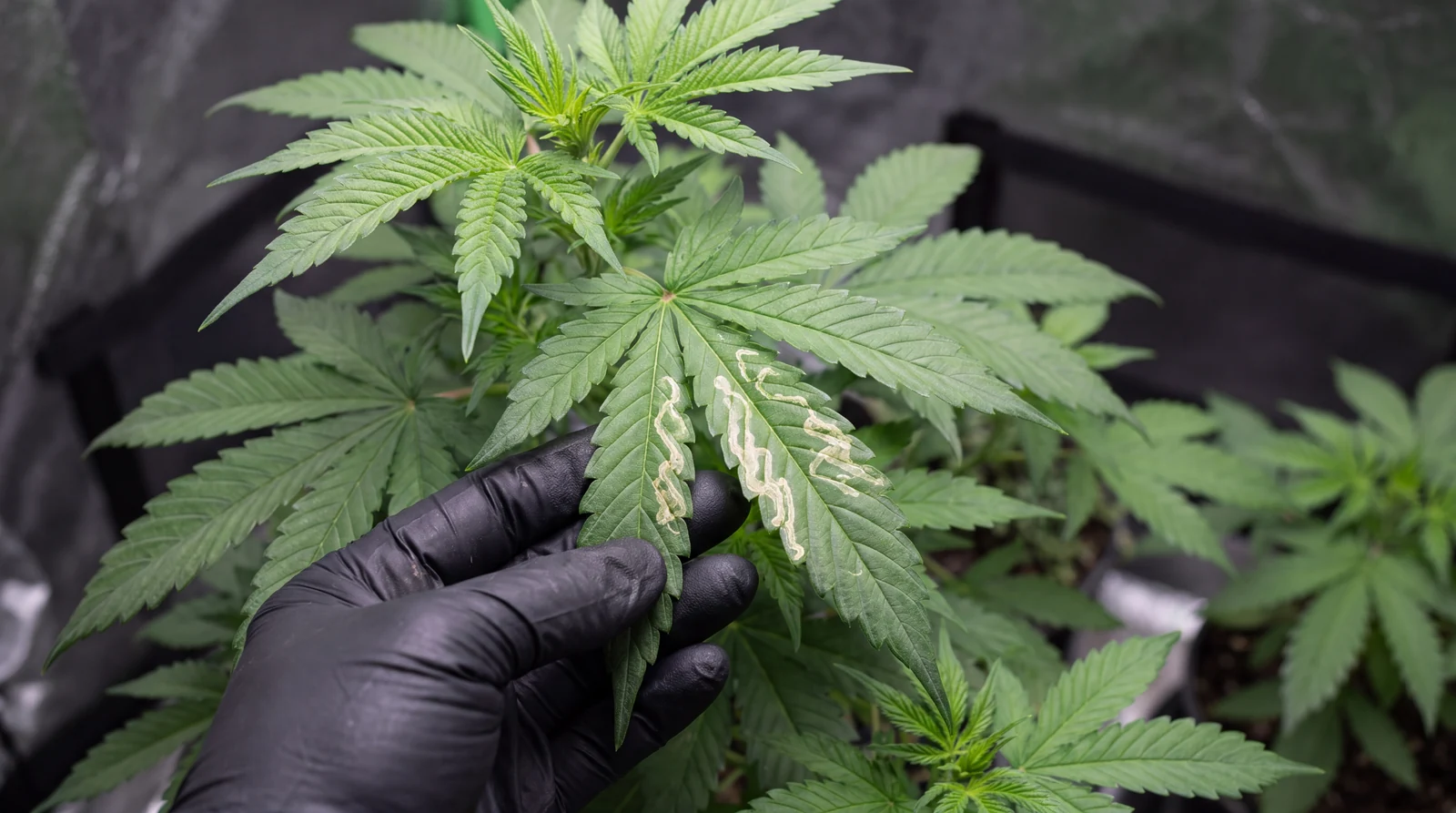
In cannabis plants, HLVd symptoms show up as stunted growth, smaller leaves, shorter internodes, brittle stems, yellowing, poor rooting in clones, and small, airy buds with fewer trichomes. The result is lower yields and weaker potency, even when the plant looks fine for most of the run.
None of these symptoms are unique to hop latent viroid, though, and how strongly they show depends on the strain, the environment, and how much HLVd the plant carries. Your best field check is comparison, so judge a suspect plant against its siblings and past runs of the same cultivar.
Early HLVd Symptoms in Clones and Vegetative Plants
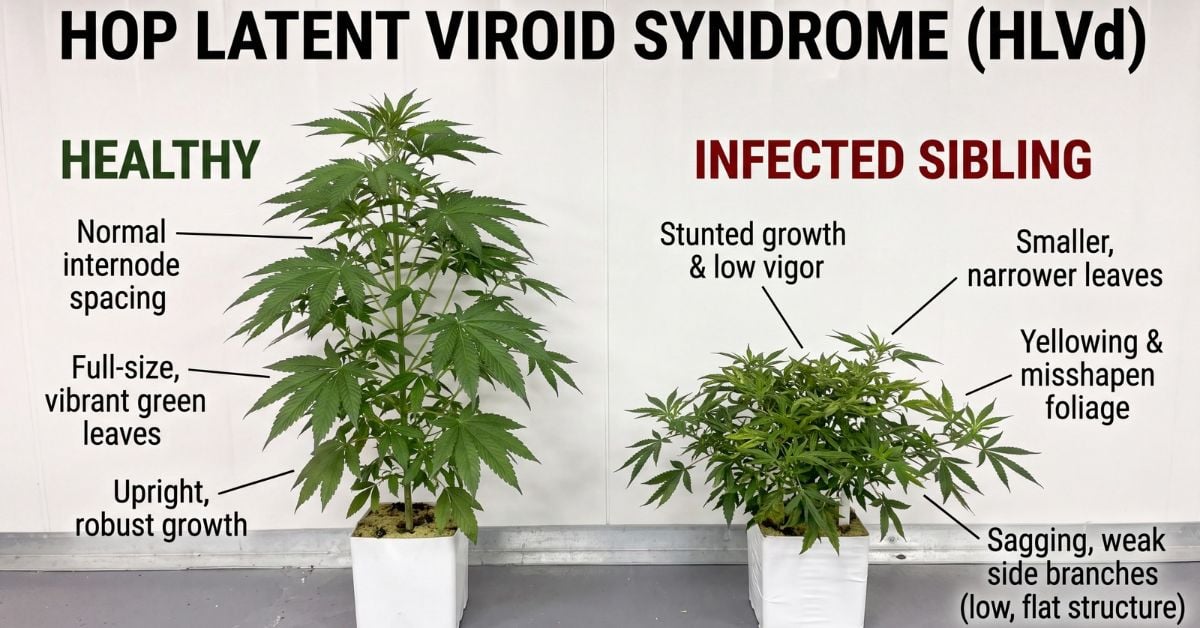
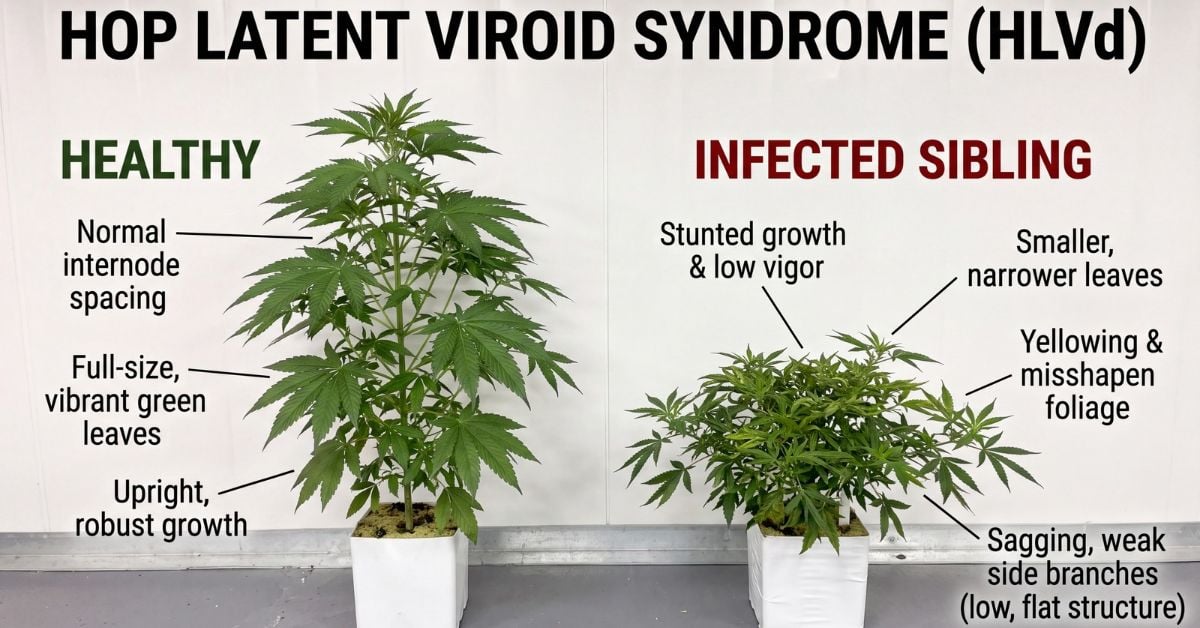
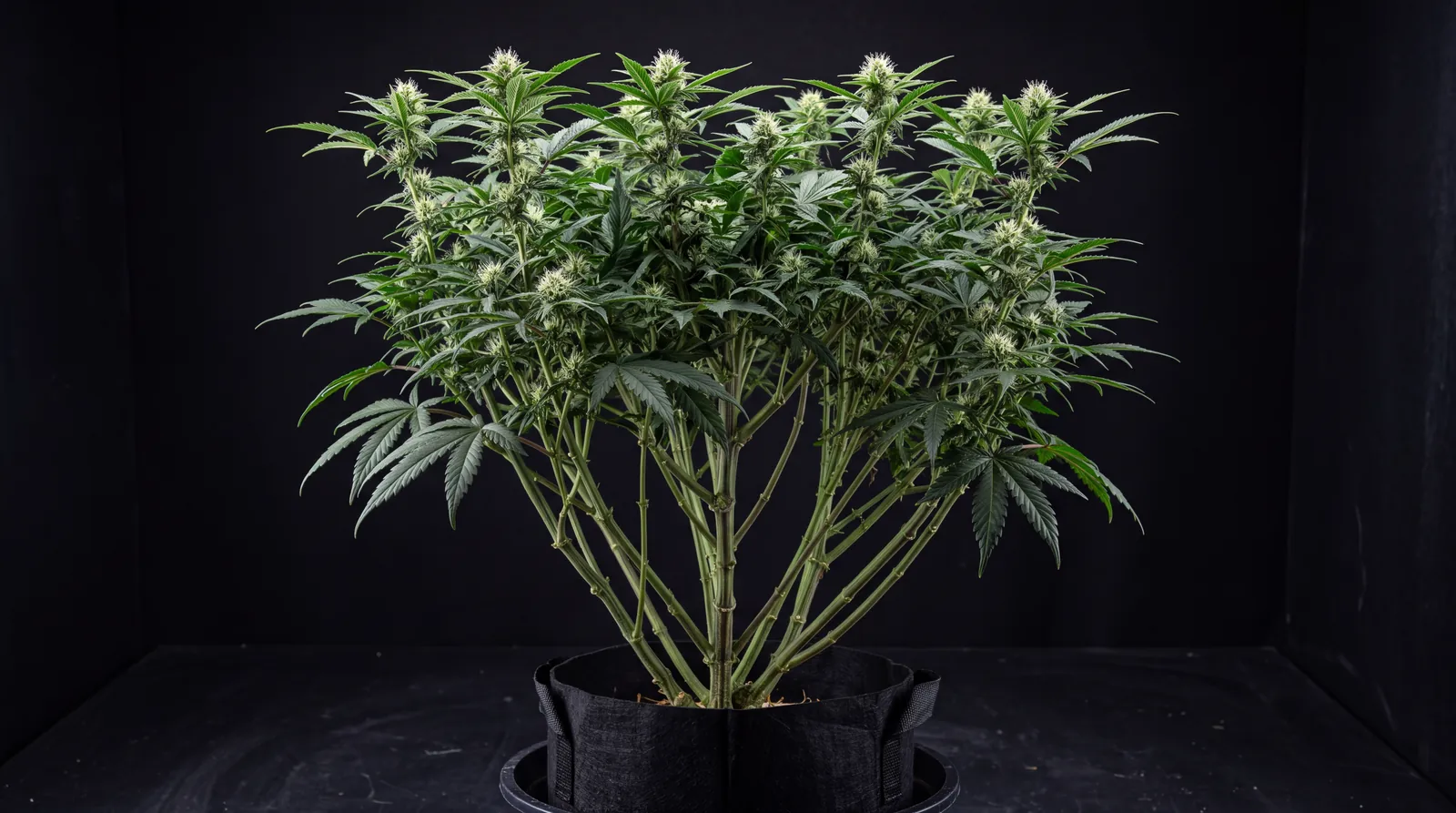
In veg, an HLVd-infected weed plant usually looks slow and squat more than sick. Clones from infected mothers often struggle to root, and the plants that do take tend to show:
- Stunted growth and low vigor.
- Smaller, narrower leaves on shorter internodes.
- Yellowing, misshapen leaves, and brittle branches.
- More sideways than upward growth, giving the plant a low, flat structure.
Timing isn't fixed. Seedlings and young plants often show nothing above ground, and stunting gets easier to spot from mid-season onward. Hot, bright rooms can make symptoms more obvious, since higher temps and stronger light can push viroid levels up.
HLVd Symptoms in Flowering and at Harvest
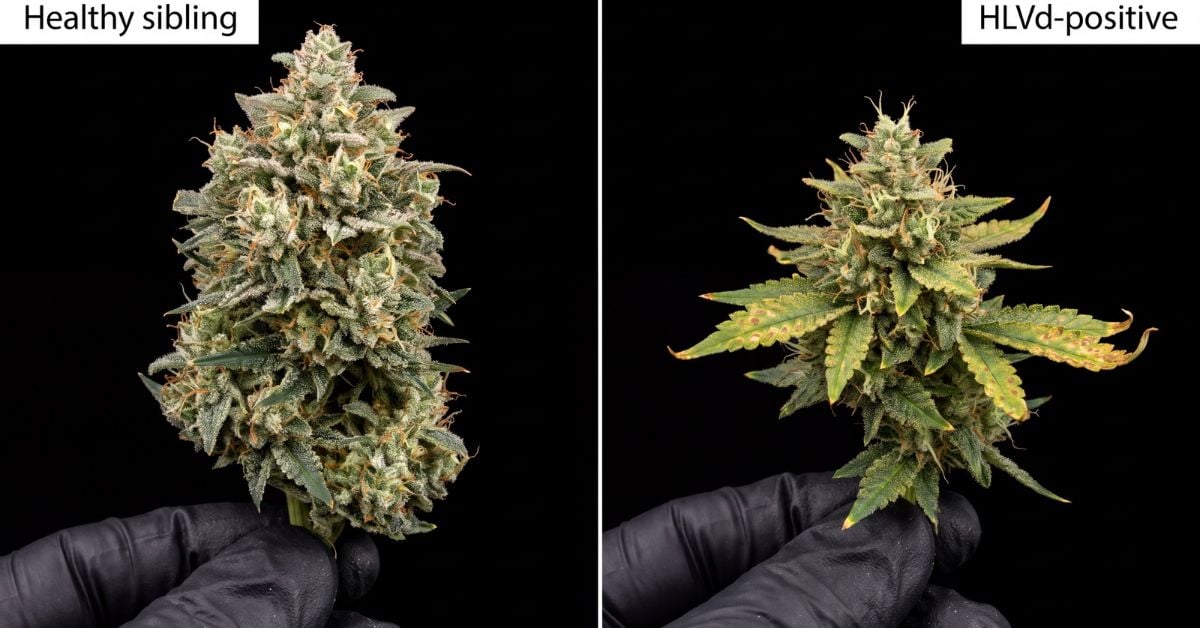
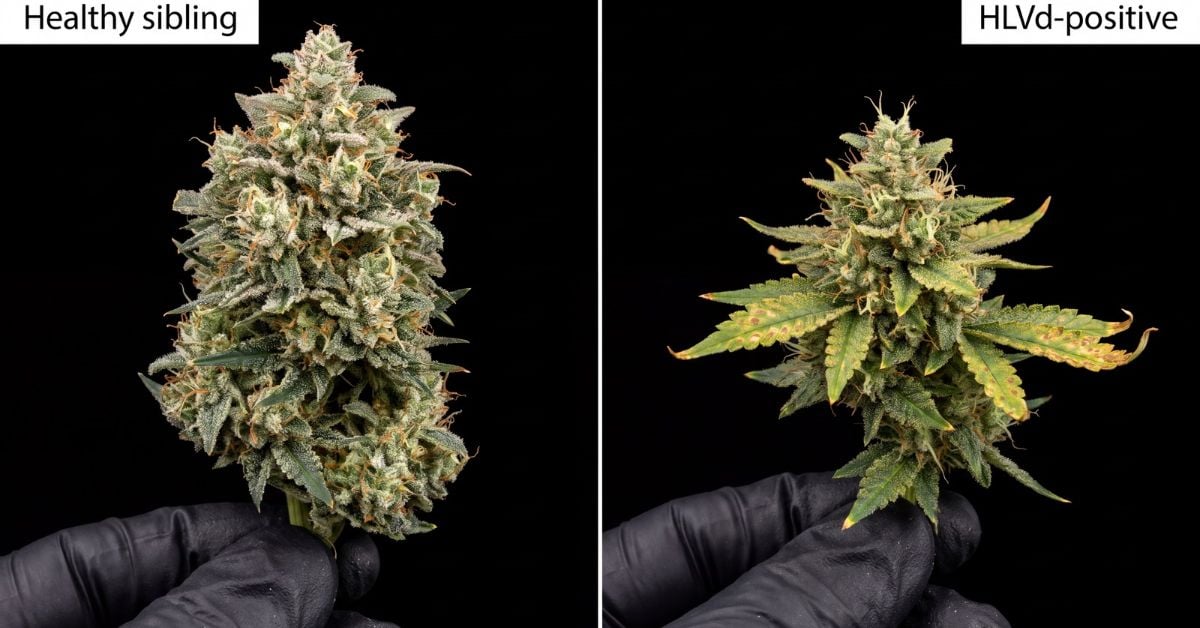
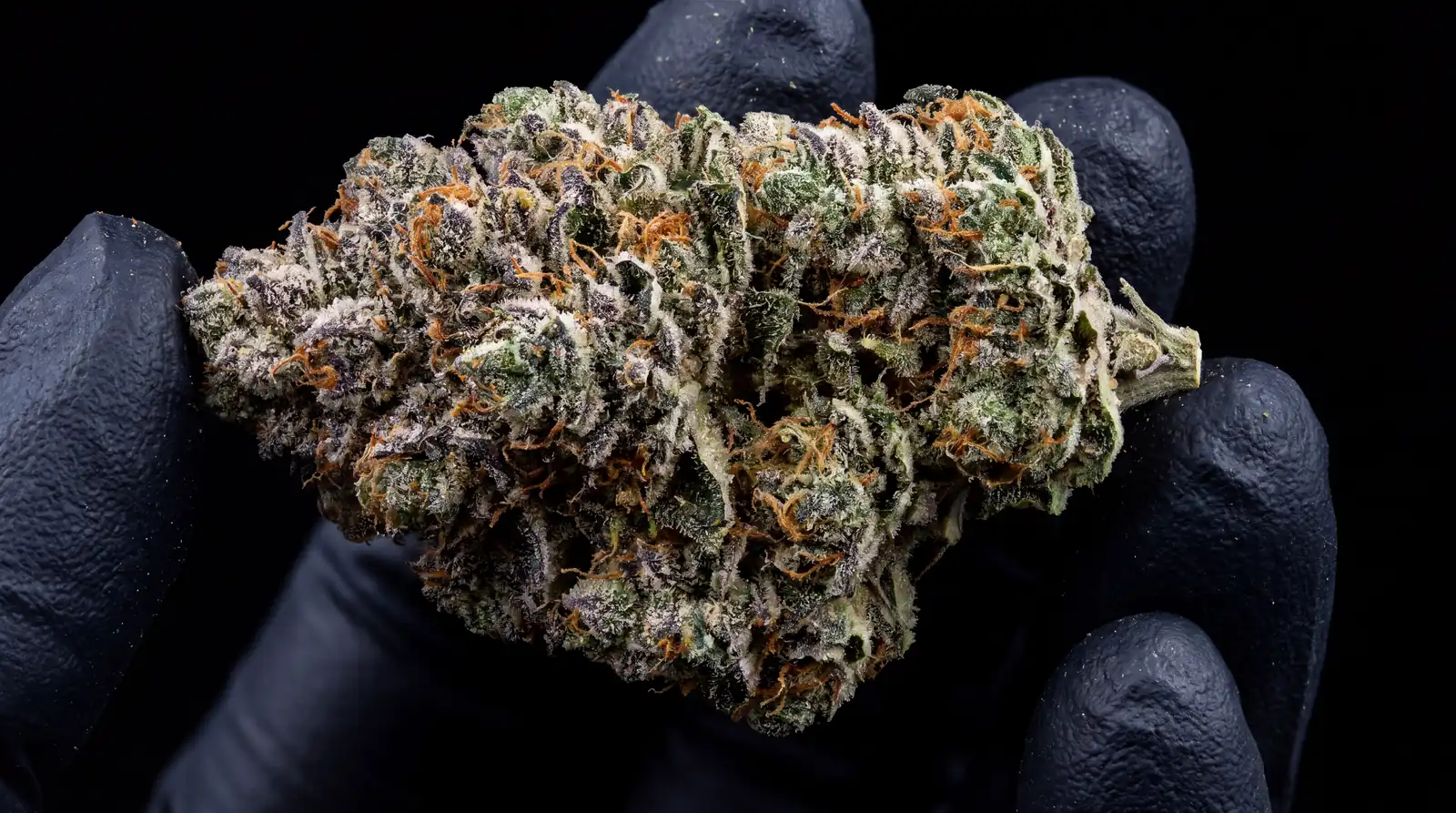
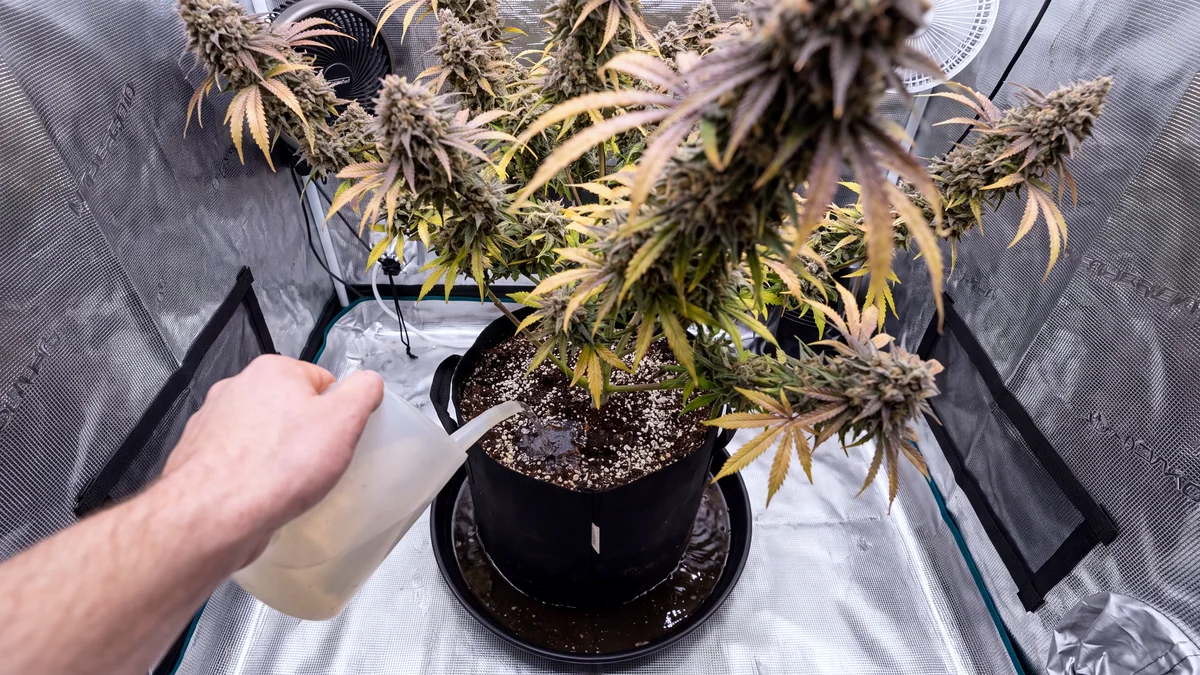
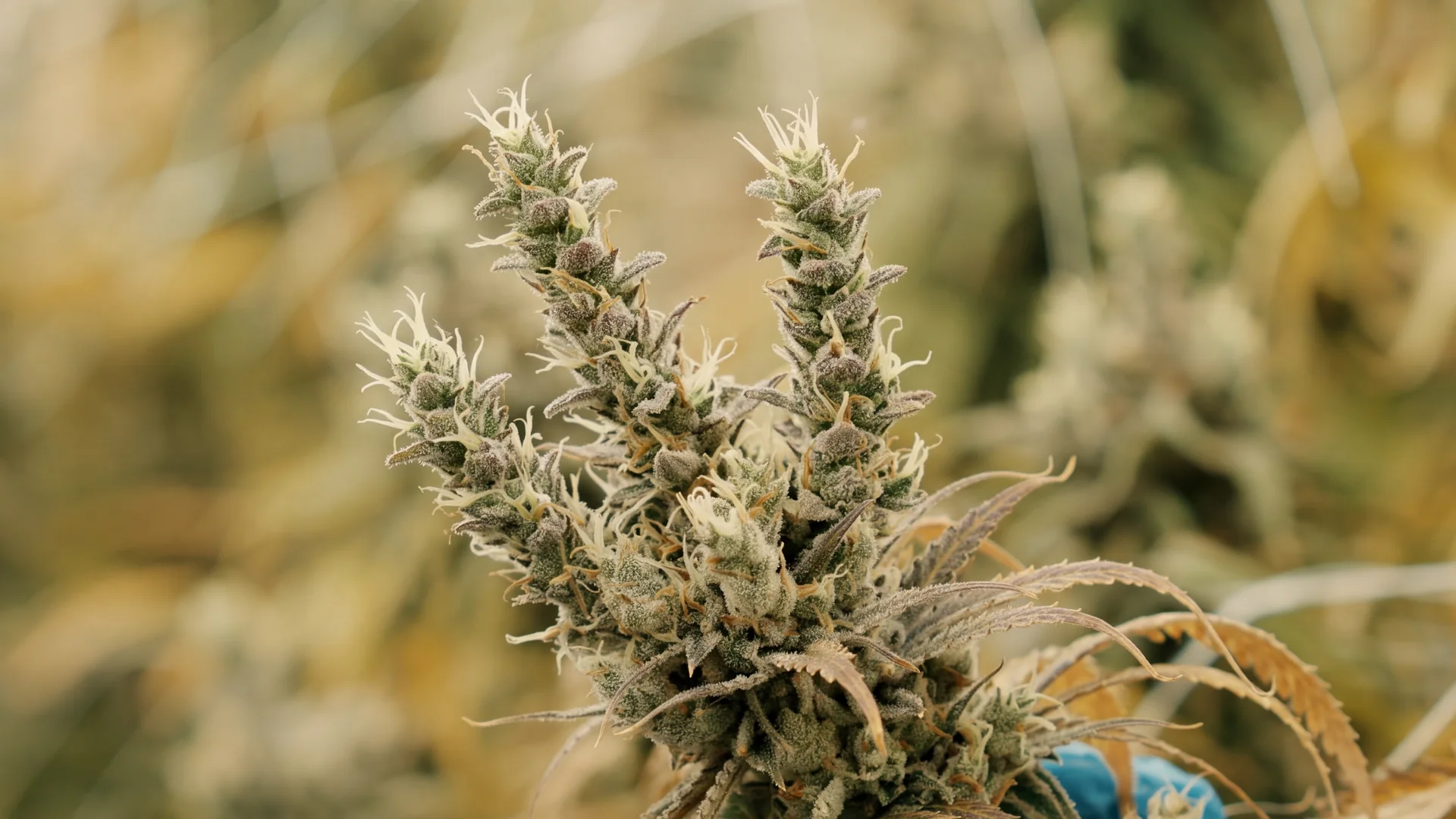
In flower, HLVd shows up as smaller, looser buds with far fewer trichomes and a weaker aroma. Some plants also develop unexpected yellowing on the leaves around their bud sites. These signs get much easier to spot after the 4th week of flower.
At harvest, that adds up to lower yields and weaker potency. Under an electron microscope, trichomes on infected plants look underdeveloped, and studies have measured drops of up to 50% in cannabinoid and terpene content. Losses vary by strain, though, so treat 50% as the worst case, not what every HLVd-infected plant will do.
Why Some Hop Latent Viroid-Infected Plants Look Healthy
Many weed plants infected with hop latent viroid never show clear symptoms because HLVd can sit quietly at low levels and then flare when heat, nutrient problems, or pests add stress. Some cultivars also cope with infection far better than others, which points to genetics playing a big role in how hard a plant gets hit.
The catch is that a symptom-free plant still spreads hop latent viroid. A mother plant that looks healthy can still test positive, and a garden that looks viroid-free doesn’t mean that it actually is.
How to Confirm Hop Latent Viroid
Only a lab test can confirm hop latent viroid. The visible signs overlap with plenty of everyday grow problems, so rule those out first and then send tissue for testing. Working in that order saves you money on tests you don't need and keeps you from culling a plant that only needed a pH fix.
Problems Commonly Mistaken for HLVd in Cannabis
Most marijuana plants that look dudded aren't. Stunting, dull coloring, and weak flower can stem from lots of ordinary issues, and each one leaves clues HLVd doesn't. The quickest check is whether the plant bounces back once you fix the suspected cause:
| Cannabis Plant Problem | What It Looks Like | How It Differs From HLVd |
| Nutrient deficiencies or pH lockout | Yellowing leaves, interveinal patterns, slow growth | Damage follows specific leaves and nutrients, and the plant recovers once pH and feeding are corrected |
| Overwatering or root disease | Drooping, slow uptake, dull color, weak growth | Roots look or smell wrong, and growth picks up once the medium dries back or the root problem is treated |
| Root-feeding cannabis pests | Stunting and low vigor with no clear leaf cause | You can find insects or larvae in the medium, and vigor returns after control |
| Heat, light or VPD stress | Tight nodes, curling, stalled growth | Symptoms track the hottest or brightest spots in the room and ease once conditions come back into range |
| Weak phenotype or runt | A smaller, slower plant from the start | Growth looks healthy and in proportion, just smaller, and the plant flowers normally |
A weed plant that stays stunted after a proper fix is worth testing for hop latent viroid. Lack of recovery is a red flag, though it isn't a diagnosis on its own.
How HLVd Testing Works
Labs test for HLVd with RT-qPCR (reverse transcription quantitative PCR), which picks up the viroid's RNA even at low levels in plants that look healthy. Some on-site kits use faster methods like LAMP, but PCR is generally the most sensitive and accurate option.
Where you sample matters as much as the test itself. After infection, HLVd travels through the plant's phloem to the roots first and shows up there within about 2–3 weeks. It reaches young leaves around week 4 and the whole plant by about week 6, so an early leaf sample can miss an infection that's already established below.
That’s why roots usually give the strongest signal, and some plants test positive in the roots while their leaves test negative. Most labs suggest pairing petiole or lower leaf tissue from new growth with one or two root samples from different spots. Go gently on an established mother so you don't tear up her root zone.
Test mothers before you take cuttings, never after the tray is cut. After that, retest mothers every 2–4 weeks depending on how often you take cuts, and spot-check a few random plants in veg on a similar schedule.
How Hop Latent Viroid Spreads
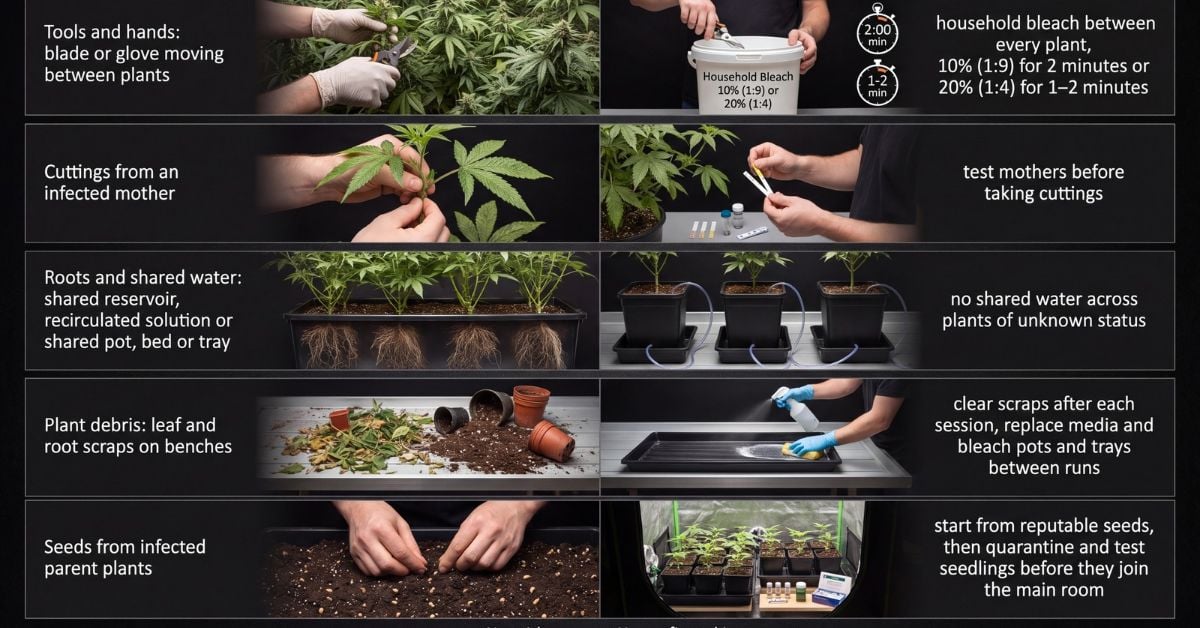
The left side shows each of the five ways hop latent viroid can spread between cannabis plants, while the right side shows how to prevent each one.
HLVd spreads through contact with infected sap, which has to get into a wound or tiny tear on a healthy plant. Most spread happens during cloning, pruning, and defoliation, when blades and hands carry sap from one plant to the next. There's no evidence it travels through the air, and no insect vector has been confirmed.
| Route | How HLVd Infection Happens | What Research Shows |
| Tools and hands | Scissors, blades, and gloves carry sap between plants | The viroid stayed detectable on gloves for up to 5 days |
| Cuttings from infected mothers | Every clone cut from a positive mother plant starts out infected | This is the most efficient route for HLVd to spread between gardens or grow tents |
| Roots and shared water | Recirculating reservoirs, shared trays, and root contact in the same pot, bed, or tray | HLVd was found in recirculated solution at propagation tables, and root-to-root spread was shown in hydro |
| Plant debris | Leaf and root scraps left on benches between sessions | HLVd survived 7 days in crushed leaf sap and 4 weeks in dried leaves or roots at room temperature |
Because hop latent viroid reaches the roots early, shared water and shared beds deserve the same suspicion as a dirty blade.
Can Hop Latent Viroid Spread Through Cannabis Seeds?
Yes, cannabis seeds from unreliable sources can carry HLVd if they come from infected parent plants. A 2025 study found the viroid in the anthers and pollen of infected males and in seeds from infected females, with up to 100% of the resulting seedlings infected. Older research on hops found much lower seed transmission, around 6%.
High-quality seeds from reputable sources still give you the cleaner start. Each seed grows into a fresh plant with no clone history, so you vastly reduce the risk of HLVd by staying out of the chain where one positive mother infects every tray cut from her. Pair that with a short quarantine and a test before seedlings join your main room, and you've closed the remaining gap.
Can Hop Latent Viroid Be Treated or Cured?
No, there's no hop latent viroid treatment or cure for an infected plant. No spray, flush, feed, or environmental tweak removes the viroid, so an infected plant stays infected and keeps spreading HLVd for the rest of its life.
That leaves 2 options:
- You can destroy the HLVd-infected marijuana plant.
- You can let the HLVd-infected plant finish in strict isolation.
But if the hop latent viroid-infected plant is a mother or anywhere in your propagation chain, cull it. If you can’t keep it off shared water or give it its own set of tools, it’s best to cull it, too.
The only rescue route saves a cultivar, not a plant. Labs can culture a sliver of growing tip about 1/64 inch across to produce viroid-free plantlets. Success depends heavily on genetics and averaged about 41% across 8 tested genotypes, with months of follow-up testing needed to confirm the line is clean.
The whole process often takes 6 months or more and doesn't come cheap. It makes sense for genetics worth preserving, but it's a lab job and not something you can do in a home grow.
How to Prevent Hop Latent Viroid in Your Grow
You can prevent HLVd by starting with clean plants, disinfecting tools with bleach between every plant, keeping water and growing media separate, and testing regularly so infected plants come out fast. Since there’s no cure, every step either keeps the viroid out of your garden or stops it moving once it’s in. None of it needs special equipment.
Start With Clean Genetics
The safest start is a plant with no clone history, or a clone from a lab-tested source. Plants grown from superior-quality cannabis seeds begin outside the clone chain, the route that moves HLVd from garden to garden most efficiently.
For clones, everything depends on the source. Swapped cuttings carry the most risk because they arrive with no record of the mother behind them. When you buy clones, ask whether the supplier tests for HLVd, which tissue they sample, and how recently, since root tests give stronger assurance than leaf tests on young plants.
Whatever you bring in, keep it apart from your main room at first:
- Quarantine new clones and seedlings with their own tools, trays, and water.
- Watch them through a full early growth period.
- Test seedlings at around 1.5 feet tall before they move into your main grow space.
Disinfect Tools and Surfaces With Bleach
Use household bleach, and disinfect blades between every plant, not just between sessions. It’s the only common disinfectant proven to destroy HLVd. Alcohol and hydrogen peroxide don’t reliably work at any strength, and UV-C for 3–5 minutes or heat of 158–194°F for 30 minutes both left detectable viroid behind.
Strength and dip time both count. 10% bleach (1 part bleach to 9 parts water) for 2 minutes or 20% bleach (1 part bleach to 4 parts water) for 1–2 minutes fully broke down HLVd in testing, while a 1-minute dip in 10% only did part of the job. Mix a fresh batch every day, or sooner once it fills with plant debris.
Build these habits into every session:
- Rotate two or more pairs of scissors so one soaks while you cut with the other.
- Change gloves and wash your hands between plants.
- Bleach benches, trays, and containers as well as tools.
- Clear leaf and root scraps from benches at the end of each session.
Keep Water and Growing Media Separate
Don’t share water or reuse growing media across plants unless you know they’re clean. HLVd builds up in the roots and has been found in recirculated nutrient solution, so one infected plant on a shared reservoir can reach every plant on the system.
Keep plants of unknown status off recirculating setups and give quarantined plants their own water. Replace growing media between runs, and bleach pots, trays and propagation gear before you reuse them.
Test for HLVd Regularly and Remove Positives
Regular HLVd testing catches symptom-free carriers, and pulling every positive right away stops them from seeding new infections. One Canadian facility cut its positive rate from 35% to 7% over seven months by doing exactly that.
Isolate or remove a positive plant the day its result comes back. Retire a suspect mother even if the cut is rare, since every clone you take from her carries the viroid forward.