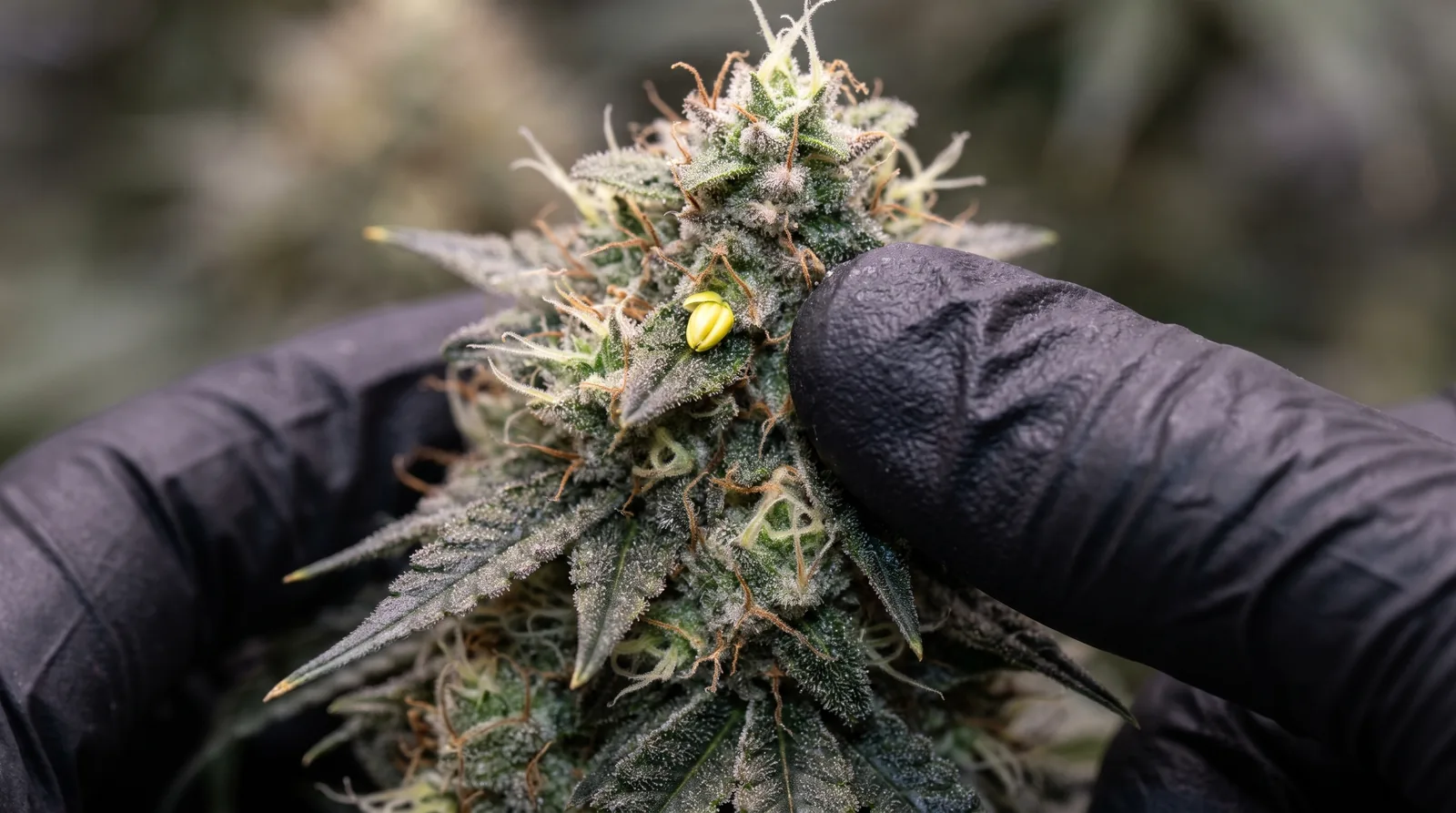
Cannabis nanners are exposed anthers, the small banana-shaped, pollen-bearing parts of a male flower, growing straight out of a female plant's buds. They're a sign of hermaphroditism, usually triggered when extreme stress hits a plant with some genetic sensitivity to it. Unlike a closed pollen sac, a nanner can release pollen the moment it appears.
If you find one, turn off your fans, confirm what you're seeing, and move the weed plant away from the rest of your flowering room. Your next move depends on how far into flower it is. Most growers start from feminized marijuana seeds to keep males out, so a stray nanner is often the only pollen source in the room.
Find out what causes nanners, how to tell them apart from pollen sacs and look-alikes, what to do at each stage of flower, and how to prevent them in future grows.
What Are Cannabis Nanners?
Cannabis nanners are pollen-producing male anthers growing uncovered out of a female plant’s buds, named for their small, curved banana shape. They’re one of several early signs of hermie plants, meaning a female that has started growing male parts alongside her flowers. Because nothing covers them, nanners can instantly release pollen and fertilize nearby buds.
On a male plant, anthers develop hidden inside a closed pollen sac and only release pollen once the sac splits open. A nanner skips that covering entirely and grows straight out of the bud, so there’s no sealed stage to give you a warning window.
Growers call them “nanners” or “bananas,” which is where terms like “weed bananas,” “cannabis bananas,” and “banana buds” come from. They all mean the anthers themselves, not banana weed strains like Banana Kush.
Herming shows up in flower, well after you’ve told male vs female weed plants apart in pre-flower. A hermie hasn’t turned male. Her buds keep developing while she grows male structures alongside them, either as nanners on the buds or as closed pollen sacs, usually at the nodes. Check for both whenever you inspect a room.
What Causes Nanners on Weed Plants?
Nanners on weed plants are usually caused by severe stress meeting genetic sensitivity. Something pushes the plant out of stable conditions, and the plant's genetics decide how much of that push it can take before it expresses hermaphroditism with an intersex trait. That's why two cannabis plants growing under the same conditions can react completely differently.
The most common triggers of cannabis bananas include:
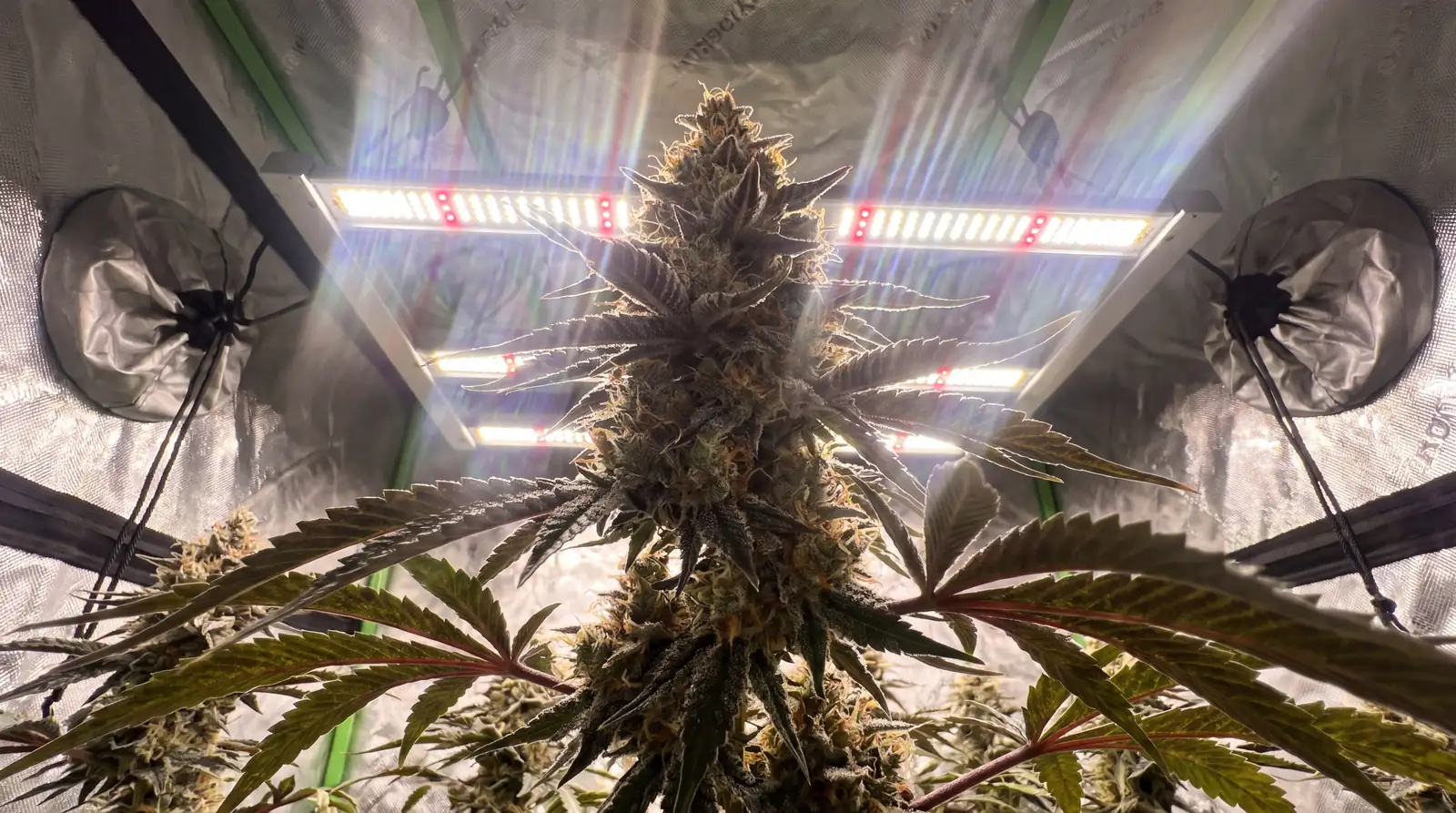
- Light leaks or interruptions during the dark period, including streetlights or security lights outdoors, mainly in photoperiod plants.
- Light that's too intense or hung too close, especially once you see light burn.
- Temperature extremes, including sustained heat peaks and cold nights.
- Big day-to-night or feed-to-feed swings in conditions.
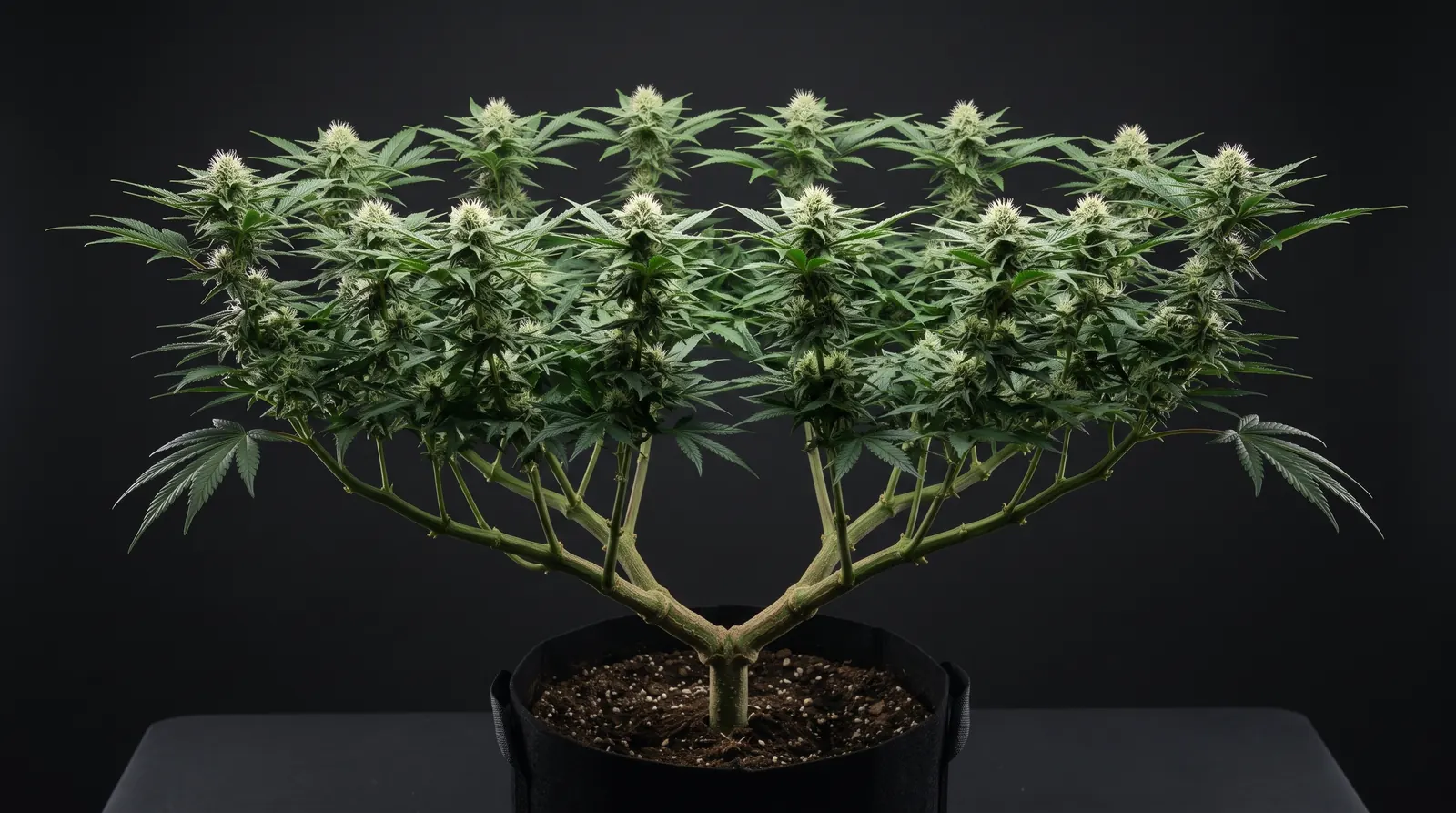
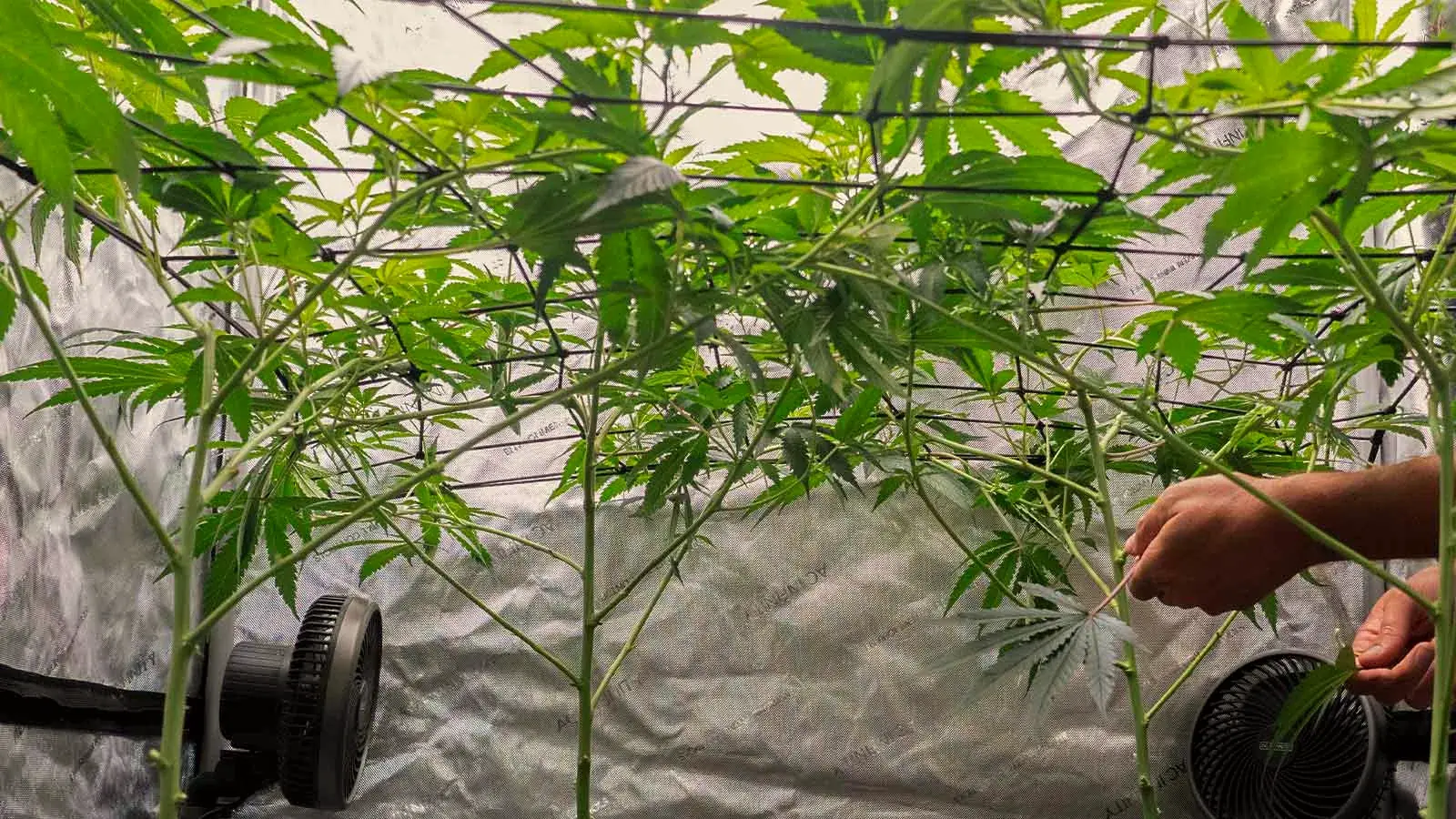
- Physical damage from rough handling, storms or wind, high-stress training, or harsh late defoliation.
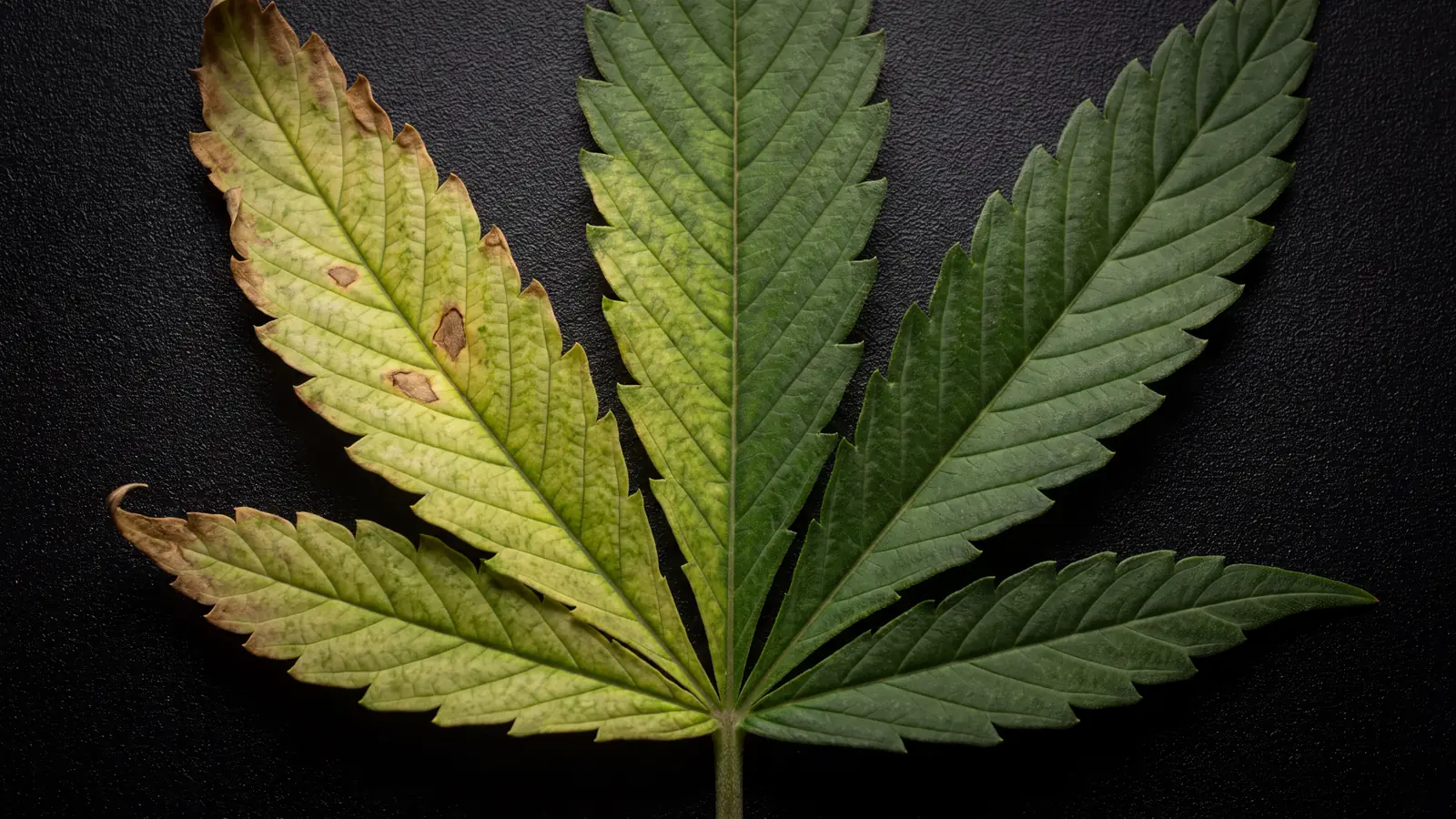
- Severe nutrient or pH problems, root rot, or heavy pest and mold pressure.
- Pest or chemical treatments sprayed during flower.
- Letting plants run well past ripeness, which some growers call “rodelization.”
None of these guarantees nanners. Plenty of plants ride out a light leak or a heat spike and finish clean. Genetics explain most of that difference. A stable, well-tested line can get through a rough week without a single anther. A line that sits close to its own limit may throw nanners under conditions the rest of your room handles fine.
Whatever tipped the plant over into a hermie often happened several days before you saw anything. Look back over the last week or two of temps, light schedule, handling, and feeding instead of only checking today's readings.
What Weed Nanners Look Like and Where They Grow
Weed nanners look like tiny curved bananas or claws, usually yellow to pale cream and sometimes lime green. They grow straight out of the flower with no stalk and no covering. Single nanners happen, but they often show up in small bunches, so one nanner is a reason to check the whole plant.
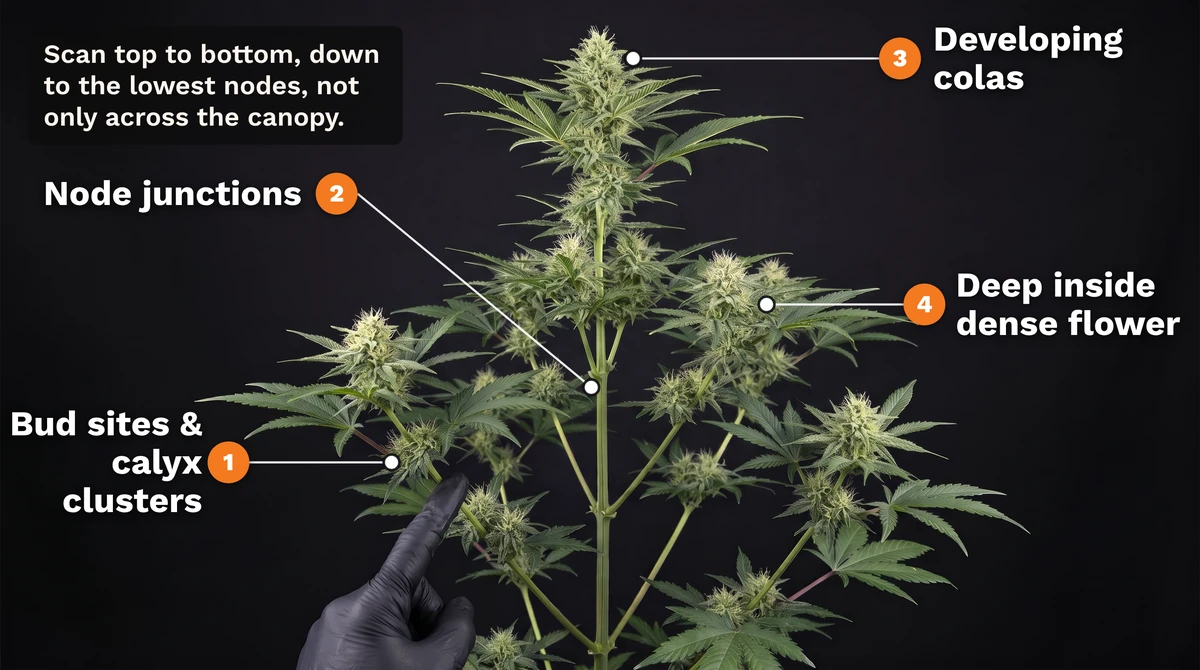
Nanners tend to hide in four places on a female cannabis plant:
- The bud sites and gaps inside calyx clusters.
- Node junctions where branches meet the main stem.
- Along the length of each developing cola.
- Deep inside dense flower where you have to part the bud to see.
A quick scan across the canopy isn’t enough to spot nanners. Grab a bright flashlight and a jeweler's loupe for the tiny ones, gently part each bud site, and work from the top of the plant all the way down to the lowest nodes.
Cannabis Bananas vs Pollen Sacs and Look-Alikes
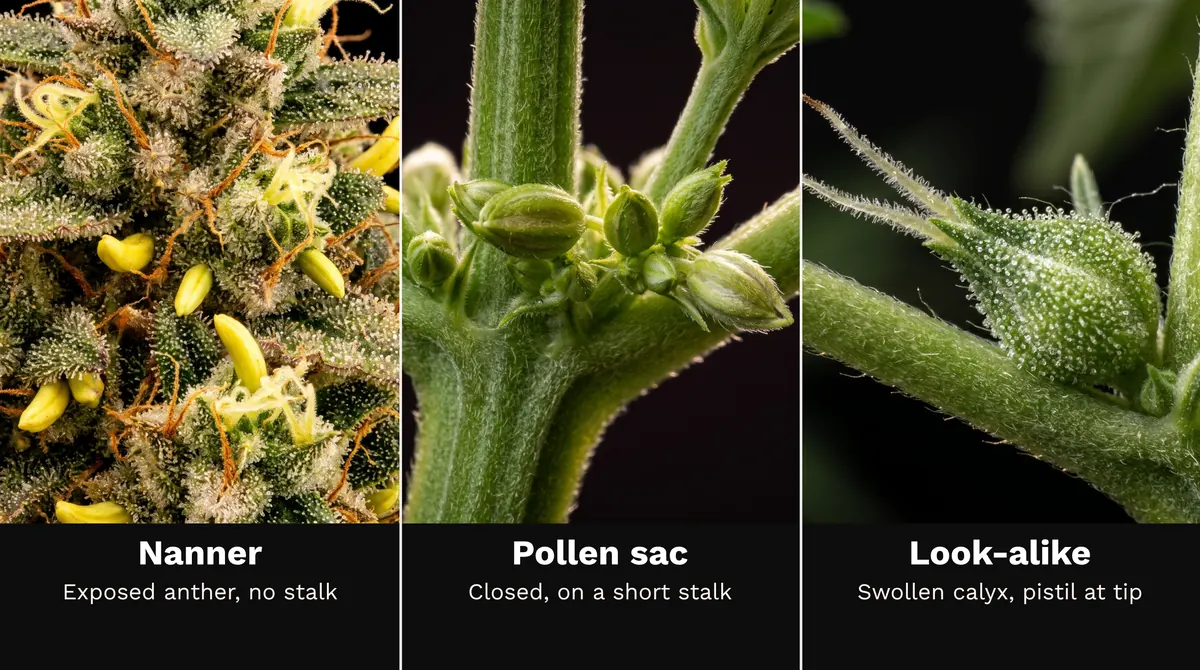
The quickest way to tell cannabis bananas from pollen sacs and look-alikes is shape and covering. A nanner is open, curved, and stalkless, and a pollen sac is a closed, rounded ball on a short stalk. Look-alikes are normal plant parts, like swollen calyxes, browning pistils, new growth, and stipules, that can pass for either at a glance but never hold pollen.
| Structure | What It Looks Like | Where It Grows | What It Means |
| Nanner | Curved, and banana shape with no stalk and no covering | Straight out of buds and flower clusters | The nanner may already be shedding pollen, so act now |
| Pollen sac | Closed teardrop or grape shape on a short stalk, often in clusters | Mostly at node junctions | It’s still sealed, so you have a short window to remove it |
| Swollen calyx | Green, rounded pod with a pistil growing from its tip | Throughout the buds | Normal as buds mature |
| Browning pistil | Hairs turning orange to brown and curling in | Across the buds, mostly from mid to late flower | Normal ripening when it happens bud-wide, worth a closer look if only a few darken early |
| New growth tip | Small green ball of tightly folded leaves | Node junctions and branch tips | Normal growth that opens into a leaf within 1-2 days |
| Stipule | Thin, pointed green spur, sometimes curled | Beside the node junctions on every plant | A normal cannabis plant part, no action needed |
If you still can’t tell, photograph the exact spot and check it again the next day. New growth opens into a leaf, a stipule stays the same, a pollen sac swells toward splitting, and a maturing anther becomes unmistakably banana-shaped.
What Happens When Nanners Release Pollen?
When nanners release pollen, it can drift to any flower on the same or a neighboring plant, and each fertilized calyx starts growing a seed. Those seeds draw energy away from bud growth, so pollinated buds finish smaller and looser, and your yield drops. How much damage you get depends on how far the pollen spreads and how early in flower it happens.
Pollen rarely stays on one plant. It’s fine and light enough to ride the smallest air current, and an oscillating fan can carry it across a tent in seconds. It also travels on hands, sleeves, and pruning shears, so every flowering plant in the same space is exposed.
Not all of it will take. Some nanners produce sterile pollen, but there’s no way to tell by looking, so treat every one as live. Beyond that, your seed count comes down to how many nanners there were, how long they shed, and where the pollen landed.
Timing decides how far those seeds get. Most grower sources put seed maturity at roughly 4–6 weeks after pollination. Pollination early in flower leaves time for fully formed seeds, while pollination close to harvest usually leaves only a few small, pale ones. Either way, it’s a hit to quality and yield, not a safety issue.
What to Do When You Find Nanners on Buds
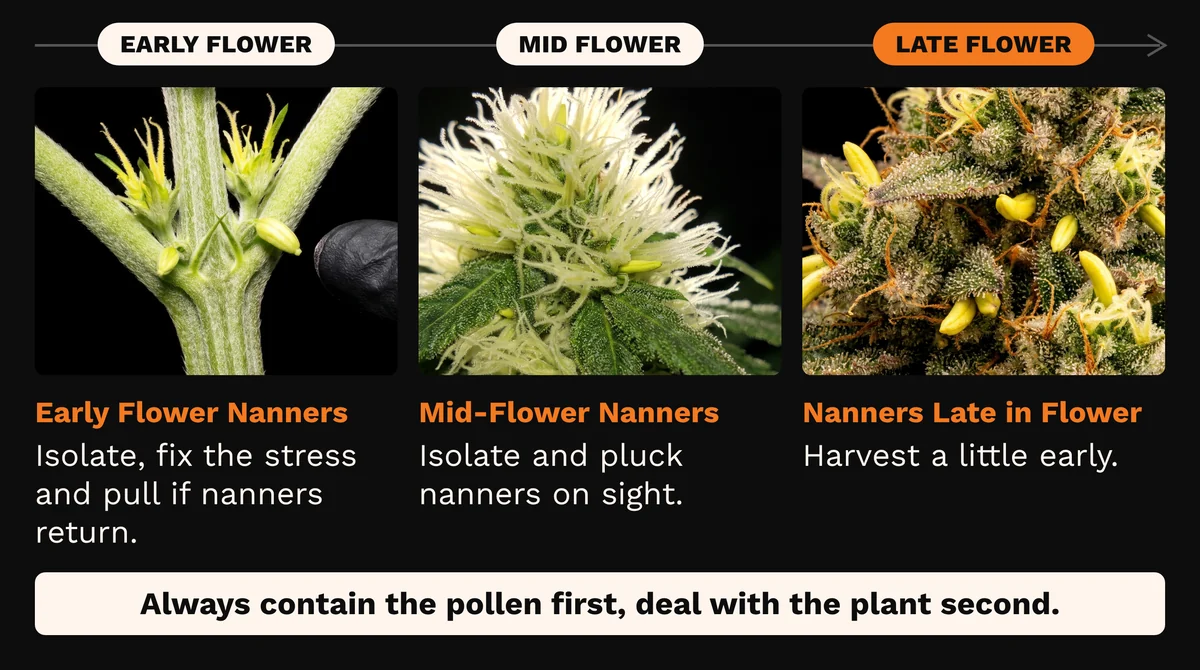
When you find nanners on buds, stop pollen from moving first and deal with the plant second. Handling the canopy can knock pollen loose, so containment always comes before removal. Work through these steps in order:
- Still the air. Turn off your fans and let the air settle before you touch anything.
- Confirm what you’re seeing. Check the structure up close with a light and loupe, not from a few feet away.
- Get her away from other flowering plants. If she’s in a movable pot, work on her somewhere else.
- Pluck the nanners carefully. Use tweezers, lightly mist the area with water to settle loose pollen, and drop each anther straight into a bag.
- Clean up before touching another plant. Wash your hands and change your shirt.
- Inspect every plant nearby. Whatever stressed one marijuana plant likely hit the others too.
Plucking cuts the risk, but it can’t undo pollination that’s already happened, and it won’t stop new nanners from forming. From here, your next move depends on how far into flower the plant is.
Early Flower Nanners
Early flower nanners call for isolation, plucking, and a fix for whatever stressed the weed plant, like a light leak or heat spike. There’s still time for seeds to fully mature, so check on it every day or two. If nanners keep coming back, or you can’t find any stress to explain them, the line itself is the likely cause. Pulling the plant is the safer call this early.
Mid-Flower Nanners
Mid-flower nanners mean keeping the plant isolated for the rest of the grow and plucking new anthers as they appear. Accept that your weed plants will probably carry a few seeds. Your bigger concern now is your other plants, which still have plenty of flowering time left for stray pollen to do damage.
Nanners Late in Flower
Nanners late in flower usually mean harvesting the affected plant a little early. You give up a few days of ripening on one weed plant to protect the rest of your garden or grow room. If the plant is already isolated and only days from harvest, plucking nanners on sight until chop works too.
The nannered plant isn’t the main concern this late. Seeds that start forming in the last couple of weeks rarely have time to mature, so only a few soft, underdeveloped ones usually show up at harvest. The bigger risk is the pollen, which can still fertilize nearby plants in late flower.
Nanners on Outdoor Plants
Nanners on outdoor plants call for the same steps and stage decisions, but you can’t switch off the wind or carry an in-ground plant somewhere else. Outdoor pollen can also travel well beyond your garden, so containment has to happen at the plant itself.
Work on a calm morning, when there’s less wind to lift pollen. Mist the area first, then pluck each nanner straight into a bag. If a whole branch is affected, slip a bag over it before you cut so any loose pollen stays inside.
Outdoors, the case for pulling an early-flower plant gets stronger. A nannered plant left in the ground keeps shedding into open air for weeks, and other cannabis crops nearby can catch that pollen too.
How to Prevent Nanners on Your Cannabis Plants
You can’t rule nanners out completely, but you can make them far less likely indoors or out. Cut out the stress spikes that push plants past their limit and start from genetics that sit comfortably away from it. These habits cover both:
- Run a dark-period audit. Indoors, sit in the tent with the lights off until your eyes adjust and look for any glow from timer displays, power strips, controller LEDs, worn zippers, or unsealed vent ports. Outdoors, keep photoperiod plants out of reach of streetlights, security lights, and porch lights.
- Keep conditions steady. Cap your peak temps and avoid sudden day-to-night or feed-to-feed changes. Outdoors, shade cloth during heat waves and covers on cold nights help smooth out the extremes.
- Give your light room. Indoors, follow your fixture’s recommended hanging height, and raise or dim it at the first sign of light stress.
- Go gentle in flower. Get heavy training and big defoliations done before flowering starts. Outdoors, stake or support branches early so wind and storms can’t snap them mid-flower.
- Harvest on time. Plan your finish so plants don’t sit well past ripe.
- Keep per-plant notes. Log the strain, the conditions and anything you find, every grow. A few grows’ worth of records shows whether nanners follow your environment or a particular line, and a line that keeps throwing them is one to retire.
- Start from proven genetics. Stable, high-quality weed seeds from lines with a solid track record are much less likely to throw nanners under everyday stress. For outdoor grows, a strain suited to your climate also means less weather stress to begin with.
Nanners come down to stress meeting genetic sensitivity, and they’re manageable once you know what you’re looking at. Always contain the pollen before you handle anything. From there, the stage of flower decides whether you pluck, pull, or harvest early. Caught early, one nannered weed plant is a minor setback, not a seeded harvest.