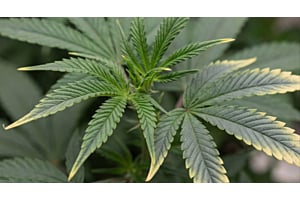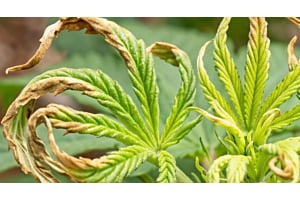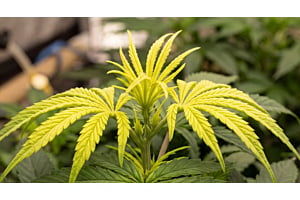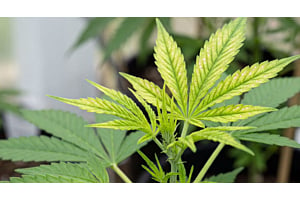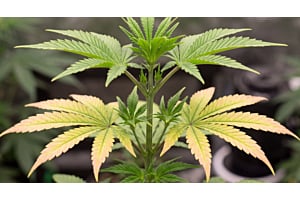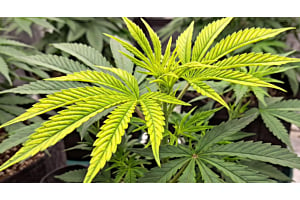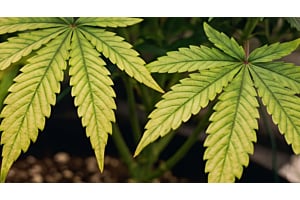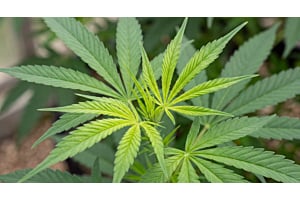
A hermie plant shows male pollen sacs or banana-shaped stamens on a plant that is otherwise growing female buds. Catching those signs early protects the rest of your crop, because one hermie can pollinate every female plant nearby and fill your buds with seeds.
This guide explains what a hermaphrodite cannabis plant is, the early signs ranked by how reliable each one is, what a hermie looks like in flower and what makes a plant herm in the first place. By the end you will know exactly where to look and what to do when you find it.
Fast Rule: A true hermie sign is a male part growing on a female plant — a round pollen sac at the node or a smooth banana-shaped stamen pushing out of a bud. White hairs (pistils) and swollen seed-pod calyxes are female parts and do not mean a hermie. When you see balls or nanners, isolate the plant the same day.
What Is a Hermie Plant?
A hermie plant is a cannabis plant that develops both female and male reproductive parts on the same plant. The term "hermie" is short for hermaphrodite, and growers also call it a hermed or hermaphrodite weed plant.
A female cannabis plant normally grows only pistils and buds, but a hermaphrodite also produces pollen sacs or banana-shaped stamens that release pollen. That pollen seeds nearby female plants and the plant's own buds alike, turning smokable flower into seedy flower. The real danger is the rest of the room, since one hermie can pollinate every female around it.
Hermies matter because pollination changes what you harvest. Most growers want sinsemilla, the seedless buds that come from unpollinated female marijuana plants. A single hermaphrodite plant releasing pollen in a flowering room can seed an entire tent.
Knowing the early signs of a female cannabis plant and the early signs of a male cannabis plant makes hermie traits easier to spot, because a hermie is simply a female plant showing male parts where it should not.
What Are the Early Signs of a Hermie Plant?
The early signs of a hermie plant are male reproductive structures appearing on a flowering female plant: pollen sacs at the nodes and banana-shaped stamens inside the buds. These two signs are the only ones that confirm a hermie on their own. Other clues, like a sudden swollen calyx, point you toward a closer look but do not confirm anything by themselves.
Here's how the signs break down:
- Pollen sacs at the nodes - the clearest, highest-reliability sign and where to look first
- Banana-shaped stamens (nanners) - male parts that grow straight out of the bud and pollinate fast
- Swollen calyx or hermie - how to tell a normal female calyx from an actual male part
| Early sign | What it looks like | Where it appears | Reliability |
| Pollen sacs | Round or teardrop green balls, grape-like clusters | At the nodes where branches meet the stem | High - confirms a hermie |
| Banana stamens (nanners) | Smooth yellow or green banana shapes, often curved | Pushing out from inside the buds | High - confirms a hermie |
| Swollen calyx | Fat rounded green pod with pistils | Throughout the bud | Low - usually normal female growth |
| Light stress marks | Yellowing or stretching near a light leak | Near the stress source | Low - a risk factor, not a sign |
The table ranks signs by diagnostic weight, so you weigh each one correctly. A high-reliability sign confirms the diagnosis on its own. A low-reliability clue only tells you to inspect more closely.
Pollen Sacs at the Nodes: The Clearest Sign
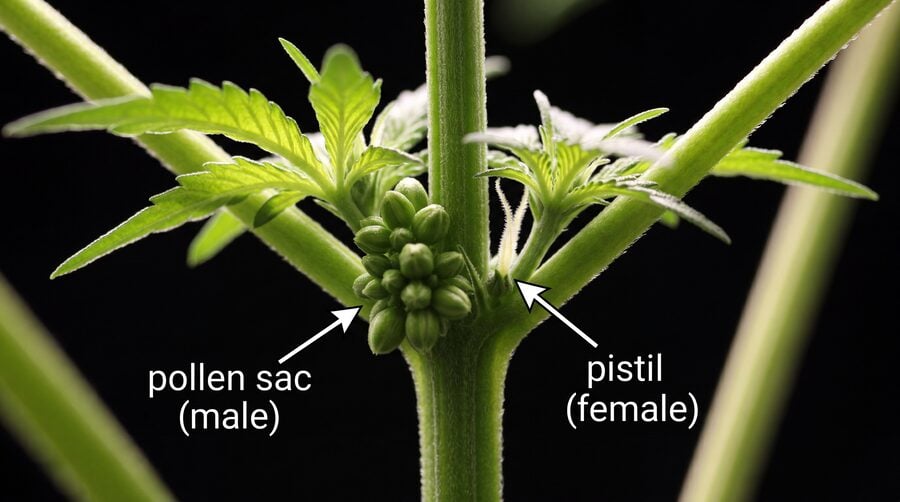
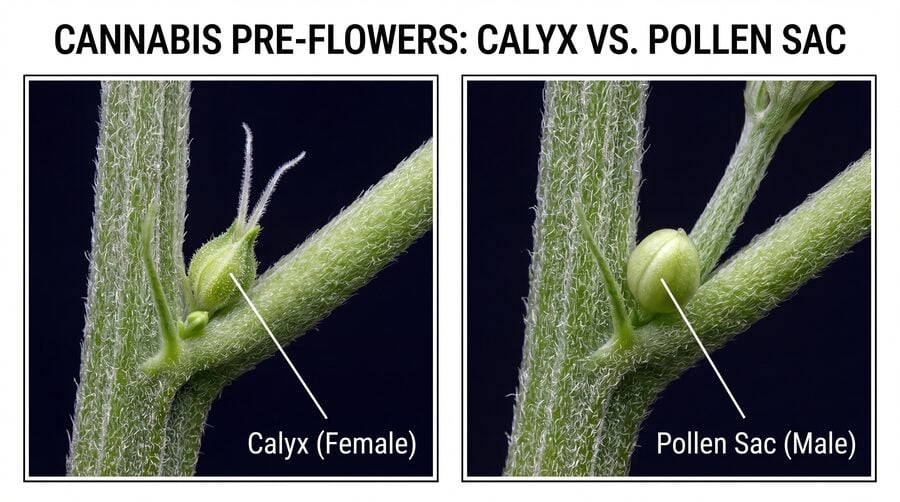
Pollen sacs are the clearest early sign of a hermie plant, and they grow at the nodes where branches meet the main stem. A pollen sac (also called a ball) starts as a small, round or teardrop-shaped green growth, and several often cluster together like a tiny bunch of grapes.
Female pre-flowers in the same spot produce thin white hairs called pistils, so the round, hair-free shape is what separates a male pollen sac from female growth. When the sacs mature, they split open and release pollen, so spotting them before they open is what saves the crop.
Banana-Shaped Stamens (Nanners) in the Buds
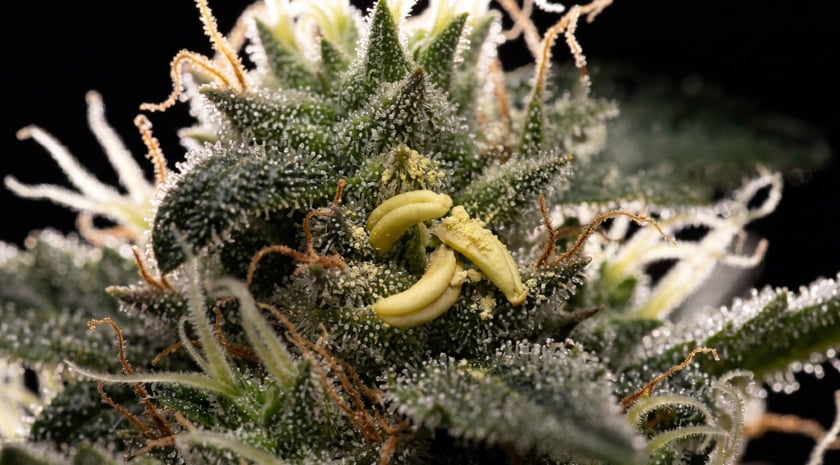
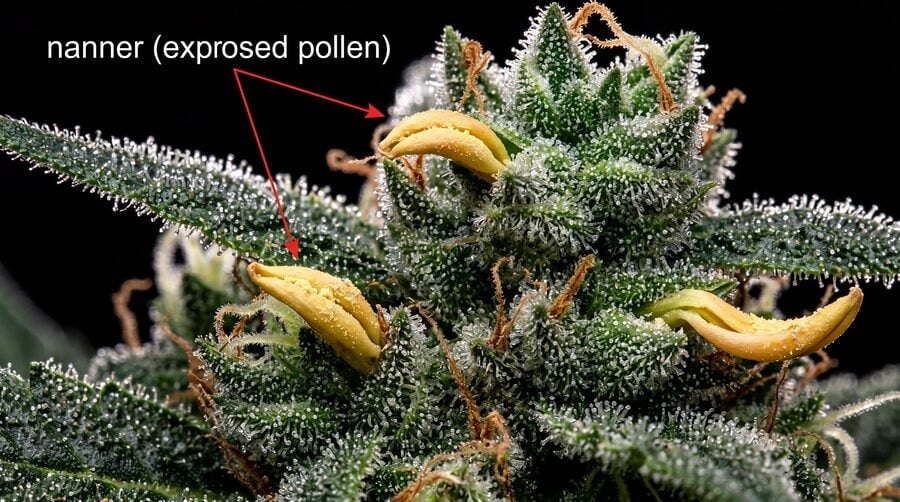
Banana-shaped stamens are male parts that grow directly out of the buds, and growers call them nanners. A nanner is a smooth, yellow or green, banana shape, often slightly curved, and it carries exposed pollen on its surface.
Nanners are more dangerous than sealed pollen sacs because they release pollen the moment they emerge, without splitting open first. They appear most often after heat stress or light stress in mid-to-late flower, so a bud-by-bud check during flowering catches them early.
Swollen Calyx or Hermie? How to Tell the Difference
A swollen calyx is not a hermie sign on its own, and it usually indicates normal female bud development or early seed formation. The calyx is the small pod at the base of each flower that holds the pistils, and it naturally swells as buds mature or after pollination.
People confuse a fat calyx with a pollen sac because both look round, but a calyx grows white pistils from its tip, while a pollen sac stays smooth and hair-free. When a calyx swells, and you also see no balls and no nanners, the plant is almost always just maturing normally.
What Does a Hermie Plant Look Like in Flower?
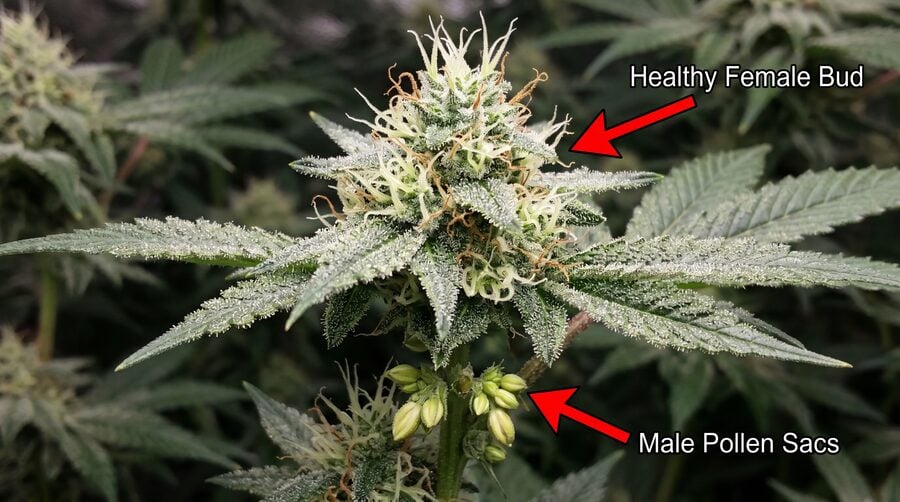
A hermie plant in flower looks like a normal bud-producing female plant with male parts mixed into the canopy. Early in flower the signs are subtle, and pollen sacs may sit low at the nodes while the buds still look healthy. By mid-to-late flower the male parts grow larger and nanners can appear inside dense buds, which makes a hermaphrodite plant harder to spot the longer you wait.
Daily inspection right through flower gives you the best chance to catch the change before pollen spreads, with extra attention after any heat spike or light leak, since that is when nanners tend to show up late in the cycle.
What Causes a Cannabis Plant to Turn Hermie?
A cannabis plant turns hermie when stress or unstable genetics push a female plant to grow male parts as a survival response. Common stress triggers include heat spikes, light leaks during the dark period, interrupted light cycles, late harvest and physical plant damage.
Genetic instability also plays a role, because some seed lines carry a stronger tendency to herm under pressure than others. Understanding the difference between male vs female weed plant development helps you read these signals, since a hermie is a female plant reacting to stress by adding male structures.
Environment is the lever most growers control. Stable temperatures, a fully dark dark-period and a steady light schedule reduce the stress load that triggers herming. The basics of a controlled setup are covered in this guide to growing weed, where consistent conditions do most of the prevention work for you, where cultivation is lawful in your area.
How Do You Prevent Hermie Plants?
You prevent hermie plants by removing stress triggers and starting with stable genetics. Keep the flowering room sealed against light leaks, hold temperatures steady, avoid interrupting the dark period, and harvest on time instead of letting plants over-ripen. Seed choice is the other half of prevention, because stable, well-bred genetics herm far less often than unstable bagseed.
Growers who want a lower-risk female outcome often start with feminized cannabis seeds, which are bred to produce female plants and reduce the male-sex uncertainty before the grow even begins, where cultivation is permitted by federal, state and local rules.
Prevention is cheaper than cleanup. Once a hermaphrodite plant releases pollen, the seeds it creates carry the same herm-prone tendency, so saving and replanting that seed repeats the problem. Buying graded seed from a known source breaks that cycle.
How Seed Type Affects Hermie Risk
Seed type affects hermie risk because each type carries a different sex-expression tendency and genetic stability profile. Feminized seeds reduce the chance of a male plant and lower herm risk when the breeding is stable, which keeps your attention on bud development instead of sex-checking every plant.
Regular seeds preserve the natural male and female split, so they suit breeding projects where you want true males and females rather than guaranteed females. Compare the options by browsing regular seeds for breeding work or the wider marijuana seeds catalog to match genetics to your grow goals, where lawful for eligible adult buyers.
Autoflower plants follow their own pattern, worth a quick note. From the angle of hermie spotting, the important point is that autoflower weed seeds flower with age rather than a light-cycle flip, so a missed dark period stresses them less, though unstable autoflower genetics can still herm under heat.
Frequently Asked Questions
What Is a Hermie in Simple Terms?
A hermie is a cannabis plant carrying both female and male parts at once. The male parts release pollen that can seed nearby female plants, and the plant's own buds along with them, turning seedless flower into a seedy flower.
When Should You Harvest a Hermie Plant?
Harvest a hermie as soon as you decide the buds are usable, rather than waiting for full ripeness, because male parts keep maturing and spreading pollen the longer the plant stays in flower. Isolate it from other plants first.
Are Hermie Buds Safe to Use?
Hermie buds are usable but often contain seeds, which reduces smokable flower and changes the smoke. The plant itself is not harmful; the seeds are just an unwanted byproduct of pollination.
Do Hermie Seeds Produce Hermie Plants?
Hermie seeds carry a higher tendency to herm because they inherit the same stress-prone genetics. Starting fresh with stable, graded seed gives a more predictable result than replanting seed from a hermed plant.
Can You Still Smoke a Plant that Hermed Late in Flower?
Yes. A plant that herms in late flower has usually already built most of its buds, so the harvest is mostly intact, with some seeds mixed in. Catching it early still limits how many seeds form.