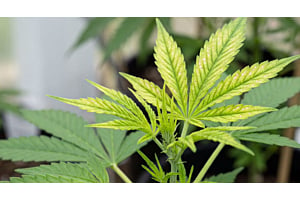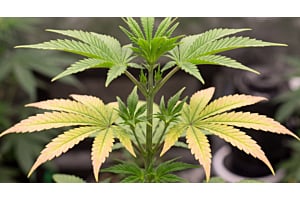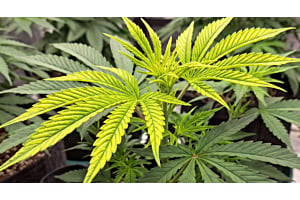
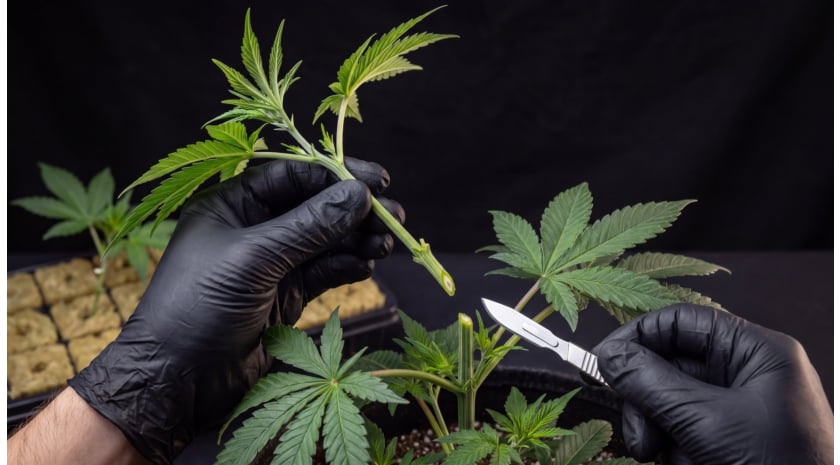
To clone marijuana, cut a 4–6 inch shoot from a healthy female plant in veg, just below a node. Strip the lower leaves, dip the base in rooting hormone, and set it in a damp medium under a humidity dome and gentle light. Most cuttings show roots in about 10–21 days.
Every cannabis clone is a genetic copy of the plant it came from, so a cutting from a female grows into another bud-bearing female with the same age and the same potential for yield, potency, and flavor. That's why most growers take clones from photoperiods started from high-quality feminized seeds.
Find a plant you love, and you can clone it for as many runs as you like. This guide has all the details, from equipment and choosing a mother plant to steps on how to clone marijuana, cutting care, troubleshooting tips, and whether cloning machines are worth it.
What Are Cannabis Clones?
Cannabis clones are cuttings taken from a living plant and rooted until they grow into separate plants. They aren't seedlings. A clone is genetically the same plant in a new body, so everything coded in the mother's genes carries over to every cutting you take.
What Does a Clone Inherit From Its Mother?
A clone inherits all of its mother's genetics, from her sex and indica/sativa makeup to her yield potential, potency, terpene profile, and flowering behavior. Seeds from one strain can grow into noticeably different phenotypes, but a clone locks in the exact pheno you picked. What can still shift is how fully those traits show up in your grow:
| Trait | What the Cannabis Clone Inherits | What Can Still Change |
| Sex | The mother's sex, so a female's clones are female | Heavy stress can trigger hermaphroditic flowers in any plant |
| Indica/sativa makeup | The same genetic balance, whether indica-dominant, sativa-dominant or a balanced hybrid | Nothing |
| Structure | The same branching pattern, leaf shape, and height tendency | Final height depends on veg time, training, and pot size |
| Plant age | The mother's maturity, so the cutting skips the seedling and juvenile stages | Growth stays slow until new roots catch up with the top |
| Flowering behavior | The same photoperiod or autoflower trait and a similar flowering length | Growing conditions can still shift finish time slightly |
| Yield potential | The same genetic ceiling | Light, root space, feeding, and training decide how close you get |
| Potency | The same THC and CBD potential | Light, plant health, and harvest timing affect final levels |
| Aroma and flavor | The same terpene potential | Climate, feeding, drying, and curing shape how strongly it comes through |
| Effects | The same cannabinoid and terpene makeup, so expect a very similar experience | Harvest timing can alter the effects due to THC degradation |
| Weak spots | The same sensitivity to mold, pests, or heavy feeding | Good conditions keep them in check |
Advantages of Cannabis Clones
The biggest advantage of cannabis clones is predictability. You know the plant's sex, strain traits, and performance before you even take the cutting. Here are a few more reasons why growers clone marijuana plants:
- Guaranteed females. There's no sexing and no males to pull halfway through veg.
- Proven performance. You've already seen how the mother grew and how her buds turned out, so there are no surprises.
- Uniform crops. Clones from one mother grow at a similar pace with similar structure, which makes canopy management and harvest timing easier.
- No germination or seedling stage. A clone is already a mature plant, so once it roots, it grows fast and is ready to flip to 12/12 sooner than a seedling of the same size. That's why clones suit sea of green (SOG) setups, where lots of small plants go into flower after a short veg.
- Keep your keeper. A standout pheno can stay in your garden for as many runs as you like.
- Nearly free plants. Once you have a healthy mother, each new cutting costs next to nothing besides plant care.
Disadvantages of Cannabis Clones
The main downside of clones is that they copy the bad along with the good. Any pest, disease, or genetic weakness in the mother passes to every cutting you take.
- Inherited problems. Mites, mildew, and hop latent viroid can all ride along on a cutting.
- No genetic variety. A crop of identical plants shares the same weak spots, so one mold or pest problem can hit every plant at once.
- No new finds. Cloning keeps a pheno going but never turns up a better one. Pheno hunting requires growing from seed.
- You need a donor plant. You have to grow one first or source cuttings, and a dedicated mother takes up space and light.
- A fragile start. Rootless cuttings need close care for a couple of weeks, and a few typically won't make it.
Choosing the Right Cannabis Mother Plant
The best cannabis mother plant is a healthy, pest-free female in active veg with enough side growth to spare a few shoots. Any plant you'd happily grow again works, so she doesn't need to be a dedicated mother kept in veg forever.
Pass on any plant that looks stressed, hungry or overwatered. A cutting roots entirely on the reserves stored inside it, so a struggling donor gives you cuttings with nothing in the tank. Fix the problem first, then cut. Run through this checklist before you start:
- Female and in vegetative growth.
- No pests, eggs, or webbing on either side of the leaves.
- No mold, rot, or unexplained spotting.
- No current feeding or watering stress.
- Enough side growth to lose a few shoots without stalling.
How Mature Should a Mother Plant Be?
Plenty of growers wait for alternating nodes or around four weeks of veg, but there's an easier test. If your cannabis mother plant can lose two or three shoots and keep growing without a visible stall, she's ready. If those shoots are most of what she has, give her another week.
Shoot position is mostly a myth. Trials comparing cuttings from the top, middle, and bottom of the plant found no meaningful difference in rooting, so take whichever shoots she can spare.
Can You Use an Autoflower as a Mother Plant?
Yes, technically you can, but it isn’t practical or worth the effort. Autoflowers start flowering by age, so a cutting carries the same internal clock as its mother. That’s why cloning autoflowers usually gives you a tiny plant that flowers almost right away. Most growers start autos from top-tier autoflowering seeds instead.
What You Need to Clone Cannabis
To clone cannabis, you need a sharp sterile blade, a rooting medium, a humidity dome, rooting hormone, and a gentle light. Everything else makes your results more consistent or helps you scale up. Here’s the full breakdown:
| Item | Why You Need It | Must-Have? |
| Scalpel, razor blade, or sharp snips | Makes a clean cut without crushing the stem | Yes |
| Household bleach (10% solution) | Sterilizes your blade between plants | Yes |
| Rockwool cubes or rooting plugs | Holds moisture and air around the stem | Yes |
| Rooting gel or powder | Speeds up root formation and evens out your batch | Strongly recommended |
| Humidity dome and tray | Slows water loss while the cutting has no roots | Yes |
| Low-intensity light | Keeps a cutting photosynthesizing without drying it out | Yes |
| pH pen and pH down | Conditions rockwool, which is alkaline out of the bag | Yes, for rockwool |
| Heat mat | Warms the root zone | Only if your room is cool |
| Hygrometer | Shows the real humidity inside your dome | Nice to have |
| Labels | Keeps different genetics straight | Nice to have |
Rooting hormone isn't strictly required, but it's a smart choice. In one large university trial, cuttings treated with any rooting hormone rooted far more often than untreated ones, while the brand and form made little difference. Stick with a standard-strength product, since very strong formulas actually performed worse in separate testing.
How to Clone Marijuana Step by Step
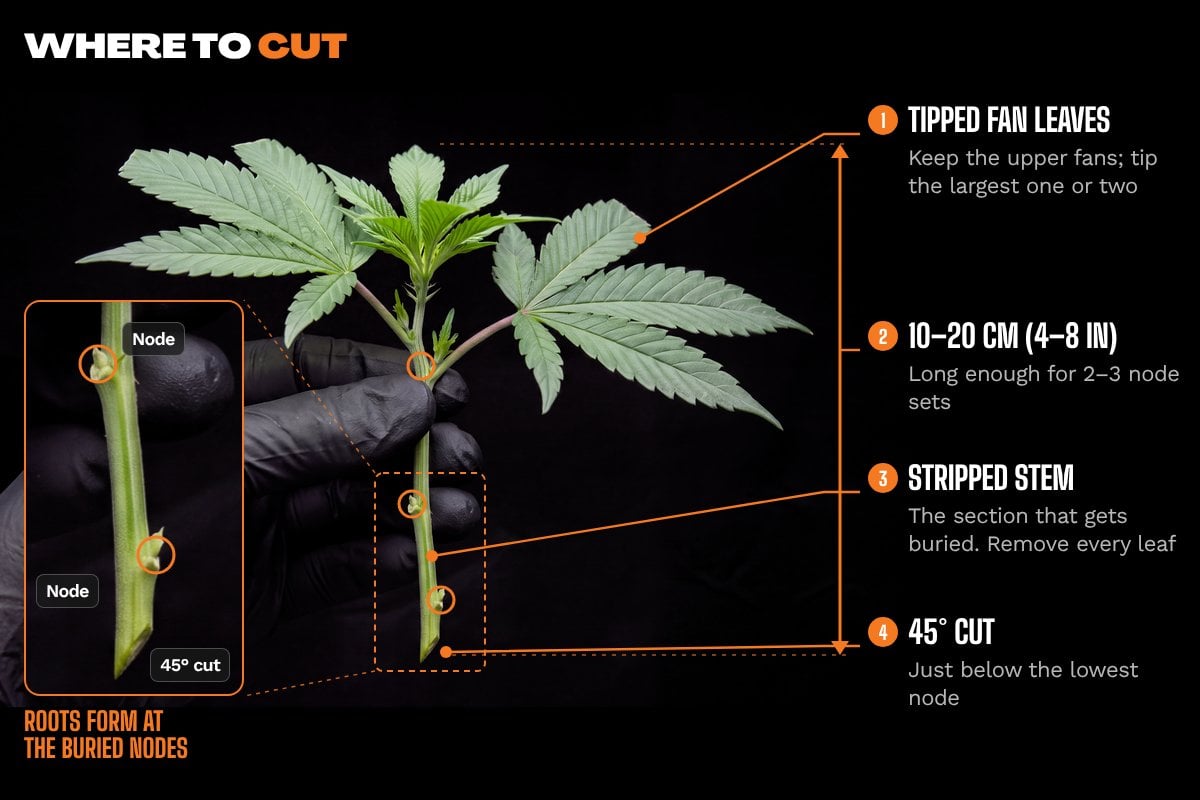
Cloning marijuana takes eight steps: prep your station, pick a shoot, cut below a node, strip the lower leaves, keep the top leaves whole, scrape the base, apply hormone, and plant it under a dome. Get everything ready before your first cut, because a cutting starts losing water the moment it leaves the plant. Here’s a detailed breakdown of each step:
- Prep your station. Soak and drain your cubes or plugs, fill a glass with clean water, and set out your dome. Sterilize your blade in a 10% household bleach solution for two minutes, then rinse it.
- Pick the right shoot. Choose a healthy side branch with a firm, pencil-thick stem and two or three sets of nodes. Skip anything woody or wafer-thin, since both root reluctantly.
- Cut 4–6 inches back from the tip. Slice at about 45 degrees, just below a node, and drop the cutting straight into water. Roots grow from tissue at and around the node. Solid white pith inside the stem is a good sign.
- Strip the lower leaves. Snip off every leaf and side shoot on the part you'll bury. Cut them off cleanly, since pulling them tears the stem and invites rot.
- Keep the top leaves whole. Leave at least 3 healthy leaves and skip the old habit of trimming their tips. A University of Guelph trial found tip trimming actually lowered rooting success with no gain in root quality.
- Scrape the base. Gently scrape the outer skin off the bottom half inch of stem with your blade. Wounded cuttings root more often and a little sooner in trials, but keep it to a light scrape, since splitting the stem invites rot.
- Dip in rooting hormone. Coat the bottom inch in rooting gel or powder and tap off the excess. Pour a little into a separate cup first so you don't contaminate the whole bottle.
- Plant and dome it. Poke a hole in the medium, insert the stem so at least one stripped node sits inside, and firm it gently so there's no air pocket. Label it, then set it under the dome with low light.
Always take a few more cuttings than you need. Even experienced growers lose some, and spares only cost you a little tray space.
Keep Your Weed Clones Clean: Pests, Mold & Hop Latent Viroid
Keeping your weed clones clean starts with a healthy mother and a properly sterilized blade. A cutting carries whatever lives on or inside the plant it came from, then sits in a warm, humid dome that pests and pathogens love. Here’s what to keep an eye on when you’re cloning cannabis:
Pests
Cannabis pests like spider mites, thrips, aphids, and whiteflies are the most likely ones to hitch a ride on your cuttings, often as eggs you won’t spot at a glance. Check both sides of the leaves and the stems before you cut. Fine webbing, pale speckling, or silvery patches mean the mother needs treating first.
Keep clones from another grower away from your other plants for a couple of weeks until you’re sure they’re clean. Pests that arrive on a single cutting can spread fast in a warm propagation space.
Mold
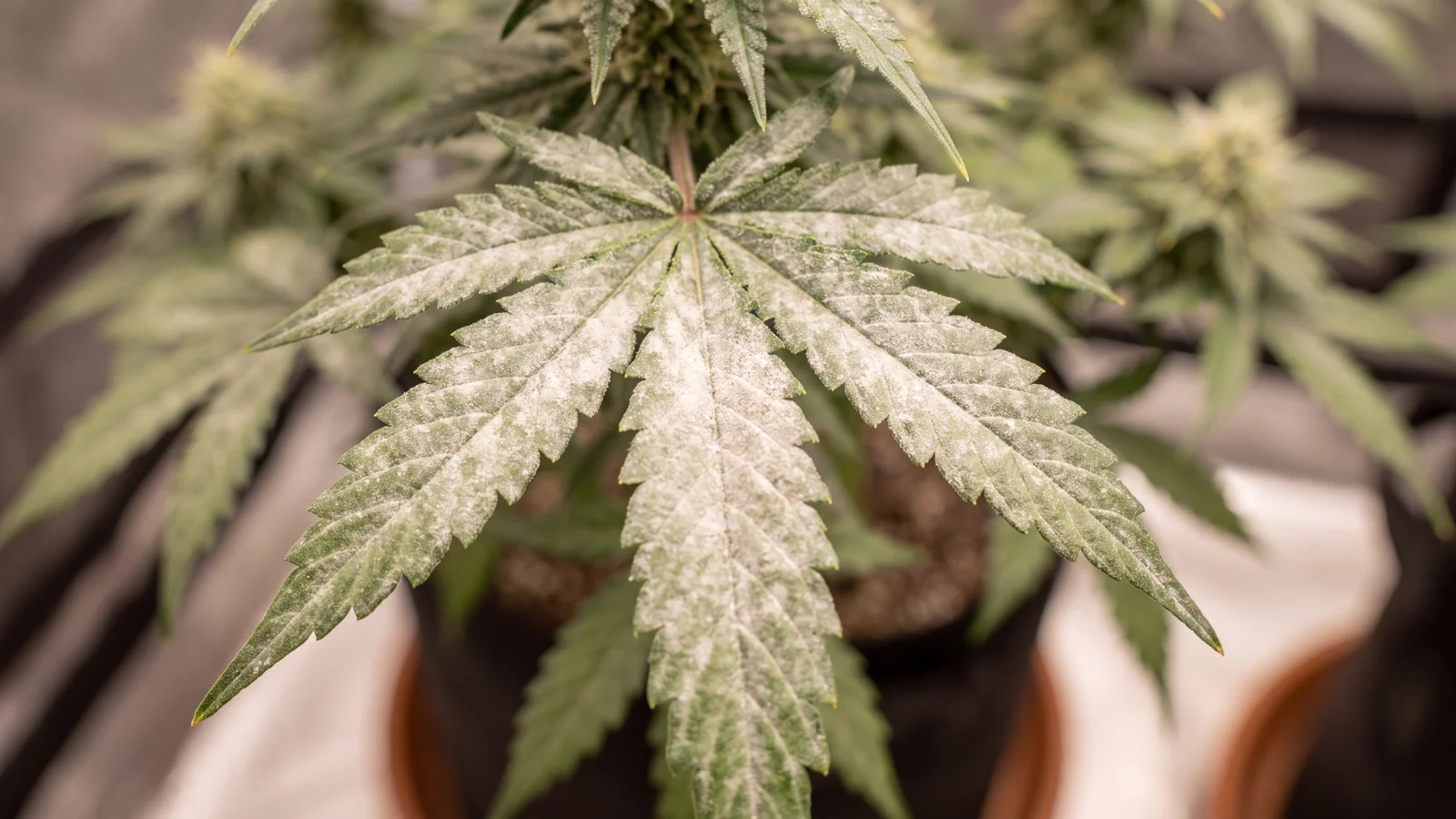
Powdery mildew is the mold most likely to arrive on a cutting, since its spores sit on the leaf surface and thrive in a humid dome. Look for white, flour-like patches on the mother’s leaves and skip any plant that shows them. Fuzzy growth that appears later inside the dome is a separate problem, caused by too much moisture and too little airflow.
Hop Latent Viroid (HLVd)
Hop latent viroid (HLVd) is the biggest hidden threat to clones. It’s a tiny infectious strand of RNA that spreads mainly through cloning and causes “dudding,” which means smaller plants, airy buds, and weaker aroma and potency.
Infected mothers often look perfectly healthy while passing it to every cutting. Alcohol wipes won’t stop it. Research found 70% alcohol had no effect on HLVd in plant sap, while a 10% household bleach solution worked with a two-minute soak. Soak your blade between plants, then rinse it before the next cut.
If you plan to keep a mother for years, a lab test for HLVd is well worth the small cost. Symptoms can take weeks to show up after infection, so a test of leaf or root tissue catches what your eyes can’t.
How to Care for Cannabis Cuttings Until They Root
Until roots form, keep your cannabis cuttings warm, very humid, gently lit, and mostly left alone. High humidity slows water loss from the leaves, and low light keeps their water demand down. Together, they buy the cutting time to grow roots.
| Setting | Target |
| Air temperature | 72–78°F |
| Root zone | About 75–80°F, slightly warmer than the air |
| Humidity | 80–95% at first, easing toward 70–75% as roots appear |
| Light intensity | Low, around 50–150 PPFD |
| Light schedule | 18 hours on, 6 off |
| Medium | Damp throughout, never soggy or sitting in water |
| Feeding | None until roots appear |
Keep the Light Low
Strong light drives water loss, and that's exactly what a rootless cutting can't afford. Use a weak light or dim your LED way down. In a reflective tent, dimming works better than raising the light, since the walls bounce much of it back down.
Brighter light won't root more cuttings either. A trial comparing three light levels found no significant difference in how many cuttings rooted, so there's nothing to gain from pushing it.
Vent the Dome Gradually
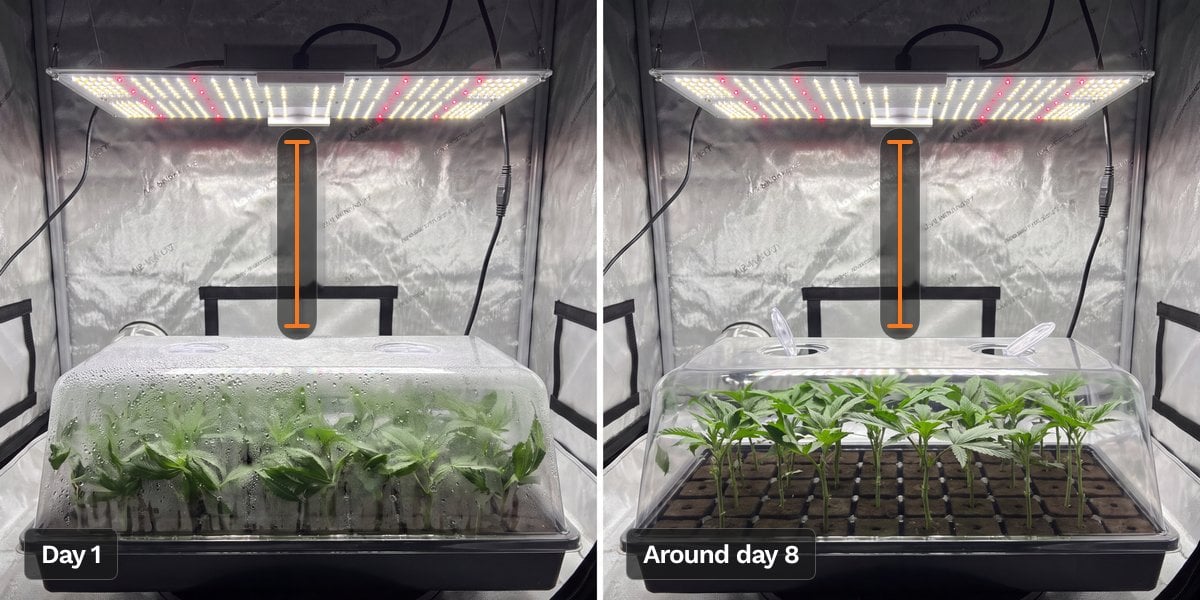
Keep the dome closed for the first 2–3 days, then start venting briefly once a day. Leave it open a little longer each day as roots form. Heavy condensation on every surface means you're overdue for a vent, and clones left sealed too long tend to rot or stall.
A sealed dome already holds plenty of moisture, so skip routine misting. Water sitting on the leaves invites mold. Only mist if your dome leaks and the leaves look limp.
Hold Off on Feeding
A cutting without roots can't take up nutrients, so feeding just leaves salts in the medium that can burn the stem. Stick with plain pH'd water only. Once white root tips appear, a quarter-strength veg feed is plenty.
Your daily check takes a minute. Vent as needed, make sure the medium is damp, remove any dropped or moldy leaves, then leave them be. Pulling cuttings up to peek at the base does more damage than most environmental slip-ups.
How Long Do Marijuana Clones Take to Root?
Most marijuana clones root in about 10–21 days. Easy cultivars can show roots in under a week, and stubborn ones can take up to 5 weeks. Genetics, medium, root-zone warmth, and the cutting's reserves all shift the timing, so day 12 with nothing showing is still on schedule.
| Days | What the Cutting is Doing | What You Should Do |
| 1–3 | Leaves droop, then lift as it settles | Keep the dome closed and the light low |
| 4–7 | A pale callus forms over the cut | Start brief daily venting |
| 7–10 | Roots begin forming inside the stem | Vent a little longer each day |
| 10–14 | First white root tips appear | Open the dome most of the day and start a very light feed |
| 14–21 | Roots spread and new top growth appears | Harden off and transplant |
Don't mistake a callus for roots. The pale, bumpy tissue that forms over the cut is a normal first step, but it isn't a root system yet.
How to Tell Your Clones Have Rooted & What to Do Next
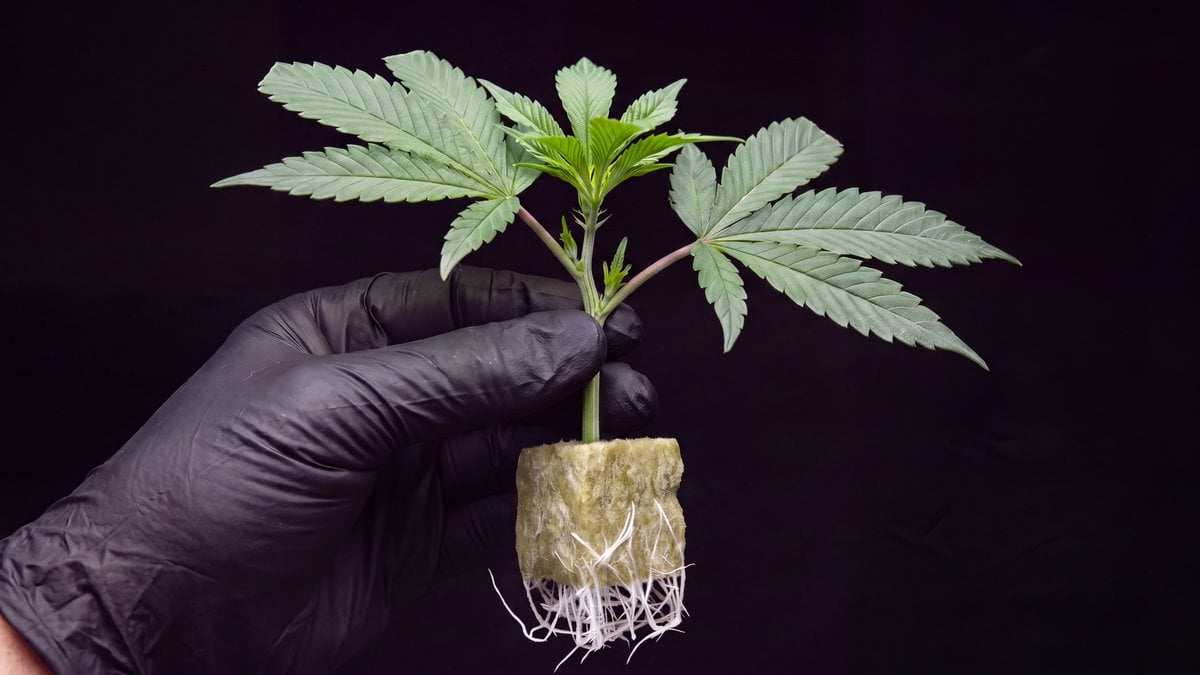
Your clones have rooted once white root tips push out through the cube or plug, and your next step is hardening them off before you transplant. Each sign tells you something different, so read them together and check by eye before you touch anything:
- Roots on the outside of the medium are the only certain proof. Healthy tips look bright white and crisp, while brown or slimy roots point to rot.
- New leaves at the tip are a strong hint, but a cutting can push a little growth on stored reserves before it has roots.
- Standing firm with the dome open shows the roots are supplying water. A cutting that flops within minutes needs more time under cover.
- Resistance on a light tug confirms the cutting is anchored, but every tug risks snapping new roots, so test one cutting and only once.
Hardening Off and Transplanting Weed Clones
Harden your weed clones off before moving them. Open the dome a bit more each day until they hold up in room humidity, then raise the light gradually. Jumping straight from a sealed dome to full veg conditions is the most common way a rooted clone gets wasted.
Transplant your cannabis clone once the roots show on more than one side of the cube. Hold the medium, never the stem, and plant the whole cube so its top sits level with the new soil. A small pot or nursery cup works better than a big container, since a tiny root mass in lots of wet medium can drown.
Expect a quiet week or so while roots fill the new pot. That's normal, so resist the urge to feed harder. From here, your marijuana clone grows on like any other plant in veg.
Why Clones Fail and How to Fix Them
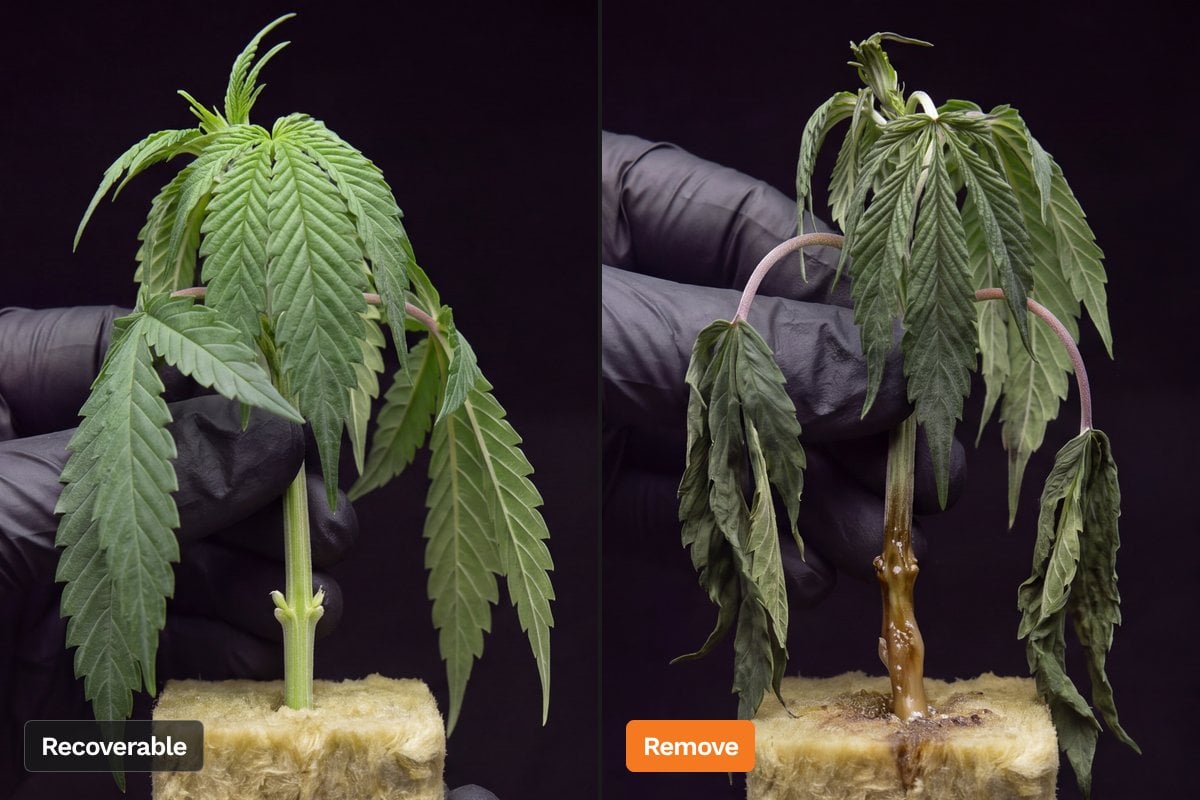
Most clone failures come from one of two opposite problems. Either the cutting is drying out, or it's sitting too wet in still air. Read the symptom first, because the fixes for each point in opposite directions.
| Symptom | Likely Cause | Fix |
| Drooping on day 1 or 2 | Normal settling | Leave it alone and check the dome seal if it's still flat by day 4 |
| Wilting or crispy leaf edges after day 3 | Light too strong or humidity too low | Close the dome and dim the light, but don't add more water |
| Brown, soft, or slimy stem base | Soggy medium, stagnant air, or a dirty blade | Let the medium dry back to damp, improve airflow, and remove affected cuttings |
| White fuzz on leaves or medium | Mold from saturated, still air | Vent more, clear out dead leaves, and stop misting |
| Lower leaves slowly yellowing | The cutting is using up its stored reserves | Usually normal, so don't feed |
| Burnt, crispy tips after feeding | Nutrients given before roots formed | Switch back to plain water |
| No roots after 3 weeks, stem still green | Cool root zone, slow genetics, or no hormone | Add bottom heat and give it more time |
When nothing roots, check root-zone warmth first, since a cool medium is the quietest cause of a stalled batch. Then look at the cutting itself. Woody, thin, or crushed stems root reluctantly, and so do cuttings from a stressed mother.
Before you toss anything, triage the tray. A wilted cutting with a firm green stem often bounces back within hours once humidity returns. A soft, brown base rarely recovers, though, so remove it to protect the other cuttings.
Rooting Mediums and Clone Machines Compared
Cannabis clones root in every common medium, but rockwool gives most home growers the most consistent results. In one university trial, rockwool rooted far more cuttings than peat-based mixes. Pick a method based on your batch size and how much moisture management you're up for:
| Method | How It Works | Best For | Watch Out For |
| Rockwool cubes | The stem sits in a pre-soaked fiber cube that holds water and air | Repeatable results in any batch size | Alkaline out of the bag and easy to oversaturate |
| Peat or coco plugs | The stem sits in a compressed organic plug | First attempts and small batches | Dries faster than rockwool once you start venting |
| Coco and perlite cells | The stem sits in loose medium in small cells or cups | Growers already running coco | Moisture is hard to judge across many cells |
| Glass of water | The stem stands in clean water until roots form | Trying it with one or two cuttings | Slower rooting and fragile roots at transplant |
| Aeroponic clone machine | Bare stems hang in collars over misted or bubbled water | Rooting lots of cuttings regularly | One fault can take out every cutting at once |
If you use rockwool, soak it in water adjusted to pH 5.5 to 6.0, then let it drain without squeezing. Skipping this step is one of the most common reasons a batch just sits there. Solid mediums also go straight into the pot at transplant, so you never disturb the roots.
Is a Clone Machine Worth It?
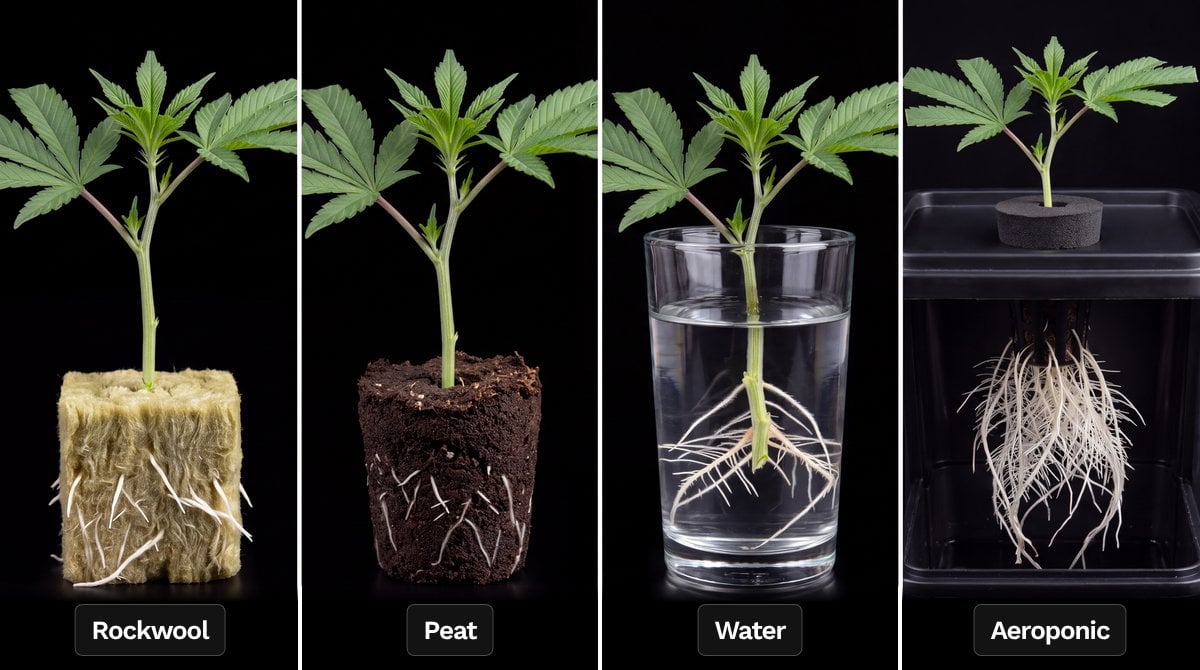
A clone machine is worth it if you root marijuana cuttings in quantity and do it often. These aeroponic units suspend bare stems over oxygenated water or fine mist, and trials show they root as well as rockwool or better. Clone machines also need power, a fresh reservoir, and cleaning between runs, and a stalled pump or dirty water can sink the whole batch together.
For a handful of cannabis cuttings, a simple dome and tray does the job for far less money.
Cannabis Clones vs Seeds: Which Should You Start With?
Top-quality cannabis seeds are the better starting point for most home growers, and clones are how you keep a plant you love. When you get them from a reputable seed bank, weed seeds arrive clean with no pest or disease history, while clones from someone else's garden can bring mites, mildew, or viruses like HLVd with them.
That's the catch with getting marijuana clones from someone or someplace else. They're live plants, so they don't travel as easily as seeds and need careful quarantine when they arrive.
The best approach uses both. Grow from seed, find the standout plant in your tent, and take a few cuttings before you flip to 12/12. If the harvest impresses you, those weed clones keep that exact plant going for future runs.