Buying or growing cannabis can raise a lot of questions, especially when it comes to weed cost and how much you actually get for what you pay. Ask ten people what a pound of marijuana is worth, and you might get ten different answers.
Add in terms like ounces, grams, and slang like “zip,” and it’s no wonder consumers get confused trying to figure out how many grams are in what they’re buying.
This guide breaks it all down: what you can expect to pay at a dispensary, what factors influence average prices, and how to make sense of the different ways weed is measured.
National Average Cannabis Price in the U.S. (2026)
As of the beginning of 2026, the national U.S. spot price for a pound of marijuana has ranged between approximately $1,000 and $1,089 in early 2026, with the index sitting around $1,059 as of mid-April, according to Cannabis Benchmarks. This number reflects wholesale rates, where licensed businesses buy cannabis in bulk.
It’s important to understand that this spot price isn’t what individual cannabis consumers pay at a dispensary. Retail prices are usually higher since they include packaging, taxes, labor, and other overhead. So while just over $1000 sets a baseline, the price you actually pay for weed can vary depending on location, quality, and whether you’re shopping in a medical or recreational market.
What Affects Cannabis Pricing
Cannabis prices vary for many reasons, so knowing what drives those changes helps you recognize value and spot trends. Here are the key factors that influence pricing:
- Cultivation Method: Indoor-grown cannabis tends to cost more than outdoor or greenhouse varieties due to higher energy use and environmental control.
- Supply & Demand: Seasonal harvests, spikes in consumer demand, and weather events all shift availability—and prices—at the dispensary.
- Production Expenses: Production costs such as labor, lighting, and nutrients, plus compliance costs (testing, packaging, licensing) push prices higher in legal markets.
- Quality & Potency: Cannabis grown to meet premium quality standards sells for more, so expect higher prices for dense buds, strong terpene profiles, and high potency.
- Legality & Market Type: In regulated markets, layered taxes and increased competition shape pricing. Meanwhile, illegal markets often have lower street prices but no safety or consistency.
Medical vs. Recreational Cannabis Pricing
Prices can also differ significantly between medical and recreational markets. In many states, medical marijuana is taxed at a lower rate compared to recreational sales. This helps keep costs more manageable for patients who rely on medical cannabis for long-term treatment.
Some states also limit the types of cannabis products or the strength of cannabis flower available in recreational markets, which can shift demand and affect pricing structures between the two systems.
Overall, medical cannabis is usually priced to be more accessible, while recreational pricing is more influenced by market trends, specific cannabis strains, competition, and what cannabis consumers are willing to pay.
Regional Price Variation
Where you live can really affect cannabis prices. In states like Oregon and Colorado, legal markets are well-established and production is high, so prices tend to be lower. But in states with stricter rules or fewer licensed growers, like New York or Pennsylvania, both wholesale and retail costs can be much higher.
These different pricing structures come down to local regulations and how mature the supply chain is. In newer legal markets, limits on production and high compliance costs can make prices spike. Over time, as more competition enters and the market grows, prices tend to settle.
How Much Is a Pound of Weed?
A pound equals 16 ounces or roughly 454 grams of cannabis, making it a bulk quantity typically reserved for business-to-business transactions, such as between growers, processors, and dispensaries. In practical terms, a pound represents a full production-level batch rather than a consumer purchase, and it’s often broken down into smaller units like ounces or quarters before reaching the retail level.
For most cannabis consumers, this isn’t just a large amount; it exceeds what they’re legally allowed to carry or purchase in a single visit in most states. That’s why pounds are usually discussed in wholesale terms, not personal use.
What Does a Pound of Weed Look Like?
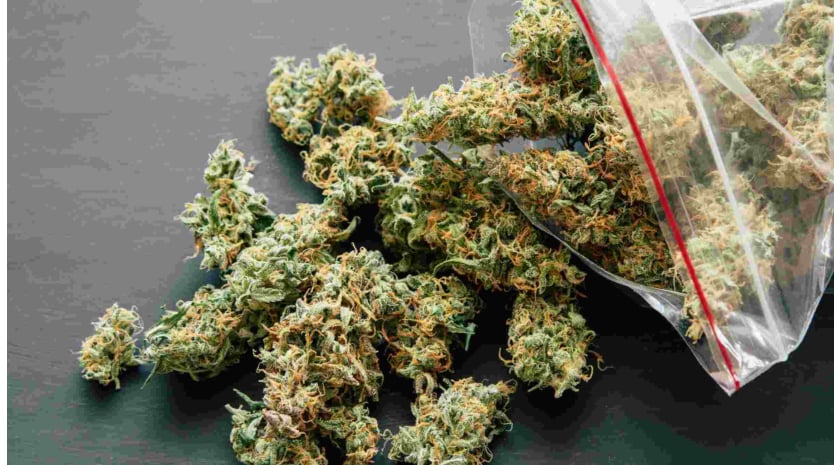
An ounce of weed is about 28 grams and can fit into a standard sandwich bag. It’s a popular amount for regular cannabis consumers and is often seen as the limit for personal possession in many legal states.
Now imagine stacking 16 of those ounce-sized bags together. That’s a full pound of cannabis, a sizable amount that can fill a large jar or even a small shoebox. It’s more than most people would use in months.
Common Weed Measurement Terms Explained
Here’s how the most common weed measurements relate to each other:
- Gram: The smallest standard unit, often used for a single joint or bowl.
- Eighth: Short for an eighth of an ounce. An eighth of weed is about 3.5 grams.
- Quarter: A quarter of an ounce. Equals about 7 grams.
- Half: Half of an ounce. Equals about 14 grams.
- Ounce: A full ounce of cannabis. Equals about 28 grams. Often considered the legal personal limit in many states.
- Pound: The largest amount in standard cannabis sales. Equals 16 ounces or about 454 grams. Mostly used in wholesale or commercial settings.
Street & Industry Slang Terms for Weed Weights
As if weed measurements weren’t tricky enough, there’s a whole set of slang still in use, many carried over from less regulated times. These nicknames often show up in casual conversation, older markets, or street-level transactions, and they can easily cause confusion if you’re not familiar with them.
- Zip: A slang term for one ounce of cannabis. The name comes from the fact that it fits in a ziplock bag.
- QP: Short for “quarter pound.” That’s 4 ounces or about 113 grams.
- HP: Means “half pound.” That’s 8 ounces or roughly 227 grams.
- O: Another way to say one ounce. You might hear someone ask for “an O” casually.
- Dime bag: An old-school term for a small $10 bag, usually around 1 gram, depending on local prices.
- Dub: Typically refers to $20 worth of weed, often around 2 grams. This one varies more depending on the local prices in the area.
While legalization has pushed for clearer labeling and standardization, these terms still pop up in conversations between cannabis consumers and even in some dispensary culture. Knowing what they mean can help you avoid misunderstandings and spot a good deal when you hear one.
What This Means for Consumers & Growers
In a world where weed prices shift, and weed measurements can sound like code, knowing your pounds from your eighths matters. For consumers, it means knowing when you’re getting a fair deal or just a fancy label. For growers, it’s the key to pricing and staying ahead of market trends.
A little knowledge goes a long way. It helps you shop smarter and grow better.