 THC
THC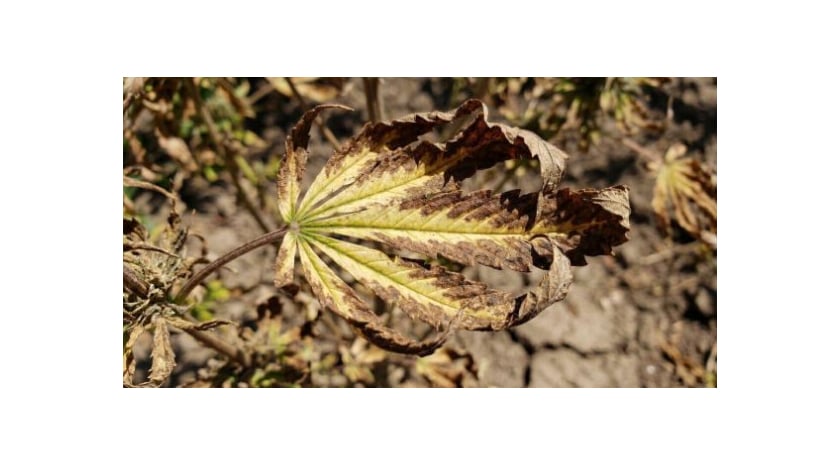
Potassium deficiency in cannabis is one of the most misdiagnosed problems a grower will face. The symptoms often mimic nutrient burn, light stress, and half a dozen other issues. This is exactly why it catches beginner cannabis growers by surprise, often being identified too late, when yield quality is already at risk.
Potassium is a vital nutrient required for overall plant health. A shortage can cause stunted growth at any stage, but it hits hardest during flowering, directly affecting bud formation, density, and resin output. However, if you spot it early, it's very fixable.
This in-depth guide covers the symptoms and causes of marijuana potassium deficiency, what sets it apart from other issues, and how to fix it fast.
What Does Potassium Do for Cannabis Plants?
Potassium (K) is a primary macronutrient, sitting alongside nitrogen and phosphorus in the N-P-K ratio on every nutrient label. Cannabis plants consume it in large quantities throughout their life cycle. Here are the four core roles it plays in cannabis growth:
Enzyme Activation and Metabolic Processes
Potassium activates over 60 enzymes involved in plant metabolic processes, including those responsible for photosynthesis and protein synthesis. It drives the production of ATP, the cellular energy currency that powers plant growth at a fundamental level.
Without adequate potassium, these processes slow noticeably, and the plant's capacity to build new tissue drops.
Water and Nutrient Transport
Potassium regulates the opening and closing of stomata, the tiny pores on cannabis leaves that control gas exchange. This directly affects nutrient uptake and how efficiently water moves through plant tissues.
When potassium levels fall, stomata function poorly, water regulation breaks down, and nutrient transport through the xylem and phloem becomes compromised.
Sugar Transport, Bud Formation, and Flowering Performance
Sugar transport through the plant's vascular system depends heavily on potassium. During the flowering phase, cannabis plants rely on this carbohydrate movement to fuel bud formation, and a steady supply is what separates dense, resinous flowers from light, airy, and underwhelming ones.
Structural Support and Cell Health
When potassium levels drop, plant structure deteriorates quickly. Stems become weak and brittle, and branches can lose their ability to support bud weight during late flower.
Turgor pressure in cell membranes, the mechanism keeping stems upright and branches strong, relies directly on potassium to function.
What Does Potassium Deficiency Look Like in Cannabis Plants
With a marijuana potassium deficiency, the symptoms shift depending on how far it has progressed and which growth stage the plant is in.
Potassium is a mobile nutrient, so the plant will pull it from older, lower leaves to prioritize new growth. This means the lower canopy is where visual symptoms typically appear first.
Early Stage Potassium Deficiency
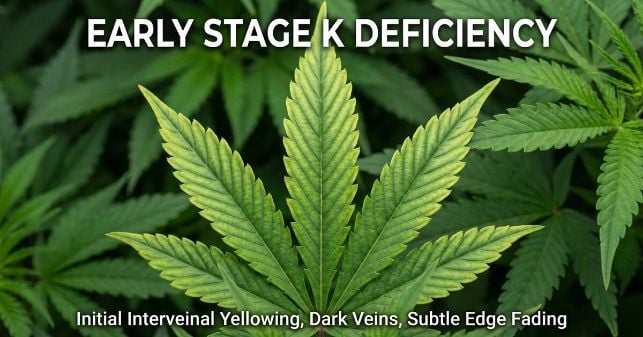
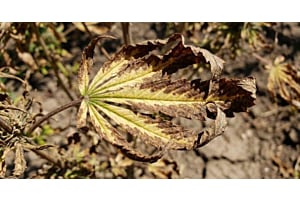
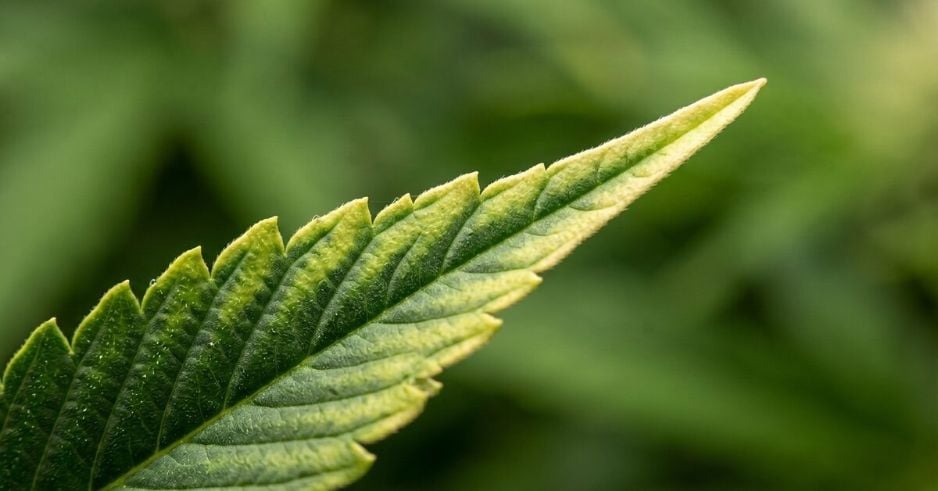
Yellowing at leaf tips and margins on older fan leaves, while veins remain green. Plant begins reallocating potassium from lower leaves to new growth.
Mid-Stage Potassium Deficiency Signs
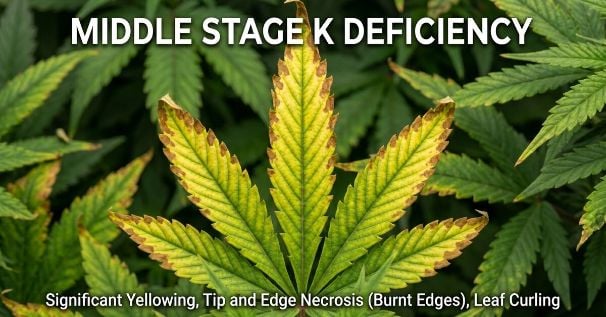
Leaf edges start browning and curling upward while stems weaken and growth visibly slows. Nutrient transport and enzyme activation are impaired, so vegetative growth stalls.
Later Stage Potassium Deficiency Signs
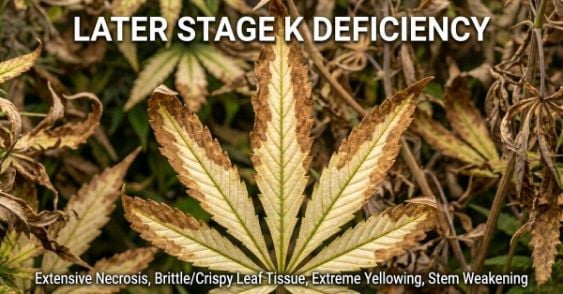
Browning spreads across leaves that curl and crisp, flowering buds develop loosely, and stems turn brittle. Sugar transport breaks down, bud formation is directly compromised, and plant structure fails.
One detail worth noting: the inner veins almost always stay green, even as the surrounding leaf tissue yellows and browns. This is a key marker that separates potassium deficiency from several other common deficiencies.
If symptoms are spreading upward from the bottom of the plant and the veins are still green, potassium is the first culprit to check.
Potassium Deficiency or Something Else?
Misdiagnosis is the biggest risk with cannabis potassium deficiency. Other deficiencies and environmental factors can produce similar leaf symptoms, and treating the wrong problem makes things worse. The table below lays out the key differences.
Potassium Deficiency vs. Other Nutrient Deficiencies
| Nutrient Deficiency | Key Visual Signs | Leaves Affected First | pH Link |
| Potassium | Yellowing leaf edges, brown crispy tips, green veins, and upward leaf curling. | Older, lower leaves. | Below 5.5 in soil limits uptake. |
| Nitrogen | Uniform yellowing starting at the tip, spreading across the whole leaf. | Oldest, lowest leaves first. | Below 6.0 or above 7.0 reduces availability. |
| Phosphorus | Dark green or purple-tinted leaves with stems that turn red or purple. | Older, lower leaves. | Below 6.0 severely restricts uptake. |
| Iron | Bright interveinal yellowing with veins that stay green. | New growth, upper canopy. | Above 7.0 locks iron out. |
| Calcium | Brown spots, curled and distorted new growth, and stunted tips. | New growth, upper leaves. | Low pH reduces calcium uptake. |
| Magnesium | Interveinal yellowing with green veins, similar to iron but lower in the canopy. | Mid-canopy, older leaves. | Low pH or excess potassium blocks magnesium. |
| Boron | Thick, twisted, or dead new growth with growing tips that look scorched. | New growth only. | Rare; linked to pH imbalance or dry conditions. |
Potassium and magnesium deficiency both show interveinal yellowing, but magnesium tends to affect mid-canopy leaves while potassium hits the oldest growth first. Calcium and iron deficiency both move from the top down, the opposite of potassium.
Potassium Deficiency vs. Nutrient Burn vs. Light Burn
These three conditions get confused often. Here's how to tell them apart:
- Nutrient burn: Brown, crispy tips with green margins. The burn stays at the tip and rarely spreads inward.
- Potassium deficiency: Brown tips combined with yellowing in the leaf margins. Damage starts at the bottom of the plant and works upward. Inner veins stay green
- Light burn: Damage concentrates at the top of the canopy, on leaves closest to the light source. Bottom leaves are unaffected.
What Causes Potassium Deficiency in Cannabis?
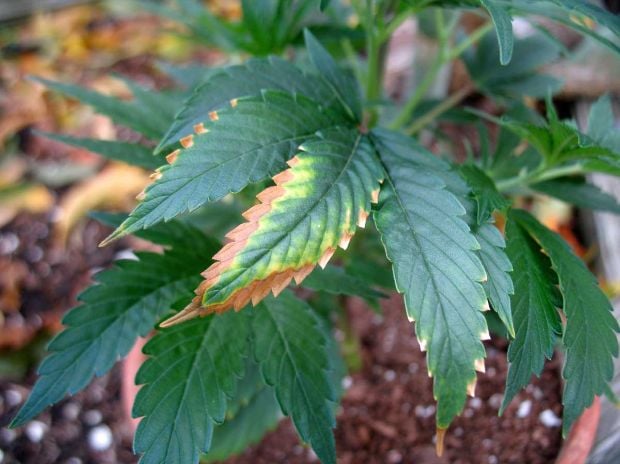
Several environmental factors can limit potassium availability, even when it's physically present in the growing medium. The causes below are the most common.
pH Imbalance and Nutrient Lockout
pH imbalance is the most frequent cause of cannabis potassium deficiency. Uptake is most efficient within specific pH ranges, depending on your growing medium:
Soil: 6.0 to 7.0
Coco coir: 5.8 to 6.3
Hydroponics: 5.5 to 6.5
Outside these windows, potassium and other nutrients become locked out at the root zone. The nutrients are physically present, but the plant just can't access them.
Poor Soil Health
Heavy, compacted soils restrict root health and limit how much potassium roots can absorb. Degraded soil health over time can also deplete natural potassium reserves, particularly in outdoor cannabis cultivation.
Checking the soil surface periodically for compaction or salt crust is a simple habit that catches problems early.
Overwatering
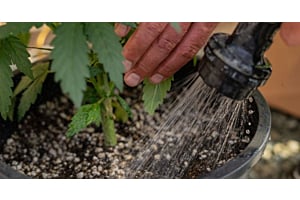
Overwatering leaches potassium out of the root zone and reduces oxygen availability, making it harder for roots to absorb other nutrients effectively. It's a common issue that can trigger or worsen a marijuana potassium deficiency even when nutrient levels in the medium are adequate.
High Potassium Demand During the Flowering Stage
Cannabis plants ramp up their potassium intake significantly during the flowering stage. A feeding schedule calibrated for vegetative growth often can't keep up with this demand. Growers who don't adjust their NPK ratios when switching to flower frequently see potassium deficiency appear around weeks 3 to 5 of bloom.
How to Fix a Cannabis Potassium Deficiency
Once a cannabis potassium deficiency is confirmed, the fix follows a clear sequence. Work through the following steps to restore plant health:
Step 1: Check and Correct pH First
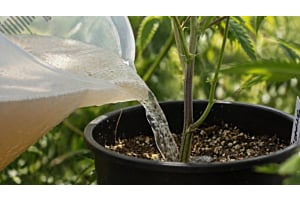
Test pH before touching your feeding schedule. Use a calibrated meter, not strips, and check both your feed water and your runoff. If they don't match your medium's ideal range, correct that first. Adding more potassium to a locked-out root zone won't fix anything.
Step 2: Flush the Growing Medium
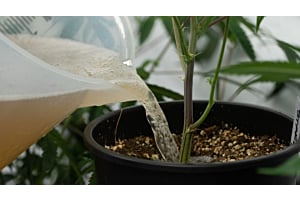
If pH is out of range or nutrient build-up is suspected, flush with plain pH-balanced water at roughly three times the container volume. This clears salt accumulation and resets the root environment. Wait until the medium has partially dried out before reintroducing nutrients, giving roots a chance to recover before the next feed.
Step 3: Choose the Right Potassium Source
For fast correction, water-soluble options like potassium sulfate or potassium nitrate act quickly and show results within days in hydro setups, and within a week or so in soil. For a more measured approach, potassium bicarbonate works well in organic systems. Potassium chloride is also effective but should be used sparingly.
Always reintroduce potassium at a reduced dose and increase gradually. Jumping straight to full strength after a flush risks nutrient burn.
Step 4: Apply a Foliar Spray for Fast Relief
A foliar spray delivers potassium directly through the leaves, bypassing root uptake issues entirely. Mix a diluted potassium solution and apply it to the undersides of leaves during lights-off to avoid burning.
This won't replace a corrected root-zone feed, but it gives the plant immediate access while the medium recovers.
Organic Sources of Potassium for Cannabis
Synthetic salts work fast, but organic amendments add potassium steadily without the risk of nutrient burn, a better fit for living soils and outdoor grows.
- Wood ash releases potassium quickly and raises soil pH slightly, making it a good fit for acidic soils.
- Kelp meal releases more slowly, supporting potassium intake over several weeks.
- Chicken manure is rich in potassium alongside nitrogen and phosphorus, making it a solid all-around soil amendment for outdoor grows.
- Potassium sulfate and potassium nitrate are available in organic-approved forms and suit growers who want measurable, consistent potassium levels.
Potassium bicarbonate doubles as a mild fungicide while adding potassium simultaneously, a practical option during the vegetative stage.
How to Manage Excess Potassium in Cannabis
Too much potassium creates its own set of problems, and growers who've just corrected a deficiency are particularly vulnerable to overcorrecting. Excess potassium competes with calcium and magnesium uptake at the root level, so the first symptoms are often a calcium deficiency or magnesium deficiency, appearing even when those nutrients are present in the feed.
Leaf tips may show nutrient burn, and iron deficiency symptoms can follow if the imbalance becomes severe. Managing this delicate balance is especially important in the flowering stage, where micronutrients like calcium and magnesium play a bigger role in bud development.
To correct excess potassium:
- Flush the medium thoroughly with pH-balanced water and hold back potassium-heavy feeds for several days.
- Monitor runoff EC to confirm levels are dropping, then reintroduce a balanced nutrient solution at a reduced rate.
- In coco and hydroponic systems, maintaining 10 to 20% runoff per watering is the most reliable way to prevent potassium build-up over time.
How to Prevent Potassium Deficiency in Cannabis
Preventing a cannabis potassium deficiency comes down to consistency. These habits cover most of the risk:
- Feed according to growth stage. The vegetative stage calls for moderate potassium uptake alongside higher nitrogen. The flowering stage needs significantly more potassium and phosphorus, with nitrogen scaled back. Switching to a bloom-specific feed at the right time keeps potassium at optimal levels throughout.
- Test pH at every watering. Catching drift early prevents nutrient lockout from developing. Use a calibrated meter and adjust accordingly before feeding.
- Check EC in both feed and runoff. A rising runoff EC signals salt accumulation. A dropping EC relative to your feed suggests the plant is consuming nutrients faster than you're supplying them, a cue to add potassium input before deficiency symptoms appear.
- Avoid heavy potassium feeding early in veg. Cannabis plants need less potassium during early vegetative growth. Overfeeding at this stage can create imbalances that lock out calcium and magnesium later.
Don't Let Potassium Be the Problem You Didn't See Coming
Potassium deficiency in cannabis is fixable, but only when it's caught and correctly identified early. Yellowing leaf margins, green veins, and damage that starts at the bottom of the plant are the consistent signs to watch for.
Check pH first, flush if needed, and match your feed to the growth stage. Get those fundamentals right, and potassium deficiency rarely becomes a serious problem in your cannabis cultivation.
Building a grow from the ground up? Start with premium cannabis seeds from Seed Supreme.
FAQs About Cannabis Potassium Deficiency
What Are the First Signs of Potassium Deficiency in Cannabis?
The earliest signs are yellowing at the tips and margins of older, lower fan leaves, with the inner veins staying green. Leaf edges may start to look slightly scorched before any browning appears.
How Quickly Does Potassium Deficiency Progress in Cannabis?
In soil, symptoms can develop over one to two weeks. In hydroponic systems, cannabis plants can show visible signs within a few days of potassium levels dropping. Acting at the first sign of yellowing leaf margins limits the damage significantly.
Can You Fix Potassium Deficiency During the Flowering Stage?
Yes, but time matters. Correcting pH and introducing a potassium-rich bloom feed early in the flowering phase typically allows plants to recover. Deficiencies caught in late flower are harder to reverse and more likely to affect final bud quality.