Lollipopping weed means pruning away shaded growth like smaller bud sites, branches, and leaves on the lower part of a cannabis plant so more of its energy goes to the bud sites up top. Those low sites rarely see enough light, so without lollipopping, the plant wastes energy on airy popcorn buds. Most growers lollipop late in veg, just before the flip or early in flower.
This high-stress pruning method pays off most on tall, bushy plants with a dense canopy, like big photoperiods grown from feminized seeds. Smaller plants, open canopies, and autoflowers need a much lighter touch, and sometimes none at all. This guide covers the what, why, when, and how of lollipopping weed plus when it’s not worth it and what to do instead.
What Does Lollipopping Weed Mean?
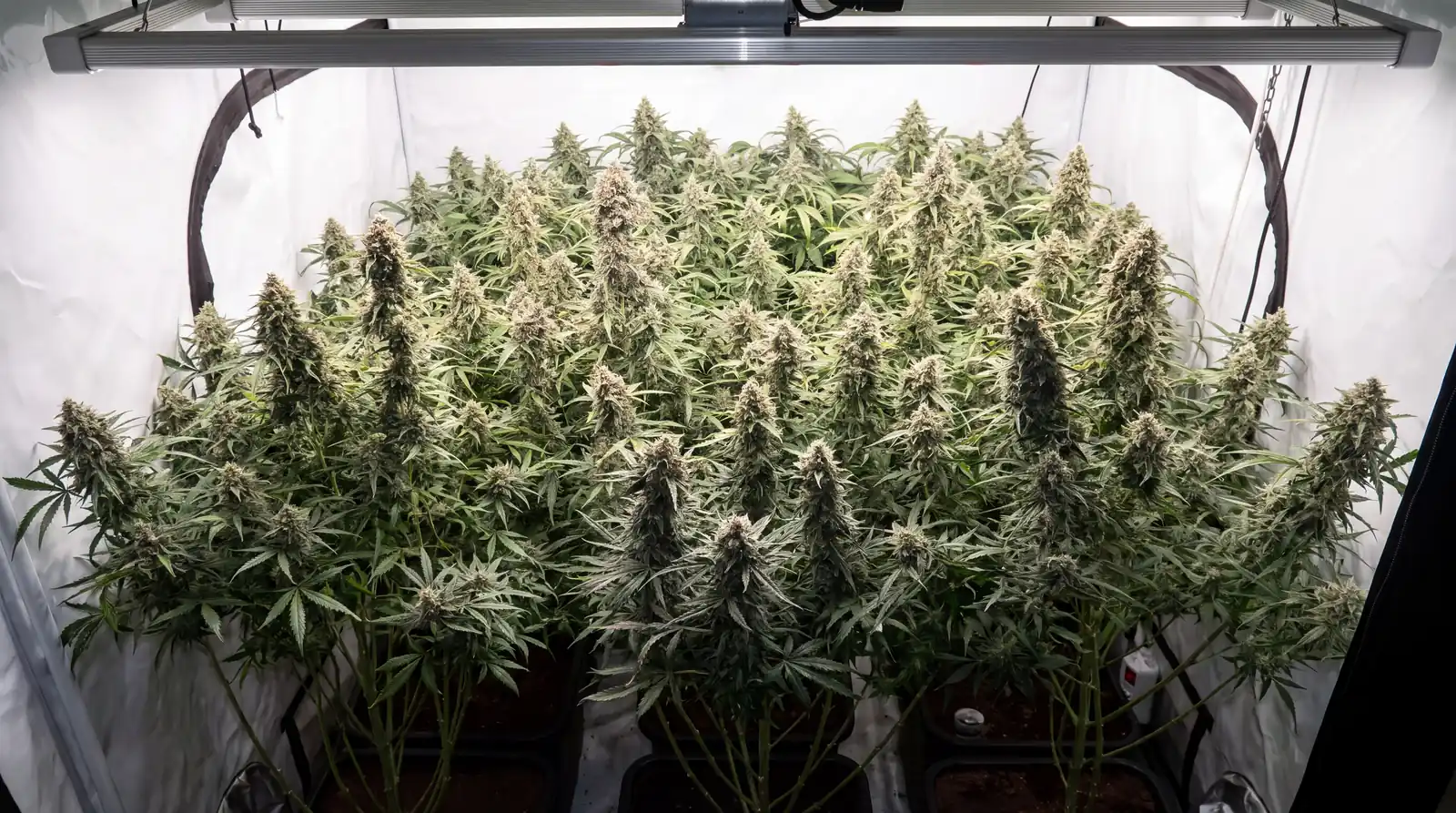
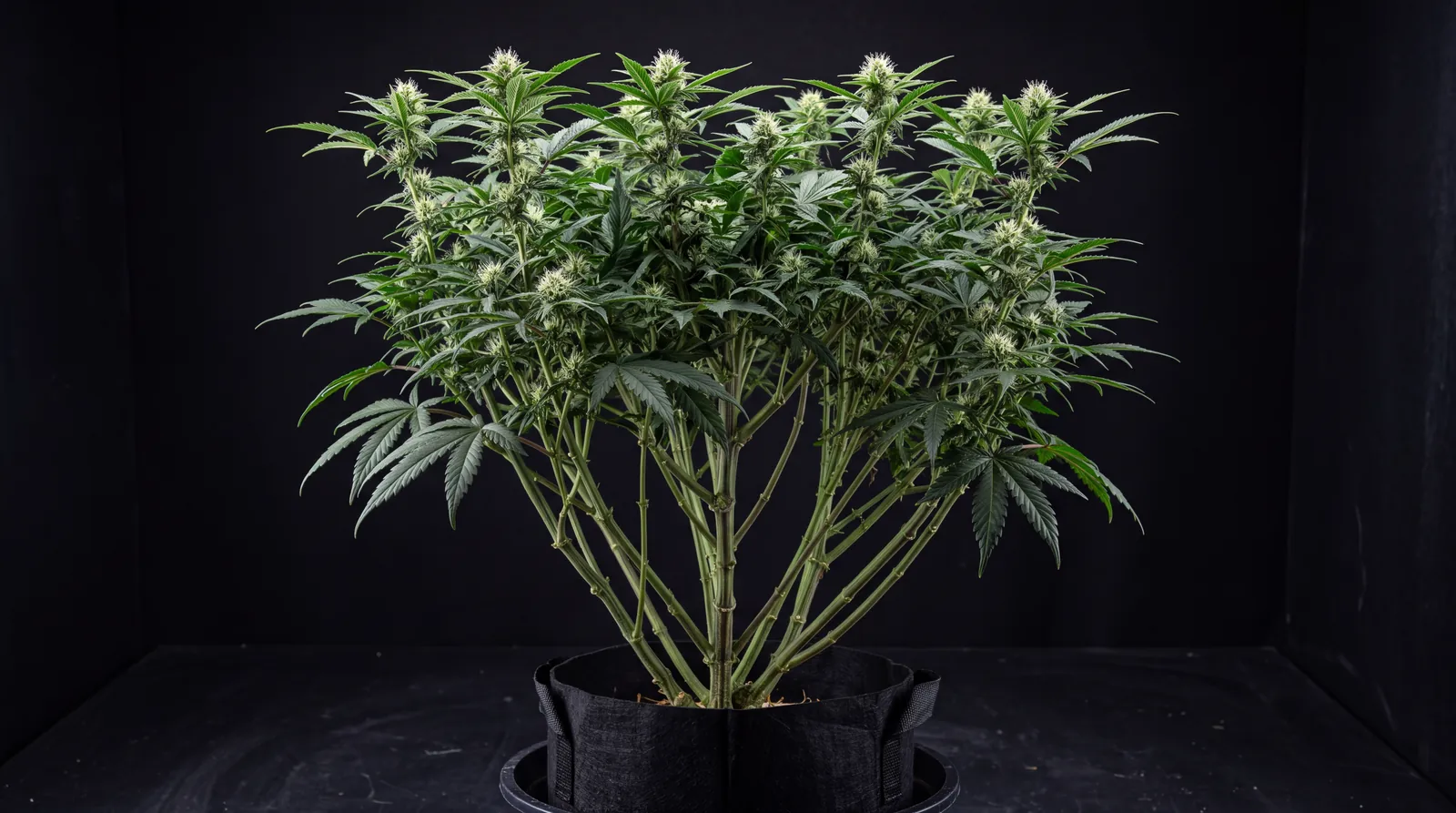
Lollipopping weed refers to a pruning technique that removes the thin shoots, bud sites, and leaves growing below the light on a cannabis plant. A lollipopped weed plant has a mostly bare lower stem with its foliage and buds stacked on top, which is exactly where the name comes from.
Lollipopping is a high-stress cutting technique, not a low-stress bending or tying one. Whatever you remove is gone for good, so it's a bigger commitment than moving a branch into the light. You'll run into three terms with this method:
- “Suckers” is grower slang for the weak lower shoots on a weed plant that get little direct light and rarely turn into quality flower. A branch counts as a sucker because of where it sits in the light, not how low it sits. A low branch that catches strong light still pulls its weight.
- “Popcorn buds” are the small, loose flowers that form at poorly lit lower sites. The term describes bud size and density, not a plant health problem.
- “Canopy line” means the depth where light stops reaching growth in any useful amount. Everything below it is the zone lollipopping targets.
Lollipopping is also a matter of degree, from trimming only the worst bottom shoots to clearing the lower stem completely.
Why Do Growers Lollipop Weed Plants?
Growers lollipop weed plants to focus the plant’s energy — and the light you’re paying for — on the bud sites that can actually finish well. The usual result is fewer popcorn buds and bigger, more even buds at the top. The payoff is biggest on dense plants where lots of growth sits below the reach of the light. Lollipopping changes four things in a grow:
- Energy: With fewer shaded sites to feed, the plant puts more energy into the flowers sitting in good light. It’s redistribution, not addition, so total harvest weight still depends on your lighting, plant care, and training.
- Bud quality: Light fades fast as it moves down into a canopy, so lower sites usually finish as small, loose popcorn nugs. Clearing them leaves better-developed, more even flowers across the top.
- Airflow: An open base lets air move freely low in the plant, so fewer still, humid pockets form under the canopy. That helps against bud rot and pests (but it won’t protect a plant without good humidity control and ventilation).
- Harvest and upkeep: Less popcorn means faster, cleaner trimming. A clear lower stem also makes watering and pest checks easier all the way through the grow.
Lollipopping vs Not Lollipopping
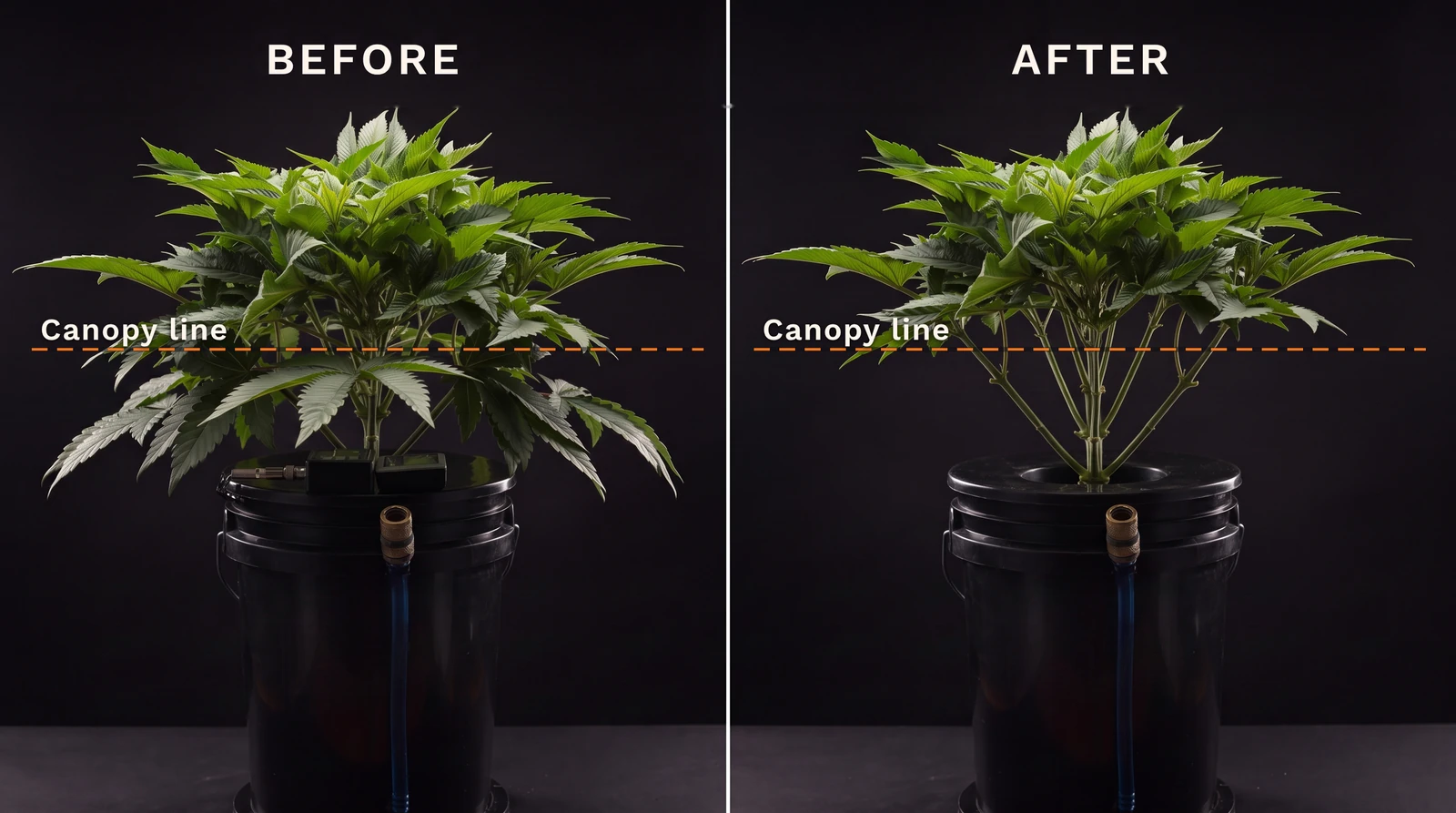
A lollipopped plant puts its weight into fewer, larger top buds, while an untouched plant spreads it across many sites, including the smaller ones down low. Neither is automatically better. It depends on how much of your plant sits in shade.
| Lollipopped Weed Plant | Untouched Weed Plant | |
| Lower growth | Thin, shaded shoots removed and base left open | Shoots and bud sites left in the shade |
| Top buds | Larger and more even | Share energy with many lower sites |
| Popcorn buds | Few | Many, mostly low on the plant |
| Harvest weight | Shifted to bigger bud sites at the top | Spread across more & smaller buds |
| Airflow at base | Open for air to move freely | Dense & more likely to trap humidity |
| Trimming | Faster, with less low-grade flower | Slower, with more small buds to process |
| Stress & recovery | A few days of recovery after pruning | No pruning stress |
| Best for | Tall, dense plants with bushy growth below the light's reach | Short plants, open canopies, and outdoor grows |
Pruning always has a cost. Leaves capture the light that powers growth, so cutting healthy, well-lit ones reduces the plant's energy supply. Recovery also takes longer the more you remove at once. That's why lollipopping helps most when growth sits deep in shade and costs most when lower leaves still catch good light.
When to Lollipop a Weed Plant
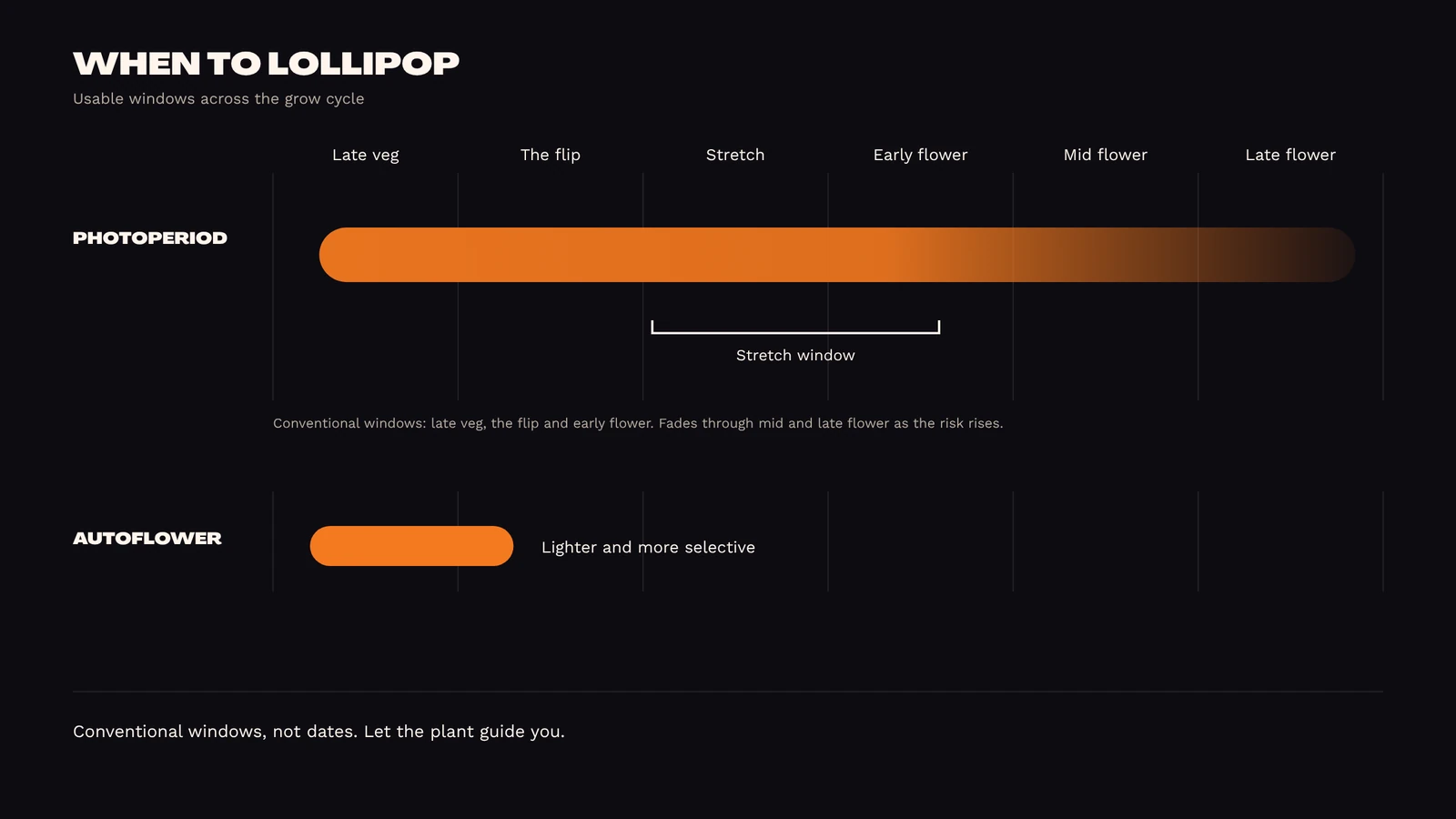
The best time to lollipop a weed plant is late in veg, just before the flip to 12/12, or in the first 2–3 weeks of flowering as the stretch slows. By then the structure is set, and the canopy shows which growth is stuck in shade. Treat these as general windows, though, not fixed dates.
Lollipopping Before the Flip
Lollipopping just before the flip is the most popular choice because it leaves ample time for recovery. Photoperiod plants stay in veg under an 18/6 schedule, so you decide when flowering starts. Prune a few days before you switch the lights to 12/12, and the marijuana plant settles before flowering starts pulling its energy.
There's one catch. Plants stretch after the flip, sometimes a lot, so growth that looks shaded now may climb into the light later. If you lollipop before the flip, keep it moderate and leave borderline branches for a second look once the stretch is done.
When to Lollipop in Flower
In flower, lollipop during the first 2–3 weeks, once the stretch is slowing and the tops have mostly stopped rising. The canopy line is easy to see at that point, and so is the growth that'll never reach it. You give up a little recovery time for much better accuracy.
Avoid heavy lollipopping once buds are well underway. Recovery costs time the plant can't spare, and there's less of the cycle left to absorb the setback. The risk rises gradually through flower, so there's no hard cut-off date. In late flowering, it’s best to stick to removing dead or damaged leaves.
Signs Your Marijuana Plant Is Ready to Lollipop
Your marijuana plant is ready to lollipop when it's healthy, its structure is set, and its canopy has started to close. Check for these signs before you make the first cut:
- You’ve finished topping and shaping, and the plant’s frame is established.
- The canopy has closed or is clearly closing, so the top growth is shading what’s underneath.
- Growth below the canopy line looks thin, stretched, and undersized next to the tops, a sign it isn’t getting enough light.
- The plant is growing actively and isn’t recovering from a transplant, a feeding fix, or other plant training.
How to Lollipop a Cannabis Plant, Step by Step
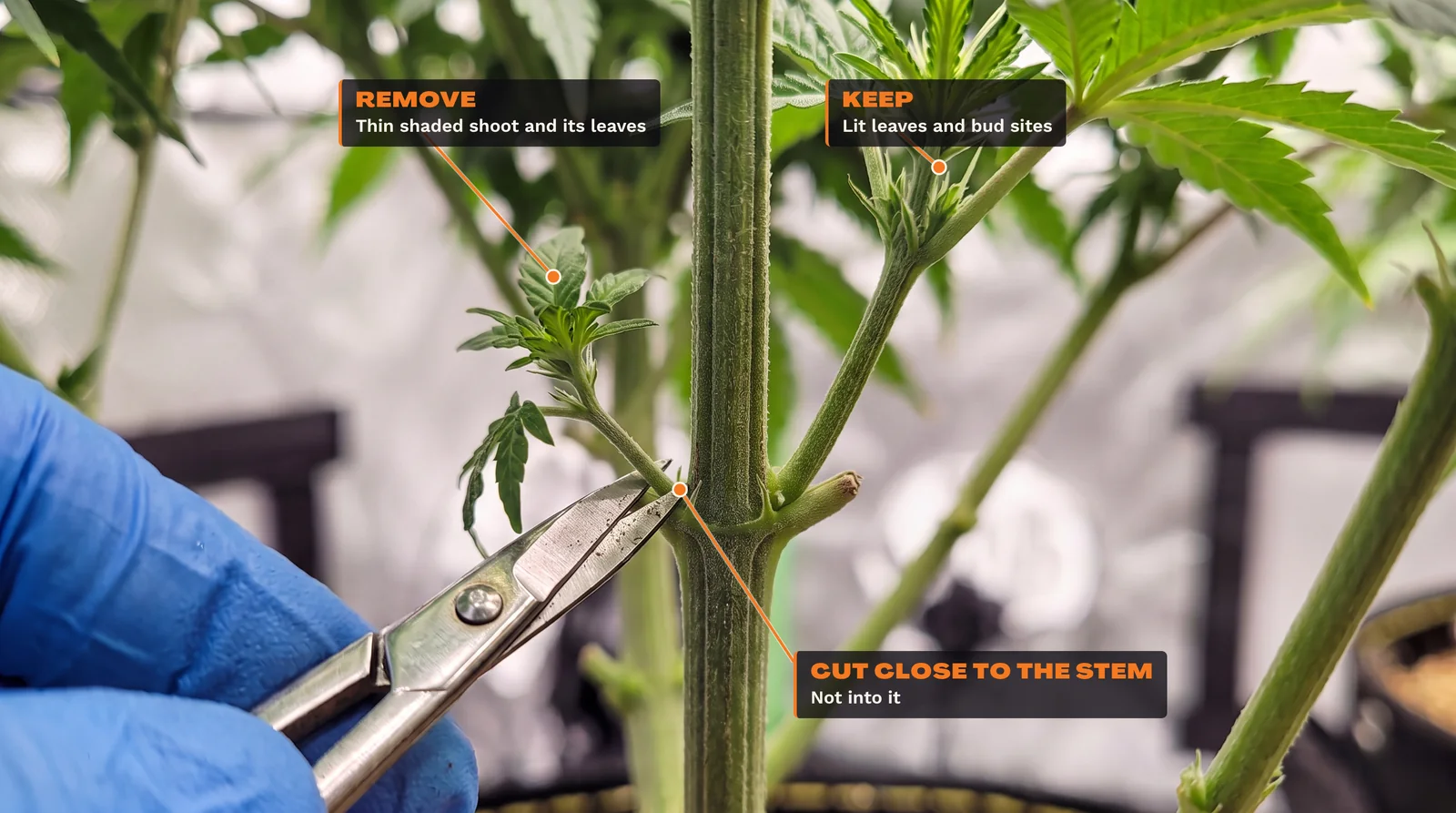
To lollipop a cannabis plant, work from the bottom up with clean, sharp scissors. Remove the thin shoots and shaded bud sites below the canopy line, along with their leaves. Stop while the plant still has plenty of well-lit leaf area. Follow these detailed steps:
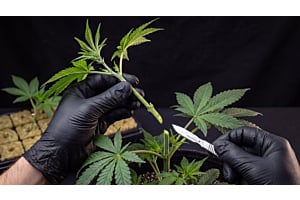
- Prep your tools. Use sharp pruning scissors, sterilized with rubbing alcohol before you start and again between plants. A clean cut seals faster than a crushed one.
- Find the canopy line. Look for where light stops reaching the weed plant, then compare growth quality. Shoots that look thin and stretched next to the tops are your candidates.
- Work bottom up, branch by branch. Follow each lower branch out and judge it on its own. Stripping the plant in quick sweeps is how good branches get lost.
- Remove the whole unproductive shoot. Take the thin shoot and its attached leaves with a clean cut close to the stem. Never cut into or gouge the main stem.
- Keep what's working. Leave any low fan leaf sitting in direct light. On branches you keep, leave the bud sites along them too, since clearing those shortens the finished colas.
- Cap each session. If a lot needs to go, split it into two lighter passes a few days apart and reassess in between.
- Clean up. Clear the cuttings out of your tent so they don't sit and rot on the medium.
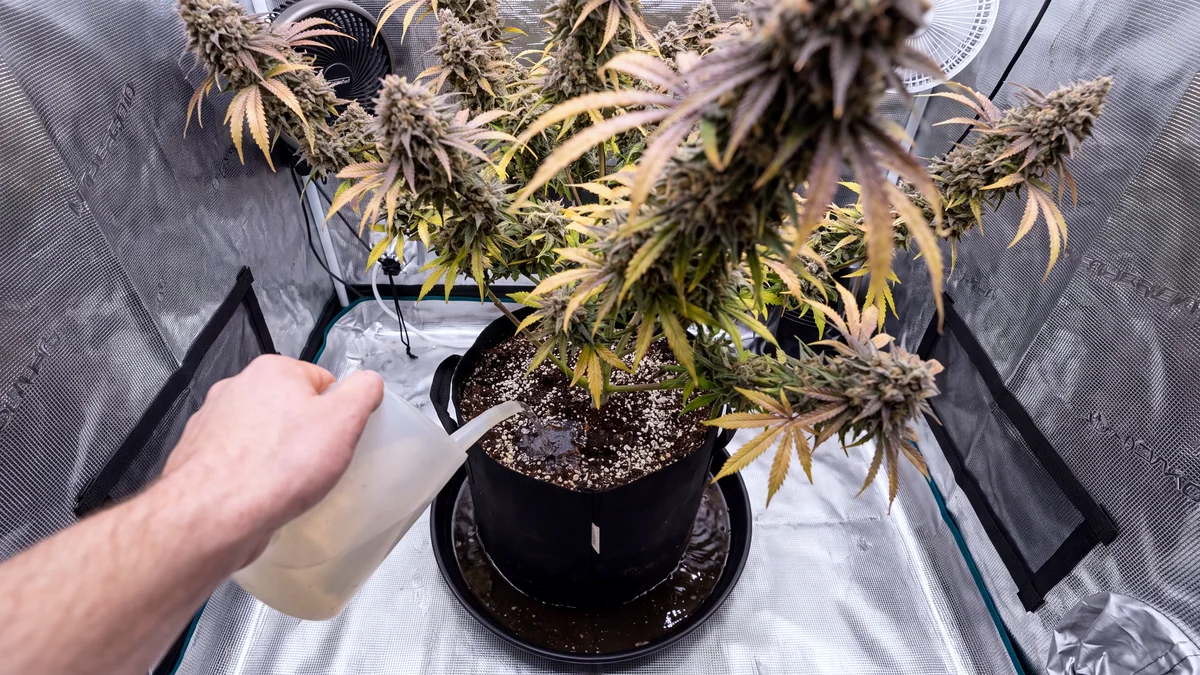
After pruning, keep everything else the same. Hold the environment steady, water as usual, and don't stack another stressor on top. Over the next few days, look for fresh growth at the tips, which tells you the plant has bounced back.
How Much Should You Remove When Lollipopping?
When lollipopping, only remove shaded growth that sits below the canopy line and looks clearly behind the tops. The often-quoted "lower third" is a fair starting point, not a rule. Where your canopy line falls depends on your light, your plant's shape, and how you've trained it.
Stronger lights push the canopy line lower. Under a powerful LED, buds can fill out surprisingly far down, so you'll remove less. Under a weaker fixture, more of a tall plant sits in shade. Plants trained flat and wide need far less work, since most of their sites already share the light.
When one cannabis plant towers over the rest of your tent, its lower sites sit deepest in the shade. Lollipopping that plant a bit more keeps its buds closer in size to its neighbors. If you're unsure, take less. You can always remove more next week, but you can't put anything back.
Lollipopping Autoflowers
You can lollipop autoflowers, but keep it light and do it early. Trim only the lowest shaded shoots before flowering is underway, and leave small or sluggish autos alone. Autoflowers start flowering by age instead of waiting for the 12/12 light flip, so you can’t hold them in veg to recover and any recovery period eats into their limited growing time.
Heavy lollipopping or pruning can stunt an auto at a stage where it has little time left to grow out of the setback. Vigor decides how much is safe:
- A fast, healthy auto with crowded lower growth handles light, selective lollipopping well.
- A small or struggling auto rarely has enough shaded growth to justify cutting at all.
When you’re lollipopping autoflowers, use the same bottom-up approach as with photoperiods, but take far less. Remove only the shoots that are clearly going nowhere to get most of the benefit for a fraction of the risk. When big fan leaves are causing the shade, defoliating autoflowers is the better leaf-side fix, with its own timing rules.
Lollipopping vs Topping, Defoliation & Other Training
Lollipopping, topping, defoliation, and other training methods each solve a different problem. Topping fixes structure, defoliation fixes leaf shade, low-stress training (LST), and screens fix an uneven canopy, and lollipopping clears unproductive growth at the base. Side by side, they look like this:
| Technique | What It Removes or Moves | Problem It Solves | Typical Stage |
| Topping | The growing tip | One dominant main stem, uneven structure | Veg |
| Defoliation | Leaves across the plant, shoots left in place | Leaf density shading the canopy | Veg or flower |
| LST & screens | Nothing; growth is repositioned | Growth in the wrong place, uneven canopy | Veg into early flower |
| Lollipopping | Lower shoots and their leaves | Unproductive growth below the canopy line | Late veg into early flower |
Structural work comes first, so topping your cannabis plants in veg sets the frame before you lollipop. Let that frame fill in, then clear what ends up shaded underneath. A screen or trellis makes this easy, since anything left below the mesh isn't getting light.
Space out your pruning sessions. Topping, defoliating, and lollipopping in the same week stacks up the recovery cost, and a plant handling three stresses at once is slower to settle. Pick the method that matches the problem you actually have: structure, light reaching into the canopy, or dead weight and airflow at the base.
When Lollipopping Isn't Worth It
Lollipopping isn't worth it when there's little or no shaded, unproductive growth to remove. If your light already reaches most of the plant, you'd be spending healthy leaf area for very little return.
Go lighter, or skip lollipopping entirely, if:
- Your plants are short, and your light already reaches the lower branches.
- You’re running single-cola plants or a Sea of Green grow, which leave little lower growth to remove.
- You’re growing outdoors, where the sun’s changing angle can still fill out lower bud sites. Judge each plant on its own.
- Your cannabis plant is stressed or dealing with an unsolved problem, like pests or a nutrient issue.
- Your plant is still recovering from a transplant, topping, or another training session.
- Your plants are already in mid or late flower, with little time left to recover from cuts.
What to Do Instead of Lollipopping
Instead of cutting lower growth, you can open up the canopy by moving it. Tucking leaves, low-stress training (LST) and a screen all let more light reach lower bud sites without costing the plant any recovery time.
Tucking is the quickest fix. Slide a big fan leaf under or behind a nearby branch so it stops shading the bud site below. LST works earlier, in veg, by bending and tying branches outward so more tops share the light. A screen takes that further by spreading branches into a flat, even canopy.
If you still want to lollipop but feel unsure, you don’t have to choose between all or nothing. Take only the most obviously useless shoots, or split the job into two sessions a few days apart.
How Cannabis Genetics Affect Lollipopping
Cannabis genetics shape how much lollipopping a plant needs, since height, branching, and stretch decide how much growth ends up in shade. Picking your weed seeds with that in mind helps you plan how much pruning your grow will need.
- Indica seeds tend to grow into short and bushy plants with tight node spacing, so their lower growth gets crowded into shade quickly.
- Sativa seeds grow into plants that often stretch aggressively after the flip, leaving more of the lower plant far from the light.
But these are general tendencies, so be sure to check each strain’s listed plant height and stretch when you’re planning a grow with lollipopping in mind.