Triploid cannabis carries three sets of chromosomes instead of the usual two, which changes how the plant grows, flowers and produces seeds. Breeders create triploid cannabis seeds by crossing a tetraploid parent with a standard diploid plant, and the resulting plants tend to grow vigorously with little to no seed production.
This guide covers what triploid cannabis is, how triploid cannabis seeds are made, how the plants behave through flowering, what the potency claims actually mean and where triploid sits alongside feminized, autoflower and regular cannabis seeds in the current seed market.
What Is Triploid Cannabis?
Triploid cannabis describes cannabis plants that carry three sets of chromosomes instead of the usual two. Standard cannabis is diploid, meaning each plant inherits one chromosome set from each parent for a total of two. Triploid weed inherits an extra set during breeding, which puts its chromosome count at three.
This is a form of polyploidy (specifically triploidy), the umbrella term for plants carrying more than two chromosome sets. It shows up across the plant kingdom in seedless watermelons, bananas, seedless grapes and some apple cultivars.
The extra chromosome set changes a few things at once. Triploid cannabis plants often grow with stronger vigor than diploid plants, produce flower clusters that stay largely seedless and sometimes show higher reported cannabinoid and terpene concentrations. The exact effect varies by breeder and phenotype, so the trait set is best understood as a tendency rather than a guarantee.
How Is Triploid Cannabis Different From Diploid?
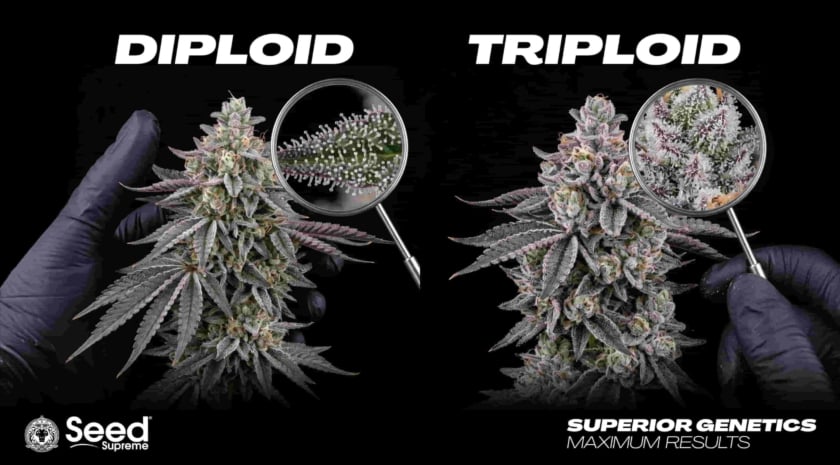
Triploid cannabis differs from diploid cannabis by carrying one extra chromosome set, which changes flowering behavior, seed production and reported potency. Diploid plants are the standard for the cannabis industry and reproduce normally, producing fertile seeds when pollinated.
Triploid cannabis plants are functionally sterile because the odd chromosome count interferes with normal seed development, so they produce very few viable seeds even when male pollen reaches them.
The growth difference comes from polyploid vigor. Each cell carries 50% more genetic material than a diploid, which translates into larger cells, stronger vegetative growth, denser flower clusters and tighter internodal spacing in triploid lines.
The table sums up the main observable differences. Most growers will notice the seedlessness and vigor before they notice anything else, since those traits show up in every grow rather than depending on lab testing.
How Are Triploid Cannabis Seeds Made?
Triploid cannabis seeds result from crossing a tetraploid cannabis plant with a regular diploid plant. The tetraploid parent carries four chromosome sets and is created in a breeder lab by treating diploid seedlings or growth tips with chromosome-doubling agents like colchicine, oryzalin or Sulfluran, which disrupt cell division and force the chromosome count to double.
When the tetraploid plant is crossed with a normal diploid, the offspring inherit two chromosome sets from one parent and one set from the other, landing at three sets total.
The tetraploid-creation step is the hard part. It takes selection, stabilization and verification across multiple generations before a breeder has a reliable tetraploid mother that produces consistent triploid offspring. Most triploid weed seeds on the market come from breeder programs that have spent years developing their tetraploid stock.
Triploid cannabis seeds are almost always feminized. Both parents in the cross are female (the tetraploid mother and a feminized diploid pollen donor treated to produce pollen), so the offspring can only inherit X chromosomes and virtually all the resulting seeds grow into female plants on top of the triploid genetics layer.
What Are Triploid Cannabis Plants Like to Grow?
Triploid cannabis plants grow with stronger vigor and reduced seed production compared to standard feminized plants. They run on the same lifecycle as other feminized photoperiod plants but show observable differences in three areas:
- Vigor and yield — stronger vegetative growth and often denser flower clusters
- Flowering behavior — same photoperiod cycle as diploid feminized plants, with sharply reduced seed development
- Seedlessness — flower stays largely seedless even when accidentally pollinated
Vigor and Yield in Triploid Cannabis Plants
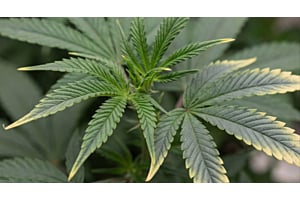
Triploid cannabis plants show stronger vegetative vigor and larger flower clusters than diploid counterparts in breeder testing. The extra chromosome set increases cell size, which translates to bigger leaves, thicker stems and heavier flower production.
Oregon CBD, the Oregon-based hemp breeder that developed the first cannabis triploids, reported yields up to double the diploid baseline in their preliminary trials, though gains vary by breeder, environment and phenotype, so the vigor advantage is real but not consistent across every triploid cultivar.
Flowering Behavior of Triploid Cannabis
Triploid cannabis flowers on the same photoperiod cycle as diploid feminized plants, with reduced seed development. Growers flip the light cycle to 12/12 and watch for flowering signals the way they would with any other feminized weed plants.
The mechanics of female vs male weed plant sex expression still apply, but the female triploid plants the grower cultivates rarely produce viable seeds even if a male appears nearby.
Seedlessness in Triploid Cannabis Flower
Triploid cannabis flower stays largely seedless even when accidentally pollinated. The chromosome mismatch during fertilization prevents most seeds from developing into viable embryos, so anyone breaking open a finished triploid bud typically finds little to no seed material inside.
This trait is the most reliable triploid advantage for commercial flower production, because seedless flower commands a higher market price and stores better.
Is Triploid Cannabis More Potent?
Triploid cannabis may produce higher reported cannabinoid and terpene concentrations, but results vary by breeder, phenotype and growing conditions. Breeder data so far suggests cannabinoid ratios and total amounts stay relatively close to the diploid baseline, while terpene and aromatic compound production runs noticeably higher.
Oregon CBD's preliminary trials reported terpene production up roughly 30% in their triploid lines, with growers consistently noting stronger aroma and flavor compared to diploid versions of the same genetics.
The variability matters. Triploid genetics give the plant the capacity to produce more cannabinoids and terpenes, but expression depends on light intensity, nutrient program, harvest timing and the specific phenotype the grower selected.
A poorly grown triploid will not outproduce a well-grown diploid, so the chromosome count is not a substitute for cultivation skill.
Where Triploid Cannabis Fits in the Seed Catalog
Triploid cannabis sits alongside feminized, autoflower and regular cannabis seeds as a newer breeder category rather than a replacement for any of them. The full catalog of cannabis seeds at most U.S. seed banks still centers on feminized and autoflower lines, with triploid available from a small number of breeders running dedicated polyploidy programs.
Triploid seeds overlap most closely with feminized pot seeds, because nearly every commercial triploid cultivar is bred for female-only expression.
For growers weighing categories, the comparison runs along familiar lines. Feminized seeds give reliable female plants on a photoperiod schedule. Autoflower seeds shift the flowering trigger from light to age. Regular seeds preserve the natural 50/50 male-female split for breeding work.
Triploid seeds add a sterility-and-vigor layer on top of the feminized framework, which is useful for flower-focused growers who want minimal seed risk. The full autoflowering vs feminized seeds comparison covers the other two categories in depth. Eligible adult buyers should check federal, state and local rules before germinating any cannabis seeds.
Frequently Asked Questions About Triploid Cannabis
Are Triploid Cannabis Seeds Available to Buy in 2026?
Triploid cannabis seeds are available from a small number of breeders running dedicated polyploidy programs. The category is newer than feminized or autoflower seeds, so the selection is narrower, but availability has grown each season as more breeders stabilize their tetraploid mother lines.
Can Triploid Cannabis Plants Produce Seeds?
Triploid cannabis plants produce very few viable seeds because the odd chromosome count interferes with normal seed development. The trait is the main reason commercial growers value triploid genetics, since the flower stays largely seedless even under accidental pollination.
Are Triploid Cannabis Seeds the Same as Feminized Seeds?
Triploid cannabis seeds are not the same as feminized seeds, but the categories overlap heavily. Triploid seeds are almost always feminized, because the breeding process selects for female expression on both parent sides. Feminized seeds describe plant sex; triploid describes chromosome count.
Do Triploid Cannabis Plants Grow Faster Than Diploid?
Triploid cannabis plants do not necessarily grow faster than diploid plants, but they often show stronger vegetative vigor. The extra chromosome set tends to produce bigger leaves, thicker stems and heavier flower clusters rather than a shorter timeline to harvest.