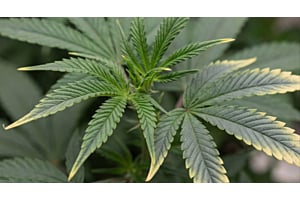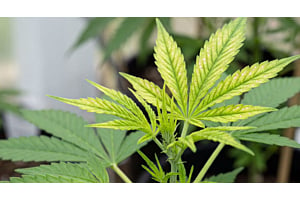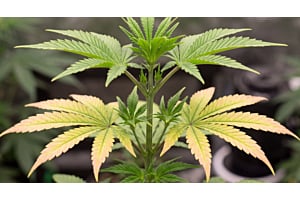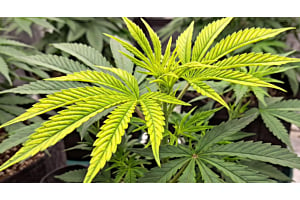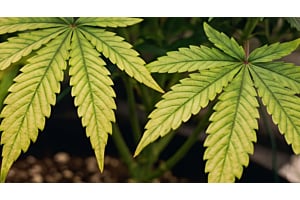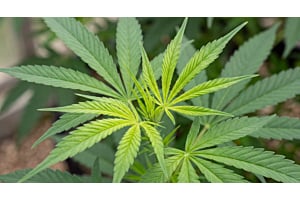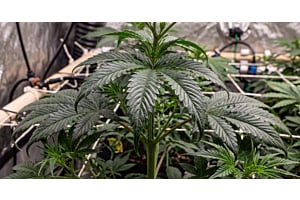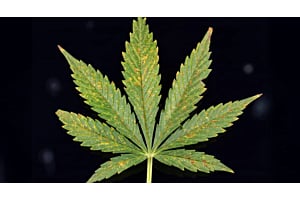
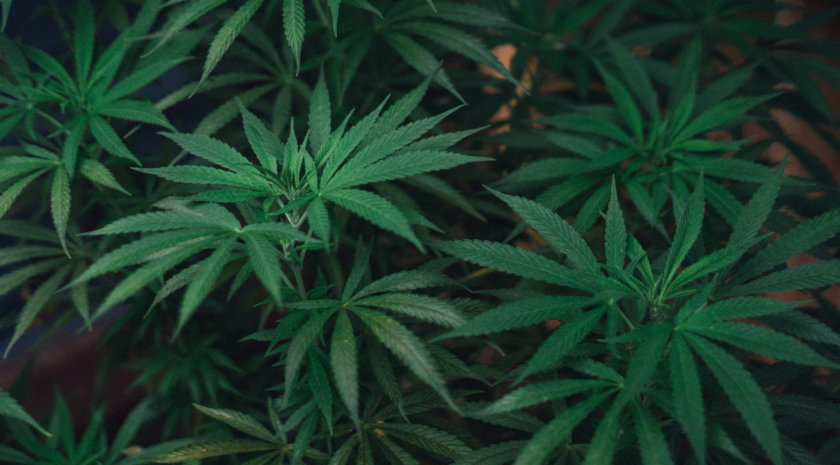
The cannabis vegetative stage is the growth phase after the seedling stage when the plant focuses on roots, stems, branches, nodes, and leaves. During veg, growers manage light, water, nutrients, training, and plant size before the plant moves into flowering.
This is the stage where you shape the plant's size, structure, and strength, helping prepare it for a productive flowering period. Veg timing is not fixed and can vary based on seed type, environment, grow space, and whether you are growing photoperiod or autoflower genetics.
Cannabis Vegetative Stage Quick Answers
- The vegetative stage comes right after the seedling stage.
- The plant focuses on roots, stems, branches, nodes, and leaves.
- Strong vegetative light, watering, nutrients, and a stable environment drive healthy veg growth.
- Veg is the main training window for shaping the plant.
- The stage ends when the plant transitions to flowering.
- Veg duration depends on seed type, grow space, and your plant goals.
What Is the Cannabis Vegetative Stage?
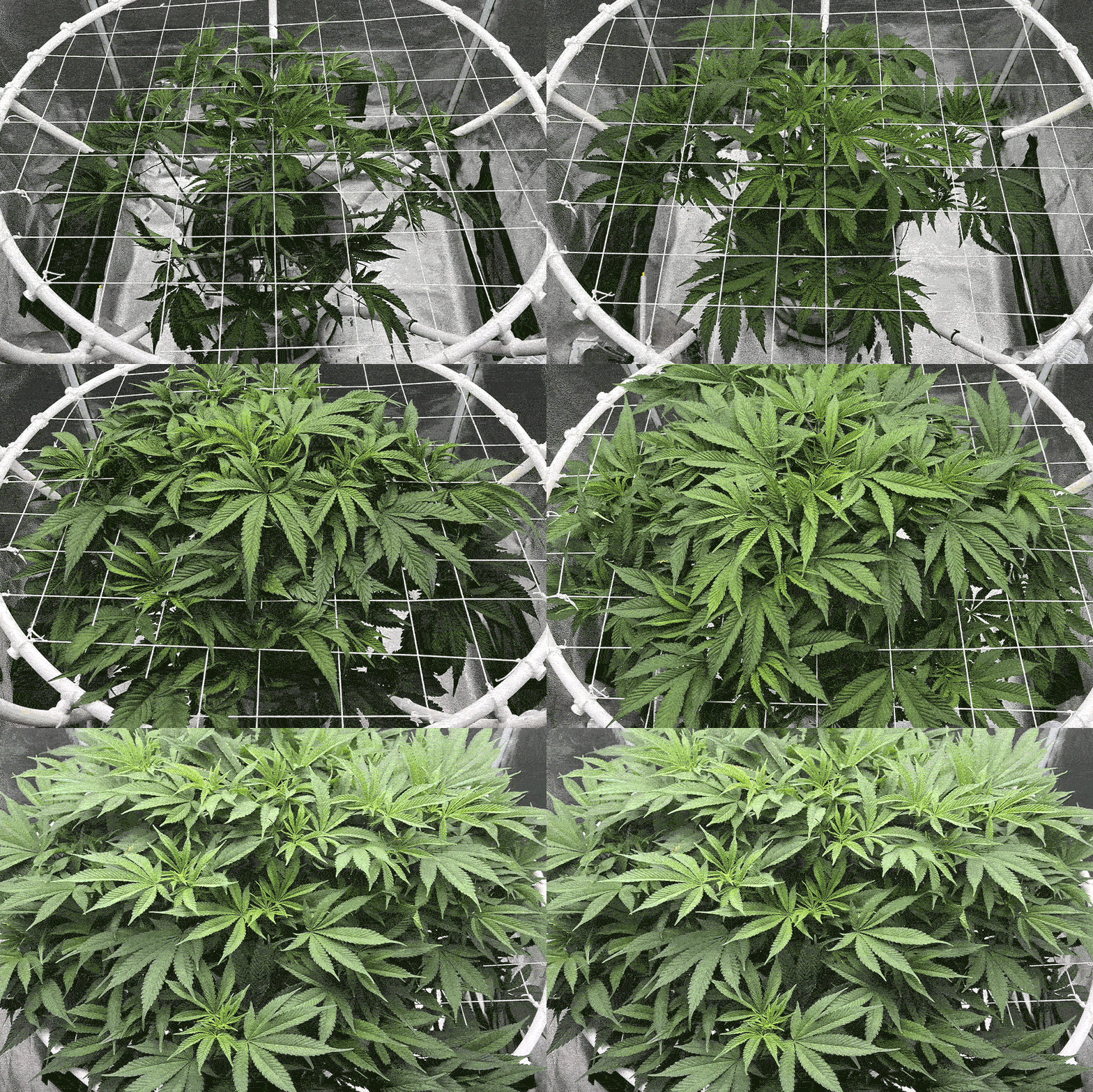
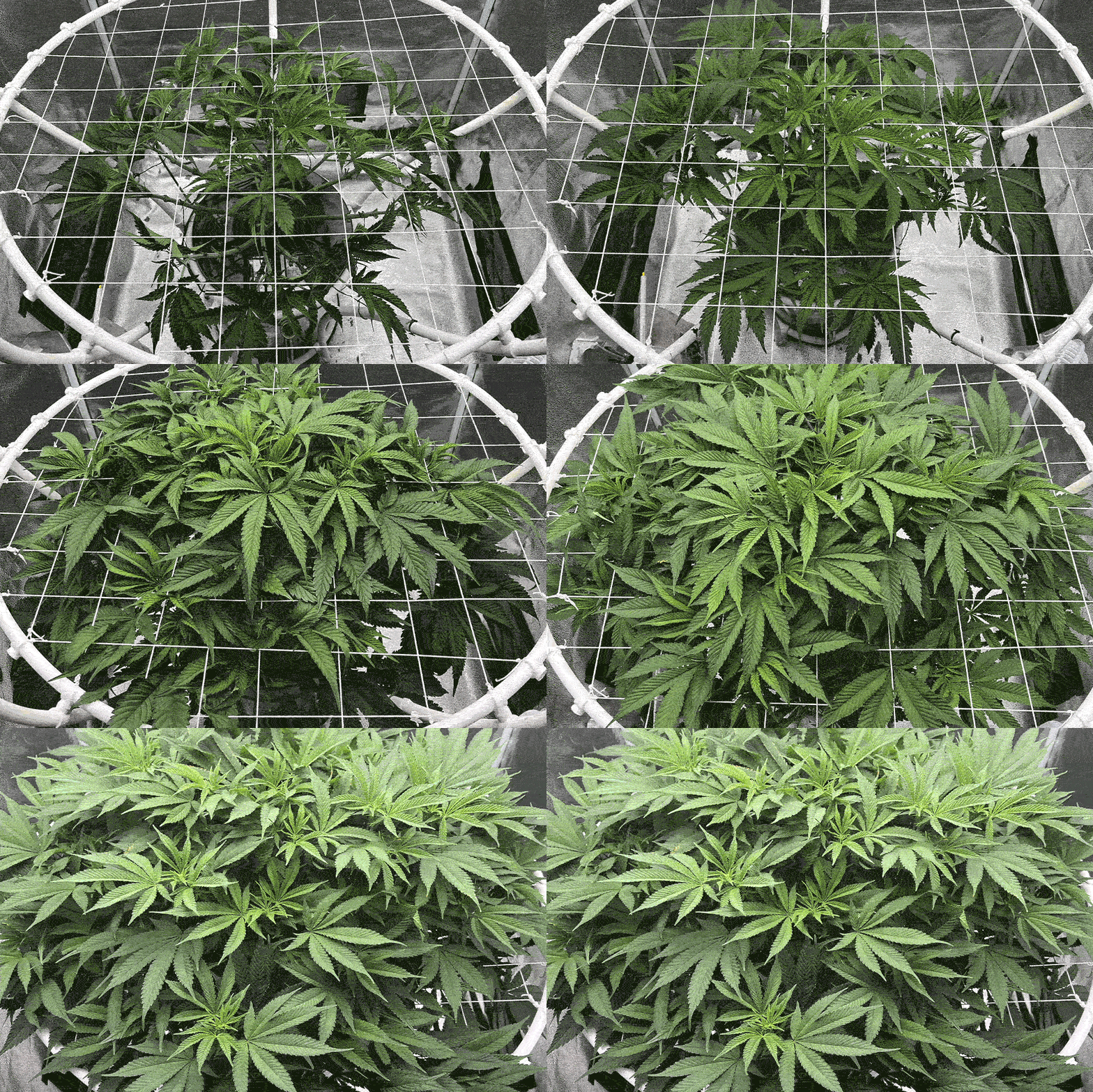
GIF courtesy of still_smoq
The vegetative stage is the period when a cannabis plant builds the structure it will use to support flowering later. The stronger its roots, stems, branches, and leaves grow during veg, the more bud sites the plant can support once flowering begins.
This growth phase follows the seedling stage, which establishes the young plant before faster expansion begins.
During veg, the cannabis plant expands its root system, thickens its stems, and develops nodes where new branches and leaves form. Leaf production accelerates, branches multiply, and the canopy widens. This growth raises the plant's water demand and nutrient demand at the same time.
The vegetative phase also opens the main window for training, because the plant is flexible and recovers quickly while it grows. Every structural gain in veg prepares the plant for the demands of flowering.
When Does the Vegetative Stage Start?
The vegetative stage starts when a cannabis seedling has established roots, several sets of true leaves, and begins faster stem, leaf, node, and branch growth. This transition follows the cannabis seedling stage, where the young plant first develops its root base and initial leaves.
The shift is gradual, so the seedling-to-veg boundary is a change in growth speed rather than a single dated event.
Development signs matter more than a day count. A plant enters veg when leaf sets multiply quickly, the stem strengthens, and clear nodes appear along the main stem. These signals confirm the plant has moved past seedling care.
Genetics, environment, light, and seed type all move this timing. Two plants from the same pack can cross into veg on slightly different schedules depending on their conditions.
If you are tracking the sequence from the beginning, the path runs from germinating cannabis seeds through seedling establishment and into veg.
Cannabis Vegetative Stage Week by Week
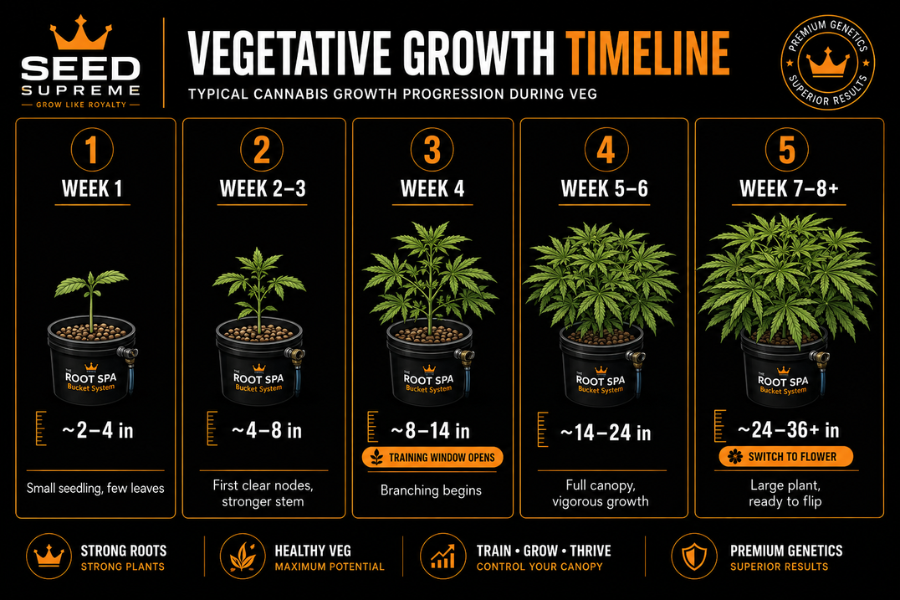
Week-by-week cannabis growth is only a general reference. A healthy plant may look different depending on genetics, seed type, light intensity, container size, environment, and training.
Use the timeline below as a directional guide, not a fixed standard every plant must match. The full timeline context sits within the broader cannabis growth stages overview.
Early veg overlaps with the tail end of the seedling stage, so a plant in its first veg week can look much like a late-stage seedling. That overlap is why the two phases are easy to confuse in the early weeks. Around weeks three and four, healthy plants reach the point where structured plant training becomes a practical option.
The following table maps approximate stages to what a plant may look like and where your attention belongs.
Vegetative Stage Week-by-Week Guide
| Approximate Stage | What the Plant May Look Like | Main Grower Focus |
| Week 1 after seedling | Small plant with early true leaves and early root expansion | Gentle transition from seedling care |
| Week 2 | More leaf sets, stronger stem, faster root growth | Light, moisture, and mild nutrition |
| Week 3 | Clear node development and branching | Begin planning training if plant is healthy |
| Week 4 | Larger leaves, stronger structure, more canopy growth | Training, watering rhythm, nutrient support |
| Week 5-6 | Strong vegetative growth, larger root system | Size control, training, pest monitoring |
| Week 7-8+ | Large plant if veg is extended (photoperiod plants can hold in veg beyond this point by choice) | Decide whether to continue veg or switch to flowering |
The table reads as a rhythm, not a rulebook. A plant that looks smaller at week four isn't automatically behind, because pot size, light, and genetics can all shift the pace. Track healthy structure and steady new growth rather than matching a photo.
How Long Should Cannabis Stay in Veg?
Cannabis can stay in the vegetative stage as long as a photoperiod grower keeps it under a vegetative light schedule, but the best veg time depends on grow space, plant health, genetics, pot size, training, and final yield goals. Autoflowers have less controllable veg time because they flower by age.
This gives photoperiod growers a lever autoflower growers don't have.
Longer veg usually produces larger plants, but only up to the size your grow space and light can actually carry. A plant that outgrows its light footprint or its container gains little from added weeks in veg.
Photoperiod plants stay in veg under a long-light schedule, which makes their veg length adjustable. Best yield does not come from veg length alone. How you shape the plant during veg, through training and canopy structure, often does more for the final harvest than simply keeping it in veg longer.
Indoor growers also need to account for stretch, the surge of vertical growth that follows the switch to flowering. Outdoor veg length is shaped instead by season and day length, so the same plant behaves differently across setups.
That's the main timing difference between photoperiod vs autoflower cannabis, and the former gives growers a lever the latter doesn't.
Best Light Cycle for the Vegetative Stage
The best light cycle for vegging cannabis plants is 18 hours of light and 6 hours of darkness (18/6), giving them plenty of time to build leaves, stems, and branches while still providing a daily dark period.
Some growers use 20/4 or even 24 hours of light, but 18/6 is usually the most practical balance of healthy growth, energy use, and heat control. Keep this schedule until the plants have reached the size and structure you want, then switch to 12/12 to trigger flowering.
Autoflowers do not need a light-cycle change to flower. They begin flowering with age, so they can stay on an 18/6 or 20/4 schedule from seed to harvest.
A lighting schedule only works well when the light is strong enough and correctly positioned. Lights that are too weak or distant can cause stretching, while excessive intensity or close placement can stress young vegging plants.
Growers using a dedicated indoor veg space often manage light inside a contained tent, so choosing the best grow tents for the available space is an important part of planning ahead.
Temperature and Environment During Veg
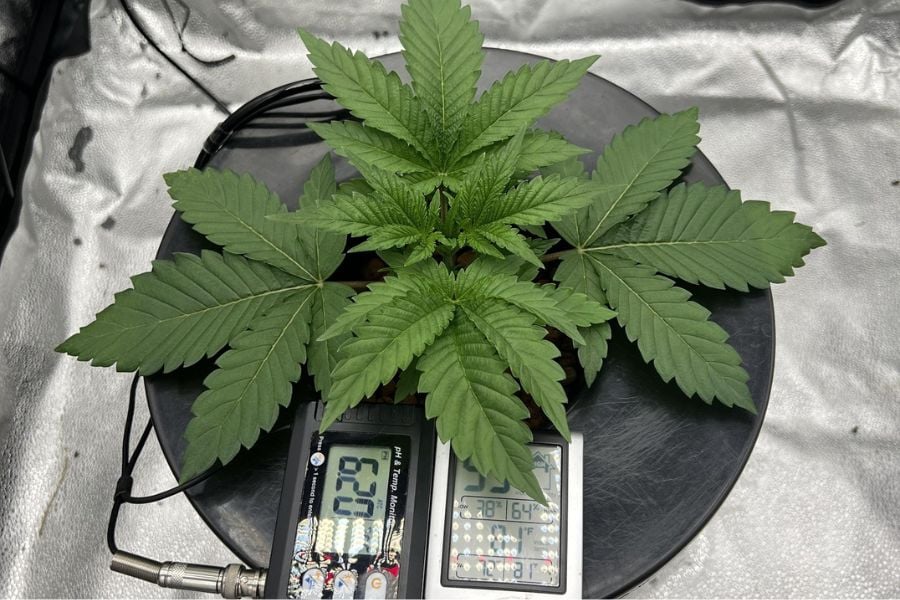
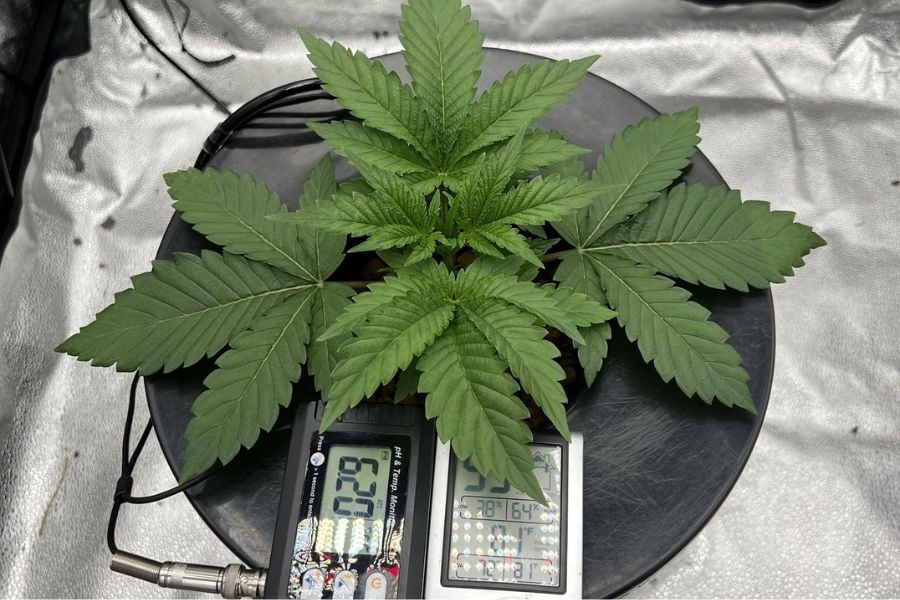
Image courtesy of still_smoq
Keep vegging cannabis plants in stable environmental conditions so they can grow steadily. Aim for daytime temperatures of 68–85°F and hold nighttime temperatures close to that same range. Extreme heat, cold, or sudden swings can slow growth and damage leaves.
Humidity should sit around 55–65%, with younger vegging cannabis plants generally preferring the higher end. Humidity influences transpiration, shaping how much water the plant pulls through its system. Good airflow matters too. A gentle fan strengthens stems and prevents stagnant pockets of air from settling around the canopy.
If you are growing cannabis indoors, you can control temperature, humidity, and airflow more easily, which makes steady vegetative growth simpler to maintain.
With outdoor growing, cannabis plants respond to the season, the weather, and the available daylight, so the environment leads and the grower adapts. Some growers run a mixed approach across setups, and whether you can veg outdoors and flower indoors depends on your space and seed type.
Watering During the Vegetative Stage
Watering cannabis plants during the vegetative stage requires restraint — water only once the top inch or two of the medium has dried out (but before the root zone itself goes dry) and let plant size, medium, pot size, and environment set the pace rather than a fixed schedule.
Cannabis plants usually need more water during veg than they did as seedlings because roots, leaves, and stems are expanding quickly. What worked at the seedling stage may fall short by mid-veg.
A large plant in a small container under warm, bright conditions drinks far faster than a small plant in a cool, dim space. Reading the plant and its medium tells you more than any calendar can.
Roots still need oxygen during veg, so constant saturation works against healthy growth. Both overwatering and underwatering can slow vegetative development, and the two problems can sometimes look similar.
As the plant gets larger and light intensity increases, its water needs generally rise. If leaves droop or growth stalls, check whether your watering pattern still matches the plant's demand.
Nutrients During the Vegetative Stage
Cannabis nutrition and feeding during veg should support healthy roots, stems, branches, and leaves. Nitrogen is the main nutrient for leafy growth, but plants also need smaller amounts of phosphorus and potassium, secondary nutrients like calcium and magnesium, and trace micronutrients.
Start veg-stage nutrients at half or quarter strength on any new feed and build up gradually as the plant shows it can handle more. The right amount depends on the medium, plant size, water quality, and nutrient line, so follow the product's feeding guidance rather than using one fixed dose, and let the plant's response guide how fast you increase it.
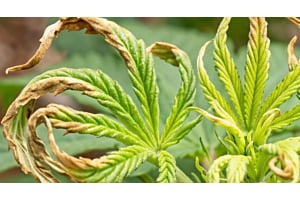
Too much feed can cause nutrient burn, often seen as brown or scorched leaf tips. Too little can slow growth and leave foliage pale or discolored. Catching either issue early helps keep veg growth on track.
Nutrient needs shift again once flowering begins, because the plant redirects energy from structure to bud development. Planning for that change ahead of time makes the transition into the flowering stage smoother.
Training Cannabis Plants During Veg
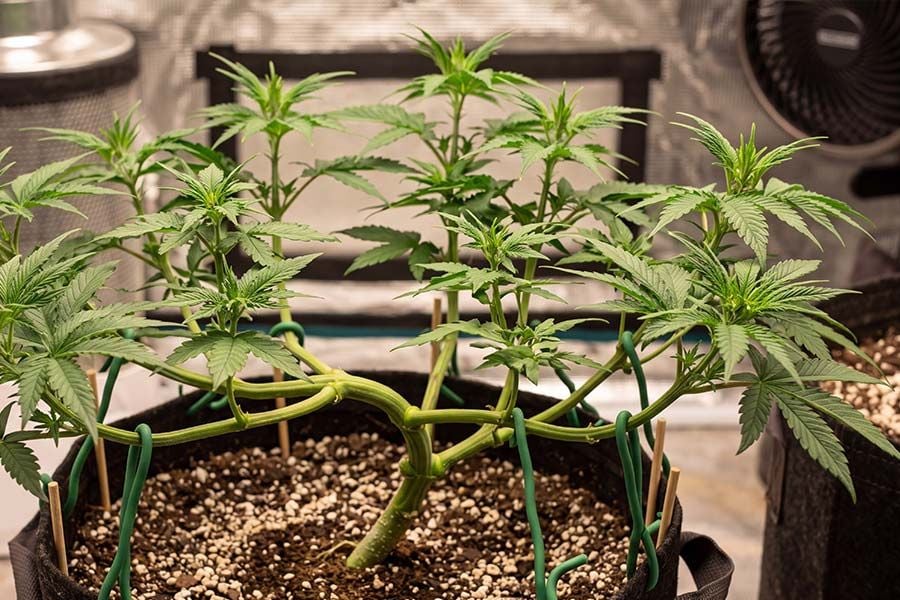
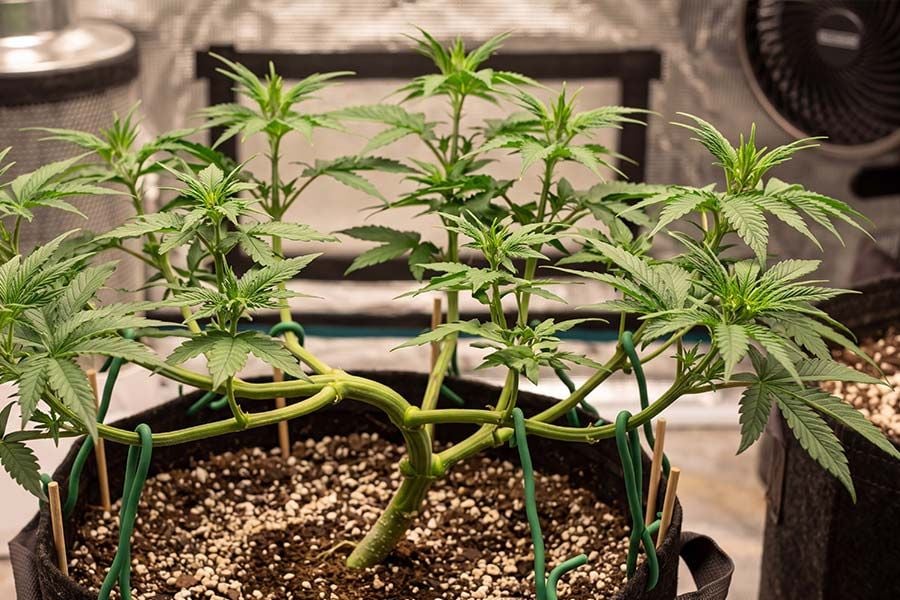
The vegetative stage is the main time to train cannabis plants because the plant is building branches and canopy structure before flowering. Training should be done only when the plant is healthy enough to recover.
Veg flexibility is what makes this window work, since a young, actively growing plant bounces back from training far better than a stressed one.
Growers train in veg to shape the canopy, control height, and expose more bud sites to light before flowering locks the structure in. Common methods include low-stress training, which bends and ties branches to open the canopy, and topping, which removes the main growing tip to encourage multiple colas.
Pruning removes excess growth, and super cropping gently damages stems to redirect growth; both shape the plant's final form.
Timing matters, because training works best while the plant still has veg growth ahead of it to recover and fill out. Training a weak or stressed plant risks setting it back rather than improving it, so plant health comes first.
Autoflowers need extra caution here because their shorter, age-based timelines leave little recovery room after heavy training. Gentler, earlier techniques suit autos better, a distinction rooted in the timeline difference between autoflower and photoperiod genetics.
Skipping training on a stressed plant is often the safer call, since a plant already under strain rarely recovers well from more.
Female Preflowers in Veg
Female preflowers in veg are early sex indicators that usually appear near the nodes as the cannabis plant matures. They can help growers identify female plants before full flowering, but plant sex should be checked carefully as the plant develops. Preflowers give an early read on sex without waiting for the full flowering stage.
Preflowers form at the nodes, the points where branches meet the main stem. Female preflowers often show fine, pistil-like structures, while male plants may show small pollen sacs instead. Learning to read these signals is the core skill covered in our male vs female cannabis plants guide.
Preflowers signal maturity and sex, but their appearance does not always mean full flowering has begun. The plant can show preflowers while still finishing its vegetative growth, so treat them as an identification tool rather than a stage change.
Seed type shapes how much sex-sorting attention a grow needs. Regular seeds can produce either male or female plants, so they require closer sex identification as preflowers appear. Feminized seeds are bred to grow into female plants, which reduces the male-plant sorting a grower has to do.
Autoflower and photoperiod timing can also differ in when preflowers show, so check each plant as it develops rather than assuming a single schedule.
Common Vegetative Stage Problems
Common vegetative stage problems usually trace back to environment, watering, feeding, or pests, and most reveal themselves through the leaves. Catching them early is mostly a matter of matching a symptom to its likely cause and knowing what to check next.
Reading a problem starts with the pattern: which leaves are affected, how the damage spreads, and what changed recently in the grow. The table below maps common veg symptoms to their likely causes and the first thing to check.
Common Cannabis Veg Problems
| Veg Problem | Possible Cause | What to Check |
| Slow growth | Weak light, cold, poor roots, overwatering | Environment and root zone |
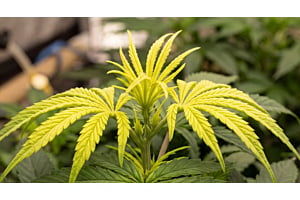
| Yellow leaves | Nutrient issue, overwatering, pH issue | Feeding and watering pattern |
| Drooping leaves | Overwatering or underwatering | Medium moisture and pot size |
| Stretching | Weak light or poor light distance | Light intensity and placement |
| Brown spots | Deficiency, pH issue, pests, or damage | Leaf pattern and spread |
| Burnt tips | Overfeeding or nutrient stress | Feeding strength |
| Pest signs | Bugs, webbing, leaf damage | Undersides of leaves and medium |
Each row points toward a deeper guide rather than a full fix. Yellowing leaves, brown spots, and burnt tips often trace back to a feeding or pH issue, while drooping usually signals a watering problem.
When to Switch Cannabis From Veg to Flowering
For photoperiod cannabis, switch to the flowering stage when the plant is healthy, trained, and about half its intended final height. Most plants stretch sharply during the first two to three weeks of bloom, often doubling in size. Make the switch earlier if vertical space is limited.
To trigger flowering indoors, switch to a 12-hour light/12-hour uninterrupted-darkness schedule each day. Outdoor photoperiod plants begin flowering naturally as nights get longer and daylight hours shorten.
Finish major topping, bending, and canopy training before the switch where possible. Avoid sending a stressed plant into flower, since recovery takes time away from bud development.
Autoflowers flower by age, so there is no light-cycle switch to make. Their growing timeline moves from veg into flowering on its own.
Veg-to-Flower Checklist
- Plant is healthy.
- Roots and canopy are developed.
- Training is complete or nearly complete.
- Plant height allows for flowering stretch.
- No major pest, nutrient, or watering issue is active.
- Light schedule is ready for photoperiod flowering.
- Monitor autoflower timing if growing autos.
Cannabis Vegetative Stage Checklist
Run through these points as your plant moves through veg. They cover the day-to-day calls that keep growth on track and set the plant up for a clean switch to flowering.
Vegetative Stage Care Checklist
- Confirm the plant has moved beyond seedling growth.
- Keep the plant under a vegetative light schedule if photoperiod.
- Increase watering as roots and canopy expand.
- Feed according to plant size, medium, and stage.
- Watch for nutrient deficiencies or overfeeding.
- Train only healthy plants.
- Monitor pests, leaf color, and growth speed.
- Control plant height before flowering.
- Check for preflowers as the plant matures.
- Switch to flowering only when the plant is healthy and sized correctly.
Cannabis laws vary by state and locality. Check local laws before germinating or growing cannabis seeds, and grow only where cultivation is legal and permitted.