
Cannabis ruderalis is the most overlooked of the three cannabis species. Most growers know indica and sativa but skip right past the plant that made autoflowering possible. This guide covers what ruderalis is, where it comes from, how it looks, what it does, and how its genetics shape the pot seeds you can buy today.
What is Cannabis Ruderalis?
Cannabis ruderalis is the third cannabis species, distinct from indica and sativa, and defined by one key trait: it flowers based on age rather than light.
That single difference separates ruderalis from every other cannabis plant. Indica and sativa wait for shorter days to trigger flowering. Ruderalis ignores the light entirely and flowers on its own schedule.
Below, you’ll learn:
- What ruderalis means — the Latin origin of the name and what it tells you about the plant.
- Where ruderalis comes from — the wild regions where it evolved its resilience.
- What ruderalis looks like — size, leaf shape, and bud structure.
What Does Ruderalis Mean?
The word ruderalis derives from the Latin rudus, meaning rubble or broken stone. Russian botanist Dmitrij Janischewsky first classified the species in 1924. He named it after the disturbed, rough terrain where it thrives — roadsides, wasteland, abandoned fields.
The name fits. Ruderalis is a weed in the original sense: a plant tough enough to grow where others cannot. That hardiness is baked into its genetics.
Where Does Cannabis Ruderalis Come From?
Cannabis ruderalis originated in the Volga River region of the Russian Ural Mountains, where harsh climates and short growing seasons shaped its genetics over thousands of years. Populations grow wild in Russia, Siberia, Kazakhstan, and parts of Mongolia. It is among the few cannabis plants found growing truly wild today, without human cultivation or management.
Those short northern summers created selection pressure. A plant that waited for long nights to trigger flowering would never finish its cycle before frost. Ruderalis adapted by abandoning light-dependent flowering entirely. Wild cannabis plants in these regions flower by age alone - a trait that makes them uniquely useful to breeders.
If you are curious about other cannabis plants with deep geographic roots, landrace seeds come from similar ancient, regionally adapted lineages.
What Does a Cannabis Ruderalis Plant Look Like?
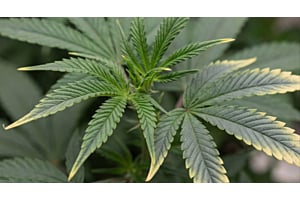
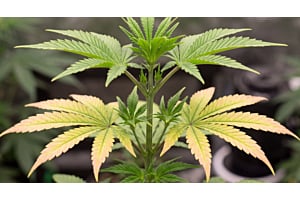
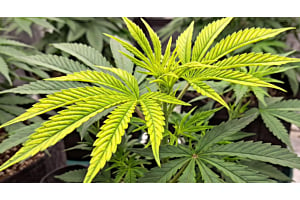
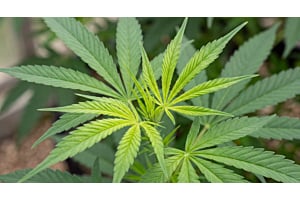
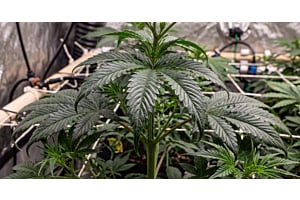
Cannabis ruderalis plants grow short and compact, typically reaching 1-3 feet at full height. That is well below most indica or sativa plants. The stems are thick and fibrous, which gives the plant structural strength in wind and cold.
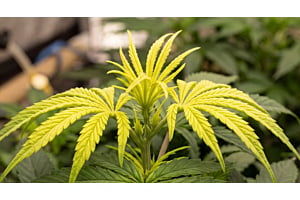
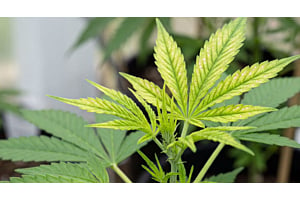
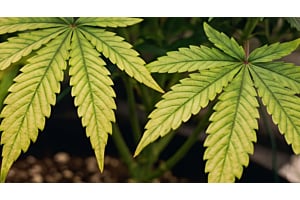
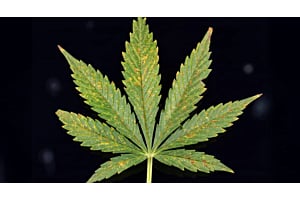
The leaves are narrower than indica leaves and have 3-5 main leaflets rather than the 7 or 9-point leaves on sativa and indica. Ruderalis buds are small and dense. Full-grown ruderalis buds lack the size of indica nugs but compensate with resin concentration relative to plant mass. The flower clusters are compact rather than elongated.
Female ruderalis plants produce buds at the nodes while male plants produce pollen sacs, just like other cannabis species in the female vs male weed plant comparison.
How Does the Ruderalis Auto-Flowering Trait Work?
The ruderalis auto-flowering trait triggers flowering by plant age, not by any change in the light cycle. Most cannabis species need a shift to 12 hours of darkness per day to enter the flowering stage. Ruderalis crosses that threshold automatically, typically between 21 and 30 days from germination.
This is not a stress response. It is a genetic timer. The plant begins flowering because it has reached a certain age, regardless of whether it gets 20 hours of light or 12. That independence from photoperiod comes from centuries of adaptation to northern climates where growing seasons are extremely short.
The practical outcome is a plant that can go from seed to harvest in 7-9 weeks. Growers in short-summer climates or indoor setups with fixed light schedules benefit the most. The auto-flowering gene transfers cleanly into hybrid strains, which is why breeders prize ruderalis genetics above almost everything else the species offers.
How Does Ruderalis Compare to Indica and Sativa?
Ruderalis, indica and sativa differ in plant size, flowering trigger, lifecycle length and cannabinoid profile. All three belong to the same genus. The differences are the result of geographic adaptation over a very long time.
The table below summarizes the key traits that matter for seed buyers.
| Trait | Ruderalis | Indica | Sativa |
| Plant height | 1-3 feet | 2-4 feet | 4-12 feet |
| Flowering trigger | Age (auto-flowering) | Light cycle (photoperiod) | Light cycle (photoperiod) |
| Flowering time | 7-9 weeks from seed to harvest | 8-10 weeks | 10-12 weeks |
| THC level | Very low (under 3%) | Moderate to high | Moderate to high |
| CBD level | Relatively higher | Varies by strain | Varies by strain |
Ruderalis is the shortest, fastest and least psychoactive of the three. Indica and sativa deliver significantly more THC and more pronounced effects. Ruderalis contributes speed, resilience and the auto-flowering gene to any cross.
For buyers interested in the full-potency experience from each branch of the family, both sativa seeds and indica seeds are available in a wide range of strains.
What Are the Effects of Ruderalis Weed?
Ruderalis weed delivers mild psychoactive effects because THC content sits well below most indica and sativa strains. Pure ruderalis typically contains under 3% THC. That is not enough to produce the pronounced high associated with commercial cannabis strains.
Ruderalis is not high in THC, but it is relatively higher in CBD compared to its THC content. That ratio makes it less interesting as a standalone smoke and more valuable as a breeding tool. Growers do not seek out pure ruderalis weed for recreational use.
When ruderalis genetics cross into indica or sativa hybrids, the resulting autoflower strains take on the THC and CBD profile of the photoperiod parent while keeping the ruderalis lifecycle. The effects of those hybrids come primarily from the non-ruderalis side of the cross. If strong psychoactive effects are a priority, high-THC seeds from indica- or sativa-dominant autoflower strains are the more relevant category.
What Are the Most Popular Ruderalis Strains?
You can find ruderalis in its raw form growing wild in parts of Central Asia and Eastern Europe, but a commercial pure ruderalis strain is uncommon. What breeders have created is a large category of ruderalis-derived hybrids. The three most recognized ruderalis strains in breeding history are:
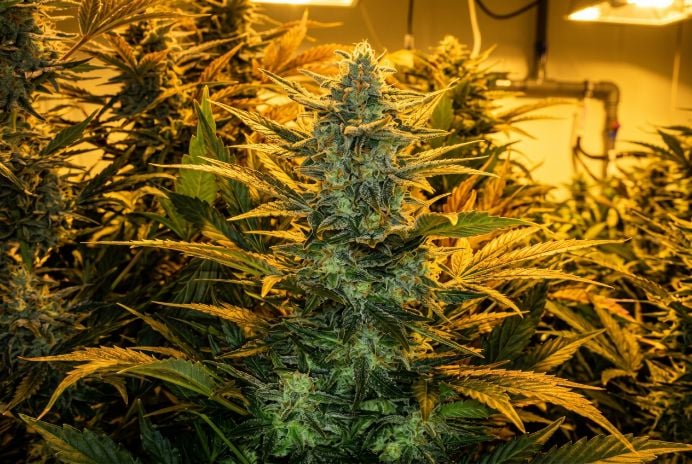
Lowryder Auto is one of the first commercially successful autoflowering strains. Breeders crossed ruderalis genetics with established indica lines to create a compact, fast-finishing plant. Lowryder proved that ruderalis genetics could transfer usefully into a commercial strain and helped open the autoflower market.
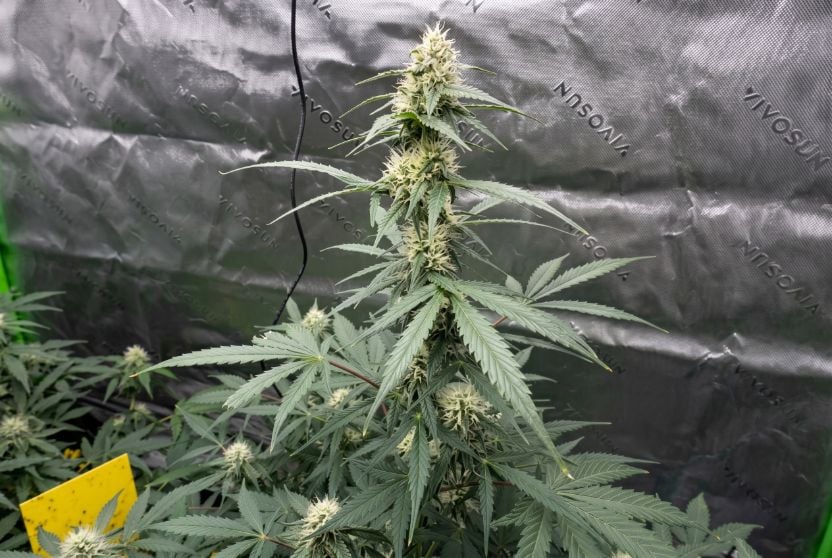
Northern Lights Auto is a ruderalis crossed with the classic Northern Lights photoperiod strain. The ruderalis contribution shortens the lifecycle and removes the light-schedule requirement while the indica genetics carry the high THC content and terpene profile.
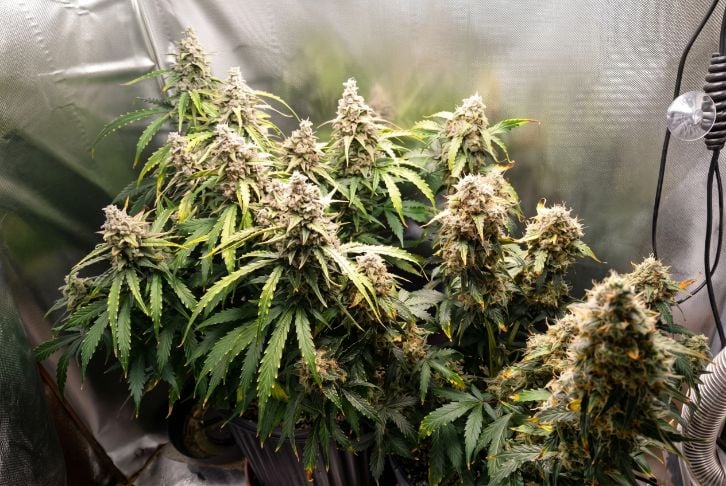
White Widow Auto is the autoflowering version of the widely grown White Widow. Ruderalis genetics reduce the entire lifecycle to around 10-12 weeks without significantly altering the effects profile from the original. These are some of the highest yielding cannabis seeds you’ll find in the autoflowering category.
The autoflowering strains above are hybrids. Pure ruderalis strains rarely appear in commercial seed catalogs because ruderalis genetics are typically crossed with indica or sativa genetics for potency and yield. The ruderalis contribution in each case is the auto-flowering gene and the compact structure.
Beginner-friendly weed seeds almost always include autoflowering cannabis seeds, because the forgiving schedules and compact size reduce the risk of early mistakes.
How Ruderalis Seeds Connect to Modern Autoflowering Cannabis
Modern autoflowering weed seeds carry ruderalis ancestry in every genetic line. Without ruderalis genetics, autoflowering cannabis does not exist. When breeders cross ruderalis with a potent indica or sativa, the offspring inherit the timed flowering of ruderalis and the cannabinoid depth of the other parent.
Stabilizing that cross over multiple generations locks in the auto-flowering trait reliably. The result is a seed that germinates, grows and flowers on a predictable schedule without needing a light-cycle adjustment.
Feminized vs Autoflowering (Ruderalis) Seeds
Photoperiodic feminized pot seeds only enter flowering when the light schedule changes. They also veg for longer, grow bigger, and yield more per plant. Autoflowering seeds with ruderalis genetics are light-cycle independent, grow smaller and yield less per plant but finish their life cycle a lot quicker — ideal for multiple harvests in a single season.
Choosing between seed types usually comes down to your preferences, setup, and grow season. If you are deciding, autoflowering vs feminized seeds breaks down the practical differences in detail. Eligible adult buyers should check federal, state and local rules before germinating any cannabis seeds where cultivation is lawful.
Frequently Asked Questions About Ruderalis
Still have a question about cannabis ruderalis weed? Here are some answers to the most common questions.
What is the Scientific Name of Cannabis Ruderalis?
The scientific name is Cannabis ruderalis Janisch., named after Russian botanist Dmitrij Janischewsky who classified it in 1924. Some botanists classify it as a subspecies (Cannabis sativa subsp. ruderalis) rather than a separate species. The classification debate continues, but the auto-flowering trait is not in dispute.
What is Cannabis Ruderalis Used For?
Cannabis ruderalis is used primarily in breeding programs to create autoflowering hybrid strains. Its wild genetics also hold interest for researchers studying cannabis adaptation and CBD-dominant cannabinoid profiles. It is not widely used as a standalone smoke or medical product because of its low THC content.
Is Ruderalis an Indica or a Sativa?
No. Ruderalis is neither indica nor sativa — it is a third classification within the cannabis genus. It shares geographic origins with some indica landrace populations but evolved distinct traits, most notably the auto-flowering mechanism. Hybrids can combine ruderalis with either indica or sativa genetics, but pure ruderalis stands apart from both.
Can You Buy Pure Ruderalis Seeds?
Pure ruderalis seeds are rarely sold commercially. The market offers autoflowering hybrids that carry ruderalis genetics. These hybrids deliver the auto-flowering trait alongside the potency and yield of their indica or sativa parent, making them the practical choice for most growers.